Now Using the POINT of the Spear….
Thursday, May 21st, 2009My esteemed colleague, Michael Tanji, goes knuckles over Think Tank 2.0.
Tanji has my 100 % endorsement.
My esteemed colleague, Michael Tanji, goes knuckles over Think Tank 2.0.
Tanji has my 100 % endorsement.

The MSM has bumped up against the internet – and lost.
Clay Shirky called it a while ago in Here Comes Everybody: The Power of Organizing Without Organizations
but big media, if they wish to make the leap to to Web 2.0 life, have to leverage the one thing they do better than everyone else, original investigative reporting, that’s where they create value. Instead they are looking for government protection, subsidies or both.
Rupert Murdoch envisions a walled garden strategy but news has a brief shelf life. A high price on all content is a barrier to entry for older news items that just interest a few people. A flat rate drives down their market share for attention, their traffic and in turn, the market value of all the content they own. A sliding scale would be needed that rapidly discounts toward free as public attention on a news item waned.
Right now the media are like a brontosaurus that has just realized it waded into a tar pit.
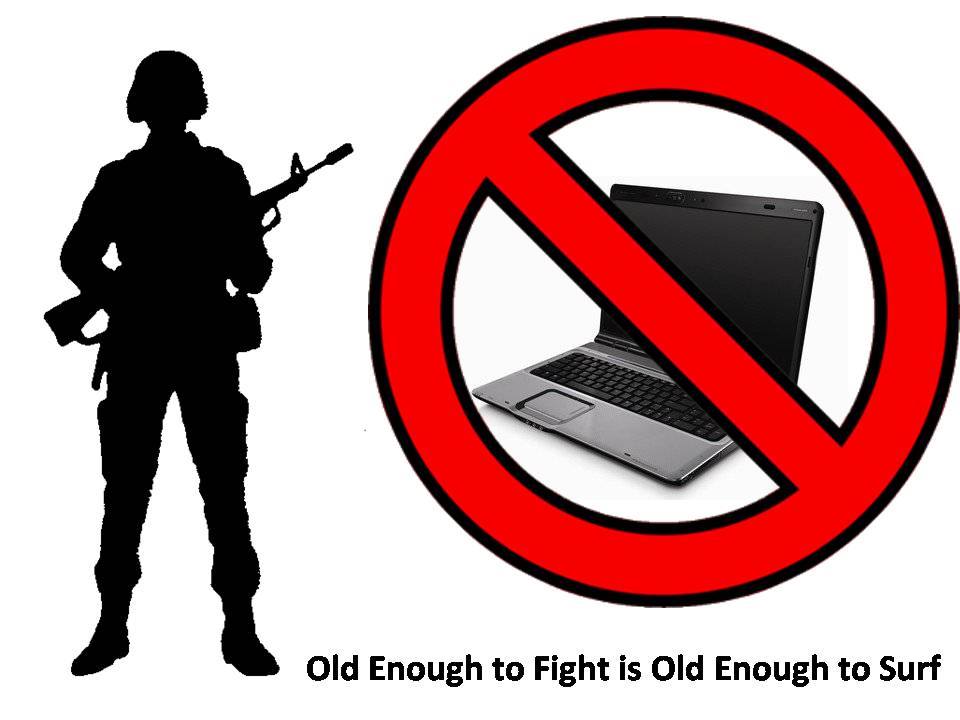
William Lind has a new post up at Defense and The National Interest that addresses the issue of the IT restrictions on the use of the internet by military personnel. This topic has been touched on previous by others such as at the SWC, SWJ Blog, Haft of the Spear, Hidden Unities and many milbloggers, intel and cyberwonks but previously, IT policy varied across services and from command to command. That appears to be changing – for the worse.
At the height of the Cold War, a U.S. army corps commander in Europe asked for information on his Soviet opposite, the commander of the corps facing him across the inter-German border. All the U.S. intelligence agencies, working with classified material, came up with very little. He then took his question to Chris Donnelly, who had a small Soviet military research institute at Sandhurst. That institute worked solely from open source, i.e. unclassified material. It sent the American general a stack of reports six inches high, with articles by his Soviet counterpart, articles about him, descriptions of exercises he had played in, etc.
What was true during the Cold War is even more true now, in the face of Fourth Generation war. As we have witnessed in the hunt for Osama, our satellite-photo-addicted intel shops can’t tell us much. But there is a vast amount of 4GW material available open-source: websites by and about our opponents, works by civilian academics, material from think-tanks, reports from businessmen who travel in areas we are interested in – the pile is almost bottomless. Every American soldier with access to a computer can find almost anything he needs. Much of it is both more accurate and more useful than what filters down through the military intelligence chain.
Or at least he could. In recent months, more and more American officers have told me that when they attempt to access the websites they need, they find access is blocked on DOD computers. Is al Qaeda doing this in a dastardly attempt to blind American combat units?
Sadly, no. DOD is doing it. Someone in DOD is putting blinders on American troops.I do not know who is behind this particular bit of idiocy. It may be the security trolls. They always like to restrict access to information, because doing so increases their bureaucratic power. One argument points to them, namely an assertion that the other side may obtain useful information by seeing what we are looking for. That is like arguing that our troops should be given no ammunition lest muzzle flashes give away their positions in a fire-fight.
But the fact that websites of American organizations whose views differ from DOD’s are also blocked points elsewhere. It suggests political involvement. Why, for example, is access to the website of the Center for Defense Information blocked? CDI is located in Washington, not the Hindu Kush. Its work includes the new book on military reform America’s Defense Meltdown, which has garnered quite a bit of attention at Quantico.
The goal of the website blockers, it seems, is to cut American military men off from any views except those of DOD itself. In other words, the blockaders want to create a closed system. John Boyd had quite a bit to say about closed systems, and it wasn’t favorable.
Read the rest here.
What is disturbing to me is that Lind indicates that the previous policy, which left IT restrictions up to commanders, seems to be coalescing behind one of systemic, tight, restrictions on access for all uniformed personnel to all kinds of blogs or websites that do not jeopardize information security. Or may even be useful to the conduct of their mission. The previous excuse by DoD bureaucrats was “conserving bandwidth” but it’s hard to see how esoteric sites like the Center for Defense Information or some university PDF on Islamist madrassas in Pakistan clog up a combatant command’s skinny pipes.
Intel and cyber experts in the readership are cordially invited to weigh in here.
ADDENDUM:
Professor Sam Liles offered up this manifesto on cyberthreats and cybersecurity.
ADDENDUM II:
Fabius Maximus, Ubi war and Wings Over Iraq took a similar view ( Wings though, added “Curse you Zenpundit!”).
ADDENDUM III THE COUNTERPOINT:
Galrahn says Bill Lind does not understand the legitimate cybersecurity aspect that causes blogs and websites to be blocked and then offers some practical advice to the blocked bloggers (such as myself):
….but I’d bet at least 5 shots of Canadian Whiskey (I’m a Crown Royal fan until summer gets here) that the problem that triggered his rant doesn’t originate in the DoD or any government entity, rather the private sector.
But I will say this. There are several legitimate reasons why websites, blogs, and other forms of social media sites on the web are blocked. If your website or blog is blocked, please understand you can do something about it besides whine.
Use Feedburner, or some other form of syndication software to distribute your content, including by email. Organizations including the military may block Blogger but typically they do not block syndication service sites because from an IT perspective, syndication services like Feedburner is a better way to manage bandwidth for larger enterprises. If an organization is blocking syndication sites too, then your organization has a very strict IT policy, BUT if your favorite websites are distributing content by email, problem solved
I used Feedburner previously with my old blogger site when Feedburner was in beta but when it was purchased or absorbed by Google, that account went dormant. I think I will ressurect it and then look into Galrahn’s other suggestions.
Dr. Mark Drapeau and Dr. Linton Wells II in a National Defense University paper:
Social Software and National Security: An Initial Net Assessment (PDF)
….We have approached this research paper as an initial net assessment of how social software interacts with government and security in the broadest sense.1 The analysis looks at both sides of what once might have been called a “blue-red” balance to investigate how social software is being used (or could be used) by not only the United States and its allies, but also by adversaries and other counterparties. We have considered how incorporation of social software into U.S. Government (USG) missions is likely to be affected by different agencies, layers of bureaucracy within agencies, and various laws, policies, rules, and regulations. Finally, we take a preliminary look at questions like: How should the Department of Defense (DOD) use social software in all aspects of day-to-day operations? How will the evolution of using social software by nations and other entities within the global political, social, cultural, and ideological ecosystem influence the use of it by DOD? How might DOD be affected if it does not adopt social software into operations?
Saw this a day or two ago. Just finished reading the intro. Read the rest here.

I am sometimes asked ” What is the point of twitter?” by people who sign up and are bewildered by the flurry of seemingly disconnected “tweets”. Even Dave Davison, a longtime investor in and enthusiast of media platforms has asked what is the “Return on Attention” with twitter ?
All social networking is not created equal. My usual answer based upon my own usage has been that twitter will make sense for you if  you have an established network of people with whom you have a reason to be in frequent contact and a common set of interests. I have that on twitter with a sizable national security/mil/foreign policy/4GW/IC informal “twittersphere”. If you don’t have that kind of network at least in latent form when you sign up on twitter, its going to be very hard to build one from scratch by following strangers based on random tweets.
As it turns out, research has begun to validate my empirical observation. In social networking platforms there is your formal network but inside it is the real, “hidden” network with which you actually interact:
From Complexity Digest – “Social networks that matter: Twitter under the microscope” (PDF) by Bernardo A. Huberman, Daniel M. Romero and Fang Wu
“….This implies the existence of two different networks: a very dense one made up of followers and followees, and a sparser and simpler network of actual friends. The latter proves to be a more inuential network in driving Twitter usage since users with many actual friends tend to post more updates than users with few actual friends. On the other hand, users with many followers or followees post updates more infrequently than those with few followers or followees.”
What does this mean ?
First, it means that if the IC or military or law enforcement are worried about terrorists or criminals using twitter or Facebook for nefarious purposes, the bad guys will not be able to conceal their cells amidst a large list of nominal “friends” because their manic activity stands out like neon lights against the passivity of the non-members of the network.
Secondly, I’m not certain if this research scales with “celebrity” figures on a platform with huge numbers of followers like Robert Scoble ( Scobleizer 50, 362) or the designer Guy Kawasaki ( guykawasaki 52, 506). These people are deep influencers well outside any realistic circle of actual friends and are followed in part because of their pre-existing status earned in other domains or media.
That said, it’s an interesting concept to think of social media networks having a surface and a hidden or inner network where the real action takes place and what causes transactional movement to occur between the two.
UPDATE:
A related post by Drew – Enabling the Power of Social Networks in the IC

Zenpundit is a blog dedicated to exploring the intersections of foreign policy, history, military theory, national security,strategic thinking, futurism, cognition and a number of other esoteric pursuits.
Customized Web Site & Blog Design


