zenpundit.com » geopolitics

Archive for the ‘geopolitics’ Category

Maxwell on North Korea

Tuesday, December 20th, 2011

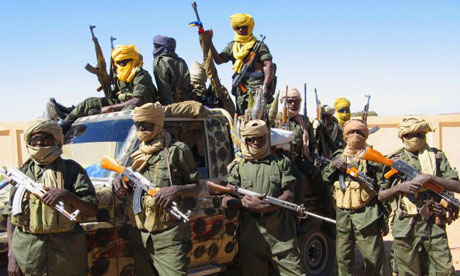
Fatboy Kim II

(Photo hat tip to Robert Young Pelton)

Colonel Dave Maxwell, now retired from active duty and working at Georgetown University as Associate Director of the Center for Peace and Security Studies and the Security Studies Program in the School of Foreign Service, is an expert on the esoteric subject of North Korea ( which he habitually writes as “north Korea”) and the idiosyncratic dynastic Communist system he terms “the Kim Family regime”. In the past few years, I can say my knowledge of the DPRK has improved markedly largely from reading Dave’s posts on The Warlord Loop.

SWJ Blog has just published an analysis by Colonel Maxwell on what the demise of Kim Jong-il portends:

The Death of a Dictator: Danger, Opportunity or Best Timing Possible?

….There are two scenarios that are likely to play out within North Korea.  The first scenario depends on the strength and power of Jang Song-taek who, along with his wife and the late Kim Jong-il’s sister, is the de facto “regent” for the young Kim Jong-un.  Has he been able to help Kim Jong-un establish sufficient legitimacy within the Regime and will they be able to consolidate power?  It is very likely that if Kim has sufficient strength and control of the
security apparatus there are very likely arrests and purges taking place even as we try to figure out what is happening. 

The second scenario is that he has not been able to consolidate sufficient power and will be
faced with internal threats from other senior members of the regime who are unwilling to allow a 27 year old four star general rule the party and the military.  If there is a power struggle many scenarios can play out ranging from internal chaos, civil war, and “implosion” to an external “explosion” – e.g., spillover of the effects of chaos and civil war into China and the ROK or the worst case: the desperate execution of the regime’s campaign plan to reunify the peninsula as the only means left to ensure survival of the Kim Family Regime.  Finally, regime collapse will occur when there is the loss of the ability of the regime to centrally govern and the loss of control and support of the military and security apparatus.    We have seen cracks in the system like hairline cracks in a dam.  The recently reported alleged defection of eight armed guards is but one indication of such cracks with water slowly dripping from through the regime’s dam – the question is are those cracks repairable or will they cause the dam to crumble and collapse; unleashing such a torrent on the peninsula that will make 1950-53 look like a minor skirmish in terms of scale of potential conflict and devastation.

Either scenario will ensure the continued suffering of 23 million north Korean people and the second scenario will expand the tragedy to the Republic of Korea and its 46 million citizens and significantly affect the other countries in Northeast Asia as well as have global effects…..

Read the rest here.


COIN may be Dead but 4GW has a New Lease on Life

Monday, December 12th, 2011

As I had predicted, a global recession, budgetary chicken in Congress and national weariness after a decade of war in Afghanistan and Iraq have forced a public rethink of the prominence of counterinsurgency doctrine in America’s military kit.  Colonel Gian Gentile, long the intellectual archenemy of FM 3-24 and the “Surge narrative” has pronounced COIN “dead” and even CNAS, spiritual home of COIN theory inside the Beltway, is now advocating COIN-lite FID (Foreign Internal Defense). As this entire process is being driven by a global economic crisis, there is another aspect to this American inside-baseball policy story.

While COIN as the hyperexpensive, nation-building, FM 3-24 pop-centric version of counterinsurgency is fading away, irregular warfare and terrorism are  here to stay as long as there is human conflict. Moreover, as economic systems are to nation-states as vascular systems are to living beings, we can expect an acceleration of state failure as weak but functional states are forced by decreased revenues to reduce services and diminish their ability to provide security or enforce their laws. The global “habitat” for non-state, transanational and corporate actors is going to grow larger and the zones of civilized order will shrink and come under internal stress in the medium term even in the region that Thomas P.M. Barnett defined as the “Core” of globalization.

The theory of Fourth Generation Warfare is helpful here. Many people in the defense community object to 4GW thinking, arguing that it is a poor historical model because it is overly simplified, the strategic ideas typified by each generation are cherrypicked and are usually present in many historical eras (albeit with much different technology). For example, eminent Clausewitzian strategist Colin Gray writes of 4GW in Another Bloody Century:

….The theory of Fourth Generation Warfare or 4GW merits extended critical attention here for several reasons. It appears to be a very big idea indeed. It’s author [ William S. Lind] and his followers profess to be able to explain how and why warfare has evolved over the past 350 years and onto the future….

….Talented and intellectually brave strategic theorists are in such short supply that I hesitate before drawing a bead on Lind and his grand narrative of succeeding generations of warfare. Nonetheless, there is no avoiding the judgment that 4GW is the rediscovery of the obvious and the familiar. 

4GW theory is not something that can be defended as having sound historical methodology. However, it works well enough as a strategic taxonomy of mindsets and political environments in which war is waged; particularly with the inclusion of the van Creveldian assumptions of state decline, it is a useful tool for looking at warfare in regions of weak, failing and failed states. The same global region Dr. Barnett has termed “the Gap” in his first book, The Pentagon’s New Map.

Tom predicated his geostrategy on the power of globalization being harnessed with judicious use of Core military power to “shrink the Gap” and provide connectivity as an extremely powerful lever to raise up billions of the world’s poor into a more stable, freer and middle-class existence. While that still holds, the flipside is that times of  sharp economic contraction limit the ability of the Core, led by the United States, to intervene robustly, permitting the “bad guys” to make use of connectivity and black globalization for their own purposes. Where the great powers are disunited, disinterested or increasingly in the case of European power projection, disarmed, the Gap could potentially grow.

A new Iraq or Afghanistan sized campaign is not in the American defense budget for at least a decade. Or NATO’s. Hence the newfound interest in cheaper alternatives to massive intervention on the ground, for which the Libyan campaign might charitably be classed as an “experiment” ( where it was not simply bad strategy and negotiated operations) or as a multilateral reprise of Rumsfeldian ideas of transformative, light and fast military force mashed up with Reagan Doctrine proxy warfare, justified under a new ideological theory of R2P.

These are rational policy responses to conditions of parsimony, but it also indicates a coming era of strategic triage rather than grand crusades in using military force to stabilize parts of the global system.  The US and other great power  are going to be more likely to follow Teddy Roosevelt’s advice to “Do what you can, where you are, with what you have” than they are to heed JFK’s call “to pay any price, bear any burden”. The politics of hard times means that we will be minimizing our burdens by replacing, where we can, boots with bots, bullets with bytes and Marines with mercs. Not everywhere, but certainly on the margins of American interests.

Beyond those margins? We will aid and trade with whatever clients can maintain a vestige of civilized order without too much regard to the niceties of  formal state legitimacy. Too many states will be ceding autonomy to subnational and transnational entities on their territory in the next few decades and we will have to abide by that reality if regions of the world become Somalia writ large. What to do? A number of recommendations come to mind:

  • Get our own economic house in order with greater degrees of transparency and adherence to rule of law in our financial sector. Legitimacy and stability, like charity, begins at home.
  • Adopt policies that strengthen the principle of national sovereignty and enhance legitimacy rather than weaken or erode it. This does not mean respecting hollow shells of fake states that are centers of disorder, but respecting legitimate ones that effectively govern their territory
  • Foreign policies that reject oligarchical economic arrangements in favor of encouraging liberalization of authoritarian-autarkic state economies prior to enacting political reforms ( democracy works better the first time on a full stomach).
  • Create a grand strategy board to advise senior policy makers and improve the currently abysmal level of strategic calculation and assessment prior to the US assuming open-ended commitments to intervention
  • Accept that the Laws of War require a realistic updating to deal with the international equivalent of outlaws, an updating that contradicts and rejects the 1970’s era diplomatic effort to privilege irregular combatants over conventional forces.
  • Fighting foreign insurgencies is something best done by primarily by locals, if willing, with our aid and advice. If those with the most to lose are not willing to stand, fight and die then they deserve to lose and the US should either eschew getting involved at all or resolve to secure whatever vital interest that exists there by brute force and make certain that reality is clearly communicated to the world (i.e. Carter Doctrine).  Truly vital interests are rare.

A question for the readership

Saturday, December 10th, 2011

[ by Charles Cameron — terminology of war ]
.
I have a question:

Do we have or need a term for the kind of situation where one nation, while ostensibly at peace with another, fights them by means that are plausibly deniable –- I’m thinking a campaign of sabotage, computer viruses, assassinations -– whose leaders when asked if they would care to deny them, smile like so many Cheshire Cats?

This certainly seems to be one mode of the continuation of politics by other means — and once war is declared, it would fold itself into war itself as covert and info ops — but I was wondering: is there a name for this, or do we perhaps need a name for it, in “peacetime”, as one of the forms of warfare?

I pinged Mark on this, since he’d know better than I, and he replied:

There is no legal term for such a state.

Individually, these actions either constitute “violations of sovereignty” or “criminal acts” depending on how the state chooses to interpret them, until they consider them “an act of war” (i.e. mining harbors, sabotage, assassination) and act diplomatically. Until then it is a state of “peace” under International Law.

Which leaves me wondering: is it about time we had a name for this kind of war, which the United States and / or Israel may plausibly – and deniably – be waging at against Iran as we speak?

Would it be useful to have a term for, and a legal doctrine about, campaigns of this sort?

The Haqqani come to high Dunsinane

Wednesday, November 23rd, 2011

[ by Charles Cameron — why is non-actionable (useless) intelligence sometimes the most intelligent (useful)? – importance of multiple frames for complex vision ]
.

spec-taliban-to-high-dunsinane.png

I have fun choosing my data points, I’ll admit, and I enjoy the art of juxtaposition for its own sake — but the particular juxtaposition above is frankly useless.

Readers of the Chuang-Tzu, however, will be familiar with the idea that the useless is not without its uses

Here, then, is the method to this madness.

What I want to establish in myself – and in others who choose to follow me – is a rich supply of frames, of analogies, of patterns that can be seen at a glance. And the ways to do this are (a) to read widely in those arts and sciences which make frequent use of symmetry, analogy, metaphor, and pattern, and (b) to practice, oneself, the techne of analogy-, metaphor-, symmetry-, and pattern-making.

1.

In the two image-frames above, the lower image shows a still from a Haqqani network training video from SITE — which could be viewed as the fulfillment (albeit in Afghanistan, and waking reality) of a prophecy made earlier (about Scotland, a not-entirely-dissimilar country, mountainous, clannish, proud), in suitably oracular fashion, in Shakespeare’s Macbeth Act IV Scene 1 (shown in the upper frame, from the First Folio edition).

Here, you might say, the Taliban come to high Dunsinane Hill.

But…

This is not actionable intelligence.

The injunction to “keep a lookout for people on the move pretending to be trees” is not a useful addition to tradecraft.

It is, however, vivid. And it’s an instance of “the leap” from one idea to another that’s at the heart of the process of insight and discovery. It is an example of a specific skill of considerable analytic importance.

2.

Karl Weick and Kathleen Sutcliffe, in Managing the Unexpected: Assuring High Performance in an Age of Complexity, p. 42, [quoted in Fishbein and Treverton and Jeffrey Cooper ] define mindfulness thus:

By mindfulness we mean the combination of ongoing scrutiny of existing expectations, continuous refinement and differentiation of expectations based on new experiences, willingness and capability to invent new expectations that make sense of unprecedented events, a more nuanced appreciation of context and ways to deal with it, and identification of new dimensions of context that improve foresight and current functioning.

How’s that for a prose version of the basic OODA insight?

3.

Obviously, I am not talking about the kind of tactical intelligence that is concerned with materiel and logistics here, but with mindset and morale.

This may get overlooked, since…

Emphasizing current intelligence for actionable exploitation may have created an unintended mind-set that undervalues the immense importance of knowing and understanding the adversary’s intentions throughout the course of the confrontation, even at cost of foregoing exploitation of these sources for temporary advantage on the battlefield or in the diplomatic conference room.

[Cooper, Curing Analytic Pathologies: Pathways to Improved Intelligence Analysis, p.30]

4.

What I am talking about here is that “willingness and capability to invent new expectations that make sense of unprecedented events, a more nuanced appreciation of context and ways to deal with it, and identification of new dimensions of context that improve foresight and current functioning mentioned above.

New dimensions of context? What this boils down to is multiple frames of vision… which the IC understands very well, as expressed in the often-repeated chess master analogy — good for strategic thinkers of all stripes. Here’s Robert Sinclair‘s version, in Thinking and Writing: Cognitive Science and Intelligence Analysis, p. 13:

Simon estimates that a first-class player will have 50,000 of these patterns to call on — by no means a small number, but orders of magnitude less than the theoretical possibilities that flow from any given position. The expert can use them to drastically reduce the number of choices he must consider at any point in a game, with the result that he often hits on an effective move with such speed that the observer attributes it to pure intuition.

Enter Neustadt and May, whose book Thinking in Time Zen reviewed here just the other day — enter, in fact, history, as a store of stories.

Richards Heuer explains [Psychology of Intelligence Analysis, p. 38]:

An analyst seeks understanding of current events by comparing them with historical precedents in the same country, or with similar events in other countries. Analogy is one form of comparison. When an historical situation is deemed comparable to current circumstances, analysts use their understanding of the historical precedent to fill gaps in their understanding of the current situation. Unknown elements of the present are assumed to be the same as known elements of the historical precedent. Thus, analysts reason that the same forces are at work, that the outcome of the present situation is likely to be similar to the outcome of the historical situation, or that a certain policy is required in order to avoid the same outcome as in the past.

And the analogies and insights can come from fiction as well as history, as Charles Hill is quoted here as saying:

That is why Alexander the Great carried the Iliad with him on his conquests, and why Queen Elizabeth studied Cicero in the evenings. It is why Abraham Lincoln read, and was profoundly influenced by, Walt Whitman’s “Leaves of Grass,” and why Paul Nitze paged through Shakespeare on his flights to Moscow as America’s chief arms negotiator.

Further, the appropriate insights and possible framings can come from future and/or speculative histories — hence the meetings between IC members and various science fiction authors and thriller screenwriters which then DDI Jami Miscik arranged in an attempt “to see beyond the intelligence report and into a world of plot development”.

As I noted a few days back, I’m particularly impressed by Frank Herbert‘s ability to recognize the importance of the oil / desert / ecology / major powers / jihad / Mahdi complex – back between 1957 and 1965, while writing Dune.

5.

But all this takes me back to a comment I made a while back on Mark Stout‘s On War and Words blog, on “the notion of the kinship of spycraft and literature.” I wrote there:

I think that idea has a lot of merit. Chaucer was a spy, as was Kit Marlowe, and Wordsworth, and Basil Bunting. Somerset Maugham and Graham Greene spied, and John le Carre – and if I’m not mistaken, much of the early OSS was recruited from the Yale literature department by the likes of Archibald MacLeish…

My own suggestion would be that this is because the literary mind is well suited to understanding and expressing complex relationships, just as (it has been suggested) the engineering mind is suited to seeing things in black and white – you’ve probably seen Diego Gambetta and Steffen Hertog’s paper on Engineers of Jihad, in which they determine that “engineers, in particular, were three to four times more likely to become violent terrorists than their peers in finance, medicine or the sciences”.

I don’t know whether that allegation is accurate, or just an artifact of their research methods – but if it’s true that literature offers a different (and in some ways more subtle) means of modeling the kinds of complex situation we’re all facing these days, maybe we need to increase the intake of lit and humanities majors into the IC, and stop being so tech-centric about our analytic methods. The human mind might just be better at selecting and connecting the right dots than our datamining programs.

Keith Oatley‘s paper Shakeapeare’s invention of theatre as simulation that runs on minds might give us a hint or two.

And we’re back to Shakespeare.

6.

Why?

Because what’s important in all this is the quality of imagination expressed. And the core insight is that the greatest poets, dramatists, science fiction writers and historians create pocket universes — worlds invented or perceived in which the logics of the many binary oppositions, tides, undertows, tipping points and emergent patternings of our profoundly complex world are found in miniature.

The mind in a nutshell, the world in a grain of sand…

Perhaps clearest statement of this perspective comes from the great scientist Gregory Bateson, who writes about poetry in these terms:

One reason why poetry is important for finding out about the world is because in poetry a set of relationships get mapped onto a level of diversity in us that we don’t ordinarily have access to. We bring it out in poetry. We can give to each other in poetry the access to a set of relationships in the other person and in the world that we are not usually conscious of in ourselves. So we need poetry as knowledge about the world and about ourselves, because of this mapping from complexity to complexity.

7.

If it is great imaginative power that provides the deepest insights into a complex world, great minds and hearts will be those you need to follow — not minds cowed by the pressures of bureacracy and success.

“You want some new ideas? Read some old books” Marine Gen. James Mattis told his audience at the 14th annual American Veterans Center conference the other day, in a speech which “recommended books by and about leaders like Nelson Mandela, Martin Luther King Jr., George Washington and Abraham Lincoln.”

Great hearts, great minds. And not always well-tolerated by those around them.

8.

Jami Miscik again, at a conference discussing “The Power of Impossible Thinking: A Prerequisite for Profitable Growth“:

Embrace the maverick.

Miscik is clear that the purpose isn’t only to be widely read, but to be independently and courageously thoughtful.  Bureaucracies are not by nature the most friendly places for independent thinking, stove-piping and soloing, seniority and comfort all militate against it — hence the need to embrace the maverick, to develop (in fact) a culture that embraces the maverick.

Miscik addresses that issue, too: “She also warned the audience that a single spate of change is not enough; an organization will always have to change again.”

Or as Sinclair has it in Thinking and Writing (op. cit., p. 9):

I do believe diversifying the workforce in this way would require a cultural shift at least comparable to that involved in a shift to online substantive collaboration. Without such a shift, the directorate, like any organism under threat, would identify people who failed to fit the dominant pattern as foreign bodies and extrude them.

9.

I am thinking, in all this, of those whose task it is to provide the richest, highest level analysis of “the adversary’s intentions” — the readers of minds by which history is about to be written.

Those whose job it is to be concerned about the threats that face us, from the Haqqani, from the Chinese, from Pakistan, from wherever, will do their job better, with greater insight – with greater critical doubt and critical confidence – if their minds are richly sown with myths and histories, matter for analogies pattern languages, than if they have focused down along the scope of a single silo…

As Mattis, Hill, Miscik, Sinclair, Bateson, Oatley, Heuer and company, each in their own way, suggest…

10.

When you come right down to it, audacious, insightful thinking is its own form of special ops.

Book

Sunday, November 20th, 2011

Thinking in Time by Richard Neustadt and Ernest May

Picked up this classic work on metacognition, history and strategic decision making for the astronomical price of…..$ 4. Including shipping.

The diminuition of the teaching of history in elite universities after the 1960’s, when the old undergraduate canon was chucked in deference to demands by student and faculty radicals for an a la carte system (to replace the old core with politicized race-gender-crit rubbish), has contributed to the decline in American strategic thinking.


Switch to our mobile site