zenpundit.com » war

Archive for the ‘war’ Category

Breaking the Legions

Tuesday, October 12th, 2010


Fabius Maximus makes waves with a powerful and controversial post:

The Army and Marines are breaking, but we don’t care

Summary:  The US Army and Marines are breaking.  It’s a slow inexorable process resulting from fighting 4GWs around the world too long with too few men.  Neocon war-mongers, national leaders, and the general public remain blind to the evidence, so they can express surprise when the results eventually become too severe to ignore.  It took a decade to repair the damage after Vietnam, under more favorable social and economic circumstance than likely in early 21st century America.  Here we see another warning from a senior officer, and revisit data from the lastest Army report about this slow-growth crisis, another in a string of similar reports.  See the links at the end to other articles on this topic.

Update:  The “we” in the title refers (as always on this website) to the American people.  As the shown in previous posts and the report described here, the military quickly recognized these problems and strongly responded with measures to mitigate the damage.  Unfortunately, solutions lie beyond the state of the medical and social sciences.  Perhaps these ills result inexorably result from war.

Before the data, here’s a brief on the situation, from “Dark Hour“, Katherine McIntire Peters, Government Executive, 1 October 2010 (red emphasis added):

“This report literally whistles past the graveyard,” says retired Maj. Gen. Robert Scales, who served as commandant of the Army War College in 2000 and authored a number of books on military strategy and leadership. Suggesting that officers and NCOs or garrison staffs are responsible for a rising suicide rate because of lax leadership, as Scales reads the Army’s report, is “irresponsible,” he says. “This report basically allows people off the hook for the inability to resource these two wars with the people necessary to do it. It’s got nothing to do with politics. It’s got to do with the lack of perception of what land warfare does to a ground force,” he says. “Rarely have I ever read anything that so badly misses the mark. It’s trying to find little nooks and crannies in the Army’s management of these two wars and it absolutely misses the point of what’s been going on.”

Scales says too few troops have been carrying too heavy a burden for too long. “I don’t care if you’ve got an army of Robert E. Lees, the anecdotal evidence clearly shows the ground forces are going through an unprecedented realm of emotional stress,” he says.

Read the rest here.

ADDENDUM:

More at Wings Over Iraq:

Enough complaining, what do we actually do about suicides?

2.) Reduce the Separation Authority.  I think it’s time to admit that we face a mounting discipline problem which will require years to fix.  The instances of misdemeanor activity among soldiers has nearly doubled over the past five years.  In almost a third of those cases, no disciplinary action was taken whatsoever.
Certainly, company commanders need to take action to either rehabilitate or get rid of problem troops.  But this is easier said than done.  For example, the Army has seen a precipitous decline in the number of soldiers chaptered out for obesity in recent years.


Don’t think for a moment it’s because we have fewer obese soldiers, either.?

Part of the problem, in my humble opinion, lies with the fact that separation authority has been taken from battalion commanders and raised to the “special court-martial convening authority” (in many cases, a two-star general)–a full two levels of command. Why?  Because commanders were doing exactly what they should have been doing–kicking sub-par first-term soldiers out of the Army….
Book Bonanza

Sunday, October 10th, 2010

Courtesy review copies that arrived this week from authors and publishers. Sweet!


Magic and Mayhem: The Delusions of American Foreign Policy From Korea to Afghanistan by Derek Leebaert

Operation Dark Heart: Spycraft and Special Ops on the Frontlines of Afghanistan by Anthony Shaffer

Without Hesitation: The Odyssey of an American Warrior by Hugh Shelton

Soft Spots: A Marine’s Memoir of Combat and Post Traumatic Stress Disorder by Clint van Winkle

I really enjoyed Leebaert’s early Cold War history, The Fifty Year Wound and therefore, have high hopes for Magic and Mayhem.  By contrast, Operation Dark Heart has already been the subject of controversy when the Pentagon bought up the entire first edition in order to wheedle an idiosyncratic list of redactions from the publisher for the second edition.

A note to readers, General Shelton, the former Chairman of the Joint Chiefs of Staff, and LTC Anthony Shaffer are both associated with the new military affairs and history site, Command Posts.

In addition to review copies, I shelled out some hard-earned cash for a few other titles:


The Ruin of the Roman Empire: A New History  by James J. O’Donnell

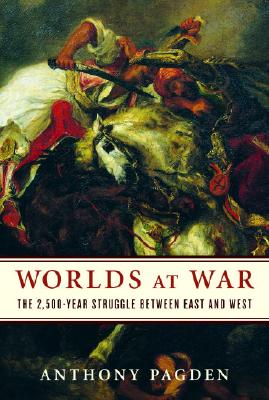
Worlds at War: The 2,500-Year Struggle Between East and West by Anthony Pagden

The House of Medici: Its Rise and Fall by Christopher Hibbert

What new books have you just picked up?

Summer Series 2010: Killing Rommel by Steven Pressfield

Sunday, October 3rd, 2010

Summer Series 2010: Reviewing the Books! continues……

Killing Rommel: A Novel by Steven Pressfield

As a rule, because of my academic  background and predisposition toward policy analysis,  I have a difficult time picking up a novel. Not because I dislike novels, but because with so many histories and “serious” policy books in my antilibrary demanding to be read, I feel guilty indulging myself in reading fiction.  Realizing that is mildly insane, I decided to shoot for a better balance in my reading this year between fiction and non-fiction and must report….that I have failed miserably. I’ve only read five novels so far in 10 months but one of the five that I read was Killing Rommel and I’m glad that I did!

I “met” the novelist Steven Pressfield online through the first iteration of his website, then a focus on the tribal aspects of the war in Afghanistan. We had some intriguing exchanges and I picked up his The War of Art, one of Steve’s few non-fiction works about becoming a professional writer ( or any creative professional) and defeating the internal psychological resistance that thwarts success and acheivement. I loved that book and read it straight through in one sitting, and later interviewed him about it. Knowing my interest in history and military affairs, Steve sent me a copy of his Killing Rommel and it sat in my antilibrary until this summer, where I read it during long stretches at poolside.

I found Killing Rommel to be a page turner.

Via a literary device, Killing Rommel is the story of  “Chap” – Major Richard Lawrence Chapman, DSO, MC. – and his mission as a member of “The Desert Rats”, The Long Range Desert Group of the British Army to find and kill the legendary commander of Afrika Korps, Field Marshal Erwin Johannes Eugen Rommel, “The Desert Fox”. In pursuit of his mission, “Chap” encounters an array of reverses, hazards and adventures in a manner of an ordinary, thoroughly decent, man rising above himself to master circumstances both physically heroic and morally agonizing, leaving the field with honor and humanity intact but free neither of doubt nor memory.

What makes “Chap” remarkable and identifiable as a character in his British ordinariness of an officer doing his duty to King and country, is the uncanny and unerring way Pressfield has reconstructed a British outlook specific to Chap’s time and class – that of the “respectable” upper middle class or younger sons of younger sons of gentry, for whom education and life was bounded by the traditions of the public school and military regiments to which family history was attached. It is a quality of “placedness” and sense of self that most Americans (other than scions of Andover and similar prep schools) cannot easily relate. Where you went was part of who you were and your whole outlook on life. Once established, Chap’s history consistently informs his actions and reactions as the plot progresses; Chap, in other words, “lived” an authentic life in Killing Rommel.


A second feature of Killing Rommel is Pressfield’s fidelity to historical realism. This is expressed both in his attention to details of military history and geographic setting and his willingness to grip war – even an unimpeachably “good” war as WWII – in all it’s moral ambiguity and unmediated violence on the human scale. It is disturbing to the reader that Rommel, the great enemy and objective of the mission, is an admirable man fighting for an evil cause; it is disturbing that dying Germans are not unrepentant Nazi beasts but are found to be men with families and lives, conscripts and volunteers, not unlike Chap and his comrades, who must persevere and fight for their lives but acknowledge these shades of gray.

Highly recommended.

A Brief Word From the MSM

Tuesday, September 28th, 2010

For reasons that are obscure to me, a staffer at CBS named Jen felt it was important that I share this embed of Lara Logan recounting the risks of reporting recently in Afghanistan. There’s also a camera guy named Ray who is a Vietnam veteran and a former Marine who is kind of an interesting character in his own right. Since a number of ZP readers are either there now, have been to or are going to Afghanistan soon or are Marines or are veterans of the war in Vietnam – this might possibly be of some interest to them.

And with that, here you go, Jen.

UPDATE:

Heh. This video is best viewed in iE and not Chrome or some other browser.

Visualizing Strategy

Saturday, September 25th, 2010

warstrategy2.jpg

Is it right? Horribly wrong? Missing variables?

Fire away in comments.

ADDENDUM:

Joseph Fouche offers up his graph of schools of strategy at The Committee of Public Safety. Note that unlike me, he has placed them in terms of “Influence…..Coercion…Violence”:

Dr. Chet Richards, in his turn, kindly drew my attention back to graph he created -if memory serves – around the time he wrote Neither Shall the Sword, but I am still trying to figure out how to convert the file to something I can post here. Until I do, go to slide 89 in the link below:
4GW and Grand Strategy


Switch to our mobile site