zenpundit.com » politics

Archive for the ‘politics’ Category

R2P Debate Rising ( Part I.)

Friday, February 7th, 2014

I thought I would call the attention of the readership to a debate that has been ricocheting around different social media platforms on R2P (Responsibility to Protect“). I have dealt with the topic several times in the past, related to the ideas of Anne-Marie Slaughter, but not much recently until Victor Allen, over at The Bridge, put up an enthusiastic post:

Strong State, Weak State: The New Sovereignty and the Responsibility to Protect

The Responsibility to Protect doctrine represents a leap forward in accountability for states and does not infringe upon their sovereignty, as states are no longer held to be completely self-contained entities with absolute power over their populations. Rather, there is a strictly defined corpus of actions that begin the R2P process?—?a process that has different levels of corrective action undertaken by the international community in order to persuade, cajole and finally coerce states into actively taking steps to prevent atrocities from occurring within their boundaries. That R2P does not violate sovereignty stems from the evolution of sovereignty from its Westphalian form in the mid 17th century to the “sovereignty as responsibility” concept advanced by Deng, et al. Modern sovereignty can no longer be held to give states carte blanche in their internal affairs regardless of the level of suffering going on within their borders. This does not diminish state agency for internal affairs, but rather holds them responsible and accountable for their action and inaction regarding the welfare of their populations…

Victor’s post deserves to be read in full.

I did not agree with Victor’s framing of the legal character of state sovereignty, to put it mildly, nor his normative assessment of R2P.  Mr. Allen also described R2P somewhat differently than I have seen from other advocates, but I was less concerned by that as the concept does not seem to be presented with consistency by the community of  R2P advocates and theorists. Having seen similar theoretical debates over the years about angels dancing on pins over 4GW, constructivism, EBO, Network-centric Warfare, OODA,  Clausewitz’s remarkable trinity,  nuclear deterrence, preemptive war, COIN,  neoconservatism, free market economics, the agrarian origin of capitalism in England, Marxist theory etc. I am not too worried if Victor’s interpretation in its specifics is not ideologically perfect. It is representative enough.

I responded to Allen’s post somewhat crankily and with too much brevity:

R2P: Asserting Theory is not = Law 

….As far as premises go, the first point is highly debatable; the second is formally disputed by *many* states, including Russia and China, great powers which are permanent members of the UN Security Council; and the third bears no relation to whether a military intervention is a violation of sovereignty or not. I am not a self-contained entity either, that does not mean you get to forcibly enter my house.

That R2P does not violate sovereignty stems from the evolution of sovereignty from its Westphalian form in the mid 17th century to the “sovereignty as responsibility” concept advanced by Deng, et al. Modern sovereignty can no longer be held to give states carte blanche in their internal affairs regardless of the level of suffering going on within their borders.

Academic theorists do not have the authority to override sovereign powers (!) constituted as legitimized, recognized, states and write their theories into international law – as if an international covenant like the Geneva Convention had just been contracted. Even persuading red haired activist cronies of the American president and State Department bureaucrats to recite your arguments at White House press conferences does not make them “international law” either – it makes them “policy” – and that only of a particular administration. 

This riff  set off something of a reaction on Facebook in private groups and on Twitter as Mr. Allen, who I am sure is a fine gent, has a large set of common colleagues with me, some of whom are Boydians and all of whom are sharp strategic thinkers. Consequently,  Victor’s post(s) as well as mine and a later follow up by a “Leonidas Musashi” ( great nom de guerre)  made it into a high caliber defense forum as well as other sites online. My spleen-venting provoked the following rebuttal at The Bridge:

R2P: A Spectrum of Responses 

….Safranski’s final point about sovereignty as carte blanche seems to be a stealth argument for the principles of R2P:

States always could and did take military action in self-defense when disorders in neighboring states threatened their security or spilled over their border outright.R2P seeks to minimize harm caused by disorder through early action taken prior to conflicts spilling over borders that can potentially cause larger conflagrations, but more importantly, it recognizes that atrocities can happen entirely within the confines of a state, and that the international community will not allow them to continue unchecked. This recognition is easily seen in the rhetoric and discussions regarding rebels in both Libya and Syria. Libya is admittedly a flawed example of the use of R2P, with second-order effects seen in the Russian and Chinese opposition to UN-sanctioned stabilization operations in Syria, but that concern for the population first and the state second were common facets to both bear mentioning in the debate and illustrate the shifting nature of intervention and sovereignty. This shift is exemplified in the contrast between discussions in the UN General Assembly regarding Kosovo/East Timor and Syria: “most of the 118 states that mentioned Syria at the UN General Assembly in 2012 expressed concern about the population, up from less than a third who invoked Kosovo and East Timor in 1999… It is clear that a fundamental shift has taken place regarding humanitarian intervention and that more and more states embrace the broad values expressed by R2P.” (“Democracy, Human Rights, and the Emerging Global Order: Workshop Summary,” Brookings Institution, 2012)

Again, I caution about reading posts in full.

Here in this rebuttal Victor doubled down, which I admire because that is interesting, but with which I agree with even less because he seems to be far removed from how the world really works in terms of international relations, not merely in practice, but also in theory as well.  That said, his response deserves a much more serious reply than my first post evinced. I have been fiddling with one ( I seem to be moving slowly these days) but another voice – “Leonidas Musashi” – has entered the debate at The Bridge with a sharp retort against Allen’s conception of R2P:

Responsibility to Protect: Rhetoric and Reality 

….My main observation, however, is that the discussion thus far has been focused more on a “right” to protect than a “responsibility” to do so. The arguments indicate that a state has a responsibility to protect its people but takes for granted that third parties somehow inherit this responsibility when the state cannot fulfill it. There is a missing explanation here. The need to justify such efforts may seem callous, but a nation’s highest moral order is to serve its own citizens first. Such an explanation would certainly be a legitimate demand for a mother that loses a son who volunteered to defend his nation, or for a government entrusted by its people to use their resources to their own benefit. While it is often stated that the international community “should” intervene, explanation of where this imperative comes from is not addressed other than by vague references to modern states being interconnected. But this implies, as previously stated, a right based on the self-interest of states, firmly grounded in realistic security concerns, rather than any inherent humanitarian responsibility to intervene. Instability and potential spillover may very well make it within a nation’s vital interests to intervene in another country and pursuing humanitarian and human rights goals within the borders of another state may well be in a nation’s secondary interests. But if this is the case, the calculus of the political leadership will determine if pursuing this goal is worth the cost/potential costs – as has been done in such cases as North Korea, Iran, Zimbabwe, Tibet and Syria. In either case, the decision is determined by what is in the nation’s interests, a reality that makes R2P not a mandate, but a merely a post hoc justification for interventions that do occur.

Leonidas makes many good points, in my view, but the intellectual fungibility of R2P as a concept, its elastic and ever evolving capacity to serve as a pretext for any situation at hand is the most important, because it is potentially most destabilizing and threatening to other great powers with which the United States has to share the globe. In short, with great responsibilities come greater costs.

In part II. I will lay out a more methodical case on the intellectual phantom that is R2P.

An Absurd Column by Walter Pincus

Thursday, December 26th, 2013

[by Mark Safranski, a.k.a. “zen“]

Walter Pincus, taking notes for the embattled bureaucrats of the creepy-state here:

‘Front-Page Rule’ is unprecedented in U.S. intelligence community 

….“Accountability and secrecy” were two watchwords a former senior intelligence official said guided operations during his 40-year career, not whether the public would approve of everything he was doing.

However, that’s not what President Obama’s Review Group on Intelligence and Communications Technologies said last week after its study of intelligence gathering in the wake of disclosures generated by former National Security Agency contractor Edward Snowden’s leaking of tens of thousands of previously secret NSA documents.

The president’s five-member panel called for reinstituting what it called the “Front-Page Rule,” which it described as an “informal precept, long employed by the leaders of U.S. administration.” It said such activities should not be undertaken if the public couldn’t support them if exposed.

In some 40 years of covering intelligence, I have never heard of such a rule, nor have several former senior intelligence officials with whom I have talked.

….Today, within the ranks of the intelligence community, there is concern that, in the face of the political uproar growing out of the Snowden disclosures, Obama might be backing away from the NSA after initially supporting the agency. “The White House may be looking to escape responsibility,” the former official said, adding that recently not enough public support has been given to Director of National Intelligence James R. Clapper Jr. and NSA Director Gen. Keith B. Alexander, who are out front defending the programs.

There are other recommendations and statements put forward by the president’s review board that run contrary to past and present operations.

For example, the panel said a collection effort should not be initiated “if a foreign government’s likely negative reaction” to it being revealed “would outweigh the value of the information likely to be obtained.” That’s a judgment call that every CIA officer, from junior to senior, routinely makes.

….The president’s review board writes that “if we are too aggressive in our surveillance policies under section 702 [a program that permits collection of intelligence from foreign targets associated with terrorists], we might trigger serious economic repercussions for American businesses.”

It is true that the Church and Pike hearings left a generation of IC personnel feeling burned and very risk averse toward covert operations and distrustful of politicians as a career philosophy. We are seeing that longstanding IC bureaucratic preference for risk aversion here in the veiled threat by senior insiders that the IC will have to sit on their hands vis-a-vis foreigners unless the NSA is greenlighted to spy on Americans to an unlimited degree.

What utter rubbish.

The Church and Pike hearings were primarily about the so-called CIA “crown jewels” – clandestine operations, actual and proposed, against foreign targets that were hostile to the United States and usually sympathetic to the Soviet Union when not outright Communists. Some of these operations were ill-considered and harebrained while others were well conceived if not executed, but the driving force behind the hearings was that many prominent committee members were very liberal to leftist antiwar Democrats, some had monumental egos or presidential ambitions and many strongly opposed anti-communist and interventionist foreign policies for ideological reasons.

It is also true that this 1970’s history has little or nothing to do with the NSA becoming an unconstitutional organ of mass domestic surveillance. Apples and oranges. Letting the NSA control all our private data data does not mean the CIA then runs a more robust HUMINT clandestine program against the Iranians, al Qaida, the Chinese or Pakistanis. Likely it will produce the opposite effect as relying systemically more and more on SIGINT is a dandy bureaucratic excuse to approve fewer and fewer covert operations or risky espionage targets.

Americans, outside State Department personnel who have to deal with the resultant headaches, could really care less if the NSA bugs the German chancellor’s cell phone or the ex-terrorist Marxist president of Brazil. To the extent they think of it at all, most would probably say “Hell, yeah!” because that is exactly what a foreign intelligence service is for. If Americans heard the NSA or CIA conducted some surveillance that resulted in Ayman al-Zawahiri being killed in a horrible way it is likely to meet with high approval ratings.
.
The idea that Americans as a whole, outside of the usual anti-American activist-protestor crowd, dislike successful covert ops against our enemies is a proposition for which there is scant evidence. The so-called “Frontpage rule” being touted by Pincus is complete B.S. intended to blur the lines of what institutional missions are really being discussed.
.
If senior managers of the NSA and CIA would rather investigate American citizens on a national scale in secret then they are in the wrong line of work and should resign or retire so that people more motivated to harry our enemies can take their places. Mass surveillance is the job of a secret police, not a foreign intelligence or even a counterintelligence service. In some countries a secret police agency is a normal and legal part of the government structure. The United States is not one of those nations and the “big boy rules” for IC operations overseas against specific, dangerous, hostile foreign targets cannot apply inside the United States against the broad mass of citizens while having the US remain a constitutional democracy anchored in the rule of law.
.
You can have one or the other but not both.

Review: Mussolini’s Italy: Life under the Fascist Dictatorship 1915-1945 by R.J.B. Bosworth

Wednesday, December 11th, 2013

[by Mark Safranski, a.k.a “zen“]

Mussolini’s Italy: Life Under the Fascist Dictatorship, 1915-1945 by R.J.B. Bosworth 

This book was Fascist Italy not of the newsreels of frenzied Roman crowds cheering bombastic speeches by Mussolini but how fascism’s imperial grandiosity were an ill-fitting facade for an Italy that underneath remained substantially an impoverished, traditionalist, parochial society of peasant squabbles and regional jealousies. Bosworth, one of the world’s top experts on the period takes a granular look at Italy under Fascism and the reader comes away amazed at how Mussolini fooled the great powers into taking his regime seriously for as long as they did.

At 692 pages, including 88 pages of endnotes, Mussolini’s Italy lays out in exhaustive detail how ordinary Italians carried on as best they could under the dictatorship, with the traditional reliance on corruption and the influence of kin and “men of respect” to undermine and ameliorate “totalitarian” rule. Repeatedly the regime sanctions dissidents (usually politically naive -or simply drunken – tradesmen or villagers) to “confino”, internal exile to faraway unpleasant regions only to have the intervention of some Fascist bigwig result in a swift amnesty.The brutality of the regime’s informal sanctions – the beatings, castor oil, kidnappings and murders – carried out by roving Fascist squadrists or at the orders of a local Fascist Ras (boss) like Cremona’s thuggish Roberto Farinacci, were by contrast, real enough.

Outside of the violent hooliganism of blackshirt squadrism there at times seems little to have held Fascism together as a political movement without Mussolini’s tin cult of personality, there was seldom agreement among fascists about such fundamental political issues as the role of the state vs. the party, capitalism vs. autarky, the sanctity of private property, the need for unions, whether Fascism should be antisemitic or the role of the Catholic Church in Italian life? An incoherence that left Mussolini, who was never much of a stickler for consistency, as supreme arbiter. A role he kept secure by arbitrarily moving his preening, intriguing, womanizing and feuding cabal of uniformed henchmen and party apparatchiks from job to job all the way into his bitter gotterdammerung of the Salo Republic, where Mussolini was reduced to being the puppet gauleiter of Lombardy and eventually patheitic victim of popular revenge.

Bosworth does a scholarly take-down of the original Fascist regime, demonstrating the deep propensity for cultural continuity in any society in the long term, even in one under the heavy hand of self-proclaimed revolutionaries and Roman tyrants.

Madame Feinstein and the NSA

Tuesday, October 29th, 2013

Senator Diane Feinstein (D-Ca.) is the Chair of the Senate Intelligence Committee. She and her closest aides are privy to some of the nation’s most closely guarded secrets above and beyond that of an ordinary member of the intelligence committee. When a highly sensitive covert operation requiring a presidential “finding” be reported to Congress hers is one of the very few offices in the loop and one of the first to be briefed.

Senator Feinstein is also suddenly shocked that the NSA, which was set up to spy on foreign governments and has been briefing her for years – is allegedly spying on foreign governments:

“It is abundantly clear that a total review of all intelligence programs is necessary so that members of the Senate Intelligence Committee are fully informed as to what is actually being carried out by the intelligence community,” Feinstein said in a statement to reporters.

“Unlike NSA’s collection of phone records under a court order, it is clear to me that certain surveillance activities have been in effect for more than a decade and that the Senate Intelligence Committee was not satisfactorily informed.

With respect to NSA collection of intelligence on leaders of US allies – including France, Spain, Mexico and Germany – let me state unequivocally: I am totally opposed.

Lest you be forgiven for thinking that Senator Feinstein was chairing an intelligence committee in some other universe than the one in which we live, she recently had this to say about NSA domestic mass surveillance of ordinary Americans (which the NSA is not supposed to be doing at all except in very narrow circumstances):

The NSA call-records program is legal and subject to extensive congressional and judicial oversight. Above all, the program has been effective in helping to prevent terrorist plots against the U.S. and our allies. Congress should adopt reforms to improve transparency and privacy protections, but I believe the program should continue.

The call-records program is not surveillance. It does not collect the content of any communication, nor do the records include names or locations. The NSA only collects the type of information found on a telephone bill: phone numbers of calls placed and received, the time of the calls and duration. The Supreme Court has held this “metadata” is not protected under the Fourth Amendment.

Set aside the cutesy and deliberately misleading part about the underlying metadata case which was decided in a radically different context than NSA mass surveillance – these two statements together effectively mean that Senator Feinstein is ok with the NSA functioning unfettered as the world’s most powerful secret police agency but not as an agency tasked with acquiring foreign intelligence. Doing things, like, you know, espionage to discover the real views of other world leaders….

WTF?

Now fairness admits that there are other possibilities for Chairman Feinstein’s public statements:

  • Senator Feinstein is giving “cover” for allied leaders to save face with their domestic critics up in arms about US spying by throwing them a bone to help them calm their voters and media.
  • Senator Feinstein is playing to the Left wing of her own Party and in the California electorate
  • Senator Feinstein is sticking a well-deserved knife in the backs of a few people high up in the NSA and the White House for previous slights directed at her personally and her committee
  • Senator Feinstein sees herself presiding in nationally televised Church Hearings II, starring the heroic Diane Feinstein
  • Senator Feinstein is a loose cannon

Your guess is as good as mine, but the idea of America getting out of the foreign intel business or taking German crocodile tears at face value is harebrained.

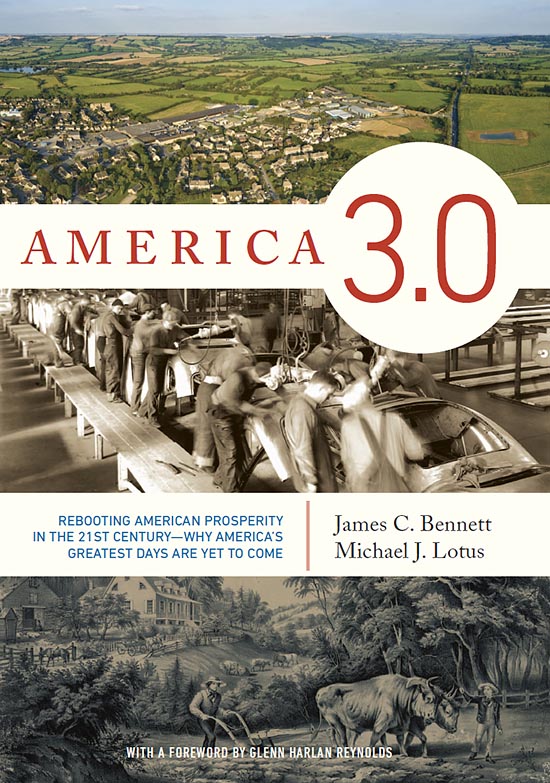
Ronfeldt’s In-Depth Review of America 3.0

Monday, September 23rd, 2013


 David Ronfeldt, RAND strategist and theorist has done a deep two-part  review of America 3.0 over at his Visions from Two Theories blog. Ronfeldt has been spending the last few years developing his TIMN analytic framework (Tribes, Institutions [hierarchical], Markets and Networks) which you can get a taste from here  and here or a full reading with this RAND paper.

David regards the familial structure thesis put forward by James Bennett and Michael Lotus in America 3.0 as “captivating”  and “compelling” for  “illuminating the importance of the nuclear family for America’s evolution in ways that, in my view, help validate and reinforce TIMN”. Both reviews are detailed and should be read in their entirety, but I will have some excerpts below:

America 3.0 illuminates significance of nuclear families — in line with TIMN (Part 1 of 2) 

….Bennett and Lotus show at length (Chapter 2, pp. 29-45) that the nuclear family explains a lot about our distinctive culture and society:

“It has caused Americans to have a uniquely strong concept of each person as an individual self, with an identity that is not bound by family or tribal or social ties. … Our distinctive type [of] American nuclear family has made us what we are.” (p. 29)And “what we are” as a result is individualistic, liberty-loving, nonegalitarian (without being inegalitarian), competitive, enterprising, mobile, and voluntaristic. In addition, Americans tend to have middle-class values, an instrumental view of government, and a preference for suburban lifestyles. 

As the authors carefully note, these are generally positive traits, but they have both bright and dark sides, noticeable for example in the ways they make America a “high-risk, high-return culture” (p. 38) — much to the bane of some individuals. The traits also interact in interesting ways, such that Americans tend to be loners as individuals and families, but also joiners “who form an incomprehensibly dense network of voluntary associations” — much to the benefit of civil society (p. 39). 

In sum, the American-style nuclear family is the major cause of “American exceptionalism” — the basis of our freedom and prosperity, our “amazing powers of assimilation” (p. 53), and our unique institutions:

“It was the deepest basis for the development of freedom and prosperity in England, and then in America. Further, the underlying Anglo-American family type was the foundation for all of the institutions, laws, and cultural practices that gave rise to our freedom and prosperity over the centuries.” (p. 52)The authors go on to show this for America 1.0 and 2.0 in detail. They also reiterate that Americans have long taken the nuclear family for granted. Yet, very different marriage and family practices are the norm in most societies around the world. And the difference is profoundly significant for the kinds of cultural, social, economic, and political evolution that ensue. Indeed, the pull of the nuclear model in the American context is so strong that it has a liberating effect on immigrants who come from societies that are organized around extended families and clans (p. 55) — an important point, since America is a land of immigrants from all over, not just from Anglo-Saxon nuclear-family cultures.

….As for foreign policy, the authors commend “an emerging phenomenon we call “Network Commonwealth,” which is an alignment of nations … who share common ties that may include language, culture and common legal systems.” (p. 260) Above all, they’d like to see the “Anglosphere” take shape. And as the world coalesces into various “global networks of affinity” engaged in shifting coalitions (p. 265), America 3.0 would cease emphasizing democracy-promotion abroad, and “reorient its national strategy to a primary emphasis on maintaining the freedom of the global commons of air, sea, and space.” (p. 263) [UPDATE: For more about the Network Commonwealth and Anglosphere concepts, see Bennett’s 2007 paper here.]

Read the whole thing here.

America 3.0 illuminates significance of nuclear families — in line with TIMN (Part 2 of 2)  

….Overlaps with TIMN themes and propositions

Part 1 discussed America 3.0’s key overlap with TIMN: the prevalence and significance of the nuclear family in the American case. This leads to questions about family matters elsewhere. Furthermore, it should be pointed out that there is more to TIMN’s tribal form than the nature of the family. I also spotted several additional thematic overlaps between America 3.0 and TIMN, and I want to highlight those as well. Thus, in outline form, this post addresses:

  • Seeking a fuller understanding of family matters beyond the American case.
  • Gaining a fuller understanding of the tribal/T form.
  • Anticipating the rise of the network/+N form.
  • Recognizing that every form has bright and dark sides.
  • Recognizing the importance of separation among the forms/realms.
  • Recognizing that balance among them is important too.
  • Cautioning against the exportability of the American model.

After these points, the post ends by summarily noting that America 3.0 is more triformist than quadriformist in conception — but a worthy kind of triformist plus, well worth reading.

My discussion emphasizes the T and +N forms. Bennett and Lotus also have lots to say about +I and +M matters — government and business — and I’ll squeeze in a few remarks along the way. But this post mostly skips +I and +M matters. For I’m more interested in how America 3.0 focuses on T (quite sharply) and +N (too diffusely). 

By the way, America 3.0 contains lots of interesting observations that I do not discuss — e.g., that treating land as a commodity was a feature of nuclear-family society (p. 105), and so was creating trusts (p. 112). Readers are advised to harvest the book’s contents for themselves.

….Caution about the exportability of the American model: TIMN sharpens — at least it is supposed to sharpen — our understanding that how societies work depends on how they use four cardinal forms of organization. This simplification leaves room for great complexity, for it is open to great variation in how those forms may be applied in particular societies. Analysts, strategists, and policymakers should be careful about assuming that what works in one society can be made to work in another. 

….In retrospect it seems I pulled my punch there. I left out what might/should have come next: TIMN-based counsel to be wary about assuming that the American model, especially its liberal democracy, can be exported into dramatically different cultures. I recall thinking that at the time; but I was also trying to shape a study of just the tribal form, without getting into more sweeping matters. So I must have pulled that punch, and I can’t find anywhere else I used it. Even so, my view of TIMN is that it does indeed caution against presuming that the American model is exportable, or that foreign societies can be forced into becoming liberal democracies of their own design.

Meanwhile, America 3.0 clearly insists that Americans should be wary of trying to export the American model of democracy. Since so much about the American model depends on the nature of the nuclear family, policies that work well in the United States may not work well in other societies with different cultures — and vice-versa. Accordingly, the authors warn,

“American politicians are likely to be wrong when they tell us that we can successfully export democracy, or make other countries look and act more like the United States.” (p. 24)

“A foreign-policy based primarily on “democracy-promotion” and “nation-building” is one that will fail more times than not, … .” (p. 254)TIMN is not a framework about foreign policy. But as a framework about social evolution, it may have foreign-policy implications that overlap with those of America 3.0. In my nascent view (notably herehere, and here), the two winningest systems of the last half-century or so are liberal democracy and patrimonial corporatism. The former is prominent among the more-advanced societies, the latter among the less-developed (e.g., see here). As Bennett and Lotus point out, liberal democracy is most suitable where nuclear families hold sway. And as I’ve pointed out, patrimonial corporatism is more attractive in societies where clannish tribalism holds sway. 

Read the rest here.

This discussion about America 3.0 and TIMN seems particularly appropriate in light of the need to process, digest and distill the lessons of more than a decade of COIN and counter-terrorism warfare in Iraq, Afghanistan, Pakistan, Yemen and – increasingly- Africa. One of the more difficult aspects of COIN operations has been for American military and diplomatic to decipher the layered relationships and interplay of family honor, tribe, political institution, emerging market and networks in a nation shattered by dictatorship and war like Iraq or to import modern institutions and  a democratic political system in Afghanistan where they had never existed.

Many of these aspects were opaque and were understood only through hard-won experience (frequently lost with new unit rotation) or still remain elusive to Americans even after ten years of fighting among alien cultures which were also permeated by the sectarian nuances and conflicts of Islam. A religion to which relatively few Americans adhere or know sufficiently about, yet is a critical psychological driver for many of our adversaries as well as our allies.

Arguably, the eye-opening response of people to America 3.0 indicates we do not even understand ourselves, much less others


Switch to our mobile site