zenpundit.com » warriors

Archive for the ‘warriors’ Category

ISIS and the Crisis in American Statecraft

Tuesday, December 30th, 2014

[by Mark Safranski, a.k.a. “zen“]

A Facebook friend with an astute comment pointed me toward this Wall Street Journal article by Joe Rago on the mission of General John Allen, USMC  as “Special Presidential Envoy for the Global Coalition to Counter ISIL”. What is a “Special Presidential Envoy” ?

In diplomatic parlance, a special envoy is an official with full powers (a “plenipotentiary”) to conduct negotiations and conclude agreements, but without the protocol rank of ambassador and the ceremonial duties and customary courtesies. A special envoy could get right down to business without wasting time and were often technical experts or seasoned diplomatic “old hands” whom the foreign interlocuter could trust, or at least respect. These were once common appointments but today less so. A “Special Presidential Envoy” is typically something grander – in theory, a trusted fixer or VIP to act as superambassador , a deal-maker or reader of riot acts on behalf of the POTUS. Think FDR sending Harry Hopkins to Stalin or Nixon sending Kissinger secretly to Mao; more recent and less dramatic examples would be General Anthony Zinni, USMC and former Senate Majority Leader George Mitchell.  

In practice, a presidential special envoy could also be much less, the foreign policy equivalent of a national commission in domestic politics; a place to park thorny, no-win, political headaches the POTUS wants to ignore by creating the illusion of action and get them off the front pages. The position is really whatever the President wishes to make of it and how much power and autonomy he cares to delegate and what, if anything, he wishes the Special Envoy to achieve. Finally, these appointments are also a sign the President does not have much confidence or trust in the bureaucracy of the State Department or DoD, or their respective Secretaries, to carry out the administration’s policy. I wager that this is one of the reasons for General Allen’s appointment.

This means that General Allen is more or less stuck with whatever brief he was given, to color within the lines and make the best uses of any carrots or sticks he was allotted ( in this micromanaging administration, probably very little of either). Why was he chosen? Most likely because the United States sending a warfighting Marine general like Allen ( or a high CIA official) will always concentrate the minds of foreigners, particularly in a region where the US has launched three major wars in a quarter century. If not Allen, it would have been someone similar with similar results because the policy and civilian officials to whom they would report would remain the same.

So if things with ISIS and Iraq/Syria  are going poorly – and my take from the article is that they are – the onus is on a pay grade much higher than General Allen’s.

I will comment on a few sections of the interview, but I suggest reading the article in full:

Inside the War Against Islamic State 

Those calamities were interrupted, and now the first beginnings of a comeback may be emerging against the disorder. Among the architects of the progress so far is John Allen, a four-star Marine Corps general who came out of retirement to lead the global campaign against what he calls “one of the darkest forces that any country has ever had to deal with.”

ISIS are definitely an bunch of evil bastards, and letting them take root unmolested is probably a bad idea. That said, they are not ten feet tall. Does anyone imagine ISIS can beat in a stand-up fight, say, the Iranian Army or the Egyptian Army, much less the IDF or (if we dropped the goofy ROE and micromanaging of company and battalion commanders) the USMC? I don’t. And if we really want Allen as an “architect” , make Allen Combatant Commander of CENTCOM.

Gen. Allen is President Obama ’s “special envoy” to the more than 60 nations and groups that have joined a coalition to defeat Islamic State, and there is now reason for optimism, even if not “wild-eyed optimism,” he said in an interview this month in his austere offices somewhere in the corridors of the State Department

Well, in DC where proximity to power is power, sticking General Allen in some broom closet at State instead of, say, in the White House, in the EOB or at least an office near the Secretary of State is how State Department mandarins and the White House staff signal to foreign partners that the Presidential Special Envoy should not be taken too seriously. It’s an intentional slight to General Allen. Not a good sign.

At the Brussels conference, the 60 international partners dedicated themselves to the defeat of Islamic State—also known as ISIS or ISIL, though Gen. Allen prefers the loose Arabic vernacular, Daesh. They formalized a strategy around five common purposes—the military campaign, disrupting the flow of foreign fighters, counterfinance, humanitarian relief and ideological delegitimization.

The fact that there are sixty (!) “partners” (whatever the hell that means) and ISIS is still running slave markets and beheading children denotes an incredible lack of seriousness here when you consider we beat Nazi Germany, Imperial Japan and Fascist Italy into utter submission in the largest war in the history of the world with barely a third that number.  The best that can be said here is that Allen, in trying to be a herder of cats, got them to graciously agree on letting the US set a reasonable list of open-ended operations and policy priorities.

Gen. Allen cautions that there is hard fighting ahead and victory is difficult to define….

I think my head is going to explode. I’m sure General Allen’s head is too because this means that President Obama and his chief advisers are refusing to define victory by setting a coherent policy and consequently, few of our sixty partners are anxious to do much fighting against ISIS. When you don’t know what victory is and won’t fight, then victory is not hard to define, its impossible to achieve.

At least we are not sending large numbers of troops to fight without defining victory. That would be worse.

Gen. Allen’s assignment is diplomatic; “I just happen to be a general,” he says. He acts as strategist, broker, mediator, fixer and deal-maker across the large and often fractious coalition, managing relationships and organizing the multi-front campaign. “As you can imagine,” he says, “it’s like three-dimensional chess sometimes.”

Or its a sign that our civilian leaders and the bureaucracies they manage are dysfunctional, cynical and incompetent at foreign policy and strategy. But perhaps General Allen will pull off a miracle without armies, authorities or resources.

Unlike its antecedent al Qaeda in Iraq, Islamic State is something new, “a truly unparalleled threat to the region that we have not seen before.” Al Qaeda in Iraq “did not have the organizational depth, they didn’t have the cohesion that Daesh has exhibited in so many places.” The group has seized territory, dominated population centers and become self-financing—“they’re even talking about generating their own currency.”

But the major difference is that “we’re not just fighting a force, you know, we’re fighting an idea,” Gen. Allen says. Islamic State has created an “image that it is not just an extremist organization, not just a violent terrorist organization, but an image that it is an Islamic proto-state, in essence, the Islamic caliphate.” It is an “image of invincibility and image of an advocate on behalf of the faith of Islam.”

This ideology has proved to be a powerful recruiting engine, especially internationally. About 18,000 foreign nationals have traveled to fight in Iraq or the Syria war, some of them Uighurs or Chechens but many from Western countries like the U.K., Belgium, Australia and the U.S. About 10,000 have joined Islamic State, Gen. Allen says.

“Often these guys have got no military qualifications whatsoever,” he continues. “They just came to the battlefield to be part of something that they found attractive or interesting. So they’re most often the suicide bombers. They are the ones who have undertaken the most horrendous depredations against the local populations. They don’t come out of the Arab world. . . . They don’t have an association with a local population. So doing what people have done to those populations is easier for a foreign fighter.”

Except for the “never seen before” part – we have in fact seen this phenomena in the Islamic world many times before, starting with the Khawarijites, of whom ISIS are just the most recent iteration – this is all largely true.

ISIS, for all its foul brigandage, religious mummery and crypto-Mahdist nonsense is a competent adversary that understands how to connect  in strategy its military operations on the ground with symbolic actions at the moral level of war. Fighting at the moral level of war does not always imply (though it often does) that your side is morally good. Sadly, terror and atrocities under some circumstances can be morally compelling to onlookers and not merely repellent. In a twisted way, there’s a “burning the boats” effect in openly and gleefully committing horrific crimes that will unify and reinforce your own side while daunting your enemies and impressing onlookers with your strength and ruthlessness. Men flocked to Spain to fight for Fascism and Communism. A remarkable 60% of the Nazi Waffen-SS were foreigners, most of whom were volunteers. Ample numbers of Western left-wing intellectuals were abject apologists not only for Stalin and Mao but the Khmer Rouge during the height of its genocide. ISIS atrocities and horror are likewise political crack for certain kinds of minds.

The problem is that none of this should be a surprise to American leaders, if they took their responsibilities seriously.

William Lind and Martin van Creveld were writing about state decline and fourth generation warfare twenty five years ago. We have debated 4Gw, hybrid war, complex war, LIC, terrorism, insurgency, failed states, criminal insurgency and terms more obscure in earnest for over a decade and have wrestled with irregular warfare since John F. Kennedy was president. Yet the USG is no closer to effective policy solutions for irregular threats in 2014 than we were in 1964.

A more hopeful sign is that the new Iraqi government is more stable and multiconfessional after the autocratic sectarian rule of Prime Minister Nouri al-Maliki. His replacement, Haider al-Abadi, has been “very clear that the future of Iraq is for all Iraqis,” Sunni, Shiite and Kurd. He has restored relations with Middle Eastern neighbors and believes in the “devolution of power” across Iraq’s regions, Gen. Allen says. “Maliki believed in the centralization of power.”

So did we. Maliki and Hamid Karzai were originally our creatures. There was at least a bad tradition of centralization in Iraq, but we imposed it in Afghanistan ex nihilo because it suited our bureaucratic convenience and, to be frank, the big government technocratic political beliefs of the kinds of people who become foreign service officers, national security wonks, military officers and NGO workers. Unfortunately, centralization didn’t much suit the Afghans.

Critics of the Obama administration’s Islamic State response argue that the campaign has been too slow and improvisational. In particular, they argue that there is one Iraqi-Syrian theater and thus that Islamic State cannot be contained or defeated in Iraq alone. Without a coherent answer to the Bashar Assad regime, the contagion from this terror haven will continue to spill over.

Gen. Allen argues that the rebels cannot remove Assad from power, and coalition members are “broadly in agreement that Syria cannot be solved by military means. . . . The only rational way to do this is a political outcome, the process of which should be developed through a political-diplomatic track. And at the end of that process, as far as the U.S. is concerned, there is no Bashar al-Assad, he is gone.”

Except without brute force or a willingness to make any significant concessions to the states that back the Assad regime this will never happen. What possible incentive would Assad have to cooperate in his own political (followed by physical) demise?  Our Washington insiders believe that you can refuse to both bargain or fight but still get your way because most of them are originally lawyers and MBAs who are used to prevailing at home by manipulation, deception, secret back room deals and rigged procedures. That works less well in the wider world which rests, under a thin veneer of international law, on the dynamic of Hobbesian political violence.

As ISIS has demonstrated, I might add.

The war against Islamic State will go on long after he returns to private life, Gen. Allen predicts. “We can attack Daesh kinetically, we can constrain it financially, we can solve the human suffering associated with the refugees, but as long as the idea of Daesh remains intact, they have yet to be defeated,” he says. The “conflict-termination aspect of the strategy,” as he puts it, is to “delegitimize Daesh, expose it for what it really is.”

This specific campaign, against this specific enemy, he continues, belongs to a larger intellectual, religious and political movement, what he describes as “the rescue of Islam.” He explains that “I understand the challenges that the Arabs face now in trying to deal with Daesh as an entity, as a clear threat to their states and to their people, but also the threat that Daesh is to their faith.”

While Iraqi and Iranian Shia have ample existentiall motive to fight ISIS. Sunni Muslims find ISIS brutality pretty tolerable, so long as it is far away from them personally and furthermore ISIS religious-theological lunacy is not terribly far removed from the extreme Salafi-Wahhabi version preached and globally proselytized by our good friends, the House of Saud – or exported violently by our other good friends, the Pakistani Army.  Or at least Sunni Muslims are not bothered enough yet by ISIS to pick up arms and fight.

General Allen is doing his best at a herculean task, but American statecraft is broken and seduced by a political culture vested in magical thinking.

Warriors with and without Wagner

Thursday, December 18th, 2014

[ by Charles Cameron — pursuant to my continuing interest in haka and other arts of intimidation ]
.

Air Cav:

Aztec:

**

Just so you know, here’s a close-up of a jade Death Whistle (click image for more video):

close up of  a jade death whistle

Hat tip to Bryan Alexander of Infocult: Uncanny Incormatics

December 1944

Wednesday, December 17th, 2014

[by Mark Safranski, a.k.a “zen‘]

On 16 December, 1944, after two prior delays, Adolf Hitler launched his last supreme gamble, Operation Autumn Mist, throwing 200,000 Wehrmacht and Waffen-SS soldiers and 600 tanks into the American front line at the Ardennes, catching the Allies completely by surprise. The 101st Airborne Division, commanded by Brigadier General Anthony McAuliffe was surrounded at Bastogne. This led to the legendary exchange between McAuliffe and the local German commander, General of Panzers, Heinrich von Luttwitz:


To the U.S.A. Commander of the encircled town of Bastogne.

The fortune of war is changing. This time the U.S.A. forces in and near Bastogne have been encircled by strong German armored units. More German armored units have crossed the river Our near Ortheuville, have taken Marche and reached St. Hubert by passing through Hompre-Sibret-Tillet. Libramont is in German hands.

There is only one possibility to save the encircled U.S.A. troops from total annihilation: that is the honorable surrender of the encircled town. In order to think it over a term of two hours will be granted beginning with the presentation of this note.

If this proposal should be rejected one German Artillery Corps and six heavy A. A. Battalions are ready to annihilate the U.S.A. troops in and near Bastogne. The order for firing will be given immediately after this two hours term.

All the serious civilian losses caused by this artillery fire would not correspond with the well-known American humanity.

The German Commander.

To which McAuliffe responded:

To the German Commander.

NUTS!

The American Commander

Thus carving a place into history  for himself and the now storied 101st Division.

When I was at Arlington National Cemetery this fall, I watched a bus of honor flight veterans from WWII disembark at the Tomb.  Many of the veterans were frail, even fragile and took the tour in wheelchairs; but others were surprisingly spry and were pushing their comrades along, cheerfully greeting children and shaking hands with other visitors and veterans of other wars much younger than themselves. Most were clad in caps or colorful jackets emblazoned with details of their service and a few wore their medals. For many of these veterans, the trip was undoubtedly a final pilgrimage.

It is common to refer to the men who fought in WWII as “the Greatest Generation”. It is an almost universal expression, but because we forget the sheer enormity of the stakes involved, the sacrifices in blood like a river and the privation and hardship faced by ordinary GI’s, we seldom pause to recall how true that phrase really is.

The 70th anniversary of the Battle of the Bulge is an appropriate time to remember.


Grothendieck’s mathematics and Child Born of Water

Saturday, December 13th, 2014

[ by Charles Cameron — two approaches to mathematics, two types of heroism, and their respective complementarities ]
.

I wish to propose a clear analogy between the mathematician Grothendieck‘s two styles of approach to a problem in mathematics, and the Navajo Twin Gods, Monster-Slayer and Child-Born-of-Water.

**

Twins

**

Steve Landsburg‘s post, The Generalist, compares two approaches to mathematics, as practiced by two eminent mathematicians:

If there was a nut to be opened, Grothendieck suggested, Serre would find just the right spot to insert a chisel, he’d strike hard and deftly, and if necessary, he’d repeat the process until the nut cracked open. Grothendieck, by contrast, preferred to immerse the nut in the ocean and let time pass. “The shell becomes more flexible through weeks and months — when the time is ripe, hand pressure is enough.”

**

In the paras leading up to this one, Landsburg gives us the insight that these two approaches can be generalized as “zooming in” and “zooming out”:

Imagine a clockmaker, who somehow has been oblivious all his life to many of the simple rules of physics. One day he accidentally drops a clock, which, to his surprise, falls to the ground. Curious, he tries it again—this time on purpose. He drops another clock. It falls to the ground. And another.

Well, this is a wondrous thing indeed. What is it about clocks, he wonders, that makes them fall to the ground? He had thought he’d understood quite a bit about the workings of clocks, but apparently he doesn’t understand them quite as well as he thought he did, because he’s quite unable to explain this whole falling thing. So he plunges himself into a deeper study of the minutiae of gears, springs and winding mechanisms, looking for the key feature that causes clocks to fall.

It should go without saying that our clockmaker is on the wrong track. A better strategy, for this problem anyway, would be to forget all about the inner workings of clocks and ask “What else falls when you drop it?”. A little observation will then reveal that the answer is “pretty much everything”, or better yet “everything that’s heavier than air”. Armed with this knowledge, our clockmaker is poised to discover something about the laws of gravity.

Now imagine a mathematician who stumbles on the curious fact that if you double a prime number and then halve the result, you get back the number you started with. It works for the prime number 2, for 3, for 5, for 7, for 11…. . What is it about primes, the mathematician wonders, that yields this pattern? He begins delving deeper into the properties of prime numbers…

Like our clockmaker, the mathematician is zooming in when he should be zooming out. The right question is not “Why do primes behave this way?” but “What other numbers behave this way?”. Once you notice that the answer is all numbers, you’ve got a good chance of figuring out why they behave this way. As long as you’re focused on the red herring of primeness, you’ve got no chance.

Now, not all problems are like that. Some problems benefit from zooming in, others from zooming out. Grothendieck was the messiah of zooming out — zooming out farther and faster and grander than anyone else would have dared to, always and everywhere. And by luck or by shrewdness, the problems he threw himself into were, time after time, precisely the problems where the zooming-out strategy, pursued apparently past the point of ridiculousness, led to spectacular, unprecedented, indescribable success. As a result, mathematicians today routinely zoom out farther and faster than anyone prior to Grothendieck would have deemed sensible. And sometimes it pays off big.

**

I no longer have — alas — a copy of Where the Two Came to their Father, the first volume in the Bollingen Series, with its suite of 18 sand paintings beautifully rendered in silkscreen by Maud Oakes, but their respective black and blue colorations lead me to suppose that the illustration at the head of this post, taken rom that series, shows the twin heroes, Monster Slayer (black) and Child Born of Water (blue) whose journeys and initiation are the subject of the rituasl “sing” recorded in that book.

The theme of two male hero twins is central to the mythologies of the American continent, according to Jospeh Campbell, who contributed a commentary to Oakes’ recording of Jeff King‘s performance of this ceremony, and lacking both the King > Oakes > Campbell book and Gladys Reichard‘s two volumes on Navaho Religion, I must draw on brief quotes from miscellaneous web sources to dramatize the differences between the twins.

Monster Slayer is the doer of deeds, similar in nature to other masculine, not to say macho, heroes — while Child Born of Water is the contemplative of the pair:

The Sun [Jóhonaa’éí] gave them prayersticks and then told them that the younger of the two (Born for Water) would sit watching these prayersticks while the older (Monster Slayer) went out to kill the monsters. If these prayersticks began to burn, this would signal that his brother was in danger and that he should go to him to help.

Reichard explains:

Monster Slayer (na’ye’ ne’zyani) (I) represents impulsive aggression, whereas Child-of-the-water represents reserve, caution, and thoughtful preparation.

A measure of their respective strategies, and of the ways in which the insights of Child Born of Water can succeed where the brute force tactics of Monster SLayer fail, can be gleaned from this section of their story, also I believe taken from Reichard:

When The Twins visited Sun the second time, he said he was willing to help them, but this time he wanted them to return the favor: “I wish you to send your mother to the west that she may make a new home for me.” Whereupon Monster Slayer, believing himself equal to any task, replied, “I will do so.I will send her there.” Then Child-of-the-water reminded them both: “No, Changing Woman is subject to no one? we cannot make promises for her. She must speak for herself? she is her own mistress. But I shall tell her your wishes and plead for you.”

**

One commentator glibly suggests that the joint presentation of the hero as twins is “a clever reminder that progress depends upon cooperation between our mind and our heart” — but the psychologist Dr Howard Teich offers a far more depthful interpretation: that the two twins represent two forms of masculine heroism, one the familiar macho hero of war movies, and the other wiser and subtler, the possessor of traits commonly attributed to the feminine — and hugely undervalued — in our culture.

Dr Teich suggests we must (urgently) abandon the division of virtues into “male” and “female” types, reognize that these types are complementary rather than rivalrous, that both are necessary functions of both males’ and females’ psyches, and begin to integrate the wholeness that both strategies together represent, in our own approaches to our lives in general, to the natural world around us, and indeed to warfare — unsurprisingly, since we first encounter the twins in the ceremonial specifically devised by the Navajo to protect young warriors on their way to battle, and to reintegrate them in harmony and balance on their return.

As Teich puts it:

Monster Slayer and Child Born of Water, as these Twin Heroes are called, are the most sacred of all the legendary heroes in Navaho mythology. It is rare for the Navaho even to speak of the twins; their presence is to be felt rather than observed, and their lessons absorbed rather than applied. Although the lessons the twins hold may be countless, their particular manifestation of a deeper, more complex image of masculinity deserves the reader’s especial attention.

**

I’d like to suggest that in the same way that there are “zooming in” and “zooming out” styles in mathematics, and “monster-slayer” and “born of water” styles of heroism, there are in fact twin traditions of understanding the world which we might term scientific and poetic, or in Teich’s terms — and those of the alchemists — solar and lunar.

A unified or “solunary” vision will encompass the virtues of both.

**

Dr Teich’s review of the King > Oakes > Campbell book under the title A Dual Masculinity was irst piublished in The San Francisco Jung Institute Library Journal, Vol. 13, No. 4, 1995. He now has a book out treating these themes: Solar Light, Lunar Light.

Oh, and please don’t expect me to know anything more about Grothendieck’s mathematics than I read in Landsburg’s article.

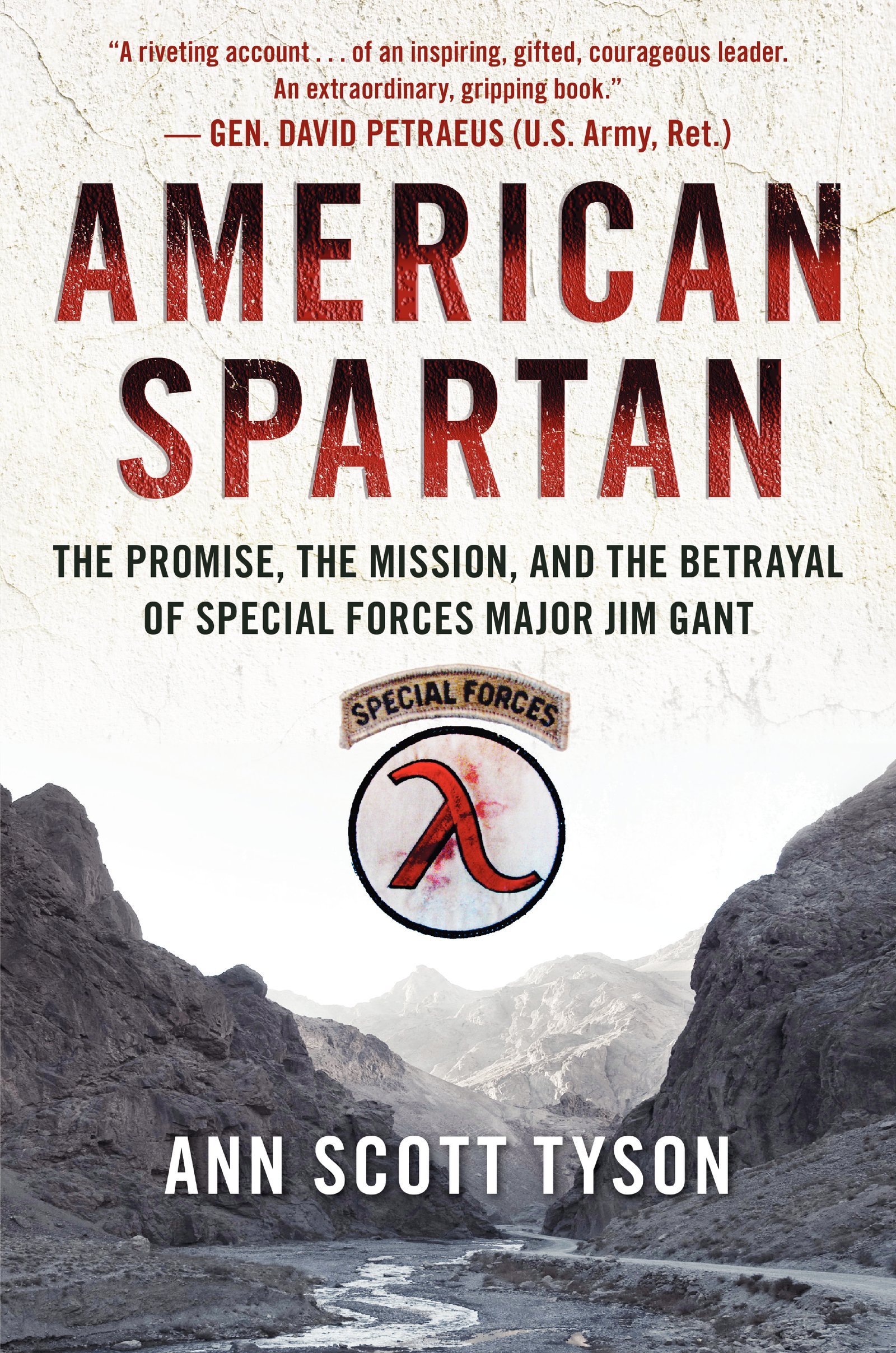
New Book: American Spartan by Ann Scott Tyson

Tuesday, March 11th, 2014

[by Mark Safranski, a.k.a. “zen“]

American Spartan: The Promise, the Mission, and the Betrayal of Special Forces Major Jim Gant by Ann Scott Tyson 

Was just sent a review copy of American Spartan courtesy of Callie at  Oettinger & Associates which tells the story of Major Jim Gant, the special forces officer and AfPak hand who pushed hard for a controversial strategy in Afghanistan based on arming and training loyalist paramilitaries out of Afghan tribesmen ( or whatever localist network would suffice when tribal identity was weak or absent). I am looking forward to reading this book for a number of reasons.

Long time readers may recall Gant coming to wider attention with his paper, One Tribe at a Time with an assist from noted author Steven Pressfield, where he called for a campaign strategy against the Taliban from “the bottom up” using “the tribes” because the current top down strategy of killing insurgents while building a strong, centralized, state would never work – the war would just drag on indefinitely until the US grew tired and quit Afghanistan ( as is happening….now). Gant, who forged a tight relationship with Afghan tribal leader  Noor Azfal ,won some fans with his paper in very high places, including SECDEF Robert Gates and Generals Stanley McChrystal and David Petraeus who gave him some cover to implement his ideas but he also faced formidable resistance and criticism. Academic experts were particularly incensed by Gant’s broad-brush use of “tribes” to cover a wide array of local networks and Afghan identities and that “tribes” were a term modern anthropology held in deep disdain ( RAND’s David Ronfeldt pointed out that while these networks are not historical tribes they are certainly “tribal” in terms of behavior patterns) while the government of Mohammed Karzai and its American boosters were bitterly hostile to any strategy that might arm locals outside Kabul’s direct control.

  It was also a risky strategy. Loyalist paramilitaries are often very effective in a military sense – as happened in Colombia when the government tolerated and encouraged private militias to make war on FARC and the ELN and badly mauled the Communist insurgents – but they are inherently unreliable politically. Paramilitaries can also  “go off the reservation” – this also happened in Colombia – and commit atrocities or become criminal enterprises or engage in warlordism and have to be reined in by the government. All of these were particular risks in the context of Afghanistan where warlordism and drug trafficking had been particularly acute problems even under Taliban rule. On the other hand, warlordism and drug trafficking has hardly been unknown in the ANA regular units and national police and is hardly the province only of irregulars.

Another reason I am interested in this book is the subtitle’s accusation of “betrayal” which I infer comes out of the long institutional cultural and chain of command clashes of bureaucratic politics between Big Army and Special Forces and Special Operations Forces communities. The long history in the big picture is that many general purpose force commanders do not know how to use these troops to best strategic effect and sometimes resent the autonomy with which they operate ( a resentment returned and repaid  at times with a lack of consultation and ignoring of local priorities in operational planning).

The author, Ann Scott Tyson is a long-time and experienced war reporter who embedded extensively with US troops in Afghanistan and Iraq. She is also married to her subject which should make for some interesting analysis when I review the book.


Switch to our mobile site