zenpundit.com » IC

Archive for the ‘IC’ Category

Form is insight: the vesica piscis

Sunday, June 2nd, 2013

[ by Charles Cameron — here’s another post in my importance of form in intelligence series ]
.

Form is pattern, and pattern recognition is insight.

A while back, I started a series of posts [1, 2, 3, 4 and 5] in which I suggested that form is, from an intelligence point of view (and however you may parse “intelligence”) as important to humans as content. I’ll be saying more about this today, but wanted to complete this old and never quite completed post in that series right away, in response to a comment Grurray made today regarding Venn diagrams and the vesica piscis.
.


.

**

If you’ve seen a Venn diagram, you’ve seen overlap. And the simplest form of overlap — between two classes, ideas, or whatever — is the one that’s Venn diagrammed (below, left) as the overlapping of two equal circles — known to artists as the vesica piscis or eye of the fish.

MasterCard uses it for its logo (right) —

— as do Gucci and Chanel:


.

**

But let’s go back to that first pair of images:


.

Long before commerce took note of it, the vesica was a sacred image — back in the days when geometry, like nature herself, was sacred.

Like the illuminist of the Codex Bruchsal (ca 1220) with his Christ Pantocrator (above, left), Jan Valentine Saether makes sacred use of the vesica in his book The Viloshin Letters, which I hope to see published shortly — the exquisite suite of prints that accompany the text have already been exhibited to acclaim.

In his text accompanying this particular plate, he writes:

I was not sure. But a new wonder has been moving towards us. That which is… has a new presence. Entering here from elsewhere, the holy spirit manifested again in the vernacular last Wednesday, September 16th.

We were standing around, being together in our own fashion, when suddenly through our common imagination, right there on the floor in the old barn, the donna and the madonna, the loose one and the holy one, merged and became visible.

**

It seems to me there is more to the glory of God than there is to the glory of handbags and perfumes — but your mileage may vary, credit cards are handy little items, and then again, it’s all part of the glory in my opinion.

A neat koan, that.

Thought provoking Tim Weiner quote

Saturday, May 18th, 2013

[ by Charles Cameron — mission statement? perhaps not — but definitely mission critical ]
.

In five words:

Know your enemy: that’s intelligence.

Weiner may not have the whole picture, but he sure puts an interesting spin on things.

Jottings 3: Espionage on the chess board

Friday, May 3rd, 2013

[ by Charles Cameron — playing the two great games, from Caxton to Le Carré ]
.

.

Karla, the Russian spymaster in John Le Carré‘s Smiley novels, is represented as the white queen in the 2011 Tomas Alfredson / Gary Oldman film of Tinker Tailor Soldier Spy (lower panel, above).

In chess terms, that’s quite a step up for spies — pawn promoted to queen.

**

Before the digital age, in the early years of printing, way back in 1474, Thomas Caxton‘s press issued the second book ever printed in England — his Game and Playe of the Chesse — and things were subtly different. The eight pawns, for instance, differed one from another, each representing a different human type or craft, and named accordingly: “Labourer, Smith, Clerk, Merchant, Physician, Taverner, Guard and Ribald.”

It’s the Ribald (in the upper panel, above) who interests us here — for he’s the spy on the chessboard, as surely as Joshua the son of Nun and Caleb the son of Jephunneh were spies in the land of milk and honey. Caxton describes the Ribald, stationing him in front of the Rook, thus:

The rybaulders, players of dyse and of messagers and corrours ought to be sette to fore the rook/ For hit apperteyneth to the rook whiche is vicayre & lieutenant of the kynge to haue men couenable for to renne here and there for tenquyre & espie the place and cytees that myght be contrarye to the kynge/ And thys pawn that representeth thys peple ought to be formed in this maner/ he must haue the forme of a man that hath longe heeris and black and holdeth in his ryght hand a lityll monoye And in his lyfte hande thre Dyse And aboute hym a corde in stede of a gyrdell/ and ought to haue a boxe full o lettres

And what should be the appearance of such a one?

And thys pawn that representeth thys peple ought to be formed in this maner/ he must haue the forme of a man that hath longe heeris and black and holdeth in his ryght hand a lityll monoye And in his lyfte hande thre Dyse And aboute hym a corde in stede of a gyrdell/ and ought to haue a boxe full o lettres

Let’s go over that first part one more time, and make sure we understand it:

It pertains to the Rook, which is vicar and lieutenant of the King, to have men available to run hither and yon to make inquiries and spy out the place and cities that might be contrary to the King.

**

And isn’t that precisely what Moses sent Joshua and Caleb out to do, when he instructed them in Numbers 13.17-20:

Get you up this way southward, and go up into the mountain: And see the land, what it is, and the people that dwelleth therein, whether they be strong or weak, few or many; And what the land is that they dwell in, whether it be good or bad; and what cities they be that they dwell in, whether in tents, or in strong holds; And what the land is, whether it be fat or lean, whether there be wood therein, or not. And be ye of good courage, and bring of the fruit of the land.

**

Espionage has been around longer than chess: some things never change — and some things have changed significantly.

Today, you can’t tell one pawn from the next…

Furnish on Pew findings re: Islam

Thursday, May 2nd, 2013

[ Charles Cameron presenting guest-blogger Timothy Furnish ]
.

.

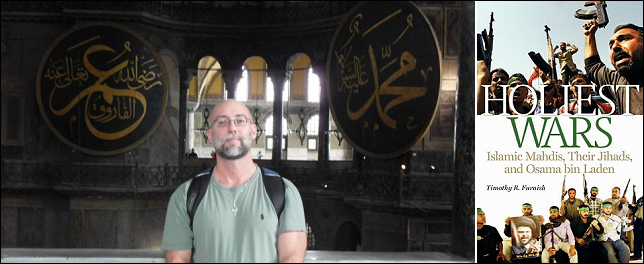
I’m delighted to welcome Dr Timothy Furnish as a guest-blogger here on Zenpundit. Dr Furnish has served as an Arabic linguist with the 101st Airborne and as an Army chaplain, holds a PhD in Islamic history from Ohio State, is the author of Holiest Wars: Islamic Mahdis, Their Jihads, and Osama bin Laden (2005), and blogs at MahdiWatch. His extended piece for the History News Network, The Ideology Behind the Boston Marathon Bombing, recently received “top billing” in Zen’s Recommended Reading of April 24th.

**

Does This Paint It Black, or Am I A Fool to Cry? Breaking Down the New Pew Study of Muslims
by Timothy R. Furnish, PhD
.

Pew has released another massive installment of data from its research, 2008-2012, into Muslim attitudes, entitled “The World’s Muslims: Religion, Politics and Society.” Over 38,000 Muslims in almost 40 countries were surveyed, thus constituting a survey both statistically sound and geographically expansive. Herewith is an analysis of that information and what seem to be its major ramifications.

The first section deals with shari`a, usually rendered simply as “Islamic law” but more accurately defined as “the rules of correct practice” which “cover every possible human contingency, social and individual, from birth to death” and based upon the Qur’an and hadiths (sayings and practices attributed to Muhammad) as interpreted by Islamic religious scholars (Marshal G.S. Hodgson, The Venture of Islam, Vol 1: The Classical Age of Islam, p. 74). Asked “should sharia [as Pew anglicizes it] be the law of the land,” 57% of Muslims across 38 countries answered “yes” — including, most problematically for the US: 99% of Afghans, 91% of Iraqis, 89% of Palestinians, 84% of Pakistanis and even 74% of Egyptians. Should sharia apply to non-Muslims as well as Muslims? Across 21 countries surveyed on this question, 40% answered affirmatively — with the highest positive response coming from Egypt (its 74% exceeding even Afghanistan’s 61%). And on the question whether sharia punishments — such as whippings and cutting off of thieves’ hands — should be enacted, the 20-country average was 52%, led by Pakistan (88%), Afghanistan (81%), the Palestinian Territories [PT] (76%) and Egypt (70-%). On the specific penalty of stoning for adultery, the 20-country average was 51% — with, again, Pakistan (89%), Afghanistan (85%), the PT (84%) and Egypt (71%) highest in approval. Finally, 38% of Muslims, across those same 20 nations, support the death penalty for those leaving Islam for another religion.

Huge majorities of Muslims across most of these surveyed nations say that “it’s good others can practice their faith” — but Pew’s imprecise terminology on this topic makes possible that this simply mean many Muslims are willing to grant non-Muslims the tolerated, but second-class, ancient status of the dhimmi. Majorities, too, in most countries say that “democracy is better than a powerful leader;” however, the latter was actually preferred by most surveyed in Russia, Bosnia-Hercegovina, Kyrgyzstan, Afghanistan and Pakistan, as well as by 42% of Iraqis, 40% of Palestinians and 36% of Egyptians. Most Afghans, Egyptians and Tunisians (and even 1/3 of Turks) believe that “Islamic political parties” are better than other ones, although 53% of Indonesians and 45% of Iraqis are also worried about “Muslim extremists.” (Curiously, 31% of Malaysians are, on the other hand, worried about “Christian extremists” — although evidence of such existing in that country is practically non-existent.) There is good news on the question of suicide bombing, however: across 20 countries, only 13.5% think it is ever justified — although the support is much higher in the PT (40%), Afghanistan (39%) and Egypt (29%).

In terms of morality, large majorities in most Muslim countries (especially outside Sub-Saharan Africa) think drinking alcohol is morally repugnant, notably in Malaysia (93%), Pakistan and Indonesia (both 91%). Most Muslims in most countries surveyed consider abortion wrong, as well as pre- and extra-marital sex and, almost needless to say, homosexuality. (Although one wishes Pew had asked about mu`tah, or “temporary marriage” — a practice originally Twelver Shi`i which has increasingly become used by Sunnis.) Yet, simultaneously — following Qur’anic rubrics — some 30% of Muslims in 21 countries support polygamy, including almost half of Palestinians, 46% of Iraqis and 41% of Egyptians. There is also significant support for honor killings in not just Afghanistan and Iraq but also Egypt and the PT. Over ¾ of Muslims across 23 countries says that “wives must always obey their husbands:” an average of 77%. And Pew notes that there is a statistically very significant correlation between sharia-support and believing women have few(er) rights.

Asked whether they believed they were “following Muhammad’s example,” 75% of Afghans and 55% of Iraqis answered affirmatively — although most Muslims were not nearly so confident. On the question “are Sunni-Shi`i tensions a problem,” 38% of Lebanese, 34% of Pakistanis, 23% of Iraqis and 20% of Afghans said “yes.”

It is no surprise that huge majorities of Muslims in most surveyed countries believe that Islam is the only path to salvation, nor that most also say “it’s a duty to convert others” to Islam. It is somewhat counterintuitive, however, that many Muslims say they “know little about Christianity” — even in places with large Christian minorities, such as Egypt. Muslims in Sub-Saharan Africa are the most likely to agree that “Islam and Christianity have a lot in common,” and so are 42% of Palestianians, as well as some 1/3 of Lebanese and Egyptians. But only 10% of Pakistanis agree. Asked whether they ever engaged in “interfaith meetings,” many Muslims in Sub-Saharan Africa said that they did (with Christians), and a majority of Thais said likewise (albeit with Buddhists). But only 8% of Palestinians, 5% of Iraqis, and 4% of Egyptians said they ever do so—despite substantial Christian populations in each of those areas.

Regarding the question “are religion and science in conflict,” most Muslims said “no” — with the exceptions of Lebanon, Bangladesh, Tunisia and Turkey where over 40% in each country (and, actually, a majority in Lebanon) said that they were at loggerheads. Most Muslims also say they have no problems with believing in Allah and evolution — the exceptions being the majority of Afghans and Indonesians. Regarding popular culture, clear majorities of Muslims in many countries say they like Western music, TV and movies—but, at the same time, similar majorities say that such things undermine morality (although Bollywood less so than Hollywood).

Observations:

1) The high degree of support for sharia is the red flag here. Contra media and adminstration (both Obama and Bush) assurances that most Muslims are “moderate,” empirical data now exists that clearly shows most Muslims, in point of fact, support not just sharia in general but its brutal punishments. Perhaps just as disturbing, almost four in ten Muslims are in favor of killing those who choose to follow another religion. And countries in which the US is heavily involved either diplomatically or militarily (or both) are the very ones where such sentiments run most high: Pakistan, Afghanistan, Egypt, the Palestinian Territories. So are the “extremists” these very Muslims who want to follow, literally, the Qur’an and hadiths? Messers Brennan, Holder and Obama have some explaining to do.

2) Afghanistan would appear to be a lost cause. Afghans are at the top of almost every list in support for not just sharia, suicide bombing, honor killing and — ironically (or perhaps not) — confidence that they are emulating Islam’s founder, as well as dislike for democracy. In light of this clear data, two points about Afghanistan become clear: tactically, ostensible American befuddlement as to the causes of “green on blue” attacks and the continuing popularity of the Taliban in Afghanistan appears as willful ignorance; strategically, the US decision to stay there after taking out the al-Qa`ida [AQ] staging, post-9/11, and attempt to modernize Afghanistan was a huge, neo-Wilsonian mistake. 2014 cannot come soon enough.

3) In some ways Islam in Southeastern Europe, and to a lesser extent in Central Asia, seems to be a more tolerant brand of the faith than the Middle Eastern variety. For example, the SE European and Central Asian Muslims are the least likely to support the death penalty for “apostasy,” and the most supportive of letting women decide for themselves whether to veil. And Muslims in Sub-Saharan Africa are the most likely to know about Christianity, and to interact with Christians. On the other hand, African Muslims are among the most enamored of sharia, and Central Asian ones fond of letting qadis (Islamic judges) decide family and property disputes. So there does not seem to be a direct link between Westernization and moderation; in fact, the influence of Sufism — Islamic mysticism — in the regard needs to be correlated and studied (beyond what Pew did on the topic in last year’s analysis).

4) One bit of prognostication based on this data: Malaysia may be the next breeding ground of Islamic terrorism. It’s home to some 17 million Muslims (61% of its 28 million people), who hold a congeries of unsettling views: 86% want sharia the law of the land; 67% favor the death penalty for apostasy; 66% like sharia-compliant corporal punishments; 60% support stoning for adultery; and 18% think suicide bombing is justified. PACOM, SOCOM and the intelligence agencies need to ramp up hiring of Malay linguists and analysts.

5) Finally, some words for those — like FNC’s Megyn Kelly and Julie Roginsky (on the former’s show “American Live,” 4/30/13) — who pose a sociopolitical and moral equivalence between Muslim support for sharia and Evangelical Protestant Christian support for wives’ obedience to husbands: that’s a bit too much sympathy for the devil. Yes, Evangelical Christian pastors hold some pretty conservative views of the family, as per a 2011 Pew study of them; for example, 55% of them do agree that “a wife must always obey her husband” (compared to 77% of Muslims). And, ironically, many such Evangelicals agree in large measure with Muslims on issues such as the immorality of alcohol, abortion and homosexuality. However, one searches in vain for any Evangelical (or other) Christian support for whippings, stonings, amputation of thieves’ limbs, polygamy or suicide bombing.

Islam is the world’s second-largest religion, numbering some 1.6 billion humans (behind only Christianity’s 2.2 billion). There is, thus, enormous diversity of opinion on many issues of doctrine and practice, and essentializing Islam as either “peaceful” or “violent” is fraught with peril. Nonetheless, this latest Pew study provides empirical evidence that many — far too many — Muslims cling to a literalist, supremacist and indeed brutal view of their religion. Insha’allah, this will change eventually — but time is not necessarily on our side.
CENTCOM, Rosenberg and Islamic eschatology, pt I

Monday, March 11th, 2013

[ by Charles Cameron — who’s giving advice to the head of CENTCOM these days? — a “prophetic” thriller novelist whose latest book concerns nuclear weapons and Iran ]
.

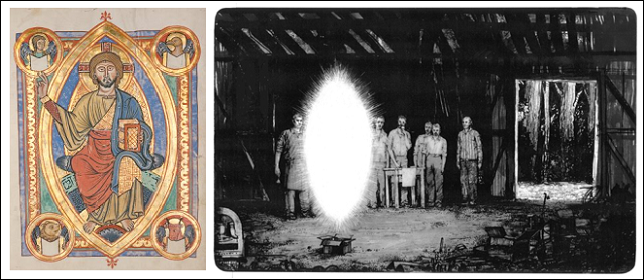
Here’s the advice apocalyptic thriller writer and political consultant Joel Rosenberg gave GEN Mattis, just two days ago:

I have deep respect for General Mattis as a military leader. Thus, I would encourage him to consider the role eschatology is playing in Tehran’s calculus. Iran’s Ayatollah Khamenei and President Ahmadinejad and their inner circle of advisors are not being driven by normal geopolitical and economic calculus, but rather by a Shia Islamic End Times theology.

I’m very interested in Islamic end times theology myself, and have a question:

What does Rosenberg claim that theology is, and what does he see as its ramifications in terms of CENTCOM — whose remit most notably includes Afghanistan, Egypt, Iran, Iraq, Saudi Arabia, Syria, Pakistan and Yemen?

**

Here’s what he says:

They believe the End of Days is at hand. They believe their messiah known as the Twelfth Imam or the “Mahdi” is coming soon.

That’s the theology as he describes it — the rest is geopolitical interpretation, no doubt favoring as well as influencing his own political ideas:

They believe that the way to hasten the coming of the Mahdi is to annihilate Israel (which they call the “Little Satan”) and America (which they call the “Great Satan.”) I wrote about this in detail in my non-fiction book, Inside The Revolution. And I factor this thinking into my current novel series, including The Twelfth Imam, The Tehran Initiative, and Damascus Countdown to consider how it could play out in real life. Such eschatology requires Iran’s leaders to acquire nuclear weaponry and the means to deliver it in order to please Allah and their coming messiah and king. As a result, the international is unlikely to convince them to disobey their most-deeply held religious beliefs through diplomacy or sanctions. A credible military threat might work, but we’re nearly out of time. Actual military action may soon be the only option. No one wants a war. I don’t. But we don’t want to have a genocidal cult to obtain and use nuclear weapons.

Hey, I don’t want a nuclear war, either. But does the Ayatollah Khamenei? Really?

**

Do you think nobody in DC listens to Rosenberg? Even before he wrote his books, when he was still only 27 and a “legman” for Rush Limbaugh, the New York Times carried a feature on him calling him “a Force in the Capital” which quoted a Senior VP at the Heritage Foundation:

I’ve been at meetings of conservative activists, and they have paid extraordinary deference and have been solicitous of him.

— but you can read the whole piece. And now, eighteen years later, he has a strong of NY Times best-sellers to his name, both fiction and non-fiction — and for his latest thriller, Damascus Countdown, published this week, Porter Goss, ex CIA Director, writes:

Whenever I see a new Joel Rosenberg book coming out, I know I need to clear time on my calendar. His penetrating knowledge of all things Mid-eastern — coupled with his intuitive knack for high stakes intrigue — demand attention.

So it’s worth asking — just how penetrating is that knowledge? And in particular, just how penetrating is it about the Iranian Twelfth Imam or Mahdi, who features prominently in his most recent series of books?

**

Three years back, Glenn Beck interviewed this same Joel Rosenberg, who writes about end-times Christianity and Islam and the need to support Israel from an end-times perspective — and the pair of them put out a sadly and dangerously muddled message. This excerpt from the transcript is worth noting for the significance it attributes to Mahdist eschatology and thus insinuates into the minds of millions of Americans:

BECK: OK. So, the Ayatollah Khomeini and the revolution of ‘79, he said these 12ers are too crazy for even him. What happened, because — is Ahmadinejad the only one? Are there a lot of them? It’s my understanding that the government now is full of these people. Is that true?

ROSENBERG: That’s right. Well, the Ayatollah Khamenei, the current supreme leader, was a disciple of the Ayatollah Khomeini.

BECK: OK.

ROSENBERG: Apparently, it’s turned out that he has been a secret closet 12er, because he clearly believes the same thing as Ahmadinejad.

Here’s what’s wrong: both Beck and Rosenberg seem to have confused “Twelvers” (the Ithna’ashariyya who make up about 85% of all Shi’a, though there are important smaller sects such as the Ismai’li) with a small and secretive faction within the Iranian Shi’a, almost certainly the Hojjatieh.

Beck says:

I want to talk to you about something that nobody seems to ever notice when they talk about Iran. When we’re talking about Iran, we’re talking about people, the leaders, that are called, they’re called “Twelvers” — they believe in the Twelfth Imam, the Mahdi. This is one spooky dude. Twelvers are so dangerous that the Ayatollah Khomeini at one point banned them, said we’ve gotta kill ’em all because they’re too crazy — the Ayatollah Khomeini said that.

It makes absolutely no sense to say that the Ayatollah Khomeini condemned the Twelvers — he was their leader in Iran — but he did oppose the (arguably extremist) Hojjatieh, which was basically a secret society — and that is almost certainly the group that Beck was thinking of.

But then Joel Rosenberg seems to get swept up in Beck’s confused and confusing rhetoric, and goes on to call the Ayatollah Khamenei “a secret, closet Twelver” — a phrase he also uses in his 2010 book, The Twelfth Imam (pp. 178, 259), and which is particularly inept since Rosenberg knows enough to have discussed the Hojjatieh in his book Inside The Revolution (copyright 2009, 2011), in which he writes (pp. 161-62):

During this same period, it appears Ahmadinejad was also involved in a shadowy Islamic society known as the Hojatieh, whose leaders taught that the Twelfth Imam was coming soon and whose members believed they were required to take spiritual (but not political) actions to hasten his coming. … the movement discouraged people from being fully devoted to creating an Islamic state, preferring instead to wait for it to come from the sky. In 1983, therefore, Khomeini actually banned the Hojatieh, and Ahmadinejad seems to have subsumed his sympathies for the group to protect his opportunities for career advancement.

**

I am happy to report that Joel Richardson, the other Joel currently writing about Islamic apocalyptic from a Christian end-times perspective, corrects Beck and Rosenberg on this point in his blog, Joel’s Trumpet:

Beck needs to have me on sometime. He gets a lot of his info wrong. Ayatollah Khomeini never banned “Twelvers”, as he himself was one. He banned the Hojjatieh of which Ahmadinejad is arguably a member of and which Mesbah Yazdi below is as well.

Beck’s the one Joel Richardson was addressing, but his critique applies equally to both Beck and Rosenberg. But this post is getting overlong, so I’ll continue with background from a scholar friend in a continuation of this post…


Switch to our mobile site