zenpundit.com » republican party

Archive for the ‘republican party’ Category

Announcement: The Ronald Reagan Roundtable at Chicago Boyz

Monday, January 17th, 2011

February 6th 2011 marks the centennial of the birth of America’s 40th president, Ronald Wilson Reagan and it is an appropriate time to reflect on the legacy of a man whose presidency altered the course of his party, his nation and the world. It is no exaggeration to say that events set in motion by the Reagan administration are still unfolding today and the ideas and values championed by Ronald Reagan continue to shape our public policies and frame our political discourse.

Therefore, to commemorate and debate this important legacy, The Ronald Reagan Roundtable, hosted at Chicago Boyz blog will begin February 6th and end on the 16th.

Past Chicago Boyz Roundtables have featured discussions about specific books – On War by Carl von Clausewitz, Science, Strategy and War by Col. Frans Osinga and The Anabasis of Cyrus by Xenophon. They were well-regarded and thought-provoking enterprises. This roundtable will be a little more like the last one on Afghanistan 2050, in that there is no set book to evaluate but a wide-open and free-wheeling discussion of Ronald Reagan, his administration and the historical record.

Contributors will be free to address the topic narrowly or broadly, from Left, Center or Right, in scholarly or polemical tone, with a focus on the present or the past, at whatever length or number of posts they feel is required. Book reviews of the burgeoning number of titles related to Ronald Reagan and his times are also very welcome.

Participants will be encouraged to comment upon one another’s posts and interact with the readers who leave comments but that is not obligatory, contributions can also stand on their own.

Those interested in in joining the Ronald Reagan Roundtable should contact me or Lexington Green and we will make the arrangements with a final “head count” to be announced on or about February 1st

Hope to see you there!

“Do they mean peace, or do they mean we just want to be left in peace? There can be no real peace while one American is dying some place in the world for the rest of us. We’re at war with the most dangerous enemy that has ever faced mankind in his long climb from the swamp to the stars, and it’s been said if we lose that war, and in so doing lose this way of freedom of ours, history will record with the greatest astonishment that those who had the most to lose did the least to prevent its happening. Well I think it’s time we ask ourselves if we still know the freedoms that were intended for us by the Founding Fathers.”
  – Ronald Reagan

Enter Stage Right

Tuesday, September 28th, 2010

Good friend and co-author Michael Lotus, a.k.a. “Lexington Green has a feature article as he debuts at The RIGHTNETWORK. Congrats Mike!

The Insurgency

Mass political movements often begin with a single, striking event. The Insurgency began in the fall of 2008, when President Bush, Senator Obama, and Senator McCain appeared together to endorse the TARP bailout.  At that moment the lights came on for many Americans. It was glaringly obvious that both political parties jointly operated the system, and the system existed to protect the well connected at the expense of everyone else. The public opposed the TARP bailouts; the banks got their money anyway. The Insurgency, long brewing, began.

The Insurgency is a movement of citizens directed against unsustainable government taxation and regulation, and spending, both of which benefit insiders rather than ordinary people. The target of the Insurgency is a leviathan in Washington, D.C. that will ruin us all if it is not dismantled. 

The Insurgency is part of a long tradition of mass political movements in our history. It has the potential to make a fundamental change in American life-for the better.

….2.  What is the Insurgency? Why now?

For now the Tea Party movement, ignited by Rick Santelli’s “Rant Heard Round the World,” is the dominant component of the Insurgency; Glenn Beck‘s gathering of hundreds of thousands of people in Washington, D.C. is another, overlapping one. The people who have gathered around Governor Sarah Palin form yet another part of the Insurgency, as do the libertarian-minded citizens who read blogs like Instapundit. Many of Rush Limbaugh‘s, Sean Hannity‘s, and Mark Levin‘s listeners are part of it. Various long-established conservative groups that have always opposed big government are now parts of the Insurgency.

There are appear to be three factors that have caused the rise of the Insurgency now, and the particular form it is taking: 1) technology, 2) a new, heightened awareness of the problem, and 3) the shock of the current crisis.

First, new technology allows massive, decentralized and horizontal organizations to form quickly. The Tea Party is the best current example: There is coordination, but no central direction. There is no one in charge, giving orders, but rather many people and groups cooperating. This is only possible due to current technology. 

“[Technology] enabled the Insurgency,

but it did not cause it.”

Technology, however, cannot by itself explain the rise of the Insurgency. After all, the political Left actually pioneered in this area: MoveOn was a highly effective internet-based organization, for example. It does seem odd, in retrospect, that a tech-savvy Left would cast its lot with a top-down, government-centric political culture. And there may be some overarching affinity between libertarian-style thinking and the new technology. But that technology is ultimately neutral. It enabled the Insurgency, but it did not cause it.

Read the rest here.

UPDATED:

Michael has published the second part of his essay: 

The Insurgency, Part II

….Mass political movements have come along several times in American history.  Some have transformed the country, and others have fizzled out. 

The movement that elected Andrew Jackson, against the vicious opposition of the existing establishment, swept through all levels of American government, rewriting state constitutions and extending the franchise to all adult White males. Jacksonian democracy caused a permanent and irreversible change in American life.  

The Populist movement looked like it would have a similar impact.  Led by the charismatic outsider William Jennings Bryan, this movement held gigantic rallies and seemed like a revolution in the making. It provoked fear and a hostile response from the establishment of its day, in both political parties. Yet the Populists ultimately failed to make a significant impact on national policy, and were absorbed into the Democratic Party. 

Today’s Insurgency could go either way. Success is not inevitable. 

Chicago Boyz at National Review

Saturday, September 18th, 2010

ChicagoBoyz.net has hit in the last few weeks a) The Glen Beck Program, b)  Rush Limbaugh and now, c) National Review. Jeez, a conservative trifecta if there ever was one.

James Bennett, who is in my experience, an extremely smart man and the author of The Anglosphere Challenge: Why the English-Speaking Nations Will Lead the Way in the Twenty-First Century, collaborated on the featured cover article in the latest edition of National Review.
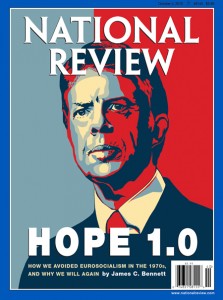
 Lexington Green has the details:

Jim Bennett Article on Cover of National Review

Bennett NR cover

The current issue of National Review features an article by my future co-author Jim Bennett:

For decades, America had been on a course toward a more centralized society. But 1980 – with the arrival of Reagan and the departure of Carter – marked the point at which the nation reversed course. Thenceforth it would be headed in the opposite direction, toward a new vision of individualism and decentralism.

I have read Jim’s piece in draft, and I strongly suggest you read it.

I second.

Congratulations to Mr. Bennett!

The Mob of Virtue

Sunday, August 1st, 2010


Small “r” republican virtue, to be precise.

A wise man once told me that a weakness of our Constitutional system was that the Framers implicitly presumed that people of a truly dangerous character, from bullies to bandits to political menaces to the community, would primarily be dealt with in age-old fashion by outraged neighbors whose rights had been trespassed and persons abused one time too many. They did not prepare for a time when communities would be prohibited from doing so by a government that also, as a whole, had slipped the leash. Indeed, having read LockeMontesquieuCicero, Polybius, Aristotle and Plato, they expected that such a state of affairs was “corruption” of the sort that plagued the Old World and might happen here in time. A sign of cultural decadence and political decay. They gave Americans, in the words of Benjamin Franklin, “A republic, if you can keep it”. It remains so only with our vigilance.

It is happening now.

We have forgotten – or rather, deliberately been taught and encouraged to forget – the meaning of citizenship.

We have let things slip.

Joseph Fouche superbly captures this implicit element, the consequences of the loss of fear of  informal but very real community sanction, in his most recent post:

People Like Us Give Mobs a Bad Name

….A classic American mob could exhibit any or all of these strategies. It could be a saint inciting a mob to attack others who deviated from a shared narrative. It could be a knave in saint’s clothing inciting an attack on personal rivals. It could be a moralist inciting a mob against the local knaves. The one constant is that an American mob was an expression of communal self-government by moralists seeking to punish what they saw as deviant, even if its manifestation was frequently unpleasant. It was a sign the local people were engaged.

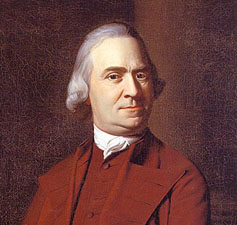
Samuel Adams was the Lenin of the American Revolution. He conceived a hatred for the British Empire and a desire for American independence well before anyone else did. Adams skillfully used mobs alongside legal pretense to incrementally spread his agenda. Others followed his example. In the Worcester Revolution of 1774, the local population shut down the normal operations of royal government in west and central Massachusetts and drove royal officials out of those regions (the book to read is Ray Raphael’s The First American Revolution: Before Lexington and Concord). The British crown lost control of inland Massachusetts before Lexington and Concord were even fought.

However, eleven years later, when many of the same local residents attempted to do the same thing in protest of the policies of a now independent Massachusetts, the state government put down their rebellion with Samuel Adams’s strong support. The difference? An apocryphal remark attributed to Adams captures some of the truth behind his attitude: “the man who dares to rebel against the laws of a republic ought to suffer death”. Mobs protesting the actions of an unrepresentative government like the British Parliament, Adams argued, were valid. Mobs protesting the actions of a representative government like Massachusetts’s state government, on the other hand, were treasonous. This doctrine, supported by other Revolutionary leaders, especially the cabal behind the Order of the Cincinnati, was eventually enshrined as the higher law of the land in the slow motion coup d’etat that overthrew the Articles of Confederation and replaced it with the more authoritarian United States Constitution in 1787-1788.

While mobs continued to combine, they were gradually neutered by the conscious agenda of American elites who sought to replace informal norms enforced by communal censure with formal norms applied under the professional supervision of “wiser heads”. This was a collusion between saints and knaves against moralists. Saints got purer standards that were not reliant on the whims of moralists who got stirred up in unpredictable ways that might violate the saints’ prevailing narrative while knaves got credentials that allowed them to entrench their positions and agendas under the cover of serving a higher good. The same sense of community morality and punishment that gave nineteenth century self-government its vigor and occasional excess was weakened as moralists were tuned out by saints embedded in holy isolation and knaves concerned only with advancing personal priorities. Moralists saw the knaves getting away with free riding off of them and began to opt out, leaving room for more knaves to free ride. For a little formal pretense, the returns on rent seeking were enormous.

The ideal went from a citizenry engaged in self-government to a system designed to advance the best and brightest. Meritocracy sounds good in theory and has some positives in reality. However, a perfect meritocracy is a perfect tyranny. All of the leaders are on once side and all the followers are on the other. This tendency toward the separation of the best from the rest may only be checked by the tendency of those on the ascendant to favor their own children, whatever their merit, over strangers that are more meritorious. This will force some aspiring meritocrats to side with the followers and bring about a rotation of elites. But the transition may take a while and its best to start before you have a meritocratic problem….

Read the whole post here.

Today’s circumstances, with the elite determinedly crafting rules for the mass but not for their class, have an ominous portent for the future of America as a democratic republic, but violence is not yet required.

Political engagement is.

An Interesting “Collapse” Hypothetical

Thursday, July 29th, 2010

Dr. Paul Craig Roberts, the famous Reagan administration economist and now an embittered and cranky paleoconservative social critic, penned a short but intriguing American “collapse” scenario set in the near future. Some of what Roberts writes fits neatly with the thesis in Joseph Tainter’s The Collapse of Complex Societies:

The Year America Dissolved

….As society broke down, the police became warlords. The state police broke apart, and the officers were subsumed into the local forces of their communities. The newly formed tribes expanded to encompass the relatives and friends of the police.

The dollar had collapsed as world reserve currency in 2012 when the worsening economic depression made it clear to Washington’s creditors that the federal budget deficit was too large to be financed except by the printing of money. With the dollar’s demise, import prices skyrocketed. As Americans were unable to afford foreign-made goods, the transnational corporations that were producing offshore for US markets were bankrupted, further eroding the government’s revenue base.

The government was forced to print money in order to pay its bills, causing domestic prices to rise rapidly. Faced with hyperinflation, Washington took recourse in terminating Social Security and Medicare and followed up by confiscating the remnants of private pensions. This provided a one-year respite, but with no more resources to confiscate, money creation and hyperinflation resumed.

Organized food deliveries broke down when the government fought hyperinflation with fixed prices and the mandate that all purchases and sales had to be in US paper currency. Unwilling to trade appreciating goods for depreciating paper, goods disappeared from stores.

Several interesting things here. First, the demagogic front men who are currently engaging in op-ed tirades against public pensions in order to loot them to ostensibly plug state budget deficits will, if successful, use that precedent to go after private pensions, IRAs, 401(k), mutual funds, Social Security, Medicare, Home mortgage interest deduction – any remaining big pot of money in the hands of the middle-class has a big target on it. Secondly, food shortages historically were the spark that set off the French and Russian Revolutions.

When hubris sent America in pursuit of overseas empire, the venture coincided with the offshoring of American manufacturing, industrial, and professional service jobs and the corresponding erosion of the government’s tax base, with the advent of massive budget and trade deficits, with the erosion of the fiat paper currency’s value, and with America’s dependence on foreign creditors and puppet rulers.

The Roman Empire lasted for centuries. The American one collapsed overnight.

Rome’s corruption became the strength of her enemies, and the Western Empire was overrun.

America’s collapse occurred when government ceased to represent the people and became the instrument of a private oligarchy. Decisions were made in behalf of short-term profits for the few at the expense of unmanageable liabilities for the many.

Overwhelmed by liabilities, the government collapsed.

Connectivity, contra Roberts, is good. Corruption, on the other hand, is not. Free markets are generally efficient, so long as you do not expect them to automatically create public goods of a certain scale or be perfectly self-regulating. They require a scrupulously impartial rule of law in order to not become corrupted by abusive players seeking rents. Unfortunately, a scrupulously impartial rule of law is incompatible with technocracy, where expert administrators are granted arbitrary discretion without democratic accountability, the prevailing ethos in the EU supranational bureaucracy, to cite a real world example. The late, unlamented, Soviet nomenklatura would be another, more sinister, historical one.

The primary problem with the American political economy is that in the last 10-15 years, elite, moderately liberal technocrats have made common cause with the elite, moderately conservative rentiers of the financial and corporate world to form an incipient oligarchy. One sees their fellow Americans paternalistically as children. The other sees us as sheep to be sheared. It’s a common enough ground on which to unite and it is the reason you see a very liberal Democratic Obama administration and a Pelosi-Reid Congressional leadership counterintuitively putting corporate regulation in impenetrable shadows not seen since before the Stock Market Crash of 1929 as if they were the minions of Jay Gould and J.P. Morgan.

Don’t expect mainstream Republicans in Congress to die on any hills fighting for the free market either – they aspire to be the party of no-bid contracts to the Democratic party of government by clout.

Alderman Paddy Bauler would be proud.


Switch to our mobile site