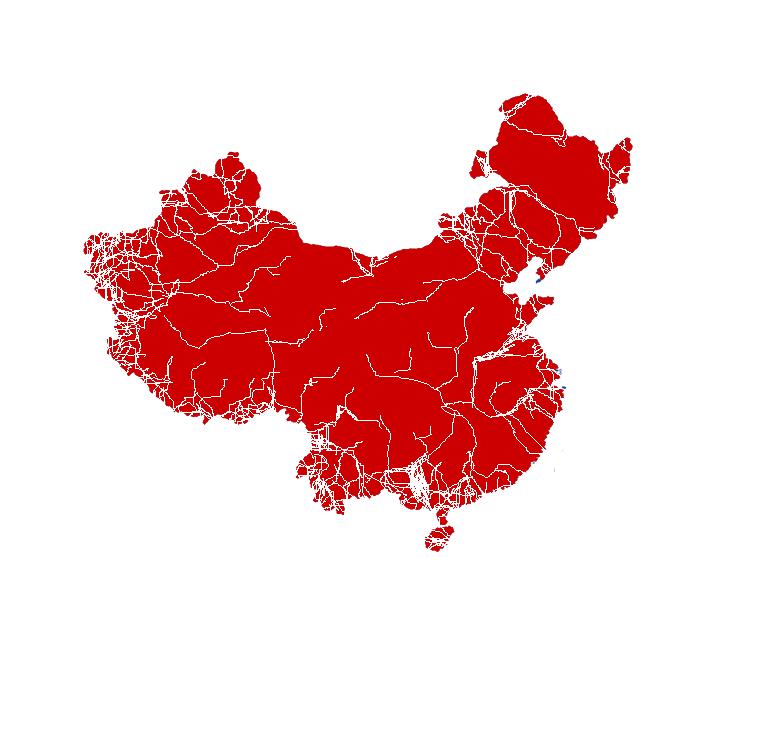
The Chinese government’s hamfisted and Brezhnevian reaction to the awarding of the Nobel Peace Prize to imprisoned political dissident Liu Xiaobo, which included a tantrum by the Chinese official media, empty threats against the Norwegian government and the bullying arrest of Liu’s hapless wife have served primarily to telegraph the deep insecurity and paranoia of the CCP oligarchy. Not only was the move reminiscient of how the Soviet leadership bungled handling the cases of Aleksandr Solzhenitsyn and Andrei Sakharov,  but coming on the heels of China’s worst year for public diplomacy since the end of the Cultural Revolution, it leaves me wondering if China’s leadership have corrupted their OODA Loop through self-imposed intellectual isolation and an unrealistic assessment of Chinese power?
Most observers have attributed China’s recent aggressive diplomatic behavior on matters of trade, the South China Sea (where China essentially demanded that China’s neighbors accept vassal status when China lacks the naval power projection to make good on such demands) and the Korean penninsula to be a direct result of confidence in China’s economic power and status as a “rising power”. Perhaps. China has been “rising” for a long time. That’s not new. The real novelty is Chinese incompetence in foreign affairs, an area where Chinese leaders have been admirably astute for decades since the “China opening” of the Nixon-Mao meeting. Chinese statesmanship has previously been noteworthy for it’s uber-realistic calculation of power relationships and strategic opportunities.
The reaction of Beijing to the Nobel Peace Prize Committee was hysterical rather than the quiet disdain of a confident great power, an indication that China’s elite remain acutely sensitive regarding their own political legitimacy, or lack thereof ( also evidenced by their recent centralization of control over China’s vast paramilitary police security troops). It is also highly unusual that China has manuvered itself into a position of friction simultaneously with virtually all other great powers on various issues, while alarming most of its neighboring states; and moreover has done so in a very brief period of time.
Something is amiss at the Central Committee and higher levels of the CCP and government. Either primary attention is being given to internal power struggles related to eventually generational shift of leadership, or a particularly belligerent and parochial faction has increased it’s influence at the expense of better informed and more pragmatic groupings that have steered China in the recent past.
The following are some possibilities:
- The Chinese leadership will find fewer rather than more opportunities as neighboring nations and distant states act to “Raise the costs” for China, which will in turn feed the Chinese leadership’s sense of paranoia, victimhood and isolation.
- The view of reality of Chinese leaders will be increasingly subject to what Col. John Boyd termed “mismatches” and they will be easily baited into reaction and overreaction by foreign adversaries and domestic dissidents. Want to send Beijing into a tizzy before an important international conference? Just roll out the red carpet for the Dalai Lama or the President of Taiwan.
- Habitual overreaction and “hardliner” attitudes in foreign affairs will bleed over into domestic unrest issues with the leadership escalating rather than de-escalating situations of domestic protest over legitimate but basically apolitical grievances over poor local governance and corruption.
- Dissident groups inside China will eschew overt political protest for covert sabotage, hacking, swarming and systems disruption while minority elements, particularly Muslims and “cults” like Falun Gong will gravitate toward terrorism and criminal enterprises to fund their activities.
- The senior leadership will reverse course and change back to Chinese diplomatic approaches emphasizing enticing “soft power” that served China well since Deng Xiaoping’s tenure. At home a renewed emphasis will be placed on anti-corruption drives, cultivating nationalism and placating peasantry and underemployed aspirants to middle-class “good life”, urban dwellers.
ADDENDUM:
From East Asia Intel.com:
“Hu and the generals face challenge by Xi and the ‘Gang of Princelings’
by Willy Lam
In theory, the upcoming plenary session of the Chinese Communist Party’s Central Committee is devoted mainly to fine-tuning the country’s Twelfth Five-Year Plan for the years 2011-2015. Personnel changes have not even been included in the publicized agenda of the plenum, which opens on Oct. 15.
However, all eyes are on whether Vice-President Xi Jinping, 57, will get the additional – and crucial – title of vice-chairman of the Central Military Commission (CMC). While Xi is the most senior-ranked Politburo Standing Committee member among politicians born in the 1950s, the power base of the putative “core of the Fifth-Generation leadership” will not be secure until he gets a CMC slot.
….It is almost certain that Xi will succeed Hu as Party General Secretary at the 18th Congress – and that he will take over the supremo’s position of state president in March 2013. However, Hu has indicated to close aides his wish to serve as military chief for one more five-year term beyond 2012.
The 67-year-old Hu has cited the precedent set by ex-president Jiang Zemin at the 16th CCP Congress in 2002, when the latter surprised his colleagues by refusing to quit the CMC despite having retired from the Central Committee and the Politburo. If Hu gets his way, there will be no urgency for Xi to be made CMC vice-chairman this year….”
Hat tip to David M.
ADDENDUM II.
T. Greer takes issue with my analysis and finds a method – authoritarian resilience – in the madness.
The Political Theater of the CCP
….I hesitate to condemn the Central Committee on the grounds of incompetence. The line between China’s domestic and foreign policies has always been difficult to demarcate and observers risk misinterpreting the message Party policies seek to convey if they have not first identified the audience meant to receive it. That a Western diplomat finds the CCP’s policies hamfisted does not mean all interested parties will reach the same conclusion.
For example, few Chinese consider the centralization of China’s paramilitary police to be a bid for political legitimacy or an attempt to squash an alternate locus of power. To the contrary, it has been hailed as a critical part of President Hu Jintao’s larger drive to eliminate corruption in the countryside. This year local Party officials have been the subject of much criticism in the Chinese press for using the People’s Armed Police and extra-legal security groups to suppress citizens filing petitions against them. Removing local access to the police is not an unusual recourse to such blatant corruption – and is not seen as such by the Chinese people. Centralization of corrupt elements is business as usual.
….This defense carries little weight in the cold court of international opinion. It was never designed to! The upper echelons of the CCP do not seek the approval of those living outside of China, but those living inside of it. China’s so-called “Victimization Syndrome” and “Cult of the Defense” define popular perceptions of international affairs. Any set of policies that conform to this narrative will quickly gain the support of China’s proudly patriotic populace. Indeed, the CCP’s most recent actions on the international scene have done just that.