And yet the period from 1919 (Treaty of Versailles) to 1939 (fission theorized) is only 20 years, and from 1919 to 1945 (nuclear warfare) is 26 years — equivalents, respectively, to the periods from 2015 (today) to 2035 (a third of the way into the USMC’s period of prediction) and 2041 (still within the UMSC timeline).
In view of this comparison, is the MCSEF’s assertion plausible?
Analysis of patterns and trends in seven categories, including demographics, technology, resource competition, environmental stresses, globalization, governance, and urban littorals, enables projection 15 to 30 years into the future of four plausible world futures: a baseline future, two alternative futures, and a “preferred” future.
— and we haven’t even considered how much influence von Neumann and Turing would have by 1945, as understood in 2019..
**
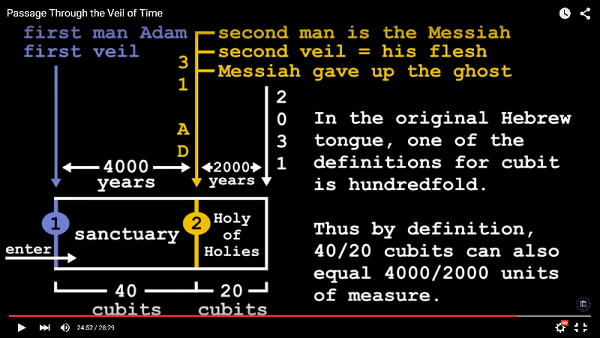
2031 will be the End of Days:
— for the record, yes, because Christ was crucified in 31 CE:
— at least according to the video Passage through the Veil of Time.
As a sidenote, the USMC Futures Directorate either hasn’t run across this date-setting (likely) or (most improbable) dismisses it as lacking sound reasoning or evidence. Ha!
[ by Charles Cameron — an experiment in blogging — morality transcending laws, the pope, battleships, jellyfish, & Catholic politicians ]
.
There’s simply so much going on that I need to try a few way of sifting and posting my daily catch. So here’s my experiment. Each day I’ll open a Simply so much post at the start of the day, adding things that catch my eye as I go, and posting either late in the day or the next morning.
The granting of asylum does not fall within the usual logic of statecraft in which a policy is considered from the perspective of the political interests of a governing party, taking into account how it will play to popular prejudices, how it fits with internal party disputes, its consistency with budgetary and other manifesto promises, its influence on the viability of other policies the government wants to pursue, and so on. None of these have standing in the face of the moral emergency of aiding refugees to regain their lives.
It is the “human right” of government officials to say they cannot discharge duties that they believe go against their conscience, Pope Francis told reporters aboard the papal flight back to Rome on Monday.
“I can’t have in mind all cases that can exist about conscience objection,” the pope told reporters on the plane. “But, yes, I can say the conscientious objection is a right that is a part of every human right. It is a right.
“And if a person does not allow others to be a conscientious objector, he denies a right.”
On the most widely accepted account of civil disobedience, famously defended by John Rawls (1971), civil disobedience is a public, non-violent and conscientious breach of law undertaken with the aim of bringing about a change in laws or government policies. On this account, people who engage in civil disobedience are willing to accept the legal consequences of their actions, as this shows their fidelity to the rule of law. Civil disobedience, given its place at the boundary of fidelity to law, is said to fall between legal protest, on the one hand, and conscientious refusal, revolutionary action, militant protest and organised forcible resistance, on the other hand.
I am here representing Jordan, and as a God-fearing, God-loving human being. I am here as a father who wants his children, like yours, to live in a compassionate and more peaceful world.
Such a future is under serious threat from the khawarej, the outlaws of Islam that operate globally today. They target religious differences, hoping to kill cooperation and compassion among the billions of people, of all faiths and communities, who live side-by-side in our many countries. These outlaw gangs use suspicion and ignorance to expand their own power. Worse still is the free hand they grant themselves to distort the word of God to justify the most atrocious crimes.
That phrase, the outlaws of Islam, nicely finesses the ongoing dispute as to whether IS should be termed “nothing to do with Islam” or “Islamic”.
**
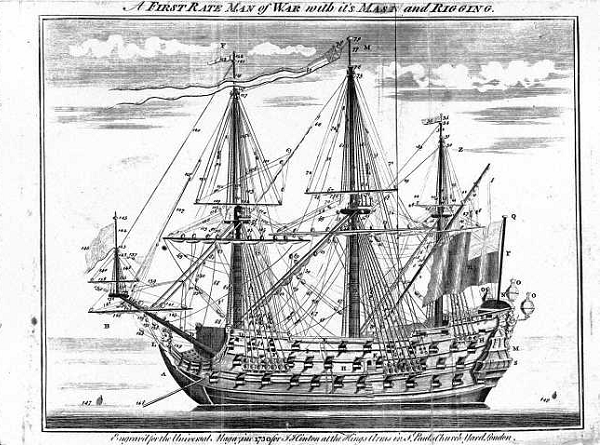
Three variants on the meaning of Man of War:
The British Man of War, c 1750
The Portuguese Man of War:
GF Handel‘s The Lord is a Man of War, from his oratorio Israel in Egypt, 1739:
[ by Charles Cameron — the material world meets the immaterial in our humanity — cognition & language ]
.
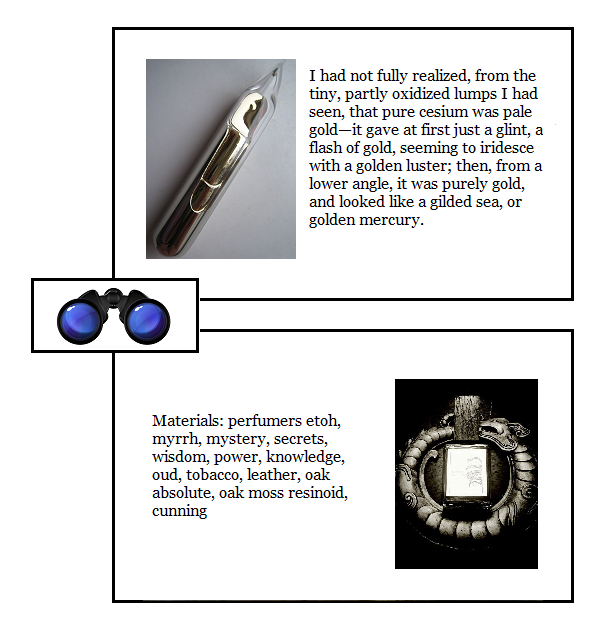
I came across two views of what you might call “alchemical substances” today — one mixed and one unmixed — and in each case the wording of the description fascinated me.
The upper panel is taken from the late Oliver Sacks‘ description of the elements as he found them in his childhood, displayed in London’s Science Museum. There’s alchemy in that description, in the fusion Sacks achieves between scientific observation and poetic insight.
In the lower panel, we have an overtly alchemical fusion, this time achieved by the interweaving of words from the language of the material (tobacco, leather, oak) and the immaterial (mystery, wisdom, knowledge) — both under the rubric “materials” — the work of Marcus McCoy.
I corresponded very briefly with John Holland, because of his interest in the Glass Bead Game — which he discussed in his Omni interview in connection with his own life’s work:
I’ve been working toward it all my life, this Das Glasperlenspiel. It was a very scholarly game, starting with an abacus, where people set up musical themes, then do variations on it, like a fugue. Then they’d expand it to where it could include other artistic forms, and eventually cultural symbols. It became a very sophisticated game for setting up themes, almost as a poet would, and building variations as a composer. It was a way of symbolizing music and of building broad insights into the world.
If I could get at all close to producing something like the glass bead game I can’t think of anything that would delight me more.
Zenpundit is a blog dedicated to exploring the intersections of foreign policy, history, military theory, national security,strategic thinking, futurism, cognition and a number of other esoteric pursuits.









#/media/File:Journey_to_the_Center_of_the_Earth1959.jpg)

