zenpundit.com » science

Archive for the ‘science’ Category

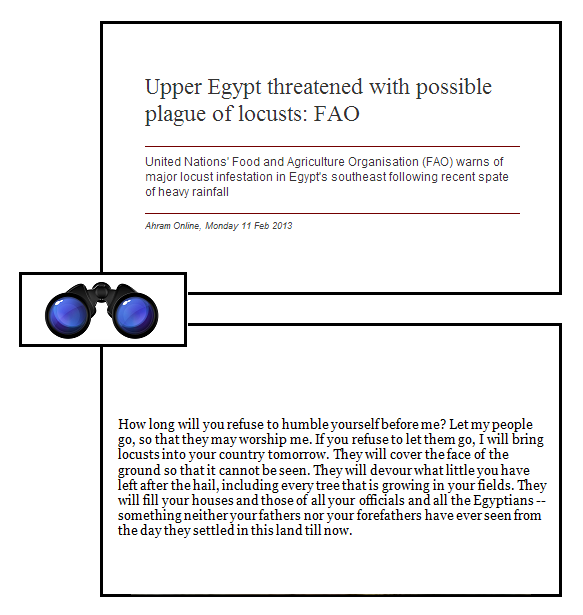
Of plagues of locusts, then & now?

Tuesday, February 26th, 2013

[ by Charles Cameron — the juxtaposition of sacred and secular worldviews, and what happens where they overlap ]
.
**

I’m returning here to an old theme of mine, the juxtaposition of worldviews — in this case, accounting for plagues of locusts in Egypt.

Such juxtapositions are like Rorschach blots in some ways — they allow each reader to see the items juxtaposed from within their own worldviews, perhaps applauding one and dismissing another, perhaps seeing some virtue in each or none in either — and perhaps arriving at some meta-level understanding which neither one alone would afford.

Is a plague of locusts in Upper Egypt of which the FAO warns in the upper panel above entirely explained in terms of rainfall? Is it pure mental happenstance that Egypt was the site of a Biblical locust plague at the time of the Israelite Exodus [Ex. 10. 3-6]? Is there, perhaps, a message for Egypt vis-a-vis Israel for our own day?

The answers people give to questions such as these, in which secular and sacred sources address what are putatively similar situations, can influence the way on which they voice themselves and vote — perhaps a good thing, perhaps not.

**

For what it’s worth, the plague of locusts is mentioned in the Qur’an in Sura 7.133:

So We let loose upon them [the Egyptians} the flood and the locusts, the lice and the frogs, the blood, distinct signs; but they waxed proud and were a sinful people.

**

In contemplating matters of this sort, it may be valuable to consider the remarks of the Pontifical Biblical Commission in The Interpretation Of The Bible In The Church, 1993/4:

The basic problem with fundamentalist interpretation of this kind is that, refusing to take into account the historical character of biblical revelation, it makes itself incapable of accepting the full truth of the incarnation itself. As regards relationships with God, fundamentalism seeks to escape any closeness of the divine and the human. It refuses to admit that the inspired word of God has been expressed in human language and that this word has been expressed, under divine inspiration, by human authors possessed of limited capacities and resources. For this reason, it tends to treat the biblical text as if it had been dictated word for word by the Spirit. It fails to recognize that the word of God has been formulated in language and expression conditioned by various periods. It pays no attention to the literary forms and to the human ways of thinking to be found in the biblical texts, many of which are the result of a process extending over long periods of time and bearing the mark of very diverse historical situations.

The great scientific art-grab

Wednesday, February 20th, 2013

[ by Charles Cameron — a poet’s rant against the hubris of scientists and the poverty of so much of what passes for art ]
.

Gorgeous. And fascinating.

**

I’d like to begin by saying beauty is not the same as prettiness any more than joy is the same as fun or truth than popular opinion. In fact I have an aphorism:

if you shoot for beauty, you’re liable to hit prettiness; if you want to achieve beauty, shoot for truth.

Okay? The beautiful can be grotesque, utterly normal, joyously peaceful, extremely violent, or simply gorgeous — and be beautiful in each case.

Having said that, I’d also like to say that the world, the universe in all it immense scope and scale and variety and possibility, isn’t “science” or “art” — we find science in exploring it one way, find art in exploring it another.

And when scientists want to impress, they often do it by choosing elements of beauty in what science has recorded of a universe that is neither science nor art but seamlessly filled to the brim with both — by appealing to our aesthetic taste, to the “art” side of our being, while claiming the result is science.

**

Case in point:

The graphic above, from the I fucking love science photo timeline on FaceBook, which comes with the caption:

Caddisfly larvae build protective cases using materials found in their environment. Artist Hubert Duprat supplied them with gold leaf and precious stones. This is what they created.

Did you get that? It’s from a site that bills itself I fucking love science that specializes in presenting, how can I make this simple, nature’s art. It’s the recognition of beauty that makes this site so wonderful — and in this particular case, the work of Artist Hubert Duprat.

**

I’ve been working with jewelry recently, and as you can see from this image of a Hematite “Tricubi” necklace by Bernd Wolf, the influence goes both ways.

**

What is beauty? And why does science as an institution so often want to claim what properly belongs in the realm of art? Or is science, perhaps, an art or cluster of arts? I’m tired of these ceaseless wranglings between two supposedly opposing cultures.

Paul Dirac:

I think that there is a moral to this story, namely that it is more important to have beauty in one’s equations that to have them fit experiment.

As art, the jewel-like protective cases those caddisfly larvae make are simply beautiful. The fact that they make them is fascinating.

Happy Birthday, Sir Isaac Newton and …

Tuesday, December 25th, 2012

[ by Charles Cameron — season’s greetings in a couple of different contexts ]
.

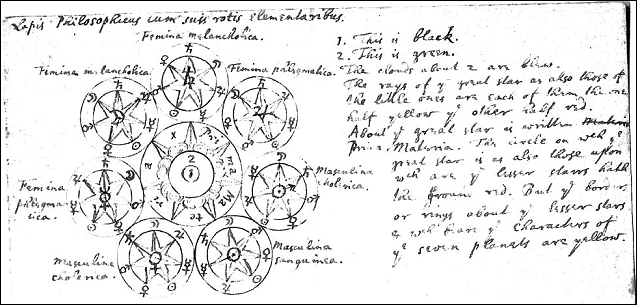
Lapis Philosphicus / The Philosopher's Stone, from Sir Isaac Newton, MS 416

.

It is Sir Isaac Newton‘s birthday today, December 25th, and that’s surely cause for some celebration.

Shakespeare‘s birthday is unknown, but was probably around April 23rd, Bach‘s is celebrated on March 31st, Galileo‘s on February 15th, Buddha‘s is mostly celebrated on April 28th, and HM the Queen‘s on April 21st, making April — TS Eliot‘s “cruelest month” — a powerful time for moving from womb into world.

If you’re a cricketer, you might celebrate WG Grace‘s birthday, 18th July, it takes all kinds to make a world. But December 25th? If you don’t also make a big deal about Leibniz on July 1st, what’s so special about Newton on December 25th?

**

There are some great aggregator blogs out there, and frankly I favor 3 Quarks Daily for their blend of culture, science and an accent from the subcontinent.

Today, as in other years, 3QD is celebrating Isaac Newton’s birthday, and I’ll raise a toast to him too. There are a great many things in our world that I am grateful for, that wouldn’t have been possible without his great and inquiring mind — though it’s his alchemical and apocalyptic interests that capture my own imagination.

What hath Newton wrought? You could do worse than to consult 3QD on this day across the years, 2004, 2005, 2006, 2007, 2008, 2009 — but you know, part of celebrating Newton’s Day (rather than that of Shakespeare, Leibniz, WG Grace, Dante, Marilyn Monroe or whomever) is that you can celebrate it on Christmas Day, on the day assigned conventionally to the birth of Christ — without getting all religious.

So it’s a sort of escape hatch for seculars, in a sacred season. As if all the gifts we give to commerce and each other weren’t enough.

**

In honor, therefore, of the child whose nominal birthday makes Sir Isaac Newton’s so much more easily memorable — this poem:

The birth of phoenix bliss
.

Gallows humor was implicit from the start
in the tiny child, in the newborn universe, in the
very heart of all that breathes and hopes,
evident then, at that first beginning, more so
in the tool shed behind the motel, most
now if we clear the rubble of malls and ads
from our eyes, blink a bit in the light, so
steady, so other than flash and glitter, so very

divinely human unfolding in each folded heart:
for oh, we are pilgrims, zeros traveling in
from earth to infinity, infinity itself
two zeros, two virgins intersecting, breeding,
filling the abyss: believe me, no phoenix
bliss is born, save from the ashes of crucifixion.

**

I know, I know, some of you will wonder WTF Charles is on about.

A lot of people have folded their Sunday suits away and mothballed them, I know — I just happen to think that the finest story in the world tells of an infant conquering men at arms, mighty empires, with love alone in his eyes.

I am not of the opinion that this obliges me to expect greybeards in space, to follow the culinary restrictions of some desert tribe, or to condemn those whose attitudes are different from mine: on the contrary, I find liberty in the childlike gaze, liberty and clarity, depth and profundity, and at bottom a deep mystery.

I wish you all whatever blessings may befall you, now and always.

Don’t you mess with my mother the moon

Tuesday, November 27th, 2012

[ by Charles Cameron — a poor, low-res copy of the greatest photo, a poem of mine, and a recent report of a scenario involving nuking the moon, apparently considered and, I am happy to say, rejected by the military ]
.

First, the greatest photo:
.

Photo: Ansel Adams, Moonrise, Hernandez, New Mexico, 1941

**

Next, the poem:

Don’t you mess with my mother the moon!
.

i

Don’t you mess with my mother the moon!
Pearl.
Superb in the night sky.
Which you treat as a junkyard.

ii

I am serious. I was never
more serious. This, which you thinking
life to be composed of things consider
real estate, rock,
subtly balances that other,

portending at the eye
that same angle — and that other, too
you would colonize,
strip, slash, mine, burn,
rape had you the chance, were it not
so magisterial a furnace.

Gold, which figures the sun
with silver the moon,
you have tapped for coinage,
despoiling hills for greed,
valleys for your convenience:
nor is your idiocy limited in reach
by anything but your idiocy.

Sun and moon are married
in a wedding you cannot conceive,
to which you lack invitation
though it was offered you.
The simple light of the night sky
escapes you, neither glimpse
nor sonata troubles your soul with its ripples,

for you lack, altogether,
reflection.

**

I wrote that poem quite a few years ago, and intended it as an appeal from the side of joyous poetic appreciation against the prevalent idea that the moon is a chunk of rock to be mined and otherwise exploited like any other. I didn’t suppose then that my voice would be heard against the amplified voices of technology, commerce, and human hubris—but voices will be voices, even in the wilderness.

The Japanese have a tradition of “moon-viewing” festivals — Tsukimi – a superb idea, appropriately reflective of the culture that produced the zen poet Ryokan, who celebrated a thief’s visit to pillage his mountain hermitage with the words:

The thief left it behind:
the moon
at my window.

The thief couldn’t steal it — but boyo, we still might be able to figure out a way to mess it up…

**

I for one don’t ever want to look at the moon and know that someone is using it as a projection screen for advertisements, let alone that its face is disfigured by robotic factories producing cheap running shoes – bad enough that we’ve left our trash there already!

Credit: NASA / Orbiter shows trash, tracks at Apollo moon landing sites

Look, my techno-leaning human friends — mine the asteroid belt if you must, I suppose Disney will eventually get the rights to Saturn, and make a ride of it – but leave the moon, leave the moon alone.

**

Then, the scenario:

I mean, how myopic can we get? According to Forbes yeaterday:

There’s a couple of preposterous reports out today alleging that the United States considered blowing up the moon in order to freak out the Soviets during the Cold War. Apparently something called “A Study of Lunar Research Flights” seriously pondered a moon bombing, and scientists as notable as Carl Sagan were even involved in planning the lunar attack, which was to take place in 1959 — before cooler heads prevailed.

Yup. There was a scenario — not a plan but a scenario — that was being explored: A STUDY OF LUNAR RESEARCH FLIGHTS:

Nuclear detonations in the vicinity of the moon are considered in this report along with scientific information which might be obtained from such explosions. The military aspect is aided by investigation of space environment, detection of nuclear device testing, and capability of weapons in space. A study was conducted of various theories of the moon’s structure and origin, and a description of the probable nature of the lunar surface is given. The areas discussed in some detail are optical lunar studies, seismic observations, lunar surface and magnetic fields, plasma and magnetic field effects, and organic matter on the moon.

I’ve corrected a spelling error, but otherwise that’s the abstract, as found within the .mil domain. I haven’t seen the document itself, but the abstract speaks for itself.

And no, as far as I can tell, the scenario didn’t involve “blowing up” the moon, which would have been pretty difficult as the Forbes article indicates. Apparently, though, some part of the military-industrial machine explored, discussed, and finally rejected the idea of hitting the moon with a single nuke — enough to switch a light-bulb on, it was hoped, above the Soviet military-industrial head.

**

And finally:

I’ve dragged this poem out of retirement, and hereby give you permission to reproduce it in toto, with or without the rest of this post — and indeed encourage you do to so. Tweet and RT the URL for this post, repost the poem, agree with me, disagree —

This latest revelation makes me feel it’s time for a conversation about convenience, commerce and science vs beauty, reverence and awe — about what the moon is worth to us.

It’s my birthday, do me a favor — spread the word: Don’t you mess with my mother the moon!

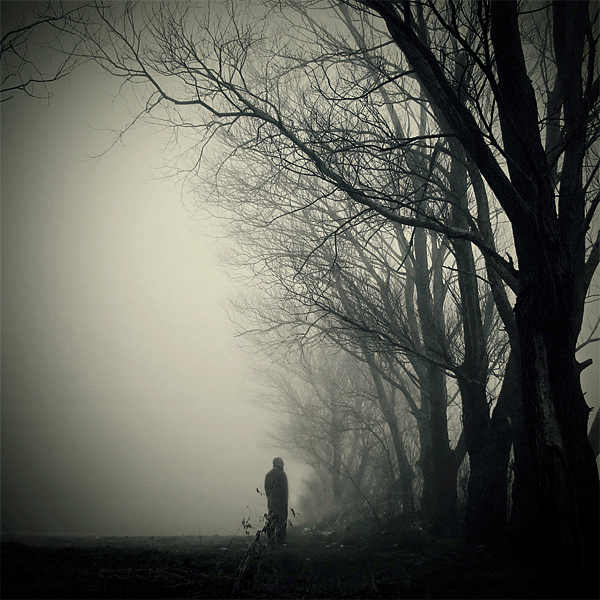
The Sounds of Silence and Your Own Mind

Tuesday, November 27th, 2012

Scott Shipman had an excellent book review post An Unknown Future and a Doubtful Present: Writing the Victory Plan of 1941 — a review-lite and a few questions in which he discussed the intellectual seriousness and evolution of war planner   Major Albert C. Wedemeyer as a military officer and strategist:

….Wedemeyer was an honor graduate of the Command and General Staff College, and his performance earned him the opportunity to attended the Kriegsakademie, the German staff college. However, coupled with impressive academic preparations, Kirkpatrick writes that Wedemeyer’s curiosity exposed him to a “kaleidoscope” of ideas and methods. Kirkpatrick summed-up Wedemeyer: “Competence as a planner thus emerged as much from conscientious professional study as from formal military education…” Going on to say:

In common with many of his peers, much of Wedemeyer’s professional and intellectual education was less the product of military schooling than of personal initiative and experience in the interwar Army.

Wedemeyer’s intellectual development was purposeful and paid off. In Wedemeyer’s deep study of his profession he used the prescribed paths, but also explored on his own. How common is that today? 

As often happens, the discussion can take an unexpected turn in the comments section. Lexington Green weighed in with this:

Think about George Marshall in China, traveling around on horseback.  No cell phone, no email.  The man could actually think.  Or Eisenhower meeting with Fox Connor to talk about the books Connor had him read. Telephone calls were not even common.  The military might do well to have two days once a quarter of silent retreats, only emergency communication permitted, with literally no unnecessary conversation, for groups of officers and non-coms, with some assigned reading and some self-selected on the same theme, then an open discussion after dinner. It would cost virtually nothing and would be an intellectual and mental oasis, and some good ideas might come out of it.  Religious silent retreats which last a couple of days and are truly life-restoring. This would probably be useful as well.

That in turn provoked this response from Marshall:

My sense is that many of us live, work, and fraternize in a culture of crisis. Everything is urgent. One response is to just shut off the moment we get some downtime. TV, drinking, schlock fiction, immersion in pop culture, video games, blog reading are some of the ways I’ve coped. I grew out of those as timewasters as I realized that I no longer had time to shut off if I wanted to do something.

But I still live in a culture of crisis. Almost everybody around me “has no time”. It doesn’t really matter what is being proposed, the sense of urgency kills all ambition toward progress. Defending myself and my space form this is a daily challenge – and some days I lose.

I’m visiting family this week on a long-scheduled “vacation” that has been interrupted by my office several times already, but always with the promise, “just this thing, Marshall, we don’t want to take you away from your family”. And these are the people I choose as my allies!

The culture of crisis doesn’t believe in people’s choices. It says that time will only be wasted, so we have to keep our people busy. After all, see how they spend their “free” time? Dissolute wastrels the lot of them. And then the culture of crisis tells us that we need to recharge by shutting off our minds. You need to vege out, man, you’re stressed; turn on the TV and have a beer, mate. Or else fire up your e-mail and write six more. And, hey, sorry about your insomnia, but it lets you get a jump on the day, amirite? [….]

The discussion moved on, but I have been mulling upon this exchange ever since.

The first thing that came to mind is that what we mean by “silence” really isn’t silent, what is really meant is that there is an absence of human voice pulling at our limited capacity for attention. Cognitive load is probably a real, if variable, limit on human cognition and the nature of hyperconnected information society is that all too frequently we are -and feel – “overloaded”.

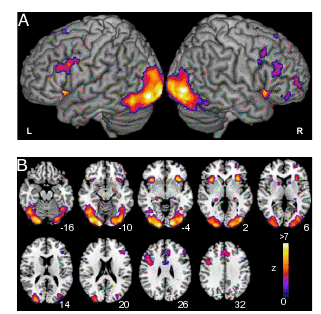
When human voices are absent the “background” environmental noise comes “forward” , natural (wind through trees, animals etc) or mechanical (various humms and clicks) that we unconsciously tune out as a matter of routine focusing on conversation or distracting hearsay, broadcasts and so on. The processing in the brain is significantly different depending on what kinds of sounds you are listening to, for example:

1. Listening to Music

2. Listening to Language

3. Listening to unpleasant sounds (nails on chalkboard etc.)

So eliminating human speech from your environment but not hearing (earplugs) itself allows other regions of your brain to become more active than usual, depending on whatever else you may be doing at the time (walking, chopping wood, smelling a flower, scanning the horizon and so on).  Your brain’s performance and how it varies when thinking under conditions of different combinations and levels of sensory stimuli – “crossmodal processing” – is not yet well understood as research is in early stages of investigation.

I will speculate here that what is important for enriching your thinking is that taking your brain out a linguistic-saturated environment (let’s include the “soundless noise” of intruding textual symbols as well from smartphones, iPads, laptops)  gives it an opportunity to operate differently for a time and establish new neuronal network patterns of activity. Various forms of meditation – which involves both silence and an intentional modulation of attention – also  alters normal  brain activity.

I will now go further out on a data-free analytical limb and hypothesize that making a practice of “silence” and/or meditation might improve your thinking by making moments of creative insight more likely. Studies on insight tend to show that as a cognitive event, insight  comes about as a kind of a “pulse” of activity and relaxation in the brain:

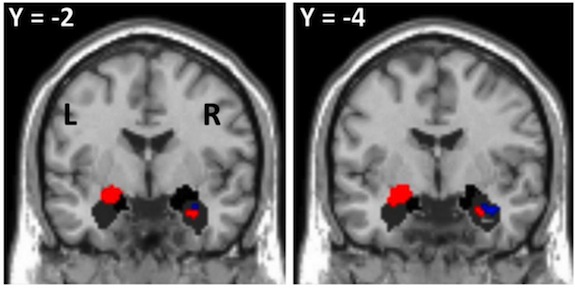
….Mark Jung-Beeman, a cognitive neuroscientist at Northwestern University, has spent the past fifteen years trying to figure out what happens inside the brain when people have an insight. Jung-Beeman became interested in the nature of insight in the early nineteen-nineties, while researching the right hemisphere of the brain. Mentions Jonathan Schooler. Jung-Beeman decided to compare word puzzles—or Compound Remote Associate Problems (C.R.A. Problems)—solved. He teamed up with John Kounios, a psychologist at Drexler University, and they combined fMRI and EEG (electroencephalography) testing to scan people’s brains while they solved the puzzles. The resulting studies, published in 2004 and 2006, found that people who solved puzzles with insight activated a specific subset of cortical areas. Although the answer seemed to appear out of nowhere, the mind was carefully preparing itself for the breakthrough. The suddenness of the insight is preceded by a burst of brain activity. A small fold of tissue on the surface of the right hemisphere, the anterior superior temporal gyrus (aSTG), becomes unusually active in the second before the insight. Once the brain is sufficiently focused on the problem, the cortex needs to relax, to seek out the more remote association in the right hemisphere that will provide the insight. As Kounios sees it, the insight process is an act of cognitive deliberation transformed by accidental, serendipitous connections. Mentions Joy Bhattacharya and Henri Poincaré. The brain area responsible for recognizing insight is the prefrontal cortex. Earl Miller, a neuroscientist at M.I.T., spent years studying the prefrontal cortex. He was eventually able to show that it wasn’t simply an aggregator of information, but rather it was more like a conductor, waving its baton and directing the players. In 2001, Miller and Princeton neuroscientist Jonathan Cohen published an influential paper laying out their theory of how the prefrontal cortex controls the rest of the brain. It remains unclear how simple cells recognize what the conscious mind cannot. An insight is just a fleeting glimpse of the brain’s huge store of unknown knowledge.

Another interesting data point to consider re: “silence” and insight is that the mental illness of schizophrenia, where delusions and other mental “noise” exists is significantly negatively correlated with insight.  Researchers are currently investigating if meditation can ease the symptoms of schizophrenia and other mental illnesses.

For myself, I find my best ideas come via insight when I am doing something primarily physical requiring steady but not all of my concentration and I am alone – working out, walking the dog, a household chore and so on. Relatively useful ideas can happen when I am reading or writing or debating (i.e. interacting with a text or a person), but they tend to be analytic and derivative, sort of an intellectual “tweaking” or “tinkering” but not ones that are fundamentally creative or synthesizing.

Lexington Green may be right – Silence is golden.


Switch to our mobile site