zenpundit.com » intellectuals

Archive for the ‘intellectuals’ Category

SWJ: Manea interviews Fernando Lujan

Tuesday, July 24th, 2012

The latest in the series of COIN interviews by Octavian Manea:

COIN and Other Four-Letter Words: Interview with AfPak Hand Major Fernando Lujan 

OM:  In early 2009, I made a tour of a few DC think tanks.  At the time everybody was talking about COIN. Why did COIN become a dirty word, today? Why do you still believe in COIN doctrine?

FL:  Well, frankly I get a bit nervous whenever I hear the words “believe” and “doctrine” in the same sentence… the same way I get nervous when I hear people refer to the current counterinsurgency manual, FM 3-24, as “the good book.”  The counterinsurgency manual should never be dogma, never be seen as some sort of universal solution.  The manual was an attempt to change the culture of the Army at a time when we desperately needed it.  It was written by a group of very smart people who tried to include some lessons from Cold War-era insurgencies, but let’s not fool ourselves–it was written in extremis, for forces struggling through their rotations in Iraq from 2006-2010.  It did a pretty good job helping those units.. and it serves as a decent framework for one type of counterinsurgency effort–the resource intensive, ‘boots heavy’ sort that we saw in Iraq and Afghanistan.

 But we should not lose sight of the fact that this type of massive COIN effort is only one extreme of a long continuum of policy options, undertaken when the situation in both countries had already deteriorated so much that major reinforcement became the ‘least bad’ choice in the minds of our civilian leaders.  If we want to keep COIN from becoming a ‘dirty word,’ as you say, we need to make this distinction clear, and leave room for alternate, smaller footprint models.  The next version of the doctrine should not just pull lessons from Iraq and Afghanistan–but also from Colombia, the Philippines, El Salvador, the Sahel, and the myriad of other places we’ve been involved in over the past decades.  To the credit of the Army and Marines, Ft. Leavenworth is in the midst of rewriting the manual as we speak–but it remains to be seen what kind of message the final product will send.  Will we have a cookie cutter model with the five standard lines of effort, built around heavy resources and a 5,000-man brigade combat team or will we have a manual that offers a broad toolkit of different approaches–some civilian-led or embassy ‘country team’ based, some more heavily reliant on targeting and offshore training or 3rd party actors, et cetera.  Knowing what we know about land wars in Asia, I’d personally much rather see the latter…..

Read the rest here.

Venkat on Positioning vs. Melee Moves

Thursday, July 19th, 2012

Blogfriend, Dr. Venkat Rao had an intriguing post at Tempo (his other blog) on which I want to make a few, relatively disjointed, observations:

Positioning Moves versus Melee Moves 

My general philosophy of decision-making de-emphasizes the planning/execution distinction. But I am not an agility purist. Nobody is. You can think of the Agility Purist archetype as a useful abstraction. This mythical kind of decision-maker believes that a mind and personality that is sufficiently prepared for a particular domain (say programming or war or biochemistry) needs no preparation for specific situations or contingencies. This magical being can jump into any active situation in that particular domain and immediately start acting effectively.

At the other extreme you have an equally mythical Planning Purist archetype who has thought through every possible contingency all the way through the end and can basically hit “Start” and reach a successful outcome without further thinking. In fiction, this is best represented by jewelry heist capers based on long, involved and improbably robust sequences of moves, as in Ocean’s Eleven or The Italian Job. A few token things go wrong, but overall, these narratives play out like Rube Goldberg machines. 

What is interesting to me is that if we look at historical figures who epitomize a “purist archetype” they can represent disaster as easily as they can triumph. Take the planner archetype,  for example. Two figures in the annals of warfare who are “purists” in this regard would be Moltke the Elder and Robert Strange McNamara.

Because the Vietnam War was such a terrible debacle and because McNamara’s role in the war was so significant the resulting opprobrium heaped upon McNamara (deservedly, IMHO) makes it too easy to forget that he had a brilliant mind, that he was not just a reckless bumbler or a hack as Secretary of Defense. A famous anecdote of McNamara’s intelligence and his ability to quickly grasp enormous reams of data is in The Best and the Brightestby David Halberstam.  As Halberstam related, Secretary McNamara was once over a thousand slides into  being briefed about the war when he abruptly ordered the briefer to stop because the current slide conflicted with the information on something like “slide 23”. They stopped and checked. McNamara was indeed right.

It was McNamara who introduced systems analysis and PPBS to the Department of Defense, created the DIA and the Defense Logistics Agency. Yet despite his methodical and mathematical analytical gifts, his understanding of the human element was a curious lacuna that led to his carefully calculated attrition strategy and escalation. There was no way way, in Robert Strange McNamara’s metrics, to quantify Hanoi’s will to fight, and without such comprehension, attrition would be (to use a popular phrase anachronistically) a “stratergy of tactics”.

Field Marshal Graf von Moltke’s careeer as a war planner and chief of the Prussian general staff was a happier one as the victor in three of Prussia’s wars and a co-founder, with Bismarck, of the German Empire. A devoted student of Clausewitz, von Moltke was at home in the contradiction of exquisite planning and the improvisation that was part and parcel of coup d’oeil in the midst of battle. Unlike McNamara, von Moltke’s planning encompassed the human factors and serendipity. As Antulio J. Echevarria put it:

….Like Clausewitz, Moltke emphasized flexibility in military planning and execution. He eschewed dogmatic thinking, whether tactical or strategic, accepted chance and uncertainty as inseparable from the nature of war, and recognized the often decisive (but incalculable) role that moral factors played in victory. He originally viewed the destruction of the enemy’s main fighting force as the proper aim of war, but gradually became less convinced of its genuine decisiveness after the French resorted to partisan warfare in 1870-71.[10] “We want to believe,” he later told the Reichstag, “that neither the Thirty Years’ nor the Seven Years’ War will recur, but when millions of individuals are engaged in a bitter struggle for national existence, we cannot expect that the matter will be decided with a few victorious battles.”

….By the early 1880s, this free-form approach to war had further established itself as part of the German military tradition, accruing still more Moltkean ideas: simplicity is the essential ingredient of an order; war plans do not endure beyond the first engagement; friction, chance, and uncertainty are inescapable elements of war; and strategy serves policy best when it strives for the highest aim, complete tactical victory.[32] The fact that military writers often accused each other of Schematismus–rigid, prescriptive thinking–in Germany’s turn-of-the-century military debates indicates that Moltke’s ideas had become paradigmatic within the officer corps. Ironically, an inherent contradiction developed in the German view of war at this time–namely, that while war possessed no absolute rules, the destruction of the enemy’s forces had to remain its ultimate aim.

Second, Moltke’s open, inductive approach to war also helped legitimize a decentralized style of warfighting called (perhaps wrongly) Auftragstaktik. Much confusion reigns concerning this concept and its “dubious” historical validity.[34] Military writers on either side of the Atlantic have somewhat abused the term Auftragstaktik in an effort to legitimize their own preferred style of command. In fact, Auftragstaktik and the meaning behind it surfaced decisively, albeit sparingly, in the debate over tactics that raged for years between the Imperial Army’s traditionalists and reformists. In its origins, the concept probably owes more to that leading figure of the Prussian Restoration, Gerhard von Scharnhorst, than to Moltke. But Moltke clearly advocated the decentralization of military effort. He reasoned that war, a product of opposing wills subject to a host of frictions, gives rise to rapidly changing situations that quickly render a commander’s decisions obsolete. Hence, subordinates had to think and act according to the situation, even without or in defiance of orders. While Moltke did indeed promote such a style of command, he did not condone willful disobedience. In fact, the Prussian, and later the German, army maintained strict codes of discipline. 

Back to Venkat:

….In sail warfare, there is a clear distinciton between moves designed to put you in an advantageous position with respect to relatively predictable environmental conditions (primarily the wind direction of course) and moves that are used once an engagement starts.  The latter culminate in a melee: ships next to each other, boarding actions and hand-to-hand combat. It is messy, chaotic and the very definition of the “Fog of War” phenomenon (in the case of sail warfare, cannon fire and the action of fire ships could create a literal blinding smokescreen over everything).

You can think of positioning moves as rich moves based on fertile variablesthat are likely to put you in command of many situations (“own the high ground” is the most famous one). They are high-potential-energy commitments in the space of probable paths. You can also think of them as leverage moves. A crucial feature is that positioning moves involve much less time pressure than melee moves and can be set up well before they are needed. So positioning moves are early, rich moves.

Melee moves on the other hand are, well, the other kind.

I am no naval expert, but the sea like the sky, being free of human clutter and topographic variation, brutally clarifies for commanders and strategists like Mahan or Wohlstetter the relative spatial relationship between adversaries and the limitations of their comparative resources and capabilities in light of distance and time.

If Russia had been a sea, Hitler would have thought twice about Operation Barbarossa.

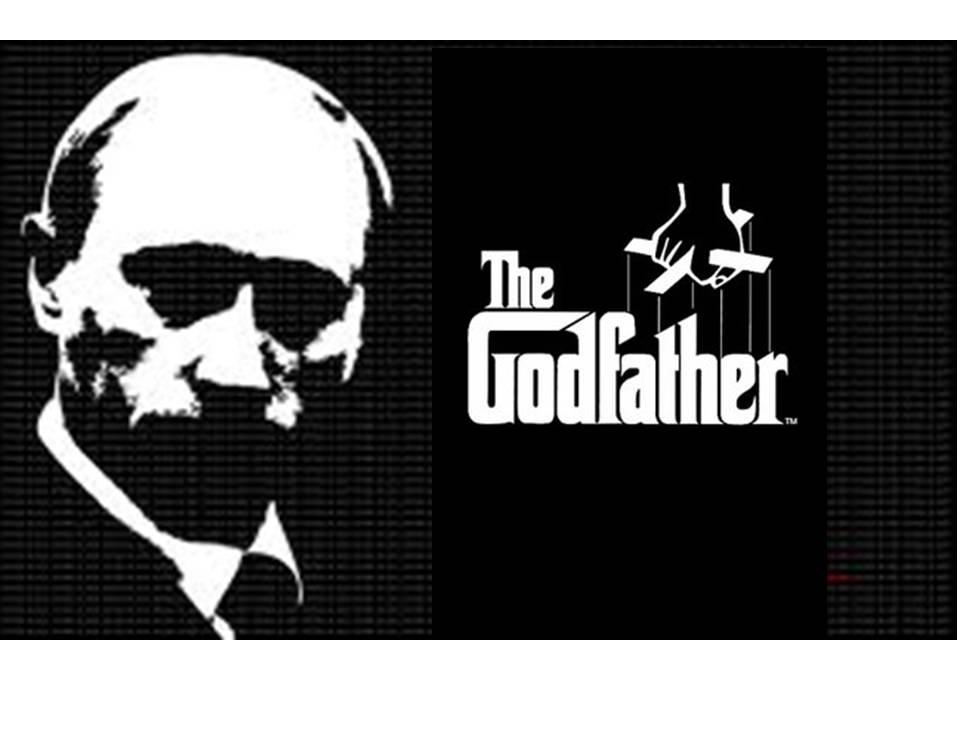
Putin and Syria: Siloviki Realism in Geopolitical Strategy

Thursday, July 12th, 2012


Russian President Vladimir Putin made a foreign policy speech to Russia’s ambassadors and Foreign Ministry officials that is very much worth reading in context of his dispatch to Syria of a fleet of warships, including a battleship, to the modest Russian naval base in Tartus. Under Putin’s hand, Russian support for the bloody regime of Bashar Assad has consistently been more about safeguarding and expanding Russia’s strategic place in world than about Syria:

….We are forced to admit that no reliable solution for overcoming the global economic crisis has been found yet. Indeed, the prospects are looking more and more worrying. The debt problems in the Eurozone and its slide towards recession are just the tip of the iceberg as far as the global economy’s unresolved structural problems go. The traditional powerhouses of global development – the USA, the EU, and Japan – are seeing their leadership erode, but the absence of new development models is putting a brake on global growth. There is increasing competition for access to resources, and this provokes abnormal fluctuations on the raw materials and energy markets. The traditional Western economic powers are being weakened by the crisis, which has exacerbated social and economic problems in the developed economies, and by the multi-vector nature of global development today. We can already see this for a fact now. 

Colleagues, this is no cause for joy. We should not take delight in this turn of events, and much less feel malicious glee. On the contrary, we cannot but worry over these developments, because the consequences of these tectonic shifts in the global economy are not yet clear, nor are the inevitable shifts in the international balance of power and in global policy that will follow. 

We are all the more worried when we see attempts by some actors in international relations to maintain their traditional influence, often by resorting to unilateral action that runs counter to the principles of international law. We see evidence of this in so-called ‘humanitarian operations’, the export of bomb and missile diplomacy, and intervention in internal conflicts.

We see how contradictory and unbalanced the reform process is in North Africa and the Middle East, and I am sure that many of you still have the tragic events in Libya before your eyes. We cannot allow a repeat of such scenarios in other countries, in Syria, for example. I believe that we must do everything possible to press the parties in this conflict into negotiating a peaceful political solution to all issues of dispute. We must do all we can to facilitate such a dialogue. Of course this is a more complex and subtle undertaking than intervention using brute force from outside, but only this process can guarantee a lasting settlement and future stable development in the region, and in Syria’s case, in the country itself….

It would be harder for Putin to have been more clear about what his priorities were, or that for Russia, R2P as a doctrine has no standing whatsoever in international law [ incidentally, he’s correct on that point] and Syria is not going to be allowed to go the way of Libya, if the Kremlin can prevent it.

Generally, the media reported this speech, highly misleadingly, as Putin’s prediction of “Western decline” when the message was Russia’s opposition to Western military intervention in Syria to remove Assad from power. Putin neither overestimates the means at Russia’s disposal to accomplish his limited objective (blocking intervention) nor inflates his objective to an unrealizable, vaguely defined, abstraction.

Contrast, with the speech on Syria made recently by SECSTATE Hillary Clinton. Here is a snippet that gives the tenor of her remarks:

….What was accomplished in Geneva by the action group was, for the very first time, to enlist not only all five permanent members of the Security Council including Russia and China, but also important leaders in the region and in the Arab League in support of such a transition. The issue now is to determine how best to put into action what was accomplished there and is continuing here. And I really hope everyone reads the communique from Geneva, because for example, one of the earlier speakers from Syria expressed concern there was nothing about political prisoners. Well, indeed there is. And a call for the release from detention. So it would be very helpful to get everybody on the same page if we’re going to work together about what we have already done and what we need to be doing as we move forward.

Under the Geneva communique, the opposition is for the first time put on an even basis with the government. They are given equal power in constituting the transition governing entity that will have, as we just heard, full executive authority. That could not have been imagined three months ago, let alone a year ago.

So although none of us here is satisfied or comfortable with what is still going on inside of Syria, because it is against every norm of international law and human decency for a government to be murdering its own people, there has been in the last several months, starting in Tunisia, a steady, inexorable march toward ending this regime. What we need to do is to follow through on what each of us can contribute to the end of the Assad regime and the beginning of a new day for Syria. 

….Now what can every nation and group represented here do? I ask you to reach out to Russia and China and to not only urge, but demand that they get off the sidelines and begin to support the legitimate aspirations of the Syrian people. It is frankly not enough just to come to the Friends of the Syrian People, because I will tell you very frankly, I don’t think Russia and China believe they are paying any price at all – nothing at all – for standing up on behalf of the Assad regime. The only way that will change is if every nation represented here directly and urgently makes it clear that Russia and China will pay a price, because they are holding up progress – blockading it – that is no longer tolerable. 

First of all, the Secretary of State needs a more effective speechwriter. Period.

Secondly, there is a substantive problem here with an obsession with the minutia of process, possibly because the legal principle behind American policy on Syria is a novelty of intellectuals and is not accepted by two veto-wielding great powers that sit on the UN Security Council. Moreover this focus on minutia of process obstructs clear thinking in regard to the larger geopolitical picture and the ways to get to the end in mind – the removal of Assad’s regime – or the consequences for opposing American policy. Russia and China are told their continued support for the Assad regime, which they see as being in their own interests, is “intolerable” – an outburst of unseemly frustration as we have no stick and strangely offer no carrots for these states to change their positions. Instead we choose to moralize  in public, a diplomatic technique with a long pedigree of failure.

The comparison of statecraft between Russia and the United States is unflattering. Russia has vastly fewer cards to play, but because  Putin has grounded his policy in a siloviki assessment the realities of power, has limited his objectives to those within Russia’s means and related those to the larger diplomatic context that would appeal to other powers, he has played those cards well. Moreover, Putin has positioned Russia to be an indispensable party in a peaceful resolution of the conflict in Syria at very little cost, as Secretary Clinton herself has admitted and capped it off with a naval show of force in the eastern Mediterranean.

We, who have a wealth of resources to employ, have squandered them ineffectively and navigate the ship of state with our heads in the clouds. We forced a vote in the UNSC on Syria, ignoring all signals that the end result would be failure. Syria shoots down a Turkish warplane intruding in it’s airspace (likely at our request) and we had no plan to capitalize on the incident. We gratuitously leak information or disinformation about covert operations that serves more to make us look amateurish than to intimidate our opponents. We do not even appear to be well-informed about the Syrian opposition we are aiding inside Syria, as opposed to expatriate organizations. Some of the fighters in the opposition are as morally objectionable as Assad’s militia thugs and secret police killers.

We play at tactical geopolitics while the Russians do strategy.

Book Review: Thucydides:The Reinvention of History by Donald Kagan

Thursday, July 5th, 2012

Thucydides: The Reinvention of History by Donald Kagan 

Donald Kagan, who has been a professor of history and classics at Yale University almost as long as I have been alive has written a provocative book about Thucydides that challenges both conventional scholarly wisdom regarding the man who shares the title of “The Father of History” and the purpose of the book Thucydides meant to be “a possession forever”, The Peloponnesian War. In Kagan’s interpretation, Thucydides is the father of historical revisionism whose careful methodology furthered a political agenda: to defend the record of the Periclean state in Athens, where democracy was moderated by the wise statesmanship of the old aristocratic elite; and lay the blame for the downfall of Athens at Spartan hands on the vulgar hubris of radical democracy of mob and demagogue.

Thucydides is tightly focused argument about Thucydidean omissions, juxtapositions and treatment of sources and bias in his analytical rendering of military events and debates in the Assembly, not a comprehensive examination of  The Peloponnesian War. Specifically, the treatment of Pericles and Nicias (whom Kagan argues Thucydides favors and whom Kagan blames for failures of strategy and execution, especially the latter) vs. that he meted out to Cleon, Alcibiades and Demosthenes. Kagan criticizes Thucydides for the deliberate omission of speeches of Periclean opponents in debates where he  had been present and purporting to know the thoughts of actors where definitely had been absent, in exile; of faulty military analysis of the situation of the Spartan garrison besieged on Sphacteria due to personal enmity with Cleon and of the original expedition to Syracuse, because of favortism toward Nicias.

On Nicias in particular, a fellow aristocrat in favor of strategic restraint whom Kagan ascribes blame for the disaster in Sicily, did Thucydides seek a radical revision of the contemporary Athenian opinion. It was Thucydides belief that the post-Periclean democracy was a reckless, superstitious and greedy mob that led him, Kagan argues, to craft his narrative as an apologia for the inept statesmanship and incompetent generalship of Nicias that brought Athens to utter ruin in Sicily. Kagan’s accusations of bias on Thucydides part are more persuasive than his contention that the original expedition to Syracuse of sixty ships was a justifiable and sensible endeavor.

Kagan’s charges against Thucydides indirectly raise the larger question of politics in postwar Athens. A democracy shorn of it’s empire, long walls and fleet, defeated in external war but triumphant in brutal civil strife over it’s internal oligarchic enemies, was in all likelihood a dangerous place. Xenophon felt as a follower of Socrates, who had been associated with the reviled Alcibiades and Critias, that it was politic to leave Athens for his march upcountry under the banner of Cyrus. Socrates was unjustly put to death by the democratic faction. Writing from retirement in the luxury of a distant estate was a wiser option for a man of Thucydides’ opinions in that era than a return to the political fray in Athens and in part, would explain his supposed “revisionism”.

Strongly recommended.

Infinity Journal: The Foundation of Strategic Thinking

Tuesday, July 3rd, 2012

I first heard Lieutenant General Paul Van Riper speak at the Boyd ’07 Conference at Quantico and came away impressed. General Van Riper has a new article posted at Infinity Journal (registration required but always free….):

The Foundation of Strategic Thinking 

….While Clausewitz alludes to this nonlinearity through much of his opus On War, he speaks to it directly in Book One, Chapter 1, Section 28. This section, which hardly takes up half a page, summarizes many of the essentials of Clausewitz’s theory of war. He begins the section noting: “War is more than a true chameleon that slightly adapts its characteristics to the given case.”[vii] His use of a biological metaphor indicates war is not mechanistic and therefore not a controllable or predictable phenomenon. He then lays out the dominant tendencies of that phenomenon, which strategists often sum up as passion, probability, and reason. He mentions that most often the three tendencies are the concern of the people, army, and government.[viii] Continuing, Clausewitz makes a strong claim: “A theory that ignores anyone of them or seeks to fix an arbitrary relationship between them would conflict with reality to such an extent that for this reason alone it would be totally useless.”[ix]

In other words, to be valid any theory of war must incorporate war’s intrinsic dynamism. He goes on to say: “Our task therefore is to develop a theory that maintains a balance between these three tendencies like an object suspended between three magnets.” This analogy points to a cutting-edge scientific experiment of his era, that demonstrates the nonlinearity of any system where there is freedom of movement among three or more elements.[x] The virtual impossibility of duplicating the path of a pendulum as it moves among three equally spaced magnets tells us that despite our desire to balance passion, probability, and reason—the three central tendencies of war—it is simply not possible.[xi] War is a nonlinear phenomenon.

As with all nonlinear phenomena, we can only study war as a complete system, not as individual parts. Clausewitz is clear in this regard claiming that, “. . . in war more than in any other subject we must begin by looking at the nature of the whole; for here more than elsewhere the part and the whole must always be thought of together.”[xii] This advice runs counter to Americans’ preference for using an engineering approach to solve all problems. Reductionism tends to be part of the national character. We persist in using linear methods even when the evidence shows their limitations.

John Lewis Gaddis described the difficulties this approach has caused the U.S. national security community in a ground-breaking article questioning why political scientists failed to forecast the end of the Cold War.[xiii] His convincing conclusion is that while members of the physical and natural sciences were incorporating the tools of nonlinear science into their various disciplines those in political science were adopting classical linear practices, which blinded them to the dynamics that led to the Soviet Union’s demise. In the end, we confront the reality that as with war, international relations is nonlinear. Indeed, so also are most things that flow from it, including strategies and strategic thinking. […]

Read the rest here.

I particularly liked Van Riper’s later comment as going to some of what ails us:

….Good strategists know how nonlinear systems such as nation-states, non-state actors, international relations, politics, economics, wars, campaigns, and a host of others work in the real world. More importantly, they use this knowledge of a nonlinear world when they ponder strategic questions or recommend strategies. Good strategists don’t depend on analytical tools to uncover the future security environment or potential enemies. Rather, they look to history and economic and demographic trends to inform their judgments of what might happen in a nonlinear world.

If you look at the biographies of the men who were “present at the creation” or made the transition from World War to Cold War – Stimson, Acheson, Harriman, Marshall, Bohlen, Kennan, McCloy, Forrestal, Nitze, Eisenhower, Dulles, Lovett – they had overlaps of background in international business, diplomacy, banking, law and war. While this did not mean policy harmony – for example Acheson, Kennan, Bohlen, Harriman and Nitze had disagreements among themselves in regards to the Soviets  – they possessed a shared understanding of strategy and the historical context in which they operated.

Today, high level discussions of strategy between the military, policy and political worlds are too often exactly that – communications between different planets rather than a dialogue within one small world.


Switch to our mobile site

