zenpundit.com » America

Archive for the ‘America’ Category

Obama mentions Khamenei “nuclear fatwa”

Tuesday, September 24th, 2013

[ by Charles Cameron — I believe this is the first time a US President — perhaps even a senior US official — has affirmed the existence of Ayatollah’s Khamanei’s previously disputed so-called “nuclear fatwa” ]
.

Here, from the Washington Post‘s full transcript of President Obama‘s address to the UN General Assembly, is the relevant section — I’ve emphasized his reference to the fatwa in red:

Since I took office, I’ve made it clear in letters to the supreme leader in Iran and more recently to President Rouhani that America prefers to resolve our concerns over Iran’s nuclear program peacefully — although we are determined to prevent Iran from developing a nuclear weapon. We are not seeking regime change, and we respect the right of the Iranian people to access peaceful nuclear energy. Instead, we insist that the Iranian government meet its responsibilities under the Nuclear Non-proliferation treaty and U.N. Security Council resolutions.

Meanwhile, the supreme leader has issued a fatwah against the development of nuclear weapons. And President Rouhani has just recently reiterated that the Islamic republic will never develop a nuclear weapon. So these statements made by our respective governments should offer the basis for a meaningful agreement. We should be able to achieve a resolution that respects the rights of the Iranian people while giving the world confidence that the Iranian program is peaceful. But to succeed, conciliatory words will have to be matched by actions that are transparent and verifiable.

**

Further reading:

I believe we tend to underestimate the significance of religious and apocalyptic influences in international affairs, since the development of Iranian nuclear weaponry is a potential casus belli, and since the use of nuclear weapons has a distinctly apocalyptic aura, I’ve tried to take an interest — here’s my lengthy overview of “religion and nukes” in religion and myth worldwide, from 2008.

  • I catalogued my own understandings about the fatwa here on Zenpundit in a 2011 post, Striking Iran — response to Cheryl. I lack access to both Iranian language and classified sources, however, so that post represented a best effort to corral what I could find, but kis far from definitive.

  • Cheryl Rofer has also been following this discussion with interest, and her two posts for Nuclear Diner, The Fatwa Against Nuclear Weapons of January this year and The Nuclear Fatwa of March present her latest understandings — Cheryl, please correct me if you have written anything more recent or more comprehensive.

  • Selfscholar claims to be a “portal for unique, pertinent research on law and human rights in the Middle East”. I cannot speak to the particular interests, influences, credentials or biases of those who posts there, but the materials on our topic, that I have found there — in English but with extensive citations of original texts — will surely provide any researcher who possesses the appropriate language skills with many further pointers to track down… My starting point would be a search of the site for the keywords “nuclear fatwa”. The most recent post there would be Radioactive Fatwas: The Growing Islamist Legitimization of Nuclear Weapons from the 17th of this month. And Go, Learn About Atoms: Iranian Discourse on Nuclear Weapons, 1962-Present, at 32 pp. and posted in June 2013, would appear to offer a detailed historical presentation.

  • **

    And for further context:

  • Yesterday’s Financial Times brought us a piece by Najmeh Bozorgmehr titled Words of seventh-century imam signal Iran’s change of approach, which begins:

    The Iranian regime’s sudden focus on a seventh-century Shia imam may be the strongest indicator yet that Tehran is serious about negotiating on its nuclear programme. Imam Hassan, grandchild of the Prophet Mohammed and the second of 12 Shia imams, is famous for negotiating a peace treaty with those opposed to the principle that only descendants of the prophet could rule over Muslims. In Shia texts, his actions are defended as a compromise for the greater good of the religion, rather than a defeat.

    When Ayatollah Ali Khamenei, Iran’s top decision maker, called last week for “heroic flexibility” in talks over the nuclear programme, he was echoing the title of a religious text about Imam Hassan that he translated decades ago: Imam Hassan’s Peace: the Most Glorious Heroic Flexibility in History. The comment boosted hopes in Iran and the west of a possible nuclear deal, even though the ayatollah added that any flexibility was simply a tactic, presumably to deal with a difficult period and head off more economic sanctions or the possible threat of military confrontation with Israel or the US.

  • **

    I’d particularly welcome a post or comment from Selfscholar responding to Pres. Obama’s remarks today, and informed commentary on the Selfscholar site from those with appropriate skills to set it in religious, political, and scholarly context — as well as the usual fine interplay of views in the ZP comments section.

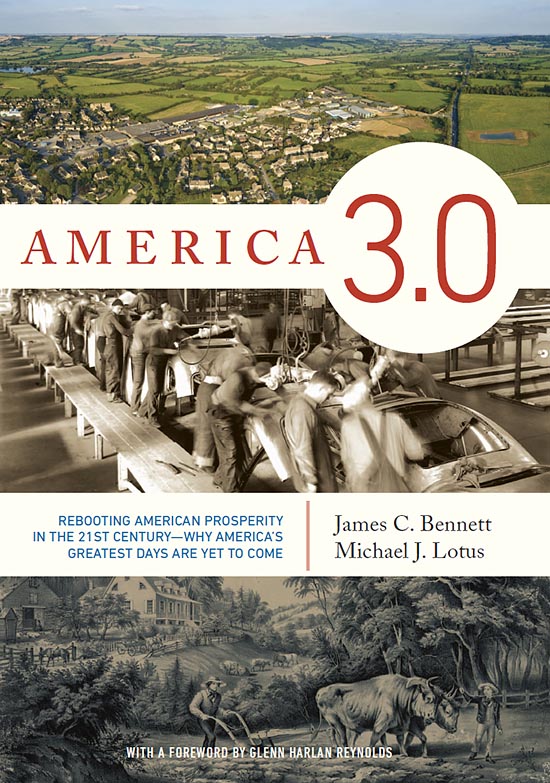
    Ronfeldt’s In-Depth Review of America 3.0

    Monday, September 23rd, 2013


     David Ronfeldt, RAND strategist and theorist has done a deep two-part  review of America 3.0 over at his Visions from Two Theories blog. Ronfeldt has been spending the last few years developing his TIMN analytic framework (Tribes, Institutions [hierarchical], Markets and Networks) which you can get a taste from here  and here or a full reading with this RAND paper.

    David regards the familial structure thesis put forward by James Bennett and Michael Lotus in America 3.0 as “captivating”  and “compelling” for  “illuminating the importance of the nuclear family for America’s evolution in ways that, in my view, help validate and reinforce TIMN”. Both reviews are detailed and should be read in their entirety, but I will have some excerpts below:

    America 3.0 illuminates significance of nuclear families — in line with TIMN (Part 1 of 2) 

    ….Bennett and Lotus show at length (Chapter 2, pp. 29-45) that the nuclear family explains a lot about our distinctive culture and society:

    “It has caused Americans to have a uniquely strong concept of each person as an individual self, with an identity that is not bound by family or tribal or social ties. … Our distinctive type [of] American nuclear family has made us what we are.” (p. 29)And “what we are” as a result is individualistic, liberty-loving, nonegalitarian (without being inegalitarian), competitive, enterprising, mobile, and voluntaristic. In addition, Americans tend to have middle-class values, an instrumental view of government, and a preference for suburban lifestyles. 

    As the authors carefully note, these are generally positive traits, but they have both bright and dark sides, noticeable for example in the ways they make America a “high-risk, high-return culture” (p. 38) — much to the bane of some individuals. The traits also interact in interesting ways, such that Americans tend to be loners as individuals and families, but also joiners “who form an incomprehensibly dense network of voluntary associations” — much to the benefit of civil society (p. 39). 

    In sum, the American-style nuclear family is the major cause of “American exceptionalism” — the basis of our freedom and prosperity, our “amazing powers of assimilation” (p. 53), and our unique institutions:

    “It was the deepest basis for the development of freedom and prosperity in England, and then in America. Further, the underlying Anglo-American family type was the foundation for all of the institutions, laws, and cultural practices that gave rise to our freedom and prosperity over the centuries.” (p. 52)The authors go on to show this for America 1.0 and 2.0 in detail. They also reiterate that Americans have long taken the nuclear family for granted. Yet, very different marriage and family practices are the norm in most societies around the world. And the difference is profoundly significant for the kinds of cultural, social, economic, and political evolution that ensue. Indeed, the pull of the nuclear model in the American context is so strong that it has a liberating effect on immigrants who come from societies that are organized around extended families and clans (p. 55) — an important point, since America is a land of immigrants from all over, not just from Anglo-Saxon nuclear-family cultures.

    ….As for foreign policy, the authors commend “an emerging phenomenon we call “Network Commonwealth,” which is an alignment of nations … who share common ties that may include language, culture and common legal systems.” (p. 260) Above all, they’d like to see the “Anglosphere” take shape. And as the world coalesces into various “global networks of affinity” engaged in shifting coalitions (p. 265), America 3.0 would cease emphasizing democracy-promotion abroad, and “reorient its national strategy to a primary emphasis on maintaining the freedom of the global commons of air, sea, and space.” (p. 263) [UPDATE: For more about the Network Commonwealth and Anglosphere concepts, see Bennett’s 2007 paper here.]

    Read the whole thing here.

    America 3.0 illuminates significance of nuclear families — in line with TIMN (Part 2 of 2)  

    ….Overlaps with TIMN themes and propositions

    Part 1 discussed America 3.0’s key overlap with TIMN: the prevalence and significance of the nuclear family in the American case. This leads to questions about family matters elsewhere. Furthermore, it should be pointed out that there is more to TIMN’s tribal form than the nature of the family. I also spotted several additional thematic overlaps between America 3.0 and TIMN, and I want to highlight those as well. Thus, in outline form, this post addresses:

    • Seeking a fuller understanding of family matters beyond the American case.
    • Gaining a fuller understanding of the tribal/T form.
    • Anticipating the rise of the network/+N form.
    • Recognizing that every form has bright and dark sides.
    • Recognizing the importance of separation among the forms/realms.
    • Recognizing that balance among them is important too.
    • Cautioning against the exportability of the American model.

    After these points, the post ends by summarily noting that America 3.0 is more triformist than quadriformist in conception — but a worthy kind of triformist plus, well worth reading.

    My discussion emphasizes the T and +N forms. Bennett and Lotus also have lots to say about +I and +M matters — government and business — and I’ll squeeze in a few remarks along the way. But this post mostly skips +I and +M matters. For I’m more interested in how America 3.0 focuses on T (quite sharply) and +N (too diffusely). 

    By the way, America 3.0 contains lots of interesting observations that I do not discuss — e.g., that treating land as a commodity was a feature of nuclear-family society (p. 105), and so was creating trusts (p. 112). Readers are advised to harvest the book’s contents for themselves.

    ….Caution about the exportability of the American model: TIMN sharpens — at least it is supposed to sharpen — our understanding that how societies work depends on how they use four cardinal forms of organization. This simplification leaves room for great complexity, for it is open to great variation in how those forms may be applied in particular societies. Analysts, strategists, and policymakers should be careful about assuming that what works in one society can be made to work in another. 

    ….In retrospect it seems I pulled my punch there. I left out what might/should have come next: TIMN-based counsel to be wary about assuming that the American model, especially its liberal democracy, can be exported into dramatically different cultures. I recall thinking that at the time; but I was also trying to shape a study of just the tribal form, without getting into more sweeping matters. So I must have pulled that punch, and I can’t find anywhere else I used it. Even so, my view of TIMN is that it does indeed caution against presuming that the American model is exportable, or that foreign societies can be forced into becoming liberal democracies of their own design.

    Meanwhile, America 3.0 clearly insists that Americans should be wary of trying to export the American model of democracy. Since so much about the American model depends on the nature of the nuclear family, policies that work well in the United States may not work well in other societies with different cultures — and vice-versa. Accordingly, the authors warn,

    “American politicians are likely to be wrong when they tell us that we can successfully export democracy, or make other countries look and act more like the United States.” (p. 24)

    “A foreign-policy based primarily on “democracy-promotion” and “nation-building” is one that will fail more times than not, … .” (p. 254)TIMN is not a framework about foreign policy. But as a framework about social evolution, it may have foreign-policy implications that overlap with those of America 3.0. In my nascent view (notably herehere, and here), the two winningest systems of the last half-century or so are liberal democracy and patrimonial corporatism. The former is prominent among the more-advanced societies, the latter among the less-developed (e.g., see here). As Bennett and Lotus point out, liberal democracy is most suitable where nuclear families hold sway. And as I’ve pointed out, patrimonial corporatism is more attractive in societies where clannish tribalism holds sway. 

    Read the rest here.

    This discussion about America 3.0 and TIMN seems particularly appropriate in light of the need to process, digest and distill the lessons of more than a decade of COIN and counter-terrorism warfare in Iraq, Afghanistan, Pakistan, Yemen and – increasingly- Africa. One of the more difficult aspects of COIN operations has been for American military and diplomatic to decipher the layered relationships and interplay of family honor, tribe, political institution, emerging market and networks in a nation shattered by dictatorship and war like Iraq or to import modern institutions and  a democratic political system in Afghanistan where they had never existed.

    Many of these aspects were opaque and were understood only through hard-won experience (frequently lost with new unit rotation) or still remain elusive to Americans even after ten years of fighting among alien cultures which were also permeated by the sectarian nuances and conflicts of Islam. A religion to which relatively few Americans adhere or know sufficiently about, yet is a critical psychological driver for many of our adversaries as well as our allies.

    Arguably, the eye-opening response of people to America 3.0 indicates we do not even understand ourselves, much less others
    It’s been a while since anyone last used a nuclear bomb, right?

    Monday, September 9th, 2013

    [ by Charles Cameron — keeping you in the “loopy” loop ]
    .

    There’s more ridiculous sloshing around on the web than I can hope to monitor, but my personal collection hit a couple of high points recently that I thought I should share with you. Did you know, for instance, that Israel recently exploded a nuclear bomb in Syria? How could you consider yourself informed, and be unaware of such a thing? It was on YouTube…

    But pshaw, that’s secular nonsense, and as you know, my tastes run to the religious. So did you know the emeritus Pope Benedict had a demonic advisor by his side while he was making a major speech?

    That sure as hell beats out the namby-pamby 10 Weirdest Fundamentalist Christian Conspiracy Theories an Alternet writer came up with, eh?

    In any case, please watch both the above videos: I trust you will then realize that the world is in far worse shape than you thought it was before reading this post.

    After all, it’s on YouTube.

    **

    How about this?

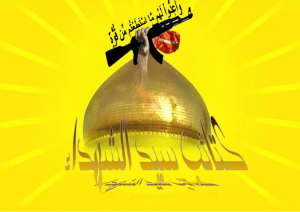
    Hang on a moment, Sayyida Zaynab is the shrine dear to Shiites that Kata’ib Sayyid al-Shuhada is defending, as this graphic suggests:

    And last but not least, consider this, from a US Senator:

    Coincidence!?!? — or just a clumsy creative leap?

    _________________________________________________________________________________________________

    NB: Updated to replace “Hezbollah” with “Kata’ib Sayyid al-Shuhada” above — h/t Phillip Smyth.

    Octavian Manea interviews T.X. Hammes

    Saturday, September 7th, 2013

    [by Mark Safranski, a.k.a. “zen“]

    Octavian Manea and SWJ are on something of a roll lately. Colonel T.X. Hammes (ret.) PhD is the respected author of the excellent The Sling and the Stone. If you have never read it, you should.

    The Fallacies of Big Expeditionary Counterinsurgency: Interview with T.X. Hammes

    SWJ: How different is Mao’s people’s war compared with what you call 4GW (Fourth Generation Warfare)? Is 4GW an updated, evolved form of people’s wars? In the end, isn’t 4GW focused on people and minds, on influencing people and minds?

    TX: Mao is a little bit different because (in China) it was a domestic insurgency and focused on wearing down the nationalists and changing the minds of the warlords who supported them. In the case of 4GW, the focus is overseas. People you can’t reach with force, you must reach with the message. 4GW is an evolved form of insurgency. It is also important to note that Maoism is a type of insurgency that essentially fits a hierarchical society, not a tribal one. It always ends with a conventional campaign to destroy the government’s army as the final step in overthrowing the government. You can’t run a Maoist insurgency in the mountains of Afghanistan, the society won’t tolerate that kind of structure.  Nor can you do it in Iraq. 4GW covers both because its objective is not the military defeat.  4GW does not focus on the destruction of the enemy’s armed forces, but on changing the minds of the enemy’s political decision makers. 4GW directly attacks the will of enemy decision makers.  Once the outside power has been ejected, the conflict can continue until resolution. 

    SWJ: Tell us about the center of gravity in a 4GW.

    TX: The center of gravity in a 4GW is the will of the policymakers of the other side. 4GW war uses all available networks – political, economic, social and military – to convince the enemy’s political decision makers that their strategic goals are either unachievable or too costly for the perceived benefit. 4GW is not necessarily targeted at the people.  If the war is small enough, it can run on for years like El Salvador.  In that case, the US commitment was small enough there was no major political cost to US decision makers to continue supporting the El Salvadorian government.

    When you look at the counterinsurgent side, I am more and more convinced that as a foreign power you can only do indirect counterinsurgency. You can advise and assist.  But keep it small – the host nation has to make it work. We, the United States, have done this successfully a number of times. Admittedly, we have not created the perfect nations that the nation-builders want, but that wasn’t the goal. The goal was to achieve US strategic goals. And we achieved our strategic goals in the Philippines, El Salvador, Columbia and Thailand. In a 4GW, the insurgent is not trying to win over the people as a whole. But the counterinsurgent must do so. In a tribal society, you can do what Kilcullen refers to as wholesale COIN – if you persuade the tribal chief everybody flips. In a more democratic society, you have to convince the people. It is more of a retail operation. It is critical to understand the society you are in and tailor your counterinsurgency and insurgency accordingly. 

    I would add, in the 4GW theme of reasoning with the “moral level of war”, that a foreign power supporting a host nation government with FID that faces an insurgency, can probably get away with “punitive raiding”  of the non-state actors from time to time, particularly in rapid response to some heinous action committed by rebels. A heavy in-country footprint though will change the political calculus for the population – it is too easy to look lie occupiers and stringpullers. Foreign troops are rarely welcome guests for long.

    Read the rest here.

    L’shanah tovah

    Wednesday, September 4th, 2013

    [ by Charles Cameron — life is full of habitual regularities without which there could be no sudden surprises ]
    .


    Switch to our mobile site

