zenpundit.com » authors

Archive for the ‘authors’ Category

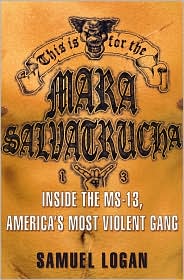
“This is For the Mara Salvatrucha”

Wednesday, June 24th, 2009

Samuel Logan, security specialist, author and sometime ZP commenter has a new book that will be released in early July, This Is for the Mara Salvatrucha: Inside the MS-13, America’s Most Violent Gang.

Sam sent me an advance copy and I have read the first few chapters, which begins at the most granular level of an outlier cell or street crew of MS-13 and a crime committed that ultimately allows law enforcement to penetrate what had been a highly secretive, as well as extremely violent, transnational street gang rooted in Central American immigrant communities.

The book is tightly written with an edge for gritty reality and will be of great interest to readers interested in criminal networks and insurgency; I will be looking to see how, from Logan’s depiction, MS-13 meshes with John Sullivan and Robert J. Bunker’s concept of 3rd Generation gangs.

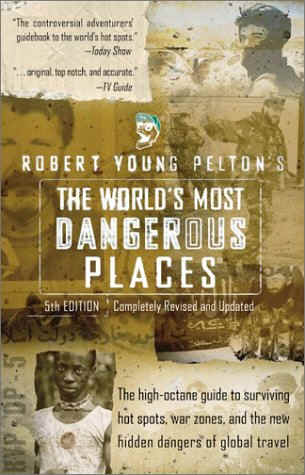
Robert Young Pelton

Tuesday, June 23rd, 2009

The author of  The World’s Most Dangerous Places: 5th Edition  and Licensed to Kill: Hired Guns in the War on Terror was nice enough to drop by in the comment section and discuss his firsthand view of special operators in Afghanistan. During the course of the discussion, in response to a question from Lexington Geen, RYP offered up a couple of links that I think readers will find worthwhile. Here is a quote from one of them:

….The next morning, about 60 Afghan cavalry came thundering into the compound. Ten minutes later, another 40 riders galloped up. General Abdul Rashid Dostum had arrived.

“Our mission was simple,” another soldier says. “Support Dostum. They told us, ‘If Dostum wants to go to Kabul, you are going with him. If he wants to take over the whole country, do it. If he goes off the deep end and starts whacking people, advise higher up and maybe pull out.’ This was the most incredibly open mission we have ever done.”

“Dostum” is the mercurial, ex-Communist, Uzbek Afghan warlord,  General Abdul Rashid Dostum.

Here are the links:

The Legend of Heavy D and the Boys: In the Field With an Afghan Warlord

Inside the Afghan War Machine

Incidentally, I read The World’s Most Dangerous Places in an earlier edition, back when Pelton’s uber-violence list was topped by Algeria, Colombia and several, broken down, West African nations. It’s a great book and a fun read that I have lent out to many of my students who had an all too idealistic and  parochial view of the world. It cured a few of them.

Ten Books I Want to Read Again

Sunday, June 21st, 2009

My bibliomaniacal co-blogger at Chicago Boyz, Lexington Green, just created a new internet meme, with a post entitled Ten Books I Want To Read Again:

I have too little time to read, let alone re-read. But there are certain books that had an impact on me, that I think about from time to time, and that I have an urge to re-read. I suppose that re-reading, or at least wanting to re-read is a sign that a book is part of a person’s quantum library. I have more, but I will pick ten:

  • Charles Norris Cochrane, Christianity and Classical Culture: A Study of Thought and Action from Augustus to Augustine
  • Eric Rucker Eddison, The Worm Ouroboros
  • Robert A Heinlein, The Moon is a Harsh Mistress
  • Homer, The Iliad
  • George Orwell, 1984
  • Quentin Reynolds, They Fought for the Sky: The Dramatic Story of the First War in the Air
  • Thomas Sowell, Knowledge and Decisions
  • Leo Tolstoy, War and Peace
  • Evelyn Waugh, The Sword of Honor Trilogy

• H.G. Wells, The War of the Worlds

A few years ago I re-read Starship Troopers, which had a huge impact on me when I was 11 years old. It was just about as good as I remembered it. I also re-read 1984 about five years ago. I first read 1984 when I was ten years old. I read it a couple of times afterwards. It is absolutely foundational to my thinking. In the ensuing years, I have read almost everything else by Orwell. I found that 1984 was much better than I remembered it being – So much so that I will certainly to go back to it one more time.

Quantum Library are those books that you read repreatedly because each time you find insights that you had missed or misunderstood previously. While many classics fall into that category, it can be any book with enough pull that you spent the time to read it again. Highbrow literature is not required.

Here are my ten, no particular order:

1. History of the Decline and Fall of the Roman Empire by Edward Gibbon.

Gibbon, along with Clausewitz and Ranke contributed mightily to the development of the historical profession, with Gibbon as a great inspirationfor many others and a daunting intellectual in his time ( Benjamin Franklin unsuccessfully sought a dinner invitation with Gibbon, while a lobbyist for colonial interests in London). I last read The Decline and Fall as an undergraduate.

2. Nonzero: The Logic of Human Destiny by Robert Wright.

Tom Barnett brought up Wright recently, which reminded me how much I liked Wright’s influential explanation of cultural evolution as a force in the Darwinian ratchet in Nonzero.

3. Bell Curve: Intelligence and Class Structure in American Life by Richard J. Herrnstein and Charles Murray.

Probably the most vilified yet least read by critics book of the last thirty years.

The authors staked out an extreme hereditarian position in regard to the “g” factor of IQ, which they took great delight in juxtaposing in one chapter and one appendix section with aggregate mean demographic statistics in such a way as to rub academic PC sensibilities raw. This politically calculated gesture let them ride to the bestseller’s lists on a wave of outrage, a good part of which was self-discreditingly ignorant of psychometric testing, genetics, economics and social science methodology, which drowned out the more perceptive critics. now that the furor is long past, it would be interesting to re-read The Bell Curve in light of subsequent scientific discoveries about neurolearning and intelligence.

4. The Closing of the American Mind by Allan Bloom.

Read it when it first came out and was carrying it into a philo gen ed class which caused my professor, a pompous ass who disliked me for some conservative opinion I once had the temerity to voice, to pause and announce “Well…at least you are reading a serious critic”. He was reading it as well.

5. The Master and Margarita by Mikhail Bulgakov.

Bulgakov was the anti-Soviet novelist who happened to also be Stalin’s favorite playwright ( Bulgakov was the author of The White Turbans, which Stalin delighted in repeatedly watching – a quirk of fate which saved Bulgakov’s life and freedom). An unhappy man of great imaginative powers, Bulgakov’s great novel had something like a quarter of a million or half a million words excised by Soviet censors. I’m curious if more accurate editions have been issued.

6. Battle Cry of Freedom: The Civil War Era by James M. McPherson.

One of the best single volume histories of the Civil War. A “gateway” book to other Civil War histories.

7. The Catcher in the Rye by J.D. Salinger.

For anyone who was ever Holden Caulfield – or who had to teach him.

8. The Great Terror: A Reassessment by Robert Conquest.

This is a hybrid pick because I read The Great Terror and also Conquest’s Reassessment. Conquest is always worth reading, an old school man of letters of whom we will see no more of his like.

9. The Best and the Brightest by David Haberstam.

The seminal, anti-Vietnam War book by a lionized Establishment figure ( lionized now, not during the war), the title of which became a term of cultural literacy. Appropriate because the current administration seems to be too cocksure that they too are best and brghtest.

10. The Possessed (The Devils) by Fyodor Dostoyevskii.

Dostoyevskii’s psychological portrait of faddish radicalism, earnest nihilism, and incipient terrorism in a provincicial backwater in Tsarist Russia, is another classic that fits the spirit of our times. The Possessed is less ponderous and more satirical than Crime and Punishment and more cohesive than The Idiot.

What are your ten ?
Horse Soldiers

Friday, June 19th, 2009

Just received a review copy of Doug Stanton’s Horse Soldiers: The Extraordinary Story of a Band of US Soldiers Who Rode to Victory in Afghanistan, which is about the special operations soldiers who infiltrated Taliban held Afghanistan and who were forced to blend the ancient with the postmodern on the battlefield. Horse Soldiers is doing very well on The New York Time’s bestseller list and is up near the very top of that prestigious category.

The promotion people also included the audio book as well in a 7 hour  CD set. I’ve never listened to a “book on tape”, as they used to be called back in the day, so this might be the opportunity to give that format a try and review.

Flipping through the pages, the Horse Soldiers is not at all dry military history but action-packed narrative to which a general audience might relate. Here is an excerpt from the prologue:

Qala-i-Janghi Fortress
Mazar-i-Sharif, Afghanistan
November 24-25, 2001Trouble came in the night, riding out of the dust and the darkness.
Trouble rolled past the refugee camp, past the tattered tents
shuddering in the moonlight, the lone cry of a baby driving high into
the sky, like a nail. Sunrise was no better; at sunrise, trouble was
still there, bristling with AKs and RPGs, engines idling, waiting to
roll into the city. Waiting.
These were the baddest of the bad, the real masters of mayhem, the
death dealers with God stamped firmly in their minds. The city groaned
and shook to life. Soon everyone knew trouble had arrived at the gates
of the city.

Major Mark Mitchell heard the news at headquarters nine miles away and
thought, You’re kidding. We got bad guys at the wire?

He ran downstairs, looking for Master Sergeant Dave Betz. Maybe he
would know what was happening.

But Betz didn’t know anything. He blustered, “One of the Agency guys
came down and told us we got six hundred Taliban surrendering. Can you
believe that?”

Surrendering? Mitchell couldn’t figure out why. He thought the Taliban
had fled from the approaching forces of the Northern Alliance to
Konduz, miles away. American Special Forces and the Northern Alliance
had been beating them back for weeks, in battle after battle, rolling
up territory by coordinating airstrikes from the sky and thousands of
Northern Alliance soldiers on the ground. They now stood on the verge
of total victory. Konduz was where the war was supposed to go next.
Not here. Not in Mazar. Not at Club Mez.

Besides, these guys didn’t surrender. They fought to the death……

Hmmmmm. Note to self. If you want to sell books, write more like this and less like an academic in a dusty cubicle at an obscure think tank.:)

The Zenpundit Summer Reading List

Saturday, June 6th, 2009


I frequently post about what I am reading and even more often, get involved in discussions of books with various blogospheric cronies on their blogs, social media networks or via email. Some of the books discussed end up becoming full-blown  roundtables, others find their way into the Antilibrary or even fall by the wayside. Time is finite and the number of good books exceed the time available. At least my time.

In an effort to be a little more efficient in my reading this summer, I decided to compose what I am sure is a wildly overambitious reading list for the next three months. The method will be to discipline myself to put in a minimum of two hours of book reading a day, seven days a week. While like most bloggers, I read a large volume of information daily, too much of it is online – listservs, blogs, email, PDFs, twitter, e-zines and so on. This gives my reading a scattered, “searchlight” quality as opposed to a drill-down focus of a “laser beam”. The former habit has its cognitive virtues, but so does the latter and it is good for the brain to periodically dive back into “old school” reading of physical books. It will also help whittle down the ominously growing pile of unread books.

There is not any particular order in mind here, except that The Anabasis of Cyrus and Accidental Guerilla are high priorities, the former due to the upcoming roundtable discussion at Chicago Boyz. I have all of the books at hand on the shelf, ready to go and a stretch of time ahead of me that is freer than usual. I may omit books as time passes and add others, but I will give a formal report of my reading after Labor Day weekend.

Without further ado, THE SUMMER READING LIST:

Military History and Strategy

Wired for War: The Robotics Revolution and Conflict in the 21st Century – PW Singer (Finish, currently reading)
The Anabasis of Cyrus (Agora) – Xenophon
The Accidental Guerrilla: Fighting Small Wars in the Midst of a Big One – David Kilcullen
The Scientific Way of Warfare: Order and Chaos on the Battlefields of Modernity
 – Antoine Bousquet
The Culture of WarMartin van Creveld
Certain to WinChet Richards

Science, Futurism, Networks, Economics and Technology

How the Mind Works – Steven Pinker
Fooled by Randomness: The Hidden Role of Chance in Life and in the Markets
 – Nassim Nicholas Taleb
Emergence: The Connected Lives of Ants, Brains, Cities, and Software
 – Steven Johnson
The Singularity Is Near: When Humans Transcend Biology
 – Ray Kurzweil
The Hyperlinked Society: Questioning Connections in the Digital Age (The New Media World)
Lokman Tsui

Biography

Ho Chi Minh: A Life William J. Duiker

Philosophy and Intellectual History

The Open Society and Its Enemies, Vol. 1: The Spell of Plato
The Open Society and Its Enemies, Vol. 2: Hegel and Marx – Karl Popper
The Closing of the Western Mind: The Rise of Faith and the Fall of ReasonCharles Freeman

What will you be reading this summer ?

UPDATE:

It occurred to me that I left out an important category….

Fiction

Pattern Recognition – William Gibson
On the Road (Penguin Classics)Jack Kerouac


Switch to our mobile site