zenpundit.com » strategist

Archive for the ‘strategist’ Category

Ruminating on Strategic Thinking

Wednesday, December 21st, 2011

“Let the Wookiee win….”

Warning! Thinking out loud in progress…..

Strategy is often described as the alignment of “Ends-Ways-Means” and “planning” to achieve important goals and several other useful definitions related to matters of war, statecraft and business.  That great strategists have come in many forms, not just between fields but demonstrating tremendous variance within them – ex.  George  Marshall vs. Alexander the Great vs. Carl von Clausewitz – indicates that strategic thinking is a complex activity in terms of cognition.

What are some of the mental actions that compose “strategic thinking” or “making strategy”? A few ideas:

  • Recognition of important variables
  • Assessment of the nature of each variable
  • Assessment of the relative importance of each variable
  • Assessment of the relationships among the variables
  • Assessment of the relationship between the variables and their strategic environment
  • Assessment of current “trajectory” or trend lines of variables
  • Assessment of costs to effect a change in the position or nature of each variable
  • Assessment of the strengths and weaknesses of the variables as a functioning system
  • Recognition of systemic “choke points”, “tipping points” and feedback loops.

  • Probabilistic estimation
  • Logical reasoning
  • Introspection 
  • Extrapolation
  • Simplification
  • Metacognition
  • Horizontal Thinking
  • Insight
  • Imagination (esp. at “grand strategic” level)

  • Logistical estimation of costs
  • Normative evaluation of potential benefits
  • Understanding of temporal constraints
  • Recognition of opportunity costs
  • Recognition of boundary conditions
  • Recognition of physical constraints of strategic environment (terrain, weather, distance etc.)
  • Recognition of patterns in the history of the strategic environment

  • Net assessment of the maximum capabilities of a political community (first ours, then theirs)
  • Understanding of organizational structure of a political community
  • Recognition of stakeholders in the political community 
  • Understanding of decision making process of the political community
  • Understanding the power relationships of the decision making process of the political community
  • Understanding the distribution of resources within the political community
  • Recognition of the touchstone points of the cultural identity of the political community (positive and negative) and worldview
  • Assessment of morale of the political community and the community’s moral code
  • Assessment of psychology of individual adversary decision makers
  • Identification of points of comparative advantage
  • Recognition of how different bilateral outcomes/shifts will affect third parties
  • Assessment of relationship between the adversaries and between them and third parties

This list is not comprehensive. In fact, I have a question for the readership, particularly those with military service and/or a good grasp of military history:

Where do the interpersonal skills or “emotional intelligence” abilities that comprise the activity we term “leadership” fit into strategic thinking? Or is it a separate but complementary suite of talents? We often assume that great strategists are the great leaders, but we tend to forget all of the generals who were popular yet mediocre in the field and gloss over the human faults of those who won great glory.

I have some ideas but I would like to hear yours. Or any additional suggestions or comments you would care to make.

Two on Strategic Thinking

Friday, December 16th, 2011

Colonel Paul Yingling hits a theme much beloved here at ZP:

An Absence of Strategic Thinking

….The future of Pakistan is more difficult to predict. It could limp along as a failing state, or suddenly fail with little warning. The West knows so little about the internal dynamics of the country that virtually any significant change will come as a surprise. Although the exact timing and extent of state failure in Pakistan is difficult to predict, the consequences of such failure are not. Partial or total state failure of a nuclear Pakistan would pose a grave threat to the United States. In such a scenario, the White House would not know who controlled Pakistan’s nuclear arsenal. A nuclear-armed al Qaeda, Lashkar-e-Taiba, or other extremist group would be difficult if not impossible to deter.

ISAF’s exit from Afghanistan has much more to do with American domestic politics than with coalition strategy. American fiscal constraints and political paralysis set this course in motion long ago, and corrective measures are unlikely in the absence of a crisis. Too often, what passes for strategic thought in the United States is actually a struggle among self-interested elites seeking political, commercial, or bureaucratic advantage. Such behavior is the privilege of a country that is both rich and safe. However, a pattern of such behavior is self-correcting: no country that behaves this way will stay rich or safe for long.

Hat tip to The Warlord Loop and SWJ Blog.

Wiggins at the Wohlstetterian Opposed Systems Design blog weighs the question of a grand strategy board and finds it to be wanting:

Everyone wants their greybeard panel but relationships and timing matter

….The influence of these sorts of boards depends massively upon relationships and timing. Senior leaders have tight schedules and must makes decisions with whatever information they have at hand. If the SECDEF or the National Security Advisor knows and trusts someone, even if they don’t have a formal role in government, then an informal conversation with that person might be able to help. But what the senior leader needs at that point is cogent and focused advice, which is why the relationship (does the leader trust the adviser? does the adviser understand what the leader really needs?) and timing (can the right advice be delivered at the right time?) matter so much.

Strategy, fundamentally, cannot be routinized. It cannot, therefore, be broken down into a bureaucratic process. Thus, any attempt to improve strategic thinking through bureaucratic reorganizations misses the point. That reality is unsatisfying and messy but accurate.

A fair point by Wiggins. The existence of a grand strategy board would be a goad to remind an incoming administration that “strategy” is important and would put a tool at their disposal. It would not guarantee strategic thinking in policy making any more than the NSC guarantees an orderly national security decision making process.

Presidents currently get the NSC they want rather than the one that they deserve, and the same would be true of a grand strategy board. Some who recognized the utility though, would use it well.

Hen’s Teeth and Presidential Strategists

Friday, November 18th, 2011


Dr. Bernard Finel, after a hiatus, has returned to blogging:

Uzbeki-beki-beki-stan-stan

….Now, I am not really making an original argument here, but there is some truth here. In a very significant sense, a president (and, by the way, I hate the way he uses “Commander-in-Chief” rather than “President” in describing his role as a foreign policy decision-maker), any president, is not really a “strategist.” When Libya began to blow up, no one went to Obama and said, “Mr. President, what should we do?” Instead, ultimately, Obama was presented with a series of courses of action developed and proposed by his staff and various other agencies and departments, and the president was asked to select from a relatively constrained set of choices.

Now, obviously,  a president is not wholly constrained. He or she could strike out in a new direction, or demand more options, or whatever. But there is, ultimately, a lot of truth to the notion that the president is ultimately more of a traffic cop than a “policy maker” per se.

….And look, this is not a Cain/Perry problem alone. I mean, Obama was tremendously thoughtful and eloquent on the campaign trail, and in the end allowed himself to be borne along with the tide on the Afghanistan surge decision. The only case I can think of where this was not the case was Nixon who, essentially, spent much of his administration waging war on his own executive departments. I’m not sure that is a better model.

Richard Nixon was a genuinely gifted geopolitical strategist, albeit one who came with serious psychological baggage, the effects of which H.R. Haldeman and Dr. Arnold A. Hutschnecker, Nixon’s sometime psychotherapist, strove to mitigate. Henry Kissinger, so valuable to Nixon as a diplomatic tactician, aggravated Nixon’s darker instincts as frequently as he calmed them (and in turn, Nixon deliberately stoked Kissinger’s anxieties to the point where Kissinger having a nervous breakdown seemed a possibility to WH staffers). I agree with Finel that presidential strategists are quite rare, but while there are more than just Nixon, they too had their share of problems.

Abraham Lincoln, who evolved into America’s greatest strategic leader by dint of circumstance, intelligence and latent talent suffered from bouts of major depression. Dwight Eisenhower, whose discernment recognized the value of strategic restraint in statecraft, had an explosively bad temper that spared neither aides nor grandchildren nor himself, contributing to Ike’s heart attacks. Even by the standards of politics, Franklin Roosevelt was unusually manipulative, deceptive and egocentric, lying with such frequency to his closest advisers that it is sometimes difficult to understand what FDR had really intended on certain issues, particularly in his last years when the weight of the war led FDR to procrastinate on making decisions.

Does strategic thinking come easier to those with psychological flaws?

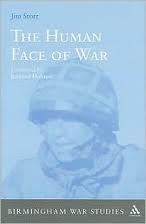
The Human Face of War, a second review

Wednesday, November 16th, 2011

[by J. Scott Shipman]

images-1.jpeg

The Human Face of War by Jim Storr 

[Zen reviewed this book earlier here. I had forgotten that I wrote a rather long review at Amazon after finishing in January 2010. Perhaps Storr will gain a wider audience as a result.]

Mr. Storr’s The Human Face of War will be I predict, a book studied by military professionals (and smart policy makers) for years to come. Using straightforward prose, Mr. Storr seeks to provide a philosophical approach to war—as he says, “In practice we are concerned so much with war as with waging it.” Storr goes on to differentiate between war and warfare; where war is an “issue” with history and warfare dedicated to methods/methodology. Storr rejects notion that war is art or science, and prefers instead to embrace pragmatism and limited empiricism. He points out correctly: “Pragmatism has obvious application to warfare. A significant aspect of warfare is `a process of trial and error; seeing what wins and exploiting it.” Storr continues that “empiricism is not just trial and error: it is a logical process based on structuring observed facts.” What “works” will suggest a way ahead. 

Storr uses broad themes of what has worked and what has not worked in military history by explaining the nature of combat and tools and models available to the practitioner. He uses Clausewitz’s “dialectic of aims and means” in conjunction with Systems Theory to describe the holistic nature of military units; where effective/efficient output is dependent on input—where a good outcome is “winning” (as Storr repeatedly observes throughout the book, armies aren’t paid to come in second). Hence, organization of military units is fundamental; efficient/effective organizations are more likely to succeed. He observes: “Cohesion and collective performance indicate the whole is greater than the sum of the parts. There is a systemic effect, and we should see armed forces as systems.” 

Storr is a proponent of forcing decision making to the folks on the ground using brief and succinct communications. His chapter on Commanding the Battle is excellent. Storr advocates lean command staff’s and dispersed decision making. “We should employ the best brains in small groups, rather than try to assemble a collective brain.” He points out that “when staff numbers are reduced, the effectiveness of HQ improves.” “Reducing staff numbers would increase speed with which they could get things done.” [Amazingly, Storr quotes a work from 1998 that reports a typical Western division commander has 600 people supporting!—and that number has, I’m sure increased in 10 years.] He concludes this excellent chapter making a distinction between technology and the human factor: “…the future is not digital: it’s human. What is needed is things that bind talents together as a team, not more bandwidth…given time, resources, open minds and not much money we could revolutionize land tactical command. The key problems are human, cultural and institutional.” 

Storr asserts that successful modern commanders are most likely intuitive thinkers and possess the ability to learn from experience. He suggests further the “tendency to learn is more critical. It implies a tendency to reflect on experience and to learn from it, to maximize the benefit of the experience.” This tendency is key to the development of “skills”. He encourages a “permissive man-management regime that allows those who can learn rapidly from their experience to do so.” At the opposite end, Storr makes clear the unsuitability of many leaders who use bullying tactics and fear to motivate. 

Storr concludes by observing that “institutional conservatism” inhibits armed forces from improving significantly during times of peace; that “the current size and shape of Western armies reflect issues that are not primarily related to warfighting effectiveness.” He insists that doctrine should be explicit, relevant,(descriptive and where appropriate, prescriptive), coherent, and practical. The short tours common in western armies harm team integrity—which is “huge”. Innovation is vital, and in many cases military members aren’t with a unit long enough to have the experience necessary to truly innovate. Storr advocates “experience is the best way to achieve practical coordination and overcome the fog of war, as long as the experience gained is positive.” He discourages the common use of lieutenant-colonels in jobs where a captain or major could function/thrive/learn; as these junior officers will have less experience when they are promoted and will have probably developed the habit of “referring decisions upwards, and hence develop little initiative.” 

According the Storr, the “human” aspect of war should take prevalence over technology. He acknowledges the utility of technology, but asks the reader to “…pause and look for a moment at the Vietnam War, which suggests that superior technology is not always the deciding factor.” [9-11 is illustrative of this point on the “terror” side; determination and box cutters wreaked havoc.] 

My review does not do justice to the wealth of information, insight, and counsel in Storr’s book and I quote him frequently because his style is better than a summary. This book was aimed at a narrow audience, hence the high price. When I began, I was concerned about Storr’ opinions concerning John Boyd’s OODA loop; but in late 2009 I rejected Boyd’s deterministic underpinnings of OODA—Storr’s pragmatic and partial empiricism makes more sense. OODA remains, in my humble opinion, a valuable and versatile methodology in both the military/law enforcement and business arenas. 

This book is highly recommended; particularly for junior officers and NCO’s—the price is high, but what you will gain will be worth the cost.

UPDATE 11.17.2011: Jim Storr contacted me and confirmed the issue of a paperback for about $40.

Hoover on Charles Hill and Hill on Grand Strategy

Tuesday, November 8th, 2011

Lexington Green sent this extended profile/interview with Charles Hill by Emily Esfahani Smith. The tone of the article is somewhat hagiographic because Hill is a fellow at the Hoover Institution and….well…. this is in Hoover’s journal 😉  If you can get past that, it is a worthwhile read about a deep thinker and scholar of grand strategy.

Profile in Strategy: Charles Hill

….In diplomacy, literature is relied upon because, as he writes in “Grand Strategies,” “The international world of states and their modern system is a literary realm; it is where the greatest issues of the human condition are played out.” That is why Alexander the Great carried the Iliad with him on his conquests, and why Queen Elizabeth studied Cicero in the evenings. It is why Abraham Lincoln read, and was profoundly influenced by, Walt Whitman’s “Leaves of Grass,” and why Paul Nitze paged through Shakespeare on his flights to Moscow as America’s chief arms negotiator.

Hill, for his part, has always kept the “History of the Peloponnesian War” in his mind as the “manual of statecraft.”

Why Thucydides? He explains: “When you read the Peloponnesian War, you realize that Thucydides is moving from one set of problems to another, and you have to deal with them all-rhetorical problems, material problems, and moral problems. That’s the closest literary work related to statecraft that I can imagine.”

To understand world order-and those who manipulate it for their own aims-requires a literary education, the kind students were once able to find at such places as Yale, where Hill now teaches the humanities to freshman undergraduates.

This is a departure from his days at the State Department, where he helped orchestrate monumental events in the grand strategy of the Cold War. One of his first memories as a diplomat was of being seated behind Adlai Stevenson at the UN during the Cuban missile crisis, characteristically scribbling notes-in grand strategy, no detail can be lost. Later, Hill was a “China watcher” during that country’s Cultural Revolution. And when the Iran-Contra scandal nearly brought down the Reagan administration, Hill’s meticulous notes played an influential role in the Congressional investigations by shedding light on the chronology of then-Secretary of State George Shultz’s knowledge of the arms sale. Over the years, Hill has also served as confidante to Secretaries of State. For Henry Kissinger, Hill was speechwriter and policy analyst. For Shultz, Hill was an executive aide and trusted ally.

These days, Hill embodies grand strategy in a different way. After a long and distinguished career as a diplomat, Hill is now a heralded figure in academia. Beyond his appointment as a research fellow at the Hoover Institution, he is the Brady-Johnson Distinguished Fellow in Grand Strategy, a Senior Lecturer in Humanities, and a Senior Lecturer in International Studies at Yale. Alongside historians John Gaddis and John Kennedy [ sic] , he teaches one of Yale’s most legendary courses to a select group of elite students-future statesmen-the Grand Strategies course.

And yet, Hill tells me stoically, “There is no grand strategy in our time.” Turning his attention to the turmoil in the Middle East, Hill provides an example. “America’s lack of strategic outlook responding to the Arab Spring is really distressing.”

Hill retains the diplomat’s gift for understatement.

Read the rest here.

ADDENDUM:

Book Review: Grand Strategies by Charles Hill 

Trial of a Thousand Years, by Charles Hill-a review


Switch to our mobile site
