Juxtaposition of two events today, for your consideration.
Former CIA Kabul Station Chief and NIC member Graham E. Fuller, bitterly blasted the Obama administration over Afghanistan-Pakistan strategy at the Huffington Post in a piece he originally had run, oddly, in The Saudi Gazette:
Global Viewpoint: Obama’s Policies Making Situation Worse in Afghanistan and Pakistan
— Military force will not win the day in either Afghanistan or Pakistan; crises have only grown worse under the U.S. military footprint.
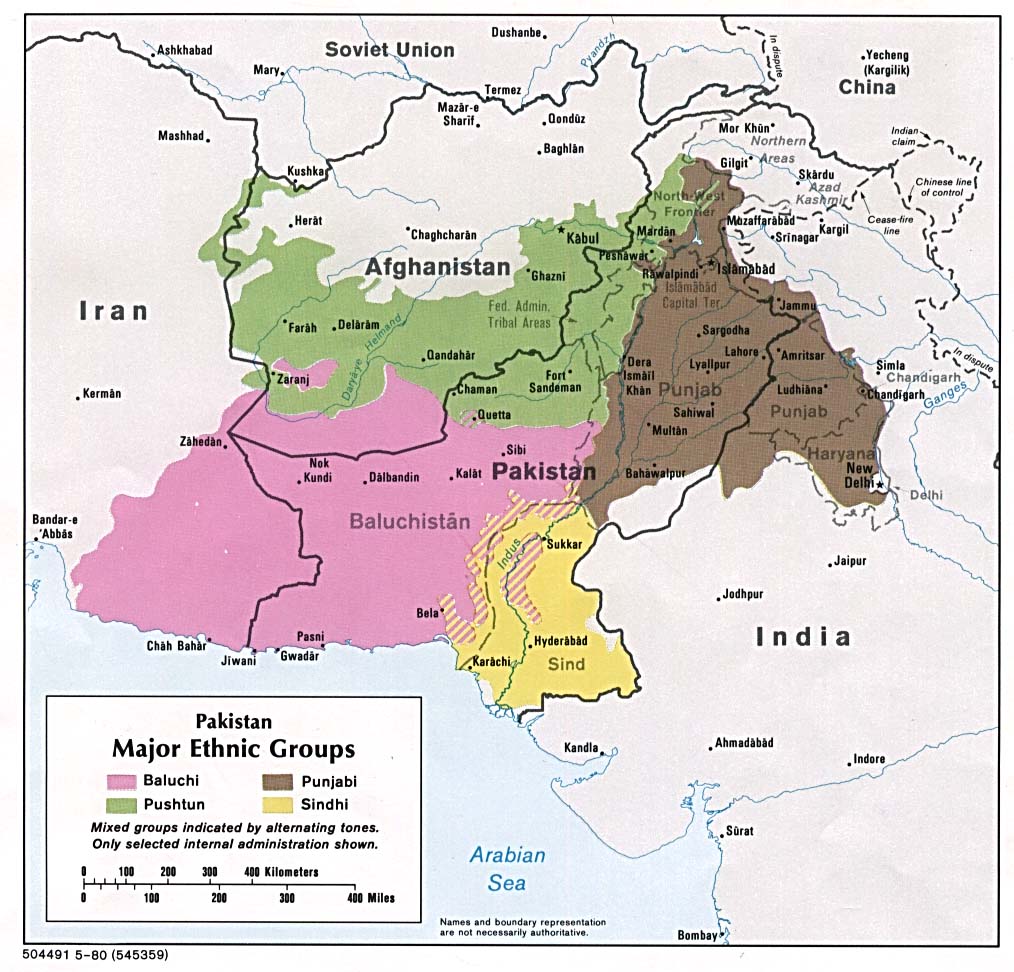
— The Taliban represent zealous and largely ignorant mountain Islamists. They are also all ethnic Pashtuns. Most Pashtuns see the Taliban — like them or not — as the primary vehicle for restoration of Pashtun power in Afghanistan, lost in 2001. Pashtuns are also among the most fiercely nationalist, tribalized and xenophobic peoples of the world, united only against the foreign invader. In the end, the Taliban are probably more Pashtun than they are Islamist.
— It is a fantasy to think of ever sealing the Pakistan-Afghanistan border. The “Durand Line” is an arbitrary imperial line drawn through Pashtun tribes on both sides of the border. And there are twice as many Pashtuns in Pakistan as there are in Afghanistan. The struggle of 13 million Afghan Pashtuns has already inflamed Pakistan’s 28 million Pashtuns.
— India is the primary geopolitical threat to Pakistan, not Afghanistan. Pakistan must therefore always maintain Afghanistan as a friendly state. India furthermore is intent upon gaining a serious foothold in Afghanistan — in the intelligence, economic and political arenas — that chills Islamabad.
— Pakistan will therefore never rupture ties or abandon the Pashtuns, in either country, whether radical Islamist or not. Pakistan can never afford to have Pashtuns hostile to Islamabad in control of Kabul, or at home.
— Occupation everywhere creates hatred, as the U.S. is learning. Yet Pashtuns remarkably have not been part of the jihadi movement at the international level, although many are indeed quick to ally themselves at home with al-Qaida against the U.S. military.
— The U.S. had every reason to strike back at the al-Qaida presence in Afghanistan after the outrage of 9/11. The Taliban were furthermore poster children for an incompetent and harsh regime. But the Taliban retreated from, rather than lost, the war in 2001, in order to fight another day. Indeed, one can debate whether it might have been possible — with sustained pressure from Pakistan, Iran, Saudi Arabia and almost all other Muslim countries that viewed the Taliban as primitives — to force the Taliban to yield up al-Qaida over time without war. That debate is in any case now moot. But the consequences of that war are baleful, debilitating and still spreading.
— The situation in Pakistan has gone from bad to worse as a direct consequence of the U.S. war raging on the Afghan border. U.S. policy has now carried the Afghan war over the border into Pakistan with its incursions, drone bombings and assassinations — the classic response to a failure to deal with insurgency in one country. Remember the invasion of Cambodia to save Vietnam?
Read the rest here.
Fuller does not understand his Vietnam War history (or if he does, then he is the master of irony) but he has a good handle on the nature of Pustunistan and of regional Islamism. The Taliban and neo-Taliban are half-educated, zealously religious, violent hillbillies who are looked down upon by Pakistani elite much the way Manhattan hedge fund managers and New Yorker magazine columnists would look at snake handling, fundamentalist, Christians from Appalachia if the latter were tramping around Georgetown suburbs with shotguns and RPG’s. I agree with Fuller that culturally transforming the average, functionally illiterate, 25 year old Pushtun tribal warrior with a 3rd grade education from a stripped-down neo-Deobandi madrassa funded by wealthy Saudi Arabian fanatics is well beyond our capacity.
But in terms of shifting U.S. strategy in Afghanistan and Pakistan, is that kind of cultural tranformation really the goal?
I think not. Predators are not meant to be persuaders except in the negative sense to communicate to al Qaida and the Taliban that no safe haven exists on the Pakistani side of the imaginary Durand line. I do not think the Obama administration is aiming for a quarter-century process of housebreaking the Pathans into a gentle Islamic debating society. Nor should they. We’d have an easier time sending men to Mars.
The second and far more reported item is that General David McKiernan has been fired by Secretary of Defense Robert Gates and replaced by Lieutenant-General Stanley McChrystal, a specialist in black ops and irregular warfare. I was asked for a quote earlier today by Dr. James Joyner of The Atlantic Council, and my immediate impression of the news was as follows:
Policy wonk Mark Safranski guesses that this has to do with tensions between McKiernan and new CENTCOM boss David Petraeus. Via email, he suggests that the recent decision to treat Afghanistan and Pakistan as a single theater “requires somebody very comfortable with close coordination with CIA special activities staff and the AF-CIA joint targeting shop, who is used to having the White House looking over his shoulder as operations are conducted.” He adds that, “Traditionally, the regular Army has never made appropriate use of special forces, a history that goes back to the Vietnam War – and definitely an issue in Afghanistan since at least late 2002. If McKiernan continued that hallowed tradition, it would have been an added irritant in his relations with Petraeus, who as CENTCOM boss is the 800 pound gorilla. I would expect, further, that Petraeus and Gates are on the same page in regard to how special operations troops are to be integrated into any strategy in Afghanistan.”
Subsequent leaks in the news indicate that Gen. McKiernan was viewed as “too conventional” in his thinking, though I will wager that is not the whole of the backstory. I would add, after digesting some of the news, that the United States is moving toward an operational posture in Afghanistan for the use military force that is more like a rapier than a sledgehammer – but the rapier is going to be used to stab very deep into Pakistan, whose ISI refuses to stop funding, arming and training wild-eyed neo-Taliban militias. This will also cause some of the Islamist Frankenstein monsters running around the FATA, to return to their creators. An action John Boyd would have describe as “folding the enemy back on themselves”.
Interesting times.
ADDENDUM:
Fine blogs commenting on these stories…..
Armchair Generalist
Thomas P.M. Barnett
Registan
Danger Room
Thomas Ricks
Threatswatch.org (Fraser)
The Newshoggers (Hynd)
Abu Muqawama
SWJ Blog
SWJ Blog – Round Up Post
New Atlanticist
Foreign Policy -Passport