zenpundit.com » Failed State

Archive for the ‘Failed State’ Category

Pipes on Russia, Barnett on Pipes

Tuesday, September 8th, 2009

Professor Richard Pipes, the Harvard University political scientist, is a seminal figure among sovietologists, historians and scholars of Soviet Studies. I highly recommend his trilogy, Russia under the Old Regime, The Russian Revolution and Russia Under the Bolshevik Regime ( I would pair the first with W.Bruce Lincoln’s The Romanovs Autocrats of All the Russias to see the differences between the way eminent historians and political scientists handle the same topic). Dr. Pipes has written an op-ed for WSJ.com and it was reviewed by his former student, Dr. Thomas P.M. Barnett.

First the Pipes op-ed, then Tom’s assessment and then my comments:

Pride and Power: Russia is caught between continents and haunted by its past,”

One unfortunate consequence of the obsession with “great power” status is that it leads Russians to neglect the internal conditions in their country. And here there is much to be done. To begin with: the economy. The Russian aggression against Georgia has cost it dearly in terms of capital flight. Due to the decline in the global prices of energy, which constitute around 70% of Russian exports, exports in the first half of 2009 have fallen by 47%. The stock market, which suffered a disastrous decline in 2008, has recovered, and the ruble has held steady, but the hard currency reserves are melting and the future does not look promising: The latest statistics indicate that Russia’s GDP this year will fall by 7%. It is this that has prompted President Dmitry Medvedev recently to demand that Russia carry out a major restructuring of her economy and end her heavy reliance on energy exports. “Russia needs to move forward,” he told a gathering of parliamentary party leaders, “and this movement so far does not exist. We are marking time and this was clearly demonstrated by the crisis… as soon as the crisis occurred, we collapsed. And we collapsed more than many other countries.”

….Today’s Russians are disoriented: they do not quite know who they are and where they belong. They are not European: This is attested to by Russian citizens who, when asked. “Do you feel European?” by a majority of 56% to 12% respond “practically never.” Since they are clearly not Asian either, they find themselves in a psychological limbo, isolated from the rest of the world and uncertain what model to adopt for themselves. They try to make up for this confusion with tough talk and tough actions. For this reason, it is incumbent on the Western powers patiently to convince Russians that they belong to the West and should adopt Western institutions and values: democracy, multi-party system, rule of law, freedom of speech and press, respect for private property. This will be a painful process, especially if the Russian government refuses to cooperate. But, in the long run, it is the only way to curb Russia’s aggressiveness and integrate her into the global community.

Read the rest here.

Now, Tom on Pipes:

Pipes the Elder on Biden comments: so impolite because they are so true

The biggest issue, like with China, is official corruption. The second is the pervasive depoliticization of the populace: they’ve never really had any experience picking their own leaders over the past 1,000 years. That fend-for-yourself mentality pervades the political system and its foreign policy. All citizens want from the state is order, and what they miss most about the Soviet past was that it preserved Russia’s contiguous empire beyond that of any in Europe or Asia.

Russians have no idea who they are today: they don’t feel either European or Asian. Eventually, they’ll come to some conclusion about what sitting between those civilizations means in terms of identity.

So patience and care is required.

Very nice piece by Pipes.

Read the rest here.

Russia has had repeated bouts of historical, “geographic schizophrenia”: the long Tatar Yoke, the age-old conflict between Petrine westernization and Orthodox slavophilism, the iron Soviet dictatorship, especially Stalin’s democidal rule. Russia has neither joined the West nor considered itself to be fully Asiatic. Instead, the Russians inherited a “Third Rome” complex from Byzantium that has helped keep them isolated from their own best opportunities as a great power. Fringe groups of ideologues promoting nutty “neo-Eurasianism” in Russia play upon this historical legacy.

To the extent that the cold-blooded Vladimir Putin and the Siloviki clan have made their nation into “Russia, Inc.” – a gas and energy monopoly in the tattered rags of a nation- state, the long term trend will be accepting globalization and integration, regardless of any deep cultural angst and Ivan Q. Public Great Russian nationalist-chauvinism along the way.

ADDENDUM:

The Western View of Russia” by George Friedman

I have a mixed opinion on STRATFOR’s analytical products but Friedman is playing to his strengths here in a piece that is measured and thoughtful. Hat tip to Lexington Green.

Forget Me Not. Obama’s Russian “Reset” Risks Alienating Eastern European Allies by Mike Wussow

Adds some regional context to Friedman’s post .

Disputing Global Dystopia:Phillips on “Our Dark Age Future”

Sunday, August 23rd, 2009

Longtime reader Isaac recently alerted me to an important article in the most recent edition of PARAMETERS. Some excerpts:

Deconstructing our Dark Age Future” by LTC. P. Michael Phillips

….This article suggests that the system of Westphalian states is not in decline, but that it never existed beyond a utopian allegory exemplifying the American experience. As such, the Dark Age thesis is really not about the decline of the sovereign state and the descent of the world into anarchy. It is instead an irrational response to the decline of American hegemony with a naïve emphasis on the power of nonstate actors to compete with nation-states. The analysis concludes that because the current paradigm paralysis places a higher value on overstated threats than opportunities, our greatest hazard is not the changing global environment we live in, but our reaction to it.

….The state as described in this article differs greatly from the ideal imagined in the Westphalian paradigm. States do not universally enjoy unrestricted sovereignty. Nor are they equal. In fact, the sovereignty of a great number of the states in the international system is merely ascriptive.27 Because these imperfect conditions have more or less existed since long before 1648, it may be more helpful to think of any observed chaos in the international system as the natural condition, rather than a decline into disorder. If the system is not melting down, are so-called nonstate actors as significant for the long-term as they appear to be for the present?

….For some observers, this so-called NSA victory over a modern state underscores their warnings of impending global chaos. But in making this declaration, they fail to appreciate the source of Hezbollah’s strength: its dependent relationship with Iran, and to a somewhat lesser extent, Syria. Hezbollah did not create out of whole cloth its impressive array of modern weapons, nor did it independently develop the tactics, techniques, and procedures to employ them. Instead, Iranian weapons completed Hezbollah’s impressive arsenal, and Iranian Revolutionary Guard Corps advisers created the command and control center that coordinated the militiamen’s missiles.

Read the whole thing here.

This was an interesting read for me; many points with which to agree and disagree. A few thoughts in no particular order:

I am sympathetic to Col. Phillips’ criticisms of the overly abstract and detached nature of IR in regard to the nature of international law and sovereignty. You can certainly see that “arid” and “imperialistic” attitude in many academics and NGO activists who like to present their novel theories and interpretations as “international law” when they lack any historical basis whatsoever (and are usually gamed to be highly restrictive on the authority of Western sovereign states to use force and permissive/exculpatory of the actions of Marxist/radical/Islamist terrorists or insurgents).  Much of Phillips’ condemnation of IR smacking of unreality from a practitioner’s perspective is spot on.

That said, while definitely fuzzy and spottily adhered to in practice international law is not entirely “illusory”, nor is it a byproduct of 20th century Wilsonian American exceptionalism as Phillips argued. Perhaps Hugo Grotius rings a bell? Or Alberico Gentili? Or the long history of admirality courts? Like common law or an unwritten tribal code, international law has evolved over a very long period of time and does exert some constraint upon the behavior of sovereigns. Statesmen and diplomats think about policy in terms of the impression it will make on other sovereigns, and international law is one of the yardsticks they contemplate.  Admittedly, at times the constraint of international law is quite feeble but in other contexts it is strong. An American military officer, who can see firsthand the effect of creeping JAG lawyerism on command decisions on the battlefield ( in my view, greatly excessive and harmful ) and in the drafting of byzantine ROE, should know better than to make such a silly statement.

Phillips main argument is about the direction of international relations and non-state actors and he comes down firmly on the supremacy of states, at least the Great Powers and regional power states enacting an age-old realpolitik. Non-state actors are an overhyped and trendy threat and really amount to a continuation of traditional proxy warfare, where powers harass each other by subsidizing barbarian “raiders”; Phillips makes much use of Hezbollah as a modern example. Juxtaposed against the more extreme claims of the 4GW school or of Martin van Creveld, Phillips criticism looks reasonable because it is easy to make an empirical case that falsifies the absolutist claim that all states everywhere are in decline or that war is endemic.  They are not and war is not.

Matched against the real world however, Phillips’ argument suffers. In terms of sovereignty and legitimacy, the globe is a ball of swiss cheese – in what Thomas P.M. Barnett terms “the Gap” there are deep holes in Africa, Asia and even Latin America where states could be but are not. Somalia has not had a state since 1991. The Congo is a vast swath of warlordism and democide on a scale of millions (!). The Lebanese government is the de facto junior partner in Lebanon to the Hezbollah militia. Mexico next door is increasingly militarizing its law enforcement apparatus toward full-blown counterterrorism and COIN because of the erosion of state authority vs. the anarchy being spread by the narco-cartels. Are sovereign states more stable and authoritative than fifty years ago? Some are. Many are not. Others are relatively fragile potemkin villages. This is why 4GW theory, while historically flawed, retains analytical strategic resonance – in some regions of the world, the premises of 4GW apply very well. Better in fact, than the traditional schools of thought.

Again, Phillips has written an interesting and thought-provoking article with salient ideas. My problem rests more with the length to which he takes some of his assertions. Phillips swings the pendulum a little too far in the opposite direction where a synthesis would serve better.

ADDENDUM:

Dr. Charli Carpenter at The Duck of Minerva, weighs in on Phillips with  Westphalian Illusions.

On Afghanistan and Strategy

Friday, August 14th, 2009

Most of you have followed the series on the Afghanistan strategy debate at Abu Muqawama that was prompted by the Andrew Bacevich article or read the exchange I had with Dr. Bernard Finel or at the many other defense blogs talking Afghanistan. So many at once, that Dave Dilegge of SWJ asked everyone to chill out and lower the “noise”. Dilegge later explained on Dr. James Joyner’s OTB Radio program that he wasn’t trying to stifle debate so much as point out that the staff working for Gen. McChrystal that are trying to put together a strategic plan were feeling overwhelmed by the blizzard of contradictory expert and not-so-expert advice that was suddenly flying furiously in the blogosphere.

When we consider that a lot of the recent debate was of a “should we be there?” character rather than “what should we do now?”, Dave had a reasonable point. The military leadership in Afghanistan doesn’t have the luxury of asking the former question or any control over regional or national policy as it should be designed at the level of the NSC – they have to answer the second question. 

In that spirit, I’ll try to offer a few concise thoughts on relating strategy to what should come next in Afghanistan.

1. Is there a strategic American interest in Afghanistan?:

Many anti-war and anti-COIN writers have pointed out that the U.S. does not have any intrinsic interests in Afghanistan. In a narrow sense, this is correct. Afghanistan has nothing we need and no economy to speak of. We abandoned Afghanistan after the end of the Soviet War and are there now only because al Qaida happened to be based there at the time of 9/11. Why not just leave again?

Afghanistan could properly be fitted into national strategy from two angles. A regional strategy for Central Asia and the Subcontinent or as part of a global strategy in the war against al Qaida. As the former task would be too complicated and slow to finesse from an interagency perspective, we should view Afghanistan in the context as a part of a global war against al Qaida. We need Afghanistan’s proximity to al Qaida in Pakistan’s border provinces in order to attack al Qaida effectively and to put continuous pressure on Pakistan’s government, elements of which which still sponsors the Taliban and, at least indirectly, al Qaida.

Can we do the same things from aircraft carriers? No? Then we need to be in Afghanistan, at least for a time.

2. Why is al Qaida so important and how will we know if we”win”?:

What makes al Qaida distinctive from all other Islamist terrorist-insurgencies is their transnational, strategic, analysis and commitment to struggle against the “far enemy” ( i.e. the US) and for the unification of the “ummah”. That’s really unique. Every other violent actor in the jihadisphere is really dedicated to their own particularist Islamist project of struggle – nationalist or secessionist – against the “near enemy” of their home country regimes.  Like Lenin and Trotsky working for world revolution, Bin Laden and Zawahiri try to plan and make AQ an independent player on an international level, unlike HAMAS, Hezbollah, Salafist Call to Combat and various other Islamist armed groups. They have also, from time to time, managed to operationalize these ambitions and “project power” through major acts of terrorism around the world.

We “win” when Bin Laden, Zawahiri and their small cohort of “global revolutionary” jihadists are dead and their paradigm discredited in favor of “localist”, “near enemy” jihadists – who have always composed the vast majority of violent Islamist extremists. The latter are no threat to us, it is the commitment of Bin Laden and co. to their vision that represents a threat. When they are gone al Qaida is likely to be seen among Islamic radicals as a grand failed experiment.

3. What are America’s objectives in Afghanistan?:

Our goal should be that Afghanistan’s government and populace are hostile towards the return of al Qaida to their territory. That’s it.

4. How should we accomplish this objective?:

My perception is that we have tried three interrelated, interdependent but also competing policies in the last eight years in Afghanistan.

1. Counterterrorism

2. COIN

3. State Building

Counterterrorism has been the policy that we have been most effective at – disrupting al Qaida organizationally, keeping its leadership on the move and in flux, squeezing it financially and grinding away at it’s primary local ally, the Taliban. We should keep doing this and even become more aggressive as this is the policy closest to American national interest.

COIN is vital in Afghanistan – but not as an end in itself. If the US embarks upon some kind of 25 year Roman Legionary version of COIN on steroids, then we have gone badly astray. We need intelligence. We need cooperation and support from Afghans. We need Afghans to see the U.S. as a benefactor and al Qaida and the Taliban as bringers of woe and misery. That requires COIN with local U.S. and NATO commanders being given great flexibility – including with discretionary expenditure of funds and alteration of policy, without a mountain of red tape and second guessing in far distant capitals by bespectacled lawyers wearing silk ties and gold cuff links.

COIN is – like Afghanistan – a means to an end.

State Building is a cardinal part of COIN doctrine. I suggest that in terms of Afghanistan, we throw that premise out the window and just accept dealing with provincial and local elites who have real power (i.e. – armed men with guns, respect of local population, a clientela network of officials and notables). Afghanistan has rarely ever had a strong, centralized, state in its history and Afghans do not have high expectations of what Kabul can do for them. Trying to swim against that current, the sheer cultural and historical inertia it represents, is a waste of our time and money.  While state building as an objective fascinates diplomats and the academic-NGO set, it is actually the least of our priorities and if we ever did build a strong state in Afghanistan, it’s first order of business would be to interfere in our making war on al Qaida and second, to kick us the hell out of their country.

If we have to build a state apparatus, let’s build them locally with a heavy emphasis on their stimulating economic activity and financing local, private, production of goods and establishing security forces composed of residents. That way, someday, if Afghanistan ever has a functioning national government, it will at least have a stream of revenue from levying taxes in relatively orderly provinces.

5. These seem like “minimalist” goals:

Yes. But in practice, quite large enough.

The problem with the asymmetric mismatch between the U.S. and it’s foes is that we bring so astronomical a flow of resources in our wake that we end up “growing” our enemies. Like parasites, they manage to feed off of our war effort against them. Afghanistan is so miserably poor that nearly everything we bring in to the country has relative market value. If you remember CNN clips of the U.S. retreat from Somalia, the last scene was the local warlord permitting  impoverished Somalis to swarm over our abandoned base, the mob was gleefully seizing scraps of what most Americans would consider to be worthless crap. 

That market differential inevitably breeds corruption when it comes to US. aid. It cannot be waved away any more than we can pretend supply and demand does not exist. While it is counterintuitive, less is more. Keeping our clients on bare sufficiency is more functional for our purposes then generosity. 

That’s not just being pragmatic, its’ cheaper too. It makes no sense to spend a trillion (borrowed) dollars in a country whose GDP will not generate that kind of wealth in a thousand years.

6. What about “destabilizing” Pakistan?:

The primary destabilizer of Pakistan is the Pakistani government’s schizophrenic relationship with the extremist groups it creates, subsidizes, funds and trains to unleash on all its neighbors. When the Islamist hillbillies in FATA or their Punjabi and Kashmiri equivalents try to menace the interests of Pakistan’s wealthy elite, the “ineffectual” Pakistani Army and security services can move with a sudden, savage efficiency.

Anyone who thinks the Pakistani Taliban can come down from the hills and take over Islamabad has a very short historical memory of what the Pakistani Army did in Bangladesh before the latter’s independence.

7. When can the troops “go home”?:

Right now the estimates range from our needing to accomplish everything in 2 years (David Kilcullen) to 40 years (Gen. Sir David Richards).

To be blunt, we are not staying for four decades; it is not in American interests to make Afghanistan the 51st state. We stayed in Germany after WWII for 50 years only because it was Germany – the industrial and geopolitical heart of Europe. Afghanistan is not “Germany” to any country on earth except Pakistan (their “strategic depth” against an invasion by India). If we dial down our objectives to the simple obliteration of al Qaida, I suggest that our departure could take place within the few years time it would take to convince/squeeze Islamabad into seeing that path as the fastest, cheapest, way to get rid of a very large American presence in their backyard. Right now, Islamabad sees us setting up shop for generations to come and Pakistan’s generals are acting to frustrate that perceived goal as much as they dare.

Strategy involves making choices and accepting costs. What costs do you think the U.S. should be prepared to shoulder in solving the problem of Afghanistan ( either by staying or leaving)?

ADDENDUM:

In the comments section, Slapout and Lexington Green have recommended some very good links that I would like to offer below.

Col. John Warden –  Strategic Options: The West and Afghanistan

Dr. Stephen BiddleIs It Worth It? The Difficult Case for War in Afghanistan

Robert Young Pelton

Tuesday, June 23rd, 2009

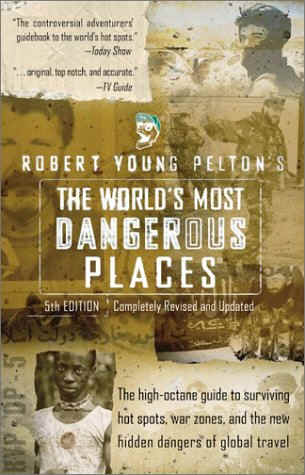
The author of  The World’s Most Dangerous Places: 5th Edition  and Licensed to Kill: Hired Guns in the War on Terror was nice enough to drop by in the comment section and discuss his firsthand view of special operators in Afghanistan. During the course of the discussion, in response to a question from Lexington Geen, RYP offered up a couple of links that I think readers will find worthwhile. Here is a quote from one of them:

….The next morning, about 60 Afghan cavalry came thundering into the compound. Ten minutes later, another 40 riders galloped up. General Abdul Rashid Dostum had arrived.

“Our mission was simple,” another soldier says. “Support Dostum. They told us, ‘If Dostum wants to go to Kabul, you are going with him. If he wants to take over the whole country, do it. If he goes off the deep end and starts whacking people, advise higher up and maybe pull out.’ This was the most incredibly open mission we have ever done.”

“Dostum” is the mercurial, ex-Communist, Uzbek Afghan warlord,  General Abdul Rashid Dostum.

Here are the links:

The Legend of Heavy D and the Boys: In the Field With an Afghan Warlord

Inside the Afghan War Machine

Incidentally, I read The World’s Most Dangerous Places in an earlier edition, back when Pelton’s uber-violence list was topped by Algeria, Colombia and several, broken down, West African nations. It’s a great book and a fun read that I have lent out to many of my students who had an all too idealistic and  parochial view of the world. It cured a few of them.

Now John Robb is in the House!

Thursday, April 2nd, 2009

John Robb is testified today before the House Armed Services Subcommittee on Terrorism, Unconventional Threats and Capability on Terrorism and the New Age of Irregular Warfare: Challenges and Opportunities. John put up a PDF of his testimony at Global Guerillas, here is a snippet but you should read John’s text in full:

MY TESTIMONY

….Against this dark picture, a combination of assault by a global economic system running amok and organic insurgency by superempowered small groups, there are few hard and fast recommendations I can provide. It’s complex. However, it is clear:

  • We will need to become more efficient. Force structure will shrink. Most of the major weapons systems we currently maintain will become too expensive to maintain, particularly given their limited utility against the emerging threat. Current efforts from the F-22 and the Future Combat System appear to be particularly out of step with the evolving environment. Smaller and more efficient systems such as unmanned aerial vehicles and coordination systems built on open platforms (as in a Intranet) that alloworganic growth in complexity make much more sense.


  • We should focus on the local. In almost all of these future conflicts, our ability to manage local conditions is paramount. Soldiers should be trained to operate in uncertain environments (the work of Don Vandergriff is important here) so they can deal with local chaos. Packages of technologies and methodologies should be developed to enable communities in distressed areas to become resilient – as in, they are able to produce the food, energy, defense, water, etc. they need to prosper without reference to a dysfunction regional or national situation. Finally, we need to get build systematic methods formanaging large numbers of militias that are nominally allied with us (like Anbar Awakening, Pakistan’s Frontier Corps, etc.). Even a simple conversion of a commercial “customer relationship management” system would provide better institutional memory and oversight than we currently have.
  • We need to get better at thinking about military theory. Military theory is rapidly evolving due to globalization. It’s amazing to me that the structures and organizations tasked with this role don’t provide this. We are likely in the same situation as we wereprior to WW2, where innovative thinking by JFC Fuller and Liddell Hart on armored warfare didn’t find a home in allied militaries, but was read feverishly by innovators in the German army like Guderian and Manstein. Unfortunately, in the current environment, most of the best thinking on military theory is now only tangentially associated with the DoD (worse, it’s done, as in my situation, on a part time basis).

A classy move on John’s part to take the time during his testimony highlight Don Vandergriff’s program of adaptive leadership ( another guy whom Congress should be hearing from)!

 Chairman Ike Skelton (D -Mo), judging by his impressive reading list in military affairs, is a Member of Congress who would seem to be keen to hear what John had to say. I’m very pleased to see Congress drawing upon the insights of strategic thinkers like John Robb and Tom Barnett, instead of the usual parade of niche specialists from the Beltway tanks.


Switch to our mobile site