zenpundit.com » Character

Archive for the ‘Character’ Category

Of Robert Bales and Dennis Weichel

Saturday, March 31st, 2012

[ by Charles Cameron — one shooting spree (or two?) — one act of self-sacrifice ]
.

The question is: who gets top billing — Specialist Dennis Welch Weichel (upper image above), who saved the life of a young Afghan girl boy, Zaiullah, throwing her him out of the path of an oncoming MWRAP, at the cost of his own life — or Staff Sergeant Robert Bales (lower image), who is alleged to have killed a dozen or more Afghans, men, women and children, in a shooting spree (or two)?

El Snarkistani gives us one answer at It’s Always Sunny in Kabul:

I do know that Good Morning America has already spent quite a bit of airtime on the Bales’ case, from his financial past, to his injuries, to more unfounded speculation about his mental health. Over several days.

Weichel? 34. Seconds.

*

Here’s a pop-psych rough cut on why that might be:

Media studies show that bad news far outweighs good news by as much as seventeen negative news reports for every one good news report. Why? The answer may lie in the work of evolutionary psychologists and neuroscientists. Humans seek out news of dramatic, negative events. These experts say that our brains evolved in a hunter-gatherer environment where anything novel or dramatic had to be attended to immediately for survival. So while we no longer defend ourselves against saber-toothed tigers, our brains have not caught up.

*

Look, I’m afraid I cannot judge SSG Bales, though my heart goes out to his victims, their families, his comrades, their families, and him and his family. That whole incident leaves me sad.

And I cannot judge SPC Welch Weichel, either. I can and do admire him, and am grateful to him — and my heart goes out to his family, his comrades, the young girl boy whose life he saved, and her his family and friends.

In both men I see the human condition under pressure — its breaking points and possibilities.

*

You can read El Snarkistani’s piece, The Madness of SPC Weichel in full for more of the possibilities…

Supporting Our Troops by Treating them as Children and Drunkards

Friday, March 16th, 2012

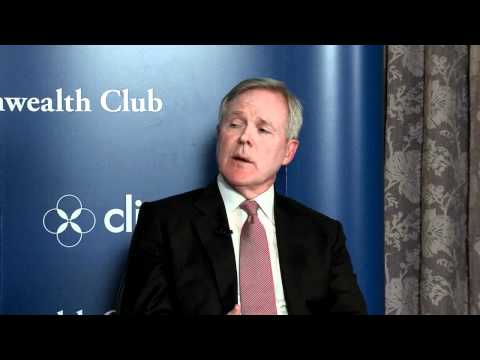
Secretary of the Navy, Ray Mabus

This is one of the more inane, disrespectful and lavishly wasteful ideas to come out of the Federal government in some time.

Secretary of the Navy Ray Mabus, who should have more sense, has proposed in his “21st Century Sailor and Marine Initiative” the idea of normalizing a breathalyzer test (!) for Sailors and Marines reporting for duty. Yes, that’s correct. Showing up for duty is going to be regarded as probable cause for drug testing, as if our AVF were composed primarily of skid row derelicts.

Nice move Mr. Secretary. Stay classy.

That this is yet another example of the demeaning, exploitative, contempt towards normal Americans by our Creepy-state bipartisan elite goes without saying, but the reaction of those so insulted is worth noting:

Best Defense (guest post):

….This is among the most paternalistic, professionally insulting concepts I’ve seen in all my years of service, and I’m not sure I will submit. Yes, I know my options, and I just may exercise them and go right over the side the first time the duty blowmeister shoves a plastic tube in my face and treats me like a drunk driver for daring to report for duty. To the CNO, CMC, CMC of the Navy, and SgtMaj of the Marine Corps, here’s my question:  At what point will one of you four exercise your duty to tell the Secretary of the Navy, “Hey, Boss, WTF, over?” and that he really ought to fire whichever clown came up with this idea to screen everyone to identify serial alcohol abusers who are readily identifiable through other means.  One or more of you needs to find the moral courage to recommend relegating this part of the initiative to the dustbin of really bad naval ideas.

USNI Blog (BJ Armstrong):

….Recently a string of new policies and programs have washed over the decks of our Navy. We’re told they are designed to address everything from the surge in CO firings, to alcohol abuse, to the identified need to increase “diversity.” Training, trackers, new layers of bureaucratic offices, and new ways of testing/identifying the “bad apples” are all in the works. Some of the initiatives appear more connected to reality than others. The issues, like sexual assault and substance abuse, are serious and are challenges that our Navy should be addressing. In many cases, however, we are attempting to install programmatic and bureaucratic solutions to what are essentially humanistic problems. These are problems of leadership, character, and integrity and must be addressed with wisdom as much as programs and bureaucracy.

I suspect, if we were to scrape away the insincerely saccharine and frankly deceptive rhetoric offered by Mabus for this kind of a camel’s nose in the tent program, we will see old fashioned venality at work.  Off the shelf commercial breathalyzers are not exactly cheap and testing 500,000 active duty personnel who make up the Navy and Marine Corps daily,(!) the DoD civilian contractor support for counseling and “training” program development, supplemental extensions for testing the reserves and so on, will represent lucrative paydays in the billions for somebody.

Will those “somebodies” be friends of the current administration? Let’s place our bets now.

[ Sidebar: Let’s also guess how long before this initiative is extended elsewhere, in the civilian world, with results, recorded, tracked and shared without your consent by your employer. Can’t happen here? Oh, Really? I bet you once never expected to have government employees demand to take nude pictures of you at the airport either]

The diversion of resources this proposed insanity represents from warfighting, acquisition, real military training or PME, medical care for our wounded or a thousand other authentic needs of the Navy or Marine Corps would be a scandal in an earlier era.  But we do not live in an earlier era, and the defense budget is just another pile of seed corn to eat as far as the beltway boomer oligarchy are concerned.

Arthur Wellesley, the Duke of Wellington, Great Britain’s greatest military hero, when asked about his soldiers, described them as “The scum of the Earth, enlisted for drink”.  Winston Churchill, over a century later, said the culture of the Royal Navy was based upon “Rum, sodomy and the lash”. This encapsulates an aristocratic worldview of rulers toward their servants and comprises a long military tradition in whose footsteps Navy Secretary Mabus is following.

It just isn’t an American military tradition.

Wishcraft as Statecraft a.k.a The “And a Pony!” Doctrine

Wednesday, January 11th, 2012

A short and cranky diatribe.

Adam Elkus and his amigo Dan Trombly of Slouching Towards Colombia have been busy  poking holes into the ill-considered and/or poorly reasoned strategic conceptions of victory-free but credible influence. Dan gets very close to something important, something worth contemplating for the welfare of our Republic:

…..Rather than a world where normal victory and political decision through force of arms give way to a world of credible influence, I see this concept ushering in a world where America’s objectives remain expansive – seeking to create social and political change – but where “twentieth century” warfare continues as usual, obscured by multilateral efforts and prosecuted as much as possible by local forces. Because the objectives are essentially unchanged – overthrow of criminal regimes, integration of societies into a dynamic liberal international order, protection of civilians – one of my real fears about the Defense Strategic Guidance is that, confronted with conflicts and challenges to our interests, and with a paradigm of military aims just as expansive as before, we will slouch inevitably towards unsustainable ways of war. Already, the new objectives of civilian protection are blurring into the old objectives of democracy promotion and liberalization – just look at the title of the new State Department Office of Civilian Security, Democracy, and Human Rights.

When a statesman selects Ends that have no rational relationship to available Ways and Means we might take that as a sign of possible incompetence as a strategist.

While that’s not good it is at least normal – most politicians in a democratic society are on average, poor strategists but pretty good intuitive tacticians. After all, acquiring and keeping political power for long periods of time requires more than luck and a large checkbook. While there are always some buffoons decorating the halls of Congress, as individuals, Members of Congress are usually pretty shrewd and a minority are exceptional people.

If the Ends selected are fantastically broad open-ended, undefined or, worse, undefinable, convoluted and insensible in their context, we are left with two even less savory conclusions:

First, that the statesman has a fundamental political immaturity and narcissism the leads them to articulate their emotively generated whims as policy objectives without regard to empirical reality. Sort of a wishcraft of state that substitutes rhetorical expressions and sloganeering for thought and analysis. We see this effect on a much larger scale in the ideological atmosphere of totalitarian regimes where 2+2= 5 and only Right-deviationist mathematician, counterrevolutionary wreckers would dare suggest the answer is 4. Geopolitical goals that are created by political fantasists – like the creation of a modern, liberal democratic state in Afghanistan in a few years time – can be appended with “And a Pony!” and still be just as likely to come to pass.

American statesmen seem to be particularly predisposed to this condition in foreign affairs (and arguably, in fiscal affairs as well). Perhaps this is an intellectual legacy of Wilsonian excess but the problem was not acute until the past decade and a half, which indicates that the driving force may be, in part, generational. Men and women born into a time of record-breaking standards of living have reached the apex of power and they are no more inclined to act with restraint, responsibility or realism now than they did in ’68.

The second conclusion is that the Ends are purposefully incoherent and recklessly broad because the real strategic objective is not in our relations with country X, but for the statesman to wrest for their faction as large a grant of unaccountable power as possible.

The Forum and The Tower, a review

Sunday, November 20th, 2011

[by J. Scott Shipman]

the-forum-and-the-tower.jpeg

The Forum and The Tower by Mary Ann Glendon

“The relationship between politics and the academy has been marked by mutual fascination and wariness since the time of Plato.”

The first sentence on the flap of the dust jacket of this very good and informative small book. Professor Glendon, who is the Learned Hand Professor of Law at Harvard Law school, set out to write a book for her students that would answer ageless questions such as:

“Is politics such a dirty business, or are conditions so unfavorable, that couldn’t make a difference? What kinds of compromises can one make for the sake of getting and keeping a position from which one might be able to have influence on the course of events? What kinds of compromises can one make for the sake of achieving a higher political goal? When does prudent accommodation become pandering? When should one speak truth to power no matter what the risk, and when is it acceptable, as Burke put it, to speak the truth with measure that one may speak it longer? When does one reach the point at which one concludes, as Plato finally did, that circumstances are so unfavorable that only the reasonable course of action is to “keep quiet and offer up prayers for one’s own welfare and for that of one’s country”?”

Professor Glendon answers these questions and more through brief examinations of the lives and works of some of history’s most important figures:

Plato

Cicero

Justinian, Tribonian, and Irnerius

Machiavelli

Thomas Hobbs and Edward Coke

John Locke

Jean-Jacques Rousseau

Edmund Burke

Tocqueville

Max Weber

Oliver Wendell Holmes

Eleanor Roosevelt and Charles Malik

All in all, I believe Professor Glendon has provided a uniquely valuable book to help her students and other readers to answers those questions. In short but focused chapters of about 20 pages each, she provides mini-biographies of the subjects above and how they answered the some of the questions both in their lives and in their philosophy. Some of her subjects were thinkers lacking the abilities for the public square, Plato, for instance, but were enormously influential just the same. Rare were those like Cicero and Burke who were equally comfortable in the political arena or the academy.

My favorite chapters were on Plato, Cicero, Machiavelli, and Burke—mostly because I’ve read a respectable amount of their work. That said, I have not read Plato’s The Laws—and Professor Glendon suggests it is much better than The Republic—which I have read and did not much enjoy. Not surprisingly, The Laws will be on my list for this winter.

The inclusion of Eleanor Roosevelt and Charles Malik was something of a surprise, but Professor Glendon is weaving a sub-story through each chapter and illustrating how Roosevelt and Malik’s work on the Universal Declaration of Human Rights was something of culmination and extension of over 2,000 years of thinking and political action—not in the context of human progress towards a utopia of sorts, which she wisely rejects,  but rather a reflection the common threads of political thought throughout history.

While this is not criticism, I would have liked to have seen a chapter on John Adams and Thomas Jefferson, and a chapter on Karl Marx, whom she frequently mentions.

This is a book that is approachable and readable, and in our tumultuous domestic and global political climate, important.

She closes with this illuminating sentence:

“If one message emerges from the stories collected here, it is that just because one does not see the results of one’s best efforts in one’s own lifetime does not mean those efforts were in vain.”

Professor Glendon is to be commended for a job “well done!”

The book comes with my highest recommendation and may be the best book I’ve read this calendar year. Add this book to your must read list.

.
Referenced works you may find of interest (some of these works are out of print and expensive—for simplicity I’ve used Amazon links): 

The Laws of Plato, translated by Thomas Pangle

Cicero: The Life and Times of Rome’s Greatest Politician, by Anthony Everitt

Cicero, A Portrait, by Elizabeth Rawson (Glendon praised this book.)

A Panorama of the World’s Legal Systems, John Henry Wigmore

The Life of Nicolo Machiavelli, Roberto Ridolfi

The Prince, translated by Harvy Mansfield

Machiavelli, by Quentin Skinner

The Lion and the Throne, Catherine Drinker Bowen

The Spirit of Modern Republicanism, by Thomas Pangle

Statesmanship and Party Government, by Harvy Mansfield

The Great Melody, A Thematic biography of Edmund Burke, by Conor Cruise O’Brien (I read this wonderful book in 1992 when it was released: highly recommended.)

Debating a Failure of Generalship and Leadership

Tuesday, October 18th, 2011

A fascinating online discussion between US Army intellectuals Colonel Gian Gentile, Colonel Paul Yingling and journalist and Iraq War veteran Carl Prine:

Paul Yingling  A Failure in Generalship  –AFJ

….Having spent a decade preparing to fight the wrong war, America’s generals then miscalculated both the means and ways necessary to succeed in Iraq. The most fundamental military miscalculation in Iraq has been the failure to commit sufficient forces to provide security to Iraq’s population. U.S. Central Command (CENTCOM) estimated in its 1998 war plan that 380,000 troops would be necessary for an invasion of Iraq. Using operations in Bosnia and Kosovo as a model for predicting troop requirements, one Army study estimated a need for 470,000 troops. Alone among America’s generals, Army Chief of Staff General Eric Shinseki publicly stated that “several hundred thousand soldiers” would be necessary to stabilize post-Saddam Iraq. Prior to the war, President Bush promised to give field commanders everything necessary for victory. Privately, many senior general officers both active and retired expressed serious misgivings about the insufficiency of forces for Iraq. These leaders would later express their concerns in tell-all books such as “Fiasco” and “Cobra II.” However, when the U.S. went to war in Iraq with less than half the strength required to win, these leaders did not make their objections public.

Gian Gentile A Few Questions for Colonel Paul Yingling on Failures in GeneralshipSmall Wars Journal

….Perhaps you see it differently, but the failure that I see in American generalship in both wars in Iraq and Afghanistan (with precedence in Vietnam) is the idea that tactical and operational excellence through a certain brand of counterinsurgency (or any other form of tactical innovation) can rescue wars that ultimately are failures of strategy, or as Schlesinger more harshly puts it “national stupidity.”

In light of how you respond to these questions might you consider writing “A Failure of Generalship, Version 2” for Afghanistan?

If not, might you spell out the differences between what you saw as the failure of American generalship in Iraq from 2003-2006 with the past two years plus in Afghanistan.  In other words, how has American generalship been a failure in Iraq and not in Afghanistan?

Paul Yingling The Gentile-Yingling Dialogue: ISAF Exit Strategy – Neither International nor an Exit nor a Strategy – Small Wars Journal

….Those of us charged with strategic thinking ought to heed this example.  Imagine a failed Pakistan that results in a terrorist organization acquiring one or more nuclear weapons.  What would our response be in the aftermath of such a crisis?  What intelligence capabilities do we need to locate compromised nuclear materials?  What civil security and law enforcement measures might disrupt or minimize the impacts of such a threat?  What counter-proliferation capabilities are required to seize and render safe compromised nuclear weapons or materials?  Imagine further the capabilities required to avoid such a crisis.  What diplomatic measures might change the Pakistani strategic calculus that lends support to extremism?  What broader engagement with Pakistani civil society might render this troubled country less amenable to radical ideology?  Now imagine still further back to the institutional arrangements that generate national security capabilities.  Do we have the right priorities?  Are we buying the right equipment?  Are we selecting the right leaders?  Are we making the best use of increasingly scarce tax payer dollars?

Too often, what passes for strategic thought in the United States is actually a struggle among self-interested elites seeking political, commercial or bureaucratic advantage.  Such behavior is the privilege of a country that is both rich and safe.  However, a pattern of such behavior is self-correcting: no country that behaves this way will stay rich or safe for long.

Carl Prine A Colonel of Truth – Line of Departure

….Gentile and I agreed nevertheless that Yingling failed to seal the deal by naming names, something that would’ve allowed readers the chance to test empirically whether the LTC’s overall thesis had merit.  Here’s Yingling’s nutgraf, words scribbled during the worst days in Iraq when Gentile commanded a cavalry squadron in Baghdad and I was stuck in Anbar as a lowly infantry SPC:

These debacles are not attributable to individual failures, but rather to a crisis in an entire institution: America’s general officer corps. America’s generals have failed to prepare our armed forces for war and advise civilian authorities on the application of force to achieve the aims of policy. The argument that follows consists of three elements. First, generals have a responsibility to society to provide policymakers with a correct estimate of strategic probabilities. Second, America’s generals in Vietnam and Iraq failed to perform this responsibility. Third, remedying the crisis in American generalship requires the intervention of Congress.

….Perhaps because it was so brief, Yingling’s essay lacked subtlety.  It’s not true that America’s generals in Vietnam saw the conflict merely in terms of conventional warfare, although some surely did.  He spun a dubious bit of scholarship on Malaya by John Nagl into a larger argument about Cold War generals choosing to orient American arms toward highly kinetic campaigns – as if the threat of Soviet arms in Europe had nothing to do with that.  And he peppered his analysis with bromides that remain unproven, perhaps my favorite being the chestnut that “?opulation security is the most important measure of effectiveness in counterinsurgency.”

That read better in 2007 than it does today. But Yingling’s larger point held true:  America’s generals failed to adapt our shrinking forces to how policymakers might direct their use, even if there was a re-emphasis on operations other than conventional war both in practice (Kurdistan, Bangladesh, Haiti, Somalia, Kovoso, Bosnia, Timor, Cambodia) and theory.

This is an important discussion because the failure of generalship is merely part of a larger paradigm of leadership by abdication and moral evasion that is corroding the fabric of American society to a degree not seen since the 1970’s. Or perhaps since the 1870’s. Colonel John Boyd once chided his brother officers for being willing to take a bullet for their country but not willing to risk their careers for their country. How much worse then is an elite civilian political class that grabs the largesse of government contracts with great gusto but is chronically unable to do the hard work of providing strategic leadership when in office?

Truman’s famous desk sign that indicated the buck stopped at his desk. To update the sign to fit the spirit of the times would require replacing it with a dead fish rotting from the head.


Switch to our mobile site

