Sunday surprise — Go on
Sunday, July 23rd, 2017[ by Charles Cameron — zen mind, beginner’s mind, math mind, game mind ]
.
Pi:
A Beautiful Mind:
[ by Charles Cameron — zen mind, beginner’s mind, math mind, game mind ]
.
Pi:
A Beautiful Mind:
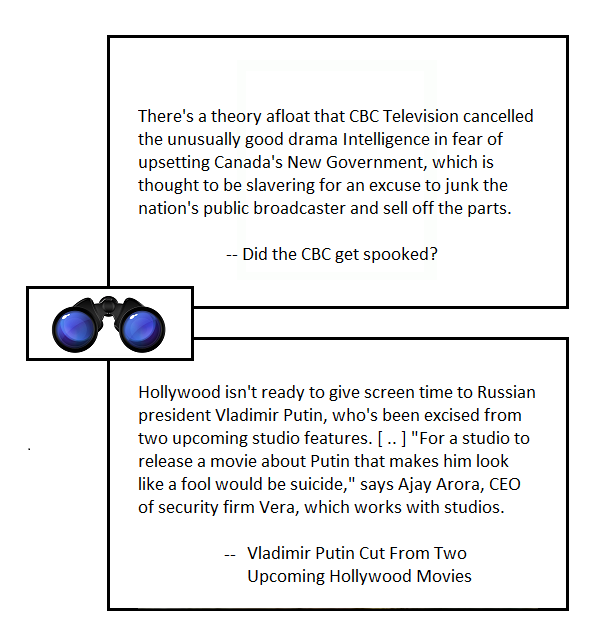
[ by Charles Cameron — Canada, Hollywood cave? ]
.
Sources:
Friends of Canadian Broadcasting, Did the CBC get spooked? Hollywood Reporter, Vladimir Putin Cut From Two Upcoming Hollywood Movies
**
The Chinese don’t want the Dalai Lama to speak with heads of state; they throw their weight around, and some heads of state capitulate.
Here’s the equivalent in terms of the arts. I suppose it’s inevitable, considering the state of the world, but I don’t like it one little bit.
[ by Charles Cameron — a superb find & capture ]
.
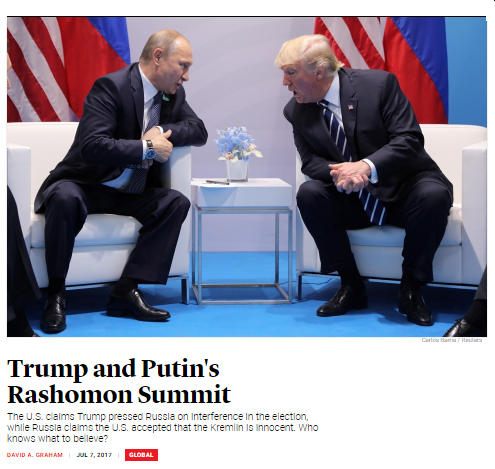
Life imitates art.#G20Summit by #craignewmark pic.twitter.com/C6fynHqfZO
— Russ Turner (@MadHelp4U) July 7, 2017
In an earlier tweet, Turner identified “Underwood and Petrov in ‘House of Cards’ season 3 vs. Trump and Putin IRL by #timoreilly“. That’s them.
I got this via Thomas Hegghammer, who has a keen European eye — something I suspect may be invaluable in analytic work.
**
Likewise noteworthy, a neat title to an Atlantic piece on the same meeting of the minds — which also exhibits double vision:
Here’s the relevant detail-work from the text of that piece:
Attendance at the meeting was sharply limited, reportedly in order to avoid leaks: There were just six people in the room, including each president’s foreign-policy chief and an interpreter for each side. That means that anyone curious to know what was discussed is forced to rely on the accounts of the two governments involved—neither of which has a sterling reputation for honesty.
Adding to the confusion, the two initial accounts of the meeting differ sharply. Russian and American officials, together with Jordan, announced a cease-fire in southwest Syria, the one major material accomplishment, though one that based on Jordan’s involvement was clearly in the works long before the two presidents met. The two sides also agreed to set up a working group on cybersecurity. From there, accounts diverge, creating a Rashomon-like situation in which it’s likely impossible to piece together what actually happened.
Rex Tillerson, the U.S. secretary of state, briefed reporters in Hamburg on the discussion. Tillerson said Trump had begun the meeting by pressing Putin about Russian interference in the 2016 presidential election.
“The president opened the meeting by raising the concerns of the American people regarding Russian interference in 2016 election. Putin denied such involvement, as he has done in the past,” Tillerson said. He said that Trump had returned to the topic more than once during the meeting. (As the meeting ran over, first lady Melania Trump was reportedly sent inside in an unsuccessful attempt to get the men to wrap up.)
Russian Foreign Minister Sergei Lavrov, also briefing reporters in Hamburg, agreed that Trump had brought up the accusations, but that Trump had accepted Putin’s version of the events, which is that Russia is innocent of any involvement. U.S. officials denied that. He also claimed Trump had dismissed the allegations: “Trump mentioned that in U.S. certain circles still inflate subject of Russian meddling in elections, even though they have no proof.”
It’s hard to know what to believe. Lavrov and Russia have obvious motivation to lie about what happened. But Trump has repeatedly shown that despite his bluster about being a tough negotiator, he can be easily persuaded by foreign leaders during face-to-face meetings, abandoning long-held positions when effectively debated by a counterpart. (This is one reason that Putin, like other foreign leaders, was so eager to meet in person.)
Moreover, Trump’s own view on the interference in the election remains opaque. He has never fully accepted the judgment of U.S. intelligence agencies and most of his own aides that Russia was behind hacking of email accounts and other feints. Most recently, on Thursday in Warsaw, Trump suggested that Russia might have been involved but might not have been alone, and concluded, “Nobody really knows. Nobody really knows for sure.”
Rashomon indeed! — but maybe that’s the play here: obfuscate.
[ by Charles Cameron — among other things, a great lecture on complexity / complicity in a complex world ]
.
**
I am always on about form, practicing ways of seeing form, of recognizing pattern in the very structure and logic of events — as though that practice were practical, had some eventual fruitfulness in practice, in the world of worldly affairs. And it may seem strange, erratic, off-course to many of my readers here, especially those who arrive in mid-stream, or with expectations of specifically strategic insight.
The other day I watched a lecture a friend of mine gave a couple of years back, and I wanted to bring it here because — tangentially — with its loops and diagrams it shows underlying form as it in-forms the games we play, the worlds they conjure, the ways we understand and navigate them, and the world around us — in which we find ourselves, and on which they are, however remotely and ingeniously, based.
My friend Mike has been lead designer on Sims 2 and Ultima Online among other games, and is currently a Professor of Practice in game design at Indiana University, Bloomington.
Mike Sellers..
More from Sellers’ bio:
He has a Bacon Number of 2 and hopes someday to have an Erdos Number.
Oh — and he was an extra — lucky dog, sorta — in Francis Ford Coppola‘s Apocalypse Now.
**
My own analytic approach, my insistence on monitoring form as well as content, and my own HipBone Games all work at the underlying / subconscious level at which Mike pitches his talk. I hope this helps you understand what I’m about — but even if it doesn’t, it’s a fine introduction to game design and the understanding of a complex world by the man who famously reminded his fellow game designers:
An idea isn’t a design. A design is not a program. A program is not a product. A product is not a business. A business is not profit. Profit is not happiness.
Good thinking, from a good friend.
[ by Charles Cameron — one-time typewriter poet & artist ]
.
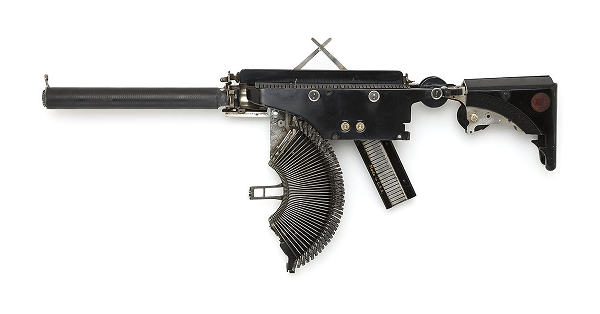
From This Artist Recycles Typewriters into Guns:
Typewriters revolutionized the way we write and guns changed the wars we fight, yet it can’t be denied that both are artifacts of tremendous cultural impact, despite the dramatic differences in function. This notion helps illuminate the peculiar Typewriter Guns of Québécois artist Eric Nado, a sculptural series of typewriters transformed to look like guns.
Thankfully non-functional, Nado’s guns seem like strange weaponry from the future, due to their brilliantly vibrant hues and the protruding typewriter parts that seem like alien steampunk appendages in this technological recontextualization. This may be partially an aesthetic choice, but it also relates to the artist’s desire to fully recycle the typewriters. In his project statement, Nado iterates that every piece of the typewriters were re-incorporated into the guns, an almost eerie vein of sustainability given how convincingly dangerous these sculptures look.
**
Reminds me of Ernst Jandl‘s sound poem schtzngrmm, based on taking the letters of the word “trench” — “Schützengraben” in German literally, letter by letter, so as to evoke (some of) the sound of trench warfare:
schtzngrmm
schtzngrmm
t-t-t-t
t-t-t-t
grrrmmmmm
t-t-t-t
s———c———h
tzngrmm
tzngrmm
tzngrmm
grrrmmmmm
schtzn
schtzn
t-t-t-t
t-t-t-t
schtzngrmm
schtzngrmm
tssssssssssssss
grrt
grrrrrt
grrrrrrrrrt
scht
scht
t-t-t-t-t-t-t-t-t-t
scht
tzngrmm
tzngrmm
t-t-t-t-t-t-t-t-t-t
scht
scht
scht
scht
scht
grrrrrrrrrrrrrrrrrrrrrrrrrrrr
t-tt
But I’ll let Jandl read it himself and comment on that final “t-tt” and its aural cognate, “tod” — death:
**
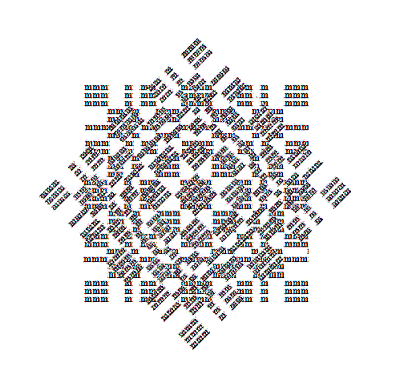
Back in the day, I was a “visual poet” as Jandl was a “sound poet” — the two experiments observed poetry as it approached art and music, respectively — and here’s one of mine, now enshrined in Marvin & Ruth Sackner‘s definitive The Art of Typewriting:
That’s no gun — it’s a rose, and I presented it to Elizabeth Taylor, no less, when she was supporting Basil Bunting for the Oxford Poetry Professorship, and we met in a pub by the river..

Zenpundit is a blog dedicated to exploring the intersections of foreign policy, history, military theory, national security,strategic thinking, futurism, cognition and a number of other esoteric pursuits.
Customized Web Site & Blog Design