[ by Charles Cameron — prescience, edutech, a twitter exchange — Glass Bead Games, Harper’s magazine and Microsoft ]
.
Twitter avatars, left to right: Mark Safranski, Enriqueta Turanzas, Lewis Shepherd
.
Mark Safranski, whom I like to think of as the Zen of Zen since there are now three of us who blog here, was tweeting with Lewis Shepherd and Enriqueta Turanzas about the future of education the other day, and Shepherd — who blogs at Shepherd’s Pi and is, as far as I know, Director of the Microsoft Institute for Advanced Technology in Governments — tweeted a phrase that caught my eye:
Back in 1996 and 1997 I was writing up my ideas on education and games for the Magister-L mailing list, and pushing them on anyone who would listen at the Computer Game Developers’ Conference — now renamed the GDC, since it has since become obvious that games and computers are a match… and to shorten a long story, my ideas back then seemed to me to rhyme with Shepherd’s tweet this week.
And rhymes between ideas are important to me.
I tweeted back to Shepherd, offering a link to a piece I’d written in 1996 titled Myst-like Universities, Oxford-like Games? — and along with the link, my tweet said, ee cummings style:
if i wrote this in 1997 i was prescient, eh?
To which Enriqueta, bless her, quickly agreed, while Shepherd responded:
Prescient, yes. And if you patented it in ’97. you should get a call from Sebastian Thrun : )
*
So.
That got me thinking, and I went back to look a little more carefully at what I’d written back then, and decided I should re-up it here on Zenpundit, which I will do in a follow up post to this one.
But first I should respond to Lewis Shepherd on the question of patenting.
I am a lot closer to a hermit than a man of business, to be honest – for reasons that Zenpundit regulars will have intuited from my two recent posts about Trevor Huddleston, and which followers of my games will know from my recent biographical sortie on the Sembl pages.
So, no – I didn’t patent my ideas, and indeed am deeply indebted to whoever engraved the words “to give, and not to count the cost, to labour, and not ask for any reward” on my heart early enough for me to be something of a Creative Commons type avant la lettre.
The other thing that’s just a tad ironic about all this, though, is that back in April of 1997, Lewis Lapham, who was then editor-in-chief of Harper’s, wrote an extended editorial called Notebook: The Spanish Armadillo in which he recommended that Microsoft should consult me – publishing my email address for their convenience, no less:
Hesse’s bead game lends itself so obviously to the transcendent aspirations of the Internet that it’s probably only a matter of months before Microsoft buys the rights to his name for one of its software programs. The company’s marketing strategists might first want to consult Charles Cameron, reachable on the Internet at hipbone@earthlink.net, the foremost of 263 correspondents concerned with the implications of Hesse’s novel.
Well, I never got the email from Microsoft. I came to the conclusion they likely didn’t read Harper’s, or not at the requisite level for initiating consultations. And I was busy writing and thinking, thinking and writing, and taking pauses.
I still am.
But perhaps if Microsoft had called on me back then, I’d have blurted my thoughts out to them in greater detail than I was able to in that one HTML 1.0 post, so many years ago.
And perhaps they’d have thought I was prescient — and patented my idea or ideas, back in 1997.
*
It’s interesting to compare my thoughts back in 1996-97 with what we’re up to these days with the Sembl project.
Next up, for your amusement: the text of that 1997 post of mine, giving my thoughts on games and education sixteen years ago – when I thought a terabyte was huge, huge.
[ by Charles Cameron — cross-posted from Sembl ]
.
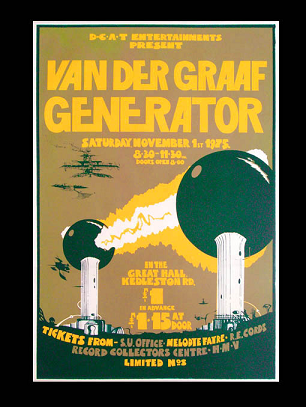
image credit The Movie Poster Art Gallery / http://www.rock-explosion.com/catpage2.html
.
1.
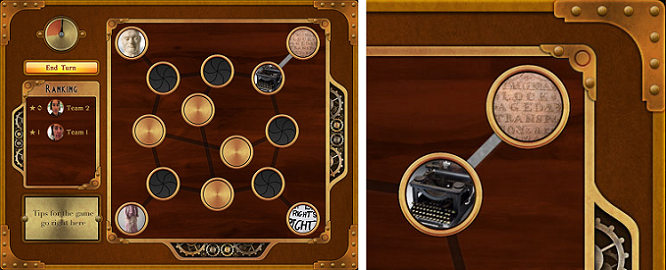
I’m always looking around for ways to describe the leap between two ideas (concepts, people, events, things) that occurs when you make a move in a Sembl game. On the game board, the ideas are shown as circles and the links as lines between them.
In the case of the museum version, the “ideas” are objects in the Museum’s collection – but the same principle applies whether we’re talking objects, concepts, events or people: entities of whatever type go in the circles, the lines between them signify the exploration of their resemblances and differences.
.
2.
Okay.
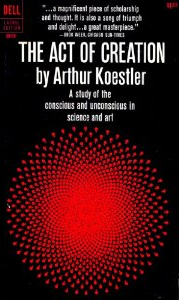
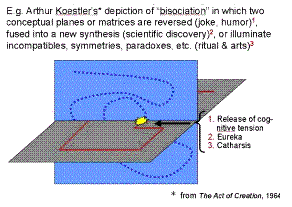
In more technical terms, Arthur Koestler in his classic book about the conceptual structure of creativity, The Act of Creation, diagrammed the intersection of two conceptual frames as representing the place where the joyous aha! of discovery, the gasped ah! of tragedy or the delightful ha! of laughter is generated, and this more recent version of his diagram gets the essence:
.
3.
But wait!
There’s a lot going on here, there’s a distinct leap – think: creative leap, even perhaps leap of faith.
It was the leap between two ideas – electricity and magnetism – that gave Faraday his dynamo, Maxwell his equations, and the modern world almost its whole existence. It was the leap between two ideas – modular forms and elliptic equations – that gave Taniyama his conjecture and Wiles his proof of Fermat‘s Last Theorem.
The leap that intuits similarities, particularly rich similarities between rich concepts in widely separated fields, is the most powerful tool of the thinking mind – and playing Sembl amounts to nothing more or less than a repeated, playful, delightful invitation to make leaps of exactly that kind.
So a Sembl leap of resemblance can be anything from training wheels for creativity to a prize-winning long-jump at the conceptual Olympics.
.
Consequently the habit of mind which leads to a search for relationships between facts becomes of the highest importance in the production of ideas.
This isn’t some hidden secret, but it’s not exactly common knowledge either, it’s not something many schools teach — which is why the great anthropologist Gregory Bateson famously told his fellow Regents at the University of California:
Break the pattern which connects the items of learning and you necessarily destroy all quality.
Which is also why Eliot Eisner, Stanford professor and former President of the American Educational Research Association, said of Sembl’s precursor HipBone Games, “the cognitive processes you are interested in developing are critical to a decent education”.
.
5.
And just what does this have to do with Van der Graaf Generators, you might wonder?
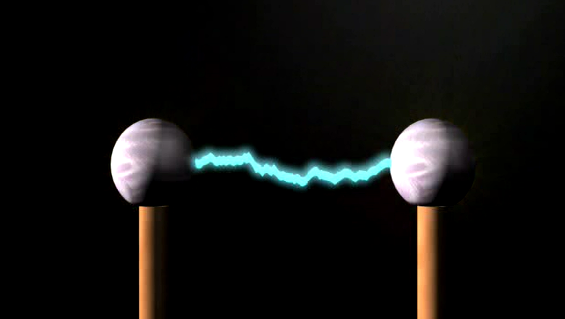
There’s a cracking sense of energy discharged when you connect two ideas in a Sembl game move – not unlike the discharge of energy between the spheres of two Van der Graaf Generators picture here:
Imagine the spheres as two ideas in place on a Sembl game board, and the electrical discharge as the excitement of seeing how they mesh together to create that ah!, aha! or ha!
Or watch the whole, ultra-short video from which that image was taken, courtesy of the folks at MIT:
[ by Charles Cameron — from the Glass Bead Game via the HipBone Games to Sembl ]
.
.
.
Play most assiduously is how Edgar Wind translates the motto of Marsilio Ficino — the man who more or less single-handed, built the Florentine Renaissance: studiossime ludere. Play most studiously.
Play as if your life depends on it.
*
Hermann Hesse crowned his life-work with the great, boring, utterly riveting novel Das Glasperlenspiel, The Glass Bead Game, sometimes better known in the English-speaking world by the (Latin) title, Magister Ludi — which means both school-teacher and Master of the Game.
And game there is: the Glass Bead Game itself, or GBG for short.
The book centers around a game of ideas — a game in which the most profound conceptual systems of all human cultures are brought together in a grand architecture that Hesse calls “the hundred-gated cathedral of Mind”:
A Game, for example, might start from a given astronomical configuration, or from the actual theme of a Bach fugue, or from a sentence out of Leibniz or the Upanishads, and from this theme, depending on the intentions and talents of the player, it could either further explore and elaborate the initial motif or else enrich its expressiveness by allusions to kindred concepts.
Here Hesse mentions astronomical, musical and textual concepts — the game, like the digital world of the internet, allows mathematical, textual, musical and visual elements to be juxtaposed and combined, just as Sven Birkerts described in an interview with Cliff Becker:
There are tremendous opportunities, and we are probably on the brink of the birth of whole new genres of art which will work through electronic systems. These genres will likely be multi-media in ways we can’t imagine. Digitalization, the idea that the same string of digits can bring image, music, or text, is a huge revolution in and of itself. When artists begin to grasp the creative possibilities of works that are neither literary, visual, or musical, but exist using all three forms in a synthetic collage fashion, an enormous artistic boom will occur.
Birkerts was concerned that these “tremendous opportunities” might drown out “the old quiet pastime of reading mere words” — but Hesse’s great game is a contemplative one, in which Hesse proposes:
Every transition from major to minor in a sonata, every transformation of a myth or a religious cult, every classical or artistic formulation was, I realized in that flashing moment, if seen with a truly meditative mind, nothing but a direct route into the interior of the cosmic mystery, where in the alternation between inhaling and exhaling, between heaven and earth, between Yin and Yang, holiness is forever being created.
*
Play…
We play, we play games, we play music… we play wargames… all the world’s a stage, and we are (merely) players.
Consider: Play is what children do to learn, so brilliantly, language, languages, geography, mathematics, history, chess, go, music, politeness, discipline, excess, consequences, moderation… And play is what masters do to express their mastery — Picasso plays, Casals plays, Einstein plays… And the motto of Ficino, mentor to the Florentine Renaissance, is play most assiduously.
*
The Glass Bead Game is a game, then, to compare with the greatest of games — Chess, Go, name your poison — indeed, with the greatest of intellectual endeavors — the Encyclopédie, the gesamtkunstwerk, the long-sought Theory of Everything…
All the insights, noble thoughts, and works of art that the human race has produced in its creative eras, all that subsequent periods of scholarly study have reduced to concepts and converted into intellectual values the Glass Bead Game player plays like the organist on an organ. And this organ has attained an almost unimaginable perfection; its manuals and pedals range over the entire intellectual cosmos; its stops are almost beyond number. Theoretically this instrument is capable of reproducing in the Game the entire intellectual content of the universe.
How can taking that idea and making it playable not be a worthy challenge, in this world that is daily more absorbed in digital play in its arcades and cinemas, on its consoles, tablets, phones, and computers?
*
Just reading the book made me want to play the game, but I like to keep things simple. I needed to be able to play it with a pencil and paper napkin over a cup of coffee — or on an email list or in the online forums that were beginning to spring up while I was figuring out some early boards and rules. I took Hesse’s basic concept of juxtaposing ideas and applied it on simple graph-like boards, on which each circle represents an idea, and each line a resemblance. I called my playable variants the HipBone Games.
More recently, my friend and colleague Cath Styles has been working on the development of iPad and web-playable versions of the games. We call them Sembl, because they explore the resemblances between things, ideas — and at a deeper level, the patterning of the world itself.
But the game remains the same: to juxtapose one thing — an idea, an object, a work of art, song, person or event — with another, in a way that generates the aha! of creativity. And to do that repeatedly, weaving an architecture of related ideas, on our way to weaving Hesse’s cathedral of Mind.
Our world has never been in greater need of creativity and connectivity — our future depends on them — and in the Sembl game, every move you make is a further link in the pattern that connects, every move you make is a creative leap. More on that in my follow up post, The crackling energy of a Sembl move.
[ by Charles Cameron — cross posted from Sembl — creativity as the blending of ideas ]
.
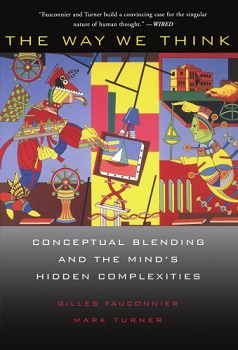
Gilles Fauconnier and Mark Turner‘s The Way We Think: Conceptual Blending and the Mind’s Hidden Complexities gives us a fascinating look at the way the human mind weaves a world out of seemingly disparate elements — in a very similar manner to that in which the creative mind weaves an aha! out of seemingly disparate ideas. The book deals with the formation of perceptions as well as ideas, but it was a specifically conceptual blend that intrigued me the other day.
First, they note that when we use expressions like “I had reached the boiling point. I was fuming. He exploded.” we are making a metaphorical mapping in which “a heated container maps to an angry individual, heat maps to anger, smoke and steam (signs of heat) map to signs of anger, explosion maps to uncontrolled rage.” Then they add in the “folk theory of physiological effects of anger” including ” increased body heat, blood pressure, agitation, redness of face” – and thus we have a threefold scheme, in which physiology, emotions and the physics of heat are intricately cross-correlated, so that we can say without much thought “He was so mad I could see smoke coming out of his ears”.
Here Fauconnier and Turner describe the mechanics of this remarkable conceptual blending process – which can yield such a seemingly unremarkable phrase:
In addition to the metaphoric mapping between Heat and Emotions and the vital-relation connection between Emotions and Body, there is a third partial mapping between Heat and Body. In this mapping, steam as vapor that comes from a container connects to perspiration as liquid that comes from a container, the heat of a physical object connects to body heat, and the shaking of the container connects to the body’s trembling.
The three partial mappings set the stage for a conventional multiple blend in which the counterparts in the inputs are fused, yielding, for example, a single element that is heat, anger, and body heat and a different single element that is exploding, reaching extreme anger, and beginning to shake. Once we have this blend, we can run it to develop further emergent structure and we can recruit other information to the inputs to facilitate its development.
*
What interests me here is the phrase:
the inputs are fused, yielding, for example, a single element that is heat, anger, and body heat
It must always be remembered … that the various senses we take out of an ancient word by analysis existed in it as a unity.
Thus the King James Version of the Bible, John 3.8, reads:
The wind bloweth where it listeth, and thou hearest the sound thereof, but canst not tell whence it cometh, and whither it goeth: so is every one that is born of the Spirit.
In the Greek, the word here translated wind is pneuma, and the sentence accordingly means “the pneuma blows where it wills, and you hear its sound but can’t tell where it comes from or is going: and so it is with all those born of pneuma“…
Recalling Lewis’ remark about the “various senses we take out of an ancient word”, this in turn means simultaneously and without separation:
the wind blows where it wills, and you hear its sound but can’t tell where it comes from or is going: and so it is with all those born of wind…
the breath blows where it wills, and you hear its sound but can’t tell where it comes from or is going: and so it is with all those born of breath…
and:
spirit blows where it wills, and you hear its sound but can’t tell where it comes from or is going: and so it is with all those born of spirit…
Take this a step further, realize that spirit can be defined as what inspires us, and we have:
inspiration blows where it wills, and you hear its sound but can’t tell where it comes from or is going: and so it is with all those born of inspiration…
Four meanings, all making good sense, and all present simultaneously and inseparably in the one gospel phrase…
*
Now consider that Fauconnier and Turner are speaking of how “three partial mappings set the stage for a conventional multiple blend in which the counterparts in the inputs are fused, yielding, for example, a single element that is heat, anger, and body heat” and compare it with Lewis’ “unity” from which we take out “the various senses” by “analysis”, as applied to the “ancient word” pneuma, with its meaning encompassing wind, breath, spirit… inspiration.
Are wind, breath and spirit or inspiration in fact three “primitives” that conceptual mapping in ancient Greek thought has brought together? What do we gain, and what do we lose if we view them this way?
And what do we lose, what do we gain if we view them as a single rich concept, now reduced to three or four separate — and separately less complexly interesting — ideas?
[ by Charles Cameron — of [almost] no military or intelligence interest, this is a post for computer scientists, historians, scientists, artists, contemplatives and other creatives ]
.
I’ve been on a bit of a binge about medieval and renaissance diagrams recently, putting together an anthology of early “semantic networks” for the Sembl game site – but also thinking about the alternate track of art history which would focus on diagrams rather than paintings (I’m thinking of two dimensions here, hence no mention of sculpture) – an alternate history which may have something to teach our richly diagrammatic and data-visual times.
My interest in all this tracks back at least to my early encounter with an essay by the computer scientist Margaret Masterman in Theoria to Theory (1967).
*
Yesterday brought me a post from Jason Wells, a scientist and bright all-rounder I follow on Google+, in which he posted an image of the cosmos from the Ptolemaic (pre-Copernical) point of view, which I’ve put at the head of this post.
Jason commented on this diagram:
As pretty as this is, this is not how your universe works.
That is all.
The diagram Jason posted purports to be mathematically and astronomically based: it is, if you like, a quantitative diagram. I don’t happen to think it’s pretty, although the two creatures (angels, goddesses?) up towards the top of the circle may be, and the serpent eating its tail around it is nicely done -– I think it has a rather austere beauty to be honest, but I’m likely to concede to Jason that it isn’t “true” in the sense of being an accurate representation of the (abstract) laws of celestial motion.
But then I also think there’s more to truth than accuracy, useful though that may be – there’s also a qualitative element to truth, and perhaps “beauty” is (among other things) a name for it.
*
Yesterday also brought me a news bulletin that ties into that same interest in medieval and renaissance diagrams. From the Vatican Information Service (via Chant Cafe) , we learn that Hildegarde of Bingen (1098 – 1179) is now a saint of the Catholic Church with universal cultus:
Vatican City, 10 May 2012 (VIS) – The Holy Father today received in audience Cardinal Angelo Amato S.D.B., prefect of the Congregation for the Causes of Saints. During the audience he extended the liturgical cult of St. Hildegard of Bingen (1089-1179) to the universal Church, inscribing her in the catalogue of saints.
Consider, then, in contrast to Jason’s mechanistic Ptolemaic diagram, this diagram which today’s fresh-minted saint produced in the late 1140s or early 1150s to illustrate her visionary intuitions of the universe in the first of three books, Scivias:
and these two, from Liber divinorum operum:
and:
These, I take it, are purely qualitative images in contrast to the Ptolemaic diagram — making no propositional claims as to physical or mathematical accuracy, but portraying Hildegarde’s sense of cosmic order. And just as we would not argue whether it is Van Gogh or El Greco who is “right” about the skies in their respective paintings, so I don’t think Hildegarde is worried about which of her diagrams is “right” in its portrayal of the world she lived and prayed in – each one illustrates some aspect of her vision of the world, and one does not necessarily contradict another.
*
Here are two descriptions of Hildegarde’s world, which may give us some insight into the diagrams above. For the top one:
For Hildegard of Bingen, twelfth century German Benedictine abbess, the universe is like an egg in the womb of God. Her view of the universe, conditioned as it is by her times and her education, represents her visionary understanding of God’s motherhood of this sphere that we call the universe. Hers is a view that is organic and holistic, coloured neither by Greek philosophy nor Enlightenment rationalism, refreshing and strikingly “true” in its perceptions around the source of created life.
God created the world out of the four elements, to glorify His name. He strengthened the world with the wind. He connected the world to the stars. And he filled the world with all kinds of creatures. He then put human beings throughout the world, giving them great power as stewards of all Creation. Human beings cannot live without the rest of nature, they must care for all natural things.
It’s probably worth mentioning that three of the “four elements” of the ancients are still known to us, though we call them “states” rather than “elements” at this point — the solid, liquid and gaseous states correspond with what the ancients called “earth”, “water” and “air”, respectively — and it has even been suggested that their “fire” corresponds to the fourth state we now term “plasmas” — not my line of business, however, so who knows?
*
Hildegarde picked up the word “viriditas” from Gregory the Great and made it peculiarly her own. It means greeness, literally, and freshness by extension — but for Hildegarde’s integral view of all that is, it also carries a theological dimension, Christ being the greening of the world for her:
For Hildegard, viriditas was an attribute of the Divine nature, a reflection of God’s goodness and beauty. It stood for vitality, fertility, fruitfulness and growth; in fact all the things that we now associate with the “greenness” of nature. For us today “greenness” is a sign that the Earth is healthy and flourishing. Similarly, for Hildegard, viriditas was synonymous with physical and spiritual health, with the continuing vivifying force of the Holy Spirit.
.
Dr Carmel Bendon Davis, Hildegard of Bingen: Eco-warrior and Superwoman
This greening or freshening is not, for Hildegarde, just a matter of earth and water, of river and forest, it is also infused with fire and air:
I am likewise the fiery life of the substance of divinity. I flame over the beauty of the fields and sparkle in the waters, and I burn in sun, moon, and stars. And with an airy wind that sustains all things with invisible life, I raise them up vitally. For air lives in greenness and flowers, waters flow as if alive, the sun, too, lives in his light, and when the moon comes to her decline she is kindled by his light, as it were to live again… Thus I, the fiery force, am hidden in [the winds], and they take fire from me, just as breath continually moves a man, and as a windy flame exists in fire. All of these live in their essence and are not found in death, because I am life.
Understanding in the soul is like the Veriditas of the branches and the leaves of the tree
It is, in fact, neither exclusively natural nor supernatural, but non-dual.
*
Dylan Thomas, being a Welshman and a poet, thus has an insight that bears a family resemblance to Hildegarde’s, but phrases it in a way that leaves the “force” neither personified nor otherwise… and thus with no necessary doctrinal implication:
The force that through the green fuse drives the flower
Drives my green age; that blasts the roots of trees
Is my destroyer.
And I am dumb to tell the crooked rose
My youth is bent by the same wintry fever.
For Hildegarde, this “force” is also Christ — for he himself is the “the fiery life of the substance of divinity” — and his coming to earth a greening and freshening of a world until then barren of the love he brought.
*
Hildegarde was the abbess in charge of a small flotilla of nuns — but also a mystic, a visionary, philosopher, poet, painter and songstress…
Her song of creation, O Viriditas, bears comparison in spirit with St Francis‘ Canticle of the Sun. She writes to her “green” Christ and his “green” planet:
O greenness of God’s finger
with which God built a vineyard
that shines in heaven
as an established pillar:
You are glorious in God’s preparation.
And o height of the mountain
that will never be dispersed
in the judgment of God,
you nevertheless stand from afar as an exile,
but it is not in the power
of the armed man
to seize you.
You are glorious in God’s preparation.
Glory be to the Father and to the Son
and to the Holy Spirit.
You are glorious in God’s preparation.
And she sets her words to the music of the times:
Indeed, her music is sung even today…
How’s that for a twelfth century statement of what we’d these days call “ecology”?
*
But all this risks getting far too ethereal, I have wandered far along my own epicycles from Jason Wells’ point, and methinks I should bring us back down to earth.
Dennis The Constitutional Peasant, in Monty Python and the Holy Grail, meets King Arthur and complains, “What I object to is you automatically treatin’ me like an inferior.” It’s understandable — but so, perhaps, is king Arthur’s response: “Well, I am king.”
Two worldviews clash here — and in the ensuing debate, Arthurian myth meets contemporary politics:
Dennis’ Mother: Well how’d you become king, then?
Arthur: The Lady of the Lake,… [Angel chorus begins singing in background] her arm clad in the purest shimmering samite, held aloft Excalibur from the bosom of the water signifying by Divine Providence that I, Arthur, was to carry Excalibur. [Angel chorus ends] That is why I am your king!
Dennis: Listen. Strange women lying in ponds distributing swords is no basis for a system of government. Supreme executive power derives from a mandate from the masses, not from some farcical aquatic ceremony.
Arthur: Be quiet!
Dennis: You can’t expect to wield supreme power just ’cause some watery tart threw a sword at you!
Arthur: Shut up!
Dennis: I mean, if I went ’round saying I was an emperor just because some moistened bint had lobbed a scimitar at me, they’d put me away!
Or if some bint told me the universe was a cosmic egg in the womb of God, for that matter — even if Benedict XVI did just add her to the calendar of saints.
*
Here you go, courtesy of YouTube:
*
Frankly I appreciate both modes of thinking — the mythic and the scientific — and believe we’re in the sort of territory here that Nils Bohr was thinking of when he said:
The opposite of a true statement is a false statement. But the opposite of a profound truth may be another profound truth.
Zenpundit is a blog dedicated to exploring the intersections of foreign policy, history, military theory, national security,strategic thinking, futurism, cognition and a number of other esoteric pursuits.