zenpundit.com » ecology

Archive for the ‘ecology’ Category

The easy way or the hard way?

Saturday, June 1st, 2013

[ by Charles Cameron — thinking more in terms of challenge than of threat, and skipping via Chicago Law, Everest, and Handel’s Messiah to a Venn diagram of the workings of conscience ]
.

Well, I don’t always read the Chicago Law Review cover to cover, or even at all to be honest — but I confess I did like this opening paragraph from George Loewenstein† & Ted O’Donoghue†† (love those daggers after your names, guys):

If you ever have the misfortune to be interrogated, and the experience resembles its depiction in movies, it is likely that your interrogator will inform you that “we can do this the easy way or the hard way.” The interrogator is telling you, with an economy of words, that you are going to spill the beans; the only question is whether you will also get tortured — which is the hard way. In this Essay, we argue that much consumption follows a similar pattern, except that the torturer is oneself.

**

Here’s the easy vs hard contrast I was thinking about as I googled my way to the Law Review — as you’ll see, it has nothing to do with interrogation:

**

So, a little background. Jason Burke has been covering Everest for The Guardian lately, since it has been almost exactly sixty years since Hillary and Tenzing were the first to “conquer” the highest peak on earth — and one of his reports caught my eye — Everest may have ladder installed to ease congestion on Hillary Step:

It was the final obstacle, the 40 feet of technical climbing up a near vertical rock face that pushed Sir Edmund Hillary to the limit. Once climbed, the way to the summit of Mount Everest lay open.

Now, almost exactly 60 years after the New Zealander and his rope-mate, Sherpa Tenzing Norgay, stood on the highest point in the planet, a new plan has been mooted to install a ladder on the famous Hillary Step, as the crucial pitch at nearly 29,000ft has been known since it was first ascended. The aim is to ease congestion.

That’s what the upper panel, above, is all about — and I think it contrasts nicely with the bottom panel, which shows a rurp. Should you need one, you can obtain your own Black Diamond rurp here.

**

Rurps are awesome. Here are two descriptions of them, both taken from the mountaineering literature, and neither one of them focusing in too closely on the poetry of the name…

Steve Rope, Camp 4: Recollections of a Yosemite Rockclimber, p. 107:

Chouinard’s “rurp” was obviously something special. An acronym for “realized ultimate reality piton,” this ludicrously small fragment of heat-treated steel opened our eyes to untold possibilities.

and Chris Jones, Climbing in North America, p. 273:

It was about the size of a postage stamp. The business end was the thickness of a knife blade and penetrated only a quarter-inch into the rock. With several of these Realized Ultimate Reality Pitons, or rurps, Chouinard and Frost made the crux pitch on Kat Pinnacle (A4). It was the most difficult aid climb in North America.

Chouinard named this postage-stamp-sized thing the realized ultimate reality piton (RURP) because if you willingly and literally hang your life on that quarter-inch of steel, you’re liable to realize, well, ultimate reality.

Zen — yours for $15 and exemplary courage.

**

Here’s my question: should we make the hard way easier?

When is that a kindness, and when is it foolish?

**

In its own way, of course, a rurp is an assist — it makes the hard way a tad easier for the serious climber.

As indeed would the proposed “ladder” on Everest: here’s why it might be not-such-a-bad idea:

This year, 520 climbers have reached the summit of Everest. On 19 May, around 150 climbed the last 3,000ft of the peak from Camp IV within hours of each other, causing lengthy delays as mountaineers queued to descend or ascend harder sections.

“Most of the traffic jams are at the Hillary Step because only one person can go up or down. If you have people waiting two, three or even four hours that means lots of exposure [to risk]. To make the climbing easier, that would be wrong. But this is a safety feature,” said Sherpa…

Besides, the idea is to set it up as a one-way street…

Frits Vrijlandt, the president of the International Mountaineering and Climbing Federation (UIAA), said the ladder could be a solution to the increasing numbers of climbers on the mountain.

“It’s for the way down, so it won’t change the climb,” Vrijlandt told the Guardian.

Ah, but then there’s human nature to consider:

It is unlikely, however, that tired ascending climbers close to their ultimate goal will spurn such an obvious aid at such an altitude.

Bah!

**

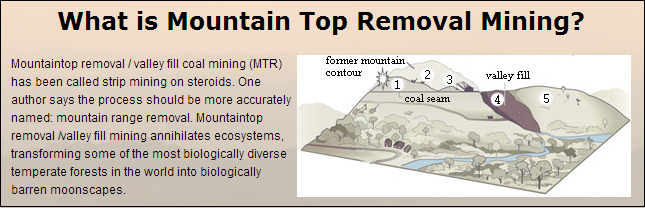
Shouldn’t we just level the top off, as Handel and Isaiah 4.4 suggest, and as we’re doing in the Appalachians?

A little mountaintop removal mining, a helipad, and voilà — even I could make it to the summit!

**

But to return to Loewenstein† & O’Donoghue†† — their paper’s full title was “We Can Do This the Easy Way or the Hard Way”: Negative Emotions, Self-Regulation, and the Law — how can a theologian such as myself resist a diagram such as this?

Water and people

Thursday, May 9th, 2013

[ by Charles Cameron — and then of course there are animals and plants, too, and wildfires, and the Grand Canyon ]
.

Just a couple of things to think about:

Sources:

  • More than half of the world’s population lives inside this circle

    Even more mindblowing: said circle is mostly water.

  • All of the World’s Water

    Spheres showing:
    (1) All water (sphere over western U.S., 860 miles in diameter)
    (2) Fresh liquid water in the ground, lakes, swamps, and rivers (sphere over Kentucky, 169.5 miles in diameter), and
    (3) Fresh-water lakes and rivers (sphere over Georgia, 34.9 miles in diameter).

  • In the lower panel, the “all water” sphere is obvious, the “fresh liquid” sphere is visible, but the “freshwater lakes and rivers” — did you even notice it?

    **

    Some paras I wrote for John Petersen while at The Arlington Institute around the turn of the millennium:

    Water is our most precious resource. Our bodies are largely made of it; we thirst for it, and die when it is withheld more rapidly than we die for lack of food; and our food itself — whether animal or plant — also relies on it for nourishment and survival. Not surprisingly, water features in religious scripture and poetic mythology as among the highest symbols of purity and blessing: the Psalmist declares “There is a river, the streams whereof shall make glad the city of God” (Psalms 46: 4), Jesus in the New Testament speaks of his own teachings as “a well of water springing up into everlasting life” (John 4:14), while Allah declares in the Koran, “We made from water every living thing” (Al-Anbiyáa 30). For Lao-tzu in the Tao te ching, it is the analog of wisdom: “In the world there is nothing more submissive and weak than water,” he writes, “yet for attacking that which is hard and strong nothing can surpass it.”

    We consume water in ever increasing amounts, while polluting it as though its very purity was a reproach to us – and simultaneously beginning to recognize that this most precious of resources is just that – a limited, physical resource that we are squandering. Such significant indicators of hydrologic activity as , salinity, sea levels, snowmelt, glacial melt, and rainfall are not merely changing but accelerating their rates of change. We are fast running our of fresh water to drink and to irrigate our crops. And when World Bank vice president Ismail Serageldin declared in 1995 that “The wars of the next century will be over water”, he was giving advanced notice of a looming problem which we overlook at our peril.

    Sensitive dependence on initial conditions — & more

    Saturday, November 3rd, 2012

    [ by Charles Cameron — on human impact, with a quick glance at Pundita’s wide-angle thinking ]
    .

    The “butterfly effect” identified by meteorologist Edward Lorenz suggests that when you are dealing with highly complex systems such as weather patterns, what eventually happens may be “sensitively dependent on initial conditions”. Very small differences at one moment in such systems may result in very large differences later on. As Lorenz explains in the upper quote above, however, we’re dealing with a myriad of influences simultaneously, and it’s entirely possible that our own meteorological impact exceeds and outweighs that of the butterfly species…

    I’ve chosen to post this particular pair of quotes, in fact, because both examples point to severely deleterious effects of human impact on our home environment in the larger sense — “the world we live in” — at a level where human individuals may not feel they have much of an individual impact, but where the cumulative effect is much greater: global warming? devastating storms? loss of rain forest? — narcarchy?

    Narcarchy: hereby defined as rule by cartel — see this fascinating news piece, and note in particular the presence of a significant religious thread in the midst of the drug / crime / warfare picture.

    **

    On the question of sensitive dependence on initial conditions, this graphic paints the picture nicely and with nuance, for those who “think in pictures”:

    I found it attached to the Wikipedia entry on Lorenz’s Butterfly Effect which may also help if like me you’re a lay reader, mathematically speaking.

    **

    I also wanted to juxtapose the two quotes above because they give me a chance to talk about “wide angle views” and their virtues, and to point you to a recent Pundita post that set me thinking along those lines. The post is Then and Now: Instructive parallels between 9/11/01-Benghazi and Katrina-Sandy storms, and part of my comment read as follows:

    …you have an amazing breadth of thought going on here – especially in your paragraph:

    It’s as if a new era arrived, with its vast changes in weather patterns and attack patterns, and nobody is yet fully processing the nature of the threats. I guess such an observation is actually old news. But Sandy coming on the heels of Benghazi struck me as a kind of exclamation mark to the fact that civilizations start to fall at the point where they’re no longer able to process the cumulative effects of their past.

    Seeing parallels between Benghazi and 9/11, or between Sandy and Katrina, would be one thing – but managing to see parallel changes in both “weather patterns and attack patterns” is quite another — and even though people may want to question and qualify some of the details, the overall scope and view is breathtaking.

    We need this kind of wide-angle thinking, it seems to me, and I offer my two quotes here in much the same spirit.

    So if “sensitive dependence on initial conditions” is one analytic thought pattern I’m promoting here, “wide-angle thinking” and the capacity to zoom from significant detail to global context is surely another.

    Let not thy left hand know what thy right hand doeth

    Tuesday, October 2nd, 2012

    [ by Charles Cameron — this post is about comparisons — what you make of them, and what they make of you, death calculus, and Handel ]
    .


    .

    Scraped from my morning read, these two quotes — a tweeted headline from Breitbart and a gobbit of the Jerusalem Post — neatly illustrate a paradox I’ve been wrestling with, the way more profound souls wrestle with angels [link is to Rilke].

    It’s the paradox of comparison.

    **

    On the one hand, I can barely imagine what it would be like to build — with, say, enough funds for a latter-day Manhattan Project — a Department whose job it was to monitor all activities and ensure even-handedness in the allocation of resources.

    So that not ever would a Presidential aide on vacation receive a security detail until each and every ambassador had an equivalent force of marines around them at any given moment, in embassy or out.

    I mean, what about consuls, or CIA heads of station — are they ambassadorial enough? Members of the cabinet on vacation? Members of the National Security Council? How far do we need to go with our even-handedness? Is Benghazi different from London? Londonistan?

    How would one possibly assure oneself that no “hand” of government, left, right, center, upper, lower, or oblique to all of the above, ever arranged things in a way that compared foolishly with the way some other “hand” of government had arranged something more or less similar?

    **

    Let’s go to what my friend Bryan Alexander calls the death calculus. Since we’re interested in terrorism here, I’ll pull quotes from a couple of pieces that you can read in full if this topic interests you. Two paras from TomDispatch:

    In 2008, 14,180 Americans were murdered, according to the FBI. In that year, there were 34,017 fatal vehicle crashes in the U.S. and, so the U.S. Fire Administration tells us, 3,320 deaths by fire. More than 11,000 Americans died of the swine flu between April and mid-December 2009, according to the Centers for Disease Control and Prevention; on average, a staggering 443,600 Americans die yearly of illnesses related to tobacco use, reports the American Cancer Society;5,000 Americans die annually from food-borne diseases; an estimated 1,760children died from abuse or neglect in 2007; and the next year, 560 Americans died of weather-related conditions, according to the National Weather Service, including 126 from tornadoes, 67 from rip tides, 58 from flash floods, 27 from lightning, 27 from avalanches, and 1 from a dust devil.

    and:

    The now-infamous Northwest Airlines Flight 253, carrying Umar Farouk Abdulmutallab and his bomb-laden underwear toward Detroit on Christmas Day 2009, had 290 passengers and crew, all of whom survived. Had the inept Abdulmutallab actually succeeded, the death toll would not have equaled the 324 traffic fatalities in Nevada in 2008; while the destruction of four Flight 253s from terrorism would not have equaled New York State’s 2008 traffic death toll of1,231, 341 of whom, or 51 more than those on Flight 253, were classified as “alcohol-impaired fatalities.”

    Two paras from a Salon piece [copied here sans links and emphases]:

    “The number of people worldwide who are killed by Muslim-type terrorists, Al Qaeda wannabes, is maybe a few hundred outside of war zones. It’s basically the same number of people who die drowning in the bathtub each year,” said John Mueller, an Ohio State University professor who has written extensively about the balance between threat and expenditures in fighting terrorism.

    Last year, McClatchy characterized this threat in similar terms: “undoubtedly more American citizens died overseas from traffic accidents or intestinal illnesses than from terrorism.” The March, 2011, Harper’s Index expressed the point this way: “Number of American civilians who died worldwide in terrorist attacks last year: 8 — Minimum number who died after being struck by lightning: 29.” That’s the threat in the name of which a vast domestic Security State is constructed, wars and other attacks are and continue to be launched, and trillions of dollars are transferred to the private security and defense contracting industry at exactly the time that Americans — even as they face massive wealth inequality — are told that they must sacrifice basic economic security because of budgetary constraints.

    **

    My points?

    On the one hand, that the world is far too complex to avoid disparities that can draw mockery down on the heads of those one might wish to mock.

    And on the other, that comparisons also have an invaluable role to play in giving us a sense of the relative peaks and valleys of the terrain we live in — and may be literally or metaphorically mountaintop removal / valley fill coal mining in preparation for our children’s children…

    **

    Here’s a “DoubleQuote” for you:

    Or for the musically inclined:

    Now there’s a fascinating comparison (between the mining and the music) that doesn’t tell you much. Or does it?

    **

    Onwards to the issue of that sacred plateau in Jerusalem, featured as my second “reading for the day” at the top of this post.

    It appears that you can be arrested for carrying a concealed knife on the Noble Sanctuary — or tallit or tefillin on Temple Mount — same place, different perspective.

    That’s the sort of comparison that makes me catch my breath with wonder.

    As the Famous Thinkers School might ask, giving you a pencil and a blank sheet of paper: can you draw this conclusion?

    **

    The full text of Matthew 6.3 reads in the KJV:

    But when thou doest alms, let not thy left hand know what thy right hand doeth:

    Marangolo P and associates uses a significant variant of that verse in the title of a learned paper: Let not thy left hand know what thy right hand knoweth. The case of a patient with an infarct involving the callosal pathways.

    Brain malfunctions (and brain surgeries) can provide windows of considerable interest on our human condition, as the writings of Oliver Sacks so eloquently demonstrate.

    Percussions and repercussions

    Monday, August 6th, 2012

    [ by Charles Cameron — ecology, fire, forests, an elevator in Denver, and how one thing leads to another ]
    .

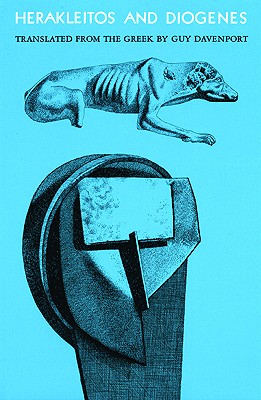
    Guy Davenport, a stylist worthy of his Masters

    .

    HeraclitusHerakleitos — sees this world as one seamless “all” in constant motion and taking many forms — with what we call “fire” as the recurring form within that flux that he can point to by name, using it as his best metaphor for that “all”…

    In the beautiful translation of Guy Davenport (drawn here from fragments 28 and 29 in his book, 7 Greeks, p 161:

    Everything becomes fire, and from fire everything is born, as in the eternal exchange of money and merchandise.

    This world, which is always the same for all, neither god nor man made: it has always been, it is, and always shall be: an everlasting fire rhythmically dying and flaring up again.

    **

    This is just a quick post, a little creativity flaring up and dying down again while I am preparing longer pieces on Nidal Hassan (as discussed by Daveed Gartenstein-Ross, JM Berger and emptywheel), a zennish biography of John Cage, and Rain (with a capital roar) in African religion and urban settlements.

    I was glancing at Chris Bright‘s entry Anticipating Environmental “Surprise” in State Of The World 2000, and my eye was caught by the phrase, “Surface fires do not climb trees and become crown fires.”

    I’d never heard of “surface fires” and “crown fires” before, and “crown fires” in particular had me thinking there’s poetry here…

    So I took a deep breath, slowed down, and read more carefully. And as I was reading the whole short section that began with those words, one part of my mind was soaking in the vivid images the text conjured up for me, but another part was calculating percentages in what seemed to be a rapidly accelerating descent.

    I have tried to picture that double effect — of lush rainforest and the numbers that illustrate its fiery fall — in what follows:

    **

    100%

    Surface fires do not climb trees and become crown fires. They just crackle along the forest floor, here and there, as little patches of flame, going out at night, when the temperature drops, and rekindling the next day. They will not kill the really big trees, and they do not cover every bit of ground in a burned patch. But they are fatal to most of the smaller trees they touch. Overall, an initial surface fire may kill perhaps 10 percent of the living forest biomass.

    90%

    The damage may not look all that dramatic, but another tract of forest may already be doomed by an incipient positive feedback loop of fire and drying. After a surface fire, the amount of shade is reduced from about 90 percent to around 60 percent, and the dead and injured trees rain debris down on the floor. So a year or two later, the next fire in that spot finds more tinder, and a warmer, drier floor. Some 40 percent of forest biomass may die in the second fire. At this point, the forest’s integrity is seriously damaged; grasses and vines invade and contribute to the accumulation of combustible material.

    50%

    The next dry season may eliminate the forest entirely.

    0%

    .
    **

    Those falling numbers remind me of the floors whizzing by in an elevator I once frequented in Denver — where the framed elevator license said, ominously enough, Type: Plunger.

    And so here we are at “Ground floor: Perfumery, Stationery and leather goods”.

    One very simple part of how complex the world we live in really is has to do with repercussions…


    Switch to our mobile site