zenpundit.com » 2010

Archive for 2010

China is Vulnerable to 4GW and 5GW

Monday, October 11th, 2010

disintegratingchina.jpg

The Chinese government’s hamfisted and Brezhnevian reaction to the awarding of the Nobel Peace Prize to imprisoned political dissident Liu Xiaobo, which included a tantrum by the Chinese official media, empty threats against the Norwegian government and the bullying arrest of Liu’s hapless wife have served primarily to telegraph the deep insecurity and paranoia of the CCP oligarchy. Not only was the move reminiscient of how the Soviet leadership bungled handling the cases of Aleksandr Solzhenitsyn and Andrei Sakharov, but coming on the heels of China’s worst year for public diplomacy since the end of the Cultural Revolution, it leaves me wondering if China’s leadership have corrupted their OODA Loop through self-imposed intellectual isolation and an unrealistic assessment of Chinese power?

Most observers have attributed China’s recent aggressive diplomatic behavior on matters of trade, the South China Sea (where China essentially demanded that China’s neighbors accept vassal status when China lacks the naval power projection to make good on such demands) and the Korean penninsula to be a direct result of confidence in China’s economic power and status as a “rising power”. Perhaps.  China has been “rising” for a long time. That’s not new. The real novelty is Chinese incompetence in foreign affairs, an area where Chinese leaders have been admirably astute for decades since the “China opening” of the Nixon-Mao meeting. Chinese statesmanship has previously been noteworthy for it’s uber-realistic calculation of power relationships and strategic opportunities.

The reaction of Beijing to the Nobel Peace Prize Committee was hysterical rather than the quiet disdain of a confident great power, an indication that China’s elite remain acutely sensitive regarding their own political legitimacy, or lack thereof ( also evidenced by their  recent centralization of control over China’s vast paramilitary police security troops). It is also highly unusual that China has manuvered itself into a position of friction simultaneously with virtually all other great powers on various issues, while alarming most of its neighboring states; and moreover has done so in a very brief period of time.

Something is amiss at the Central Committee and higher levels of the CCP and government. Either primary attention is being given to internal power struggles related to eventually generational shift of leadership, or a particularly belligerent and parochial faction has increased it’s influence at the expense of better informed and more pragmatic groupings that have steered China in the recent past.

The following are some possibilities:

  • The Chinese leadership will find fewer rather than more opportunities as neighboring nations and distant states act to “Raise the costs” for China, which will in turn feed the Chinese leadership’s sense of paranoia, victimhood and isolation.
  • The view of reality of Chinese leaders will be increasingly subject to what Col. John Boyd termed “mismatches” and they will be easily baited into reaction and overreaction by foreign adversaries and domestic dissidents. Want to send Beijing into a tizzy before an important international conference? Just roll out the red carpet for the Dalai Lama or the President of Taiwan.
  • Habitual overreaction and “hardliner” attitudes in foreign affairs will bleed over into domestic unrest issues with the leadership escalating rather than de-escalating situations of domestic protest over legitimate but basically apolitical grievances over poor local governance and corruption.
  • Dissident groups inside China will eschew overt political protest for covert sabotage, hacking, swarming and systems disruption while minority elements, particularly Muslims and “cults” like Falun Gong will gravitate toward terrorism and criminal enterprises to fund their activities.
  • The senior leadership will reverse course and change back to Chinese diplomatic approaches emphasizing enticing “soft power” that served China well since Deng Xiaoping’s tenure. At home a renewed emphasis will be placed on anti-corruption drives, cultivating nationalism and placating peasantry and underemployed aspirants to middle-class “good life”, urban dwellers.

ADDENDUM:

From East Asia Intel.com:

“Hu and the generals face challenge by Xi and the ‘Gang of Princelings’

by Willy Lam

In theory, the upcoming plenary session of the Chinese Communist Party’s Central Committee is devoted mainly to fine-tuning the country’s Twelfth Five-Year Plan for the years 2011-2015. Personnel changes have not even been included in the publicized agenda of the plenum, which opens on Oct. 15.

However, all eyes are on whether Vice-President Xi Jinping, 57, will get the additional – and crucial – title of vice-chairman of the Central Military Commission (CMC). While Xi is the most senior-ranked Politburo Standing Committee member among politicians born in the 1950s, the power base of the putative “core of the Fifth-Generation leadership” will not be secure until he gets a CMC slot.

….It is almost certain that Xi will succeed Hu as Party General Secretary at the 18th Congress – and that he will take over the supremo’s position of state president in March 2013. However, Hu has indicated to close aides his wish to serve as military chief for one more five-year term beyond 2012.

The 67-year-old Hu has cited the precedent set by ex-president Jiang Zemin at the 16th CCP Congress in 2002, when the latter surprised his colleagues by refusing to quit the CMC despite having retired from the Central Committee and the Politburo. If Hu gets his way, there will be no urgency for Xi to be made CMC vice-chairman this year….”

Hat tip to David M.

ADDENDUM II.

T. Greer takes issue with my analysis and finds a method – authoritarian resilience – in the madness.

The Political Theater of the CCP  

….I hesitate to condemn the Central Committee on the grounds of incompetence. The line between China’s domestic and foreign policies has always been difficult to demarcate and observers risk misinterpreting the message Party policies seek to convey if they have not first identified the audience meant to receive it. That a Western diplomat finds the CCP’s policies hamfisted does not mean all interested parties will reach the same conclusion.

For example, few Chinese consider the centralization of China’s paramilitary police to be a bid for political legitimacy or an attempt to squash an alternate locus of power. To the contrary, it has been hailed as a critical part of President Hu Jintao’s larger drive to eliminate corruption in the countryside. This year local Party officials have been the subject of much criticism in the Chinese press for using the People’s Armed Police and extra-legal security groups to suppress citizens filing petitions against them. Removing local access to the police is not an unusual recourse to such blatant corruption – and is not seen as such by the Chinese people.  Centralization of corrupt elements is business as usual.

….This defense carries little weight in the cold court of international opinion. It was never designed to! The upper echelons of the CCP do not seek the approval of those living outside of China, but those living inside of it. China’s so-called “Victimization Syndrome” and “Cult of the Defense” define popular perceptions of international affairs. Any set of policies that conform to this narrative will quickly gain the support of China’s proudly patriotic populace. Indeed, the CCP’s most recent actions on the international scene have done just that.

Book Bonanza

Sunday, October 10th, 2010

Courtesy review copies that arrived this week from authors and publishers. Sweet!


Magic and Mayhem: The Delusions of American Foreign Policy From Korea to Afghanistan by Derek Leebaert

Operation Dark Heart: Spycraft and Special Ops on the Frontlines of Afghanistan by Anthony Shaffer

Without Hesitation: The Odyssey of an American Warrior by Hugh Shelton

Soft Spots: A Marine’s Memoir of Combat and Post Traumatic Stress Disorder by Clint van Winkle

I really enjoyed Leebaert’s early Cold War history, The Fifty Year Wound and therefore, have high hopes for Magic and Mayhem.  By contrast, Operation Dark Heart has already been the subject of controversy when the Pentagon bought up the entire first edition in order to wheedle an idiosyncratic list of redactions from the publisher for the second edition.

A note to readers, General Shelton, the former Chairman of the Joint Chiefs of Staff, and LTC Anthony Shaffer are both associated with the new military affairs and history site, Command Posts.

In addition to review copies, I shelled out some hard-earned cash for a few other titles:


The Ruin of the Roman Empire: A New History  by James J. O’Donnell

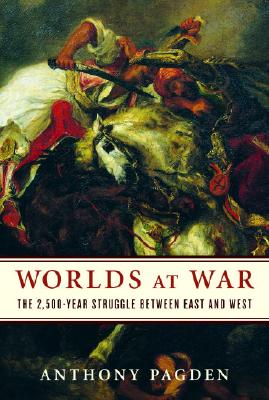
Worlds at War: The 2,500-Year Struggle Between East and West by Anthony Pagden

The House of Medici: Its Rise and Fall by Christopher Hibbert

What new books have you just picked up?

Drive-By Recommended Reading

Thursday, October 7th, 2010

A dynamic duo.  

Blogfriend Crispin “starbuck” Burke of Wings over Iraq scored a high-profile guest post at Thomas Rick’s The Best Defense blog at Foreign Policy.com:

A few words in defense of MacArthur

Those that have been following along at this blog are aware that its Pulitzer Prize-winning author, after extensive research into U.S. generalship, has deemed General Douglas MacArthur the worst general ever, edging out George McClellan and even Benedict Arnold. Certainly, MacArthur was responsible for some colossal military blunders. His botched defense of the Philippines in 1941-2 and his irresponsible, headlong rush to the Yalu River during the Korean War are among the most epic failures in U.S. military history. Additionally, as Tom notes, MacArthur was openly defiant towards Presidents Hoover, Roosevelt, and Truman….

….Nevertheless, MacArthur is not without his redeeming qualities. In particular, MacArthur’s term as the superintendent of the U.S. Military Academy at West Point should serve as a source of inspiration for those attempting to grow the next batch of military leaders.

I concur with Burke. MacArthur’s historical reputation as a general in my view is much like how Richard Nixon or LBJ could be categorized as president – both great and terrible, brilliant and self-deluding. Like him or hate him, MacArthur is a towering, contradictory,historical figure because he was not simply “just a general” in the way that, for example, Omar Bradley was or that any serving officer would be permitted to behave today. MacArthur’s weird preeminence was a political throwback to an earlier America and an “Old Army” that no longer exists. Or even existed when MacArthur accepted Japan’s surrender in 1945.

SWJ BlogDr. Robert J. Bunker –  The U.S. Strategic Imperative Must Shift

….The drug cartels and narco-gangs of the Americas, with those in Mexico of highest priority, must now be elevated to the #1 strategic threat to the United States. While the threat posed by Al Qaeda, and radical Islam is still significant, it must be downgraded presently to that of secondary strategic importance. Europe, due to the threat derived from changing demographics, larger numbers of citizens radicalized, and proximity to Islamic states, many of which contain Islamist insurgent forces, will continue to identify the threat of radical Islam as their #1 strategic imperative and should be allowed to take the opportunity to share, if not take the strategic lead, in this important area of concern. The recently heightened tensions in Europe with the threat of Mumbai style attacks directed at a number of its capital cities are indicative of the mandate which should now be provided to allied states such as Great Britain, France, and Germany and that of the more encompassing European Union. The US must help defend the line in Europe against terrorist attack, the imposition of Sharia law, and other threats to the social organization of our allies such as the disenfranchisement of women, while acknowledging for the immediate future, we have ignored for too long a new type of threat which has arisen far closer to home

A must read piece.

I would add Pakistan to the list of strategic threats to American security as it is the dark, global, epicenter of state-sponsored Islamist terrorism and insurgency, with the potential to destabilize central Asia up to and including a regional nuclear war. 

Your Brain and the Internet, Redux

Wednesday, October 6th, 2010

 This Mark McGuinness gentleman is the anti-Nick Carr:

….Pick up just about any book on Buddhist meditation, and you’ll find a similar description. Texts often refer to the ‘monkey mind’ hopping from thought to thought like the branches of a tree. And considering they are all based on the 2,500-year-old teachings of the historical Buddha, it seems a little premature to blame the internet for our monkey minds.

When Nicholas Carr writes “I’ve had an uncomfortable sense that someone, or something, has been tinkering with my brain, remapping the neural circuitry, reprogramming the memory”, it’s as though the internet were imposing some alien thought patterns on him. But all the internet is doing is exaggerating the natural tendency of the mind to keep skipping from thought to thought.

What is unnatural is the habit of spending “hours strolling through long stretches of prose”. The internet may be changing our brain, but books changed it first.

Summer Series 2010: Killing Rommel by Steven Pressfield

Sunday, October 3rd, 2010

Summer Series 2010: Reviewing the Books! continues……

Killing Rommel: A Novel by Steven Pressfield

As a rule, because of my academic  background and predisposition toward policy analysis,  I have a difficult time picking up a novel. Not because I dislike novels, but because with so many histories and “serious” policy books in my antilibrary demanding to be read, I feel guilty indulging myself in reading fiction.  Realizing that is mildly insane, I decided to shoot for a better balance in my reading this year between fiction and non-fiction and must report….that I have failed miserably. I’ve only read five novels so far in 10 months but one of the five that I read was Killing Rommel and I’m glad that I did!

I “met” the novelist Steven Pressfield online through the first iteration of his website, then a focus on the tribal aspects of the war in Afghanistan. We had some intriguing exchanges and I picked up his The War of Art, one of Steve’s few non-fiction works about becoming a professional writer ( or any creative professional) and defeating the internal psychological resistance that thwarts success and acheivement. I loved that book and read it straight through in one sitting, and later interviewed him about it. Knowing my interest in history and military affairs, Steve sent me a copy of his Killing Rommel and it sat in my antilibrary until this summer, where I read it during long stretches at poolside.

I found Killing Rommel to be a page turner.

Via a literary device, Killing Rommel is the story of  “Chap” – Major Richard Lawrence Chapman, DSO, MC. – and his mission as a member of “The Desert Rats”, The Long Range Desert Group of the British Army to find and kill the legendary commander of Afrika Korps, Field Marshal Erwin Johannes Eugen Rommel, “The Desert Fox”. In pursuit of his mission, “Chap” encounters an array of reverses, hazards and adventures in a manner of an ordinary, thoroughly decent, man rising above himself to master circumstances both physically heroic and morally agonizing, leaving the field with honor and humanity intact but free neither of doubt nor memory.

What makes “Chap” remarkable and identifiable as a character in his British ordinariness of an officer doing his duty to King and country, is the uncanny and unerring way Pressfield has reconstructed a British outlook specific to Chap’s time and class – that of the “respectable” upper middle class or younger sons of younger sons of gentry, for whom education and life was bounded by the traditions of the public school and military regiments to which family history was attached. It is a quality of “placedness” and sense of self that most Americans (other than scions of Andover and similar prep schools) cannot easily relate. Where you went was part of who you were and your whole outlook on life. Once established, Chap’s history consistently informs his actions and reactions as the plot progresses; Chap, in other words, “lived” an authentic life in Killing Rommel.


A second feature of Killing Rommel is Pressfield’s fidelity to historical realism. This is expressed both in his attention to details of military history and geographic setting and his willingness to grip war – even an unimpeachably “good” war as WWII – in all it’s moral ambiguity and unmediated violence on the human scale. It is disturbing to the reader that Rommel, the great enemy and objective of the mission, is an admirable man fighting for an evil cause; it is disturbing that dying Germans are not unrepentant Nazi beasts but are found to be men with families and lives, conscripts and volunteers, not unlike Chap and his comrades, who must persevere and fight for their lives but acknowledge these shades of gray.

Highly recommended.


Switch to our mobile site