zenpundit.com » 2017

Archive for 2017

Humans serve humans, Muslims serve Hindus, humans serve humans

Wednesday, August 2nd, 2017

[ by Charles Cameron — reminders — from July ]
.

Humans:

**

The image above:

Mosques Served Hindus With Open Arms In Gaya. Great, Right?

It is the same country we are talking about where chants of intolerance had been, since a few months, at its apex, where communal disharmony had been a routine and where cows had driven on to kill another. It is true that good too blossoms amidst the bad. Intolerance does flip to tolerance. The bitter lips do better to spread love around. Likewise, the imams of mosques too lovingly served water to the heat-ridden Hindu pilgrims.

Such news surfaces up to rekindle our lost faith in the unison of the two rival faiths.

**

The backstory of religious tolerance should not be forgotten:

How a Hindu temple was renovated by a Muslim and a Sufi shrine revamped by a Sikh in Pakistan

Today as thousands of devotees pay homage to the patron saint of Lahore every day, it is conveniently forgotten that a Sikh Maharani played a crucial role in the development of this shrine, just as the fact about a Muslim concubine of the Maharaja renovating a Hindu temple has faded from memory.

**

Sad that we need to be reminded:

Muslims serving Hindu devotees during annual Kanwar Yatra: Communal harmony project-37

The photograph on the left shows a Muslim man providing first-aid to a Hindu devotee, termed Kanwaria [Kanwariya]–youth taking the Kanwar.

The other photograph shows Muslim men offering sherbet to the devotees passing by the town.

[ CC note: I haven’t included the photos here on Zenpundit for reasons of space, but you can see them at the link]

These photographs need to be published here because mainstream media doesn’t provide space to them and ignores such examples of communal harmony.

During Muslim processions, Hindus offer sherbet at many places. And in case of Hindu processions, Muslim youths too offer their services. This is Indian culture.

Unfortunately, we live in an era when even such gestures, that are common in towns, need to be photographed and shared.

**

A hero, plain and simple:

Amarnath Yatra terror attack: Driver who saved pilgrims is a hero, the fact that he’s Muslim is irrelevant

Sheikh Saleem Gafoor did what any decent human being would do. The 37-year-old bus driver saved those in his care and in the process, saved himself.

Bullets are indiscriminate. They don’t choose their targets with care.

Sheikh had the presence of mind to get out of there. He did that. He did not idly sit behind the wheel and think: These are a bunch of Hindus, so let them die.

So, let’s not demean his actions by defining him by his religion. That’s patronising and presumptuous.

It only underscores the sentiment that we, the majority are surprised that a Muslim would do this.

**

There’s clearly an extraordinary story to be told here:

Muslims perform last rites of Hindu in Kashmir Valley

It was seen that about 3,000 people belonging to two different communities gathered to perform the last rites of the Kashmiri Pandit. They not only participated in it but also took part in doing all the arrangements of the funeral. Rising above religious lines, Muslim people actively took part in the funeral of a Hindu. Be it may the making of flower garlands which are kept above the body or carrying it to the cremation pyre, Muslim community took part in each and every ritual. According to the relatives and neighbours of the late Tej Kishan, he was a great example of communal harmony as he decided to stay back in Kashmir Valley with his Muslim brethren during the tumultuous years of 90s, when all Pandits were leaving the region due to militancy. Thus, the effort of one man, who showed courage at that time when others decided to quit had served a long way in uniting people of different religious communities.
The hunter hunted

Wednesday, August 2nd, 2017

[ by Charles CameronDoubleTweet — the self-reference and enantiodromia of the hunt ]
.

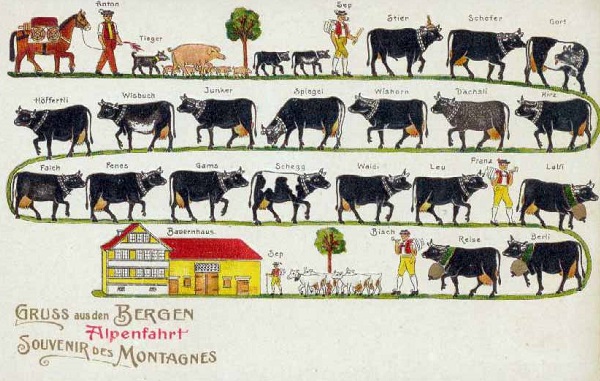
This clever illustration of the hunter(s) hunted.. reminded me inevitably of the hunter Actaeon, who saw the goddess Artemis / Diana naked, bathing in a pool. She turned him into a stag, and his own hounds then tore him to pieces..

These two tweets, one following fairly closely on the other though from different sources, just about made my day!

Trump blowback — not boustrophedon but enantiodroma?

Wednesday, August 2nd, 2017

[ by Charles Cameron — with a stinger from Bucky Fuller in the tail ]
.

Here’s boustrophedon

— since it’s harder to find a decent illustrations for enantiodromia.

**

Boustrophedon is the motion of an ox ploughing a field, up to the top and then back down: it’s a motif of reversal, but the farmer’s volition is the same both going up and coming back down. Enantiodromia, o the other hand, is just straight reversal as I understand it, a sudden switch of direction not caused by continuing intent, but by balance restoring itself after excess.

Hence, Trump blowback as described in WaPo’s Behold the Trump boomerang effect would fall in the latter category of form.

**

Fred Hiatt opens his piece under that title:

Did your head spin when Utah’s Orrin Hatch, a true conservative and the Senate’s longest-serving Republican, emerged last week as the most eloquent spokesman for transgender rights? Credit the Trump boomerang effect.

He carries on:

Much has been said about White House dysfunction and how little President Trump has accomplished in his first six months. But that’s not the whole story: In Washington and around the world, in some surprising ways, things are happening — but they are precisely the opposite of what Trump wanted and predicted when he was sworn in.

The boomerang struck first in Europe. Following his election last November, and the British vote last June to leave the European Union, anti-immigrant nationalists were poised to sweep to power across the continent. “In the wake of the electoral victories of the Brexit campaign and Donald Trump, right-wing populism in the rich world has appeared unstoppable,” the Economist wrote. Russian President Vladimir Putin would gain allies, the European Union would fracture.

But European voters, sobered by the spectacle on view in Washington, moved the other way. In March, the Netherlands rejected an anti-immigrant party in favor of a mainstream, conservative coalition. In May, French voters spurned the Putin-loving, immigrant-bashing Marine Le Pen in favor of centrist Emmanuel Macron, who went on to win an overwhelming majority in Parliament and began trying to strengthen, not weaken, the E.U.

Meanwhile, German Chancellor Angela Merkel, whom Trump belittled for having allowed so many refugees into her country, has grown steadily more popular in advance of a September election.

There’s more, of course, but you get the picture.

Unintended consequences.

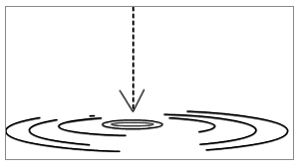
There’s a huge industry that advises us to shoot for the goal — but yachtsmen know that sometimes to get places, you need to tack with the wind. And Buckminster Fuller said [Critical Path, chapter titled “Self-Disciplines of Buckminster Fuller”] the most interesting effects occur in a manner that’s orthogonal to force applied:

**

What a fascinating world we live in!

Strategy Illuminated

Tuesday, August 1st, 2017

[ by Charles Cameron — a meander in praise of, variously, Piers at Penn, Alice in Wonderland, Caitlin Fitz Gerald, and Benjamin Wittes ]
.

Strategic theology:

Compare Nigel Howard, in Confrontation Analysis: how to win operations other than war, writing:

the problem of defense in the modern world is the paradoxical one of finding ways for the strong to defeat the weak.

**

Okay — Alice, in Wonderland, asks:

And what is the use of a book without pictures or conversation?

**

By dint of sickness, I haven’t been able to purue my efforts to see Caitlin Fitx Gerald‘s fabulous Clausewitz for Kids make its brilliantly-deserving way into print:

That image is from Caitlin’s work, as praised by Benjamin Wittes of Lawfare blog — whom I know not because he’s become a go-to source on many things Trump / Comey

Suddenly, he was D.C. famous; the very next day, Collins and Wittes bumped into each other in the Morning Joe greenroom. “It used to be that what was going to be written on my tombstone was ‘Benjamin Wittes, former Washington Post editorial writer,’ or ‘Benjamin Wittes, who wasn’t even a lawyer,’?” he says. “Now it’s just, like, ‘Benjamin Wittes, who’s a friend of Jim Comey’s.’?”

— but way before that, because he knew Caitlin and her work:

The other day, Wells drew my attention to what could be the single most excellently eccentric national security-oriented project currently ongoing on the web: It is called Clausewitz for Kids. I am apparently not the first to discover it. Spencer Ackerman had this story about it last year. But I had missed it until the other day, and I suspect most Lawfare readers are unto this very day unaware that a woman named Caitlin Fitz Gerald is currently writing a comic book edition of Clausewitz’s On War–entitled The Children’s Illustrated Clausewitz–featuring lectures in a Prussian forest by a hare in a military uniform. To make matters all the more fun, she is blogging the process to boot.

Hey, “single most excellently eccentric national security-oriented project” is pretty damn high praise, eh?

**

Benjamin Wittes and his tick, tick, as seen and summarized by Rachel Maddows:

Ben Wittes now runs a well-regarded blog that`s called Lawfare, which I think is kind of a pun on warfare, Lawfare, warfare. Anyway. Lawfareblog.com.

So, Ben Wittes. On May 16th .. Ben Wittes, he did this online, on Twitter, which is a weird thing, right? Nobody knew what was wrong with him. Nobody knew exactly what this was about.

You can see the time stamp there right beneath the tick, tick, tick, tick. He sent it at 3:18 p.m. on May 16th. Hey, Ben Wittes, what`s that about?

Well, then later, boom – literally the word boom. Two hours and eight minutes after that initial tweet, we now know in retrospect what that tick, tick, ticking was about. Ben Wittes tweeted “boom” and a link to that huge story that had just been posted at “The New York Times”.

Quote: Comey memo says Trump asked him to end Flynn investigation.

That was a huge story when it broke and apparently somehow Ben Wittes knew it was coming out because he tweeted, tick, tick, tick, tick, tick, two hours before it came, and then boom once it landed. That was May 16th.

And then two days after that, Ben Wittes started ticking again.

[ read the rest.. ]

**

Go Caitlin, go Wittes!

Go Clint Watts too, if you know what I mean!

American Spartan Redux

Monday, July 31st, 2017

[Mark Safranski / “zen“]

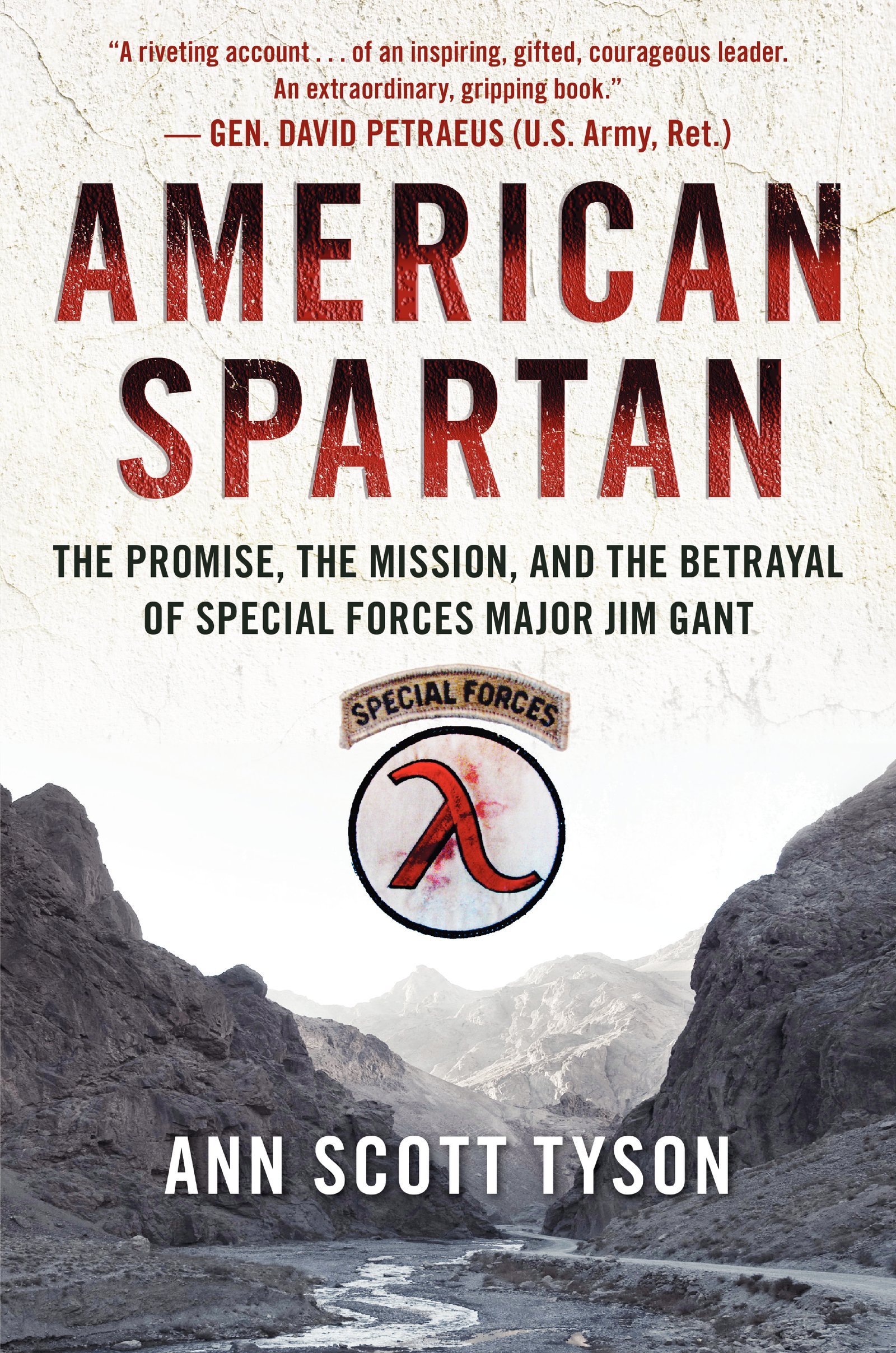
Charles Cameron helpfully tipped the news last week in our comment section, but I wished to give this update the prominence friends of zenpundit.com deserve. American Spartan has been re-released and you can get it  from now until July 31, American Spartan is available for $1.99 at BookHub

For those who need a re-cap, long time readers will recall Major Jim Gant coming to wider attention with his paper, One Tribe at a Time with an assist from noted author Steven Pressfield, where he called for a campaign strategy against the Taliban from “the bottom up” using “the tribes” because the current top down strategy of killing insurgents while building a strong, centralized, state would never work – the war would just drag on indefinitely until the US grew tired and quit Afghanistan. Gant forged a tight relationship with Afghan tribal leader  Noor Azfal ,won some fans with his paper in very high places, including SECDEF Robert Gates and Generals Stanley McChrystal and David Petraeus who gave him some top cover to implement his ideas but Gant also faced formidable resistance and criticism from Afghan government officials, parts of the ISAF chain of command and academics unhappy with Gant’s conceptual emphasis on tribalism.

Here is an excellent review of American Spartan by Doyle Quiggle in The Marine Corps Gazette:

Whether from Plutarch or Zack Snyder’s 300, we all know the command, “Come back with your shield—or on it.” Special Forces MAJ Jim Gant, USA, came back with his shield, but, like his soul, it’s as mortar-pocked as the face of the moon. The narrator of Gant’s Spartan tale is his lady, a word used with chivalric respect. Ann witnesses, validates, and, by writing this book, binds up the many wounds Gant suffered to mind, body, and soul in Iraq and Afghanistan, an act of healing she began in her home in Maryland, kicking Gant of his drug and alcohol habits to get him back into the fight. As Gen James N. Mattis recently lamented in Warriors and Civilians, true, unflinching acceptance of what warriors become through warfighting is rare. Ann’s narrative asks readers to muster a hard-nosed acceptance of Gant in the fullness of his sometimes brutal, sometimes compassionate (Afghans call this blend of virtues nangyalee) warrior soul.

A collaboration between a warrior and his woman, American Spartan provides an exemplary model for receiving the blood-tainted warrior back into the kill-shy civilian fold. The partnership itself, a cooperative, on-going translation of combat experience into a narrative for communal sharing, is a ritual of homecoming from war, a gift of acceptance that a non-killer, Ann, gives to a killer, Gant. Together, they offer military readership an enduring lesson about how to fight—in mind and battlespace—gray-zone war. With tooth-breaking honesty, Ann records Jim’s edgy mindset after his Iraq deployment:

He had sacrificed everything at the altar of war. War was, by then, all he really knew. He could not imagine a world where the people he had loved most had become strangers, and where—unlike in Iraq—his enemies were not trying to kill him, making them much harder to find and impossible to destroy.

Read the rest here.

I wrote in my own review of American Spartan:

The substance of the book, Gant’s implementation of his “One Tribe at Time” strategy among the Pashtuns and his rise and fall with the hierarchy of the US Army is more complicated and begs for deeper examination. Readers with knowledge of Afghanistan, the Army, American policy or some combination of the three will find nearly as much to read between the lines of American Spartan as they will in the text itself. It is fascinating, really, and the moral implications are deeply disturbing.

To summarize, American Spartan lays out a tragic paradox. My impression is that the tribal engagement strategy Gant championed would never have been permitted to succeed, even had he been a Boy Scout in his personal conduct; and secondly, even if tribal engagement had been fully resourced and enthusiastically supported, Gant himself would have self-destructed regardless.  A Greek tragedy in a khet partug.

Gant has frequently been compared to the legendary Lawrence of Arabia and the fictional Colonel Kurtz.   Interestingly, both of those figures died early and untimely deaths, having long outlived their usefulness for their respective armies. Major Gant is, fortunately, very much alive today which may be the only good outcome associated with his fall from grace.  Given his predisposition for assuming heroic risks, taking battle to the enemy, chance hazards of war and Gant’s own struggle with PTSD, alcoholism and pills chronicled by Tyson, the bitter vendetta of Gant’s immediate superiors ironically may have kept him from also becoming Afghanistan’s John Paul Vann or Bernard Fall.  Gant is not a Colonel Kurtz. That charge would be a slander; nor is he really T.E. Lawrence either, though that is a much better comparison. Gant had more bite to Lawrence’s bark and that was at least part of the equation in Gant’s success.  The al-Saud and al-Rashid tribes and Turkish pashas did not fear Lawrence the same way Taliban commanders and rival Pashtun subtribes personally feared Jim Gant, whom one of his fiercest anthropologist critics called “very scary”.  It was not only tea and beards, nor could it be.

Pick up American Spartan at BookHub today for $1.99!


Switch to our mobile site