zenpundit.com » state failure

Archive for the ‘state failure’ Category

An Unquiet Riot

Monday, August 20th, 2012

The Master and the Minion

The Russian girl-punk rock band Pussy Riot has done something with their protest at  Christ the Savior Cathedral that prior cases of oppression, election-fraud, corruption and murder of Putin’s critics by agents of the siloviki regime failed to do – put a defiant human face on political persecution in Russia. Something we have not seen since the days of Sakharov and Solzhenitsyn.


Photo credit: The Guardian 

A reminder that when men are not free, mocking insolence is a form of bravery.

In a thoughtful post, Charles Cameron suggests that their performance was not a “political protest”. I disagree, though I think Charles’ examination of the tradition of “Holy Fools” in Russia is useful and culturally relevant as to how this event was intended to register with a Russian audience. Pussy Riot was being audaciously offensive in their selection of performance sites, as TM Lutas explains:

Orthodoxy is not a religion that is widely understood in the West. So it’s actually the rare pundit that catches how offensive what this punk riot group was doing actually was. There’s a subtitled version of the video that helps. The video misses the positional problems. The picture screen, called an iconostasis is something like the old altar rails of Catholicism but with fairly elaborate rituals surrounding the structure. There are three doors, the center one is called the holy doors. As a lay person you’re not even supposed to walk in front of that door. It’s viewed as disrespectful, even sacrilegious. So the people in charge of order and discipline were a bit stuck because these girls were dancing in the sanctuary, in front of the iconostasis and extracting them actually meant that they had to break the rules too. Several times a Pussy Riot girl bowed and did a full prostration. One does these things towards the altar in Orthodoxy. Reversing this as the protesters did is viewed as idolatry. Who, exactly, are they bowing to? That’s the genesis of the “devil dancing” talk in their trial.

Putin may have been a target but he certainly wasn’t the target. Their attack had a much wider range of victims. This was an attack on Orthodoxy, an attack on symphonia, the concept of church and state in complementary roles and mutual respect, and also an attack on Putin. 

In 4GW thinking, the strong lose when they are forced to fight the weak on terms that favor the weak. Pussy Riot – a group of young women – engineered a protest at a location whose significance meant that the authorities could not easily ignore or suppress it quietly with brutal thuggery in the shadows. By making Vladimir Putin the lyrical center of gravity, local officials were  made to look sycophantic and toadying, national officials petty and foolish. The Russian authorities, burly and oafish like their Soviet counterparts, have been reduced to fighting young girls while the rigged legal system that passes for justice in Russia is showcased in the unsparing glare of the global media.

By daring the authorities to make them political prisoners, Maria Vladimirovna Alyokhina, Yekaterina Stanislavovna Samutsevich and Nadezhda Andreyevna Tolokonnikova have made the regime look weak.

Moreover, their actions are a not so subtle reminder to Russians that the Orthodox Church is a corrupt vessel, a propaganda arm of the regime with a long tradition of KGB agents as Patriarchs and squalid informers as clergymen. The Church in Russia has not been free of the tentacles of state security since the day Lenin ordered the arrest of St. Tikhon. President Putin and Patriarch Kyrill are not peers temporal and spiritual, but fellow alumni of the same organs as the Big Lubyanka’s gaolers and policemen.

I would like to close this post by letting Yekaterina Samutsevich speak for herself:

In the closing statement, the defendant is expected to repent, express regret for her deeds, or enumerate attenuating circumstances. In my case, as in the case of my colleagues in the group, this is completely unnecessary. Instead, I want to voice some thoughts about what has happened to us.
That Christ the Savior Cathedral had become a significant symbol in the political strategy of the authorities was clear to many thinking people when Vladimir Putin’s former [KGB] colleague Kirill Gundyayev took over as leader of the Russian Orthodox Church. After this happened, Christ the Savior Cathedral began to be openly used as a flashy backdrop for the politics of the security forces, which are the main source of political power in Russia.
Why did Putin feel the need to exploit the Orthodox religion and its aesthetic? After all, he could have employed his own, far more secular tools of power—for example, the state-controlled corporations, or his menacing police system, or his obedient judicial system. It may be that the harsh, failed policies of Putin’s government, the incident with the submarine Kursk, the bombings of civilians in broad daylight, and other unpleasant moments in his political career forced him to ponder the fact that it was high time to resign; that otherwise, the citizens of Russia would help him do this. Apparently, it was then that he felt the need for more persuasive, transcendent guarantees of his long tenure at the pinnacle of power. It was then that it became necessary to make use of the aesthetic of the Orthodox religion, which is historically associated with the heyday of Imperial Russia, where power came not from earthly manifestations such as democratic elections and civil society, but from God Himself.
How did Putin succeed in this? After all, we still have a secular state, and any intersection of the religious and political spheres should be dealt with severely by our vigilant and critically minded society. Right? Here, apparently, the authorities took advantage of a certain deficit of the Orthodox aesthetic in Soviet times, when the Orthodox religion had an aura of lost history, of something that had been crushed and damaged by the Soviet totalitarian regime, and was thus an opposition culture. The authorities decided to appropriate this historical effect of loss and present a new political project to restore Russia’s lost spiritual values, a project that has little to do with a genuine concern for the preservation of Russian Orthodoxy’s history and culture.
It was also fairly logical that the Russian Orthodox Church, given its long mystical ties to power, emerged as the project’s principal exponent in the media. It was decided that, unlike in the Soviet era, when the church opposed, above all, the brutality of the authorities toward history itself, the Russian Orthodox Church should now confront all pernicious manifestations of contemporary mass culture with its concept of diversity and tolerance.
Implementing this thoroughly interesting political project has required considerable quantities of professional lighting and video equipment, air time on national television for hours-long live broadcasts, and numerous background shoots for morally and ethically edifying news stories, where the Patriarch’s well-constructed speeches would in fact be presented, thus helping the faithful make the correct political choice during a difficult time for Putin preceding the election. Moreover, the filming must be continuous; the necessary images must be burned into the memory and constantly updated; they must create the impression of something natural, constant, and compulsory.
Our sudden musical appearance in the Cathedral of Christ the Savior with the song “Mother of God, Drive Putin Out” violated the integrity of the media image that the authorities had spent such a long time generating and maintaining, and revealed its falsity. In our performance we dared, without the Patriarch’s blessing, to unite the visual imagery of Orthodox culture with that of protest culture, thus suggesting that Orthodox culture belongs not only to the Russian Orthodox Church, the Patriarch, and Putin, but that it could also ally itself with civic rebellion and the spirit of protest in Russia.
Perhaps the unpleasant, far-reaching effect of our media intrusion into the cathedral was a surprise to the authorities themselves. At first, they tried to present our performance as a prank pulled by heartless, militant atheists. This was a serious blunder on their part, because by then we were already known as an anti-Putin feminist punk band that carried out its media assaults on the country’s major political symbols.
In the end, considering all the irreversible political and symbolic losses caused by our innocent creativity, the authorities decided to protect the public from us and our nonconformist thinking. Thus ended our complicated punk adventure in the Cathedral of Christ the Savior.
I now have mixed feelings about this trial. On the one hand, we expect a guilty verdict. Compared to the judicial machine, we are nobodies, and we have lost. On the other hand, we have won. The whole world now sees that the criminal case against us has been fabricated. The system cannot conceal the repressive nature of this trial. Once again, the world sees Russia differently than the way Putin tries to present it at his daily international meetings. Clearly, none of the steps Putin promised to take toward instituting the rule of law has been taken. And his statement that this court will be objective and hand down a fair verdict is yet another deception of the entire country and the international community. That is all. Thank you.

State Failure is the Child of Oligarchy

Sunday, August 12th, 2012

An interesting piece in Democracy Journal by James Kwak:

Failure Is an Option

….Countries differ in their economic success because of their different institutions, the rules influencing how the economy works, and the incentives that motivate people,” write Acemoglu and Robinson. Extractive institutions, whether feudalism in medieval Europe or the use of schoolchildren to harvest cotton in contemporary Uzbekistan, transfer wealth from the masses to elites. In contrast, inclusive institutions—based on property rights, the rule of law, equal provision of public services, and free economic choices—create incentives for citizens to gain skills, make capital investments, and pursue technological innovation, all of which increase productivity and generate wealth. Economic institutions are themselves the products of political processes, which depend on political institutions. These can also be extractive, if they enable an elite to maintain its dominance over society, or inclusive, if many groups have access to the political process. Poverty is not an accident: “[P]oor countries are poor because those who have power make choices that create poverty.” Therefore, Acemoglu and Robinson argue, it is ultimately politics that matters.

The logic of extractive and inclusive institutions explains why growth is not foreordained. Where a cohesive elite can use its political dominance to get rich at the expense of ordinary people, it has no need for markets and free enterprise, which can create political competitors. In addition, because control of the state can be highly lucrative, infighting among contenders for power produces instability and violence. This vicious circle keeps societies poor. In more fortunate countries, pluralistic political institutions prevent any one group from monopolizing resources for itself, while free markets empower a large class of people with an interest in defending the current system against absolutism. This virtuous circle, which first took form in seventeenth-century England, is the secret to economic growth….

Read the rest here. 

Warlords Revisited

Monday, July 23rd, 2012

“The horror! The horror!

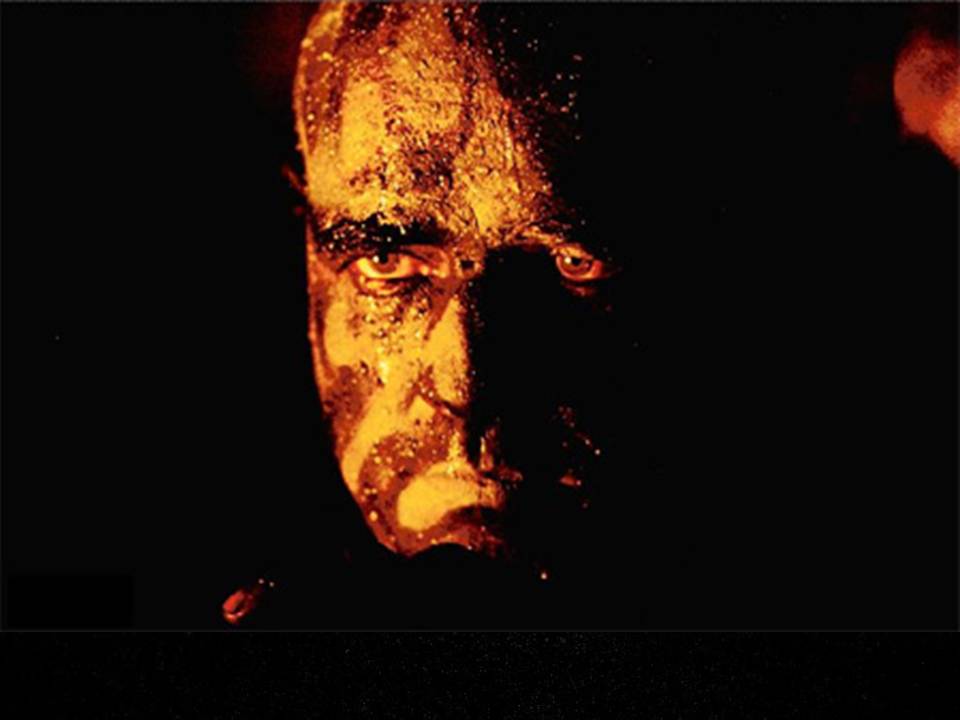
Charles Cameron sparked a discussion with his doublequotes post on two colonels, the late strategist John Boyd and the fictional monster,  Walter Kurtz from Francis Ford Coppola’s classic Vietnam War film homage to Joseph Conrad Apocalypse Now.  Kurtz is a disturbing figure, one who is recurrent in literature and history going back to Homer’s Iliad. A superlative warrior who excels above all others who nonetheless sheds all trace of civilization in his descent into barbarism. While the fall of a heroic individual can take many narrative forms, Kurtz is of a particular and dreaded kind of fallen man, the warlord.

Warlords are fascinating and repellent figures who seem to thrive best when the normal order of a society is breaking down, permitting the strong and ruthless to carve out their reputations in blood and infamy. As I have written previously:

Kent’s Imperative had a post up that would have been worthy of Coming Anarchy:

Enigmatic biographies of the damned 

“….Via the Economist this week, we learn of the death of an adversary whose kind has nearly been forgotten. Khun Sa was a warlord who amassed a private army and smuggling operation which dominated Asian heroin trafficking from remotest Burma over the course of nearly two decades. In the end, despite indictment in US courts, the politics of a failed state permitted him to retire as an investor and business figure, and to die peacefully in his own bed.

The stories of men such as these however shaped more than a region. They are the defining features of the flow of events in a world of dark globalization. Yet these are not the biographies that are taught in international relations academia, nor even in their counterpart intelligence studies classrooms. The psychology of such men, and the personal and organizational decision-making processes of the non-state groups which amassed power to rival a princeling of Renaissance Europe, are equally as worthy of study both for historical reasons as well as for the lessons they teach about the nature of empowered individuals.

….There are no shortage of warlords for such a study. Among the living we have Walid Jumblatt, the crafty chief of the Druze during the 1980’s civil war in Lebanon, the egomaniacal and democidal Charles Taylor of Liberia, Gulbuddin Hekmatyar the Islamist mujahedin commander and a large assortment of Somali, Colombian, Indonesian and El Salvadoran militiamen and paramilitaries. The history of the twentieth century alone offers up such colorful characters as “The Dogmeat General“, the ghoulishly brutal Ta Mok of the Khmer Rouge, “The Mad Baron” Ungern von SternbergCaptain Hermann Ehrhardt and Pancho Villa among many others.

What would such a historical/cross-cultural/psychological “warlord study” reveal ? Primarily the type of man that the German journalist Konrad Heiden termed “armed bohemians”. Men who are ill-suited to achieving success in an orderly society but are acutely sensitive to minute shifts that they can exploit during times of uncertainty, coupled with an amoral sociopathology to do so ruthlessly. Paranoid and vindictive, they also frequently possess a recklessness akin to bravery and a dramatic sentimentality that charms followers and naive observers alike. Some warlords can manifest a manic energy or regularly display great administrative talents while a minority are little better than half-mad gangsters getting by, for a time, on easy violence, low cunning and lady luck.

Every society, no matter how civilized or polite on the surface, harbors many such men within it. They are like ancient seeds waiting for the drought-breaking rains.

There are occasionally positive portrayals of warlords. Ahmed Shah Massoud, “the Lion of Panjshir” who fought tenaciously first against the Soviets, then later against the murderous Gulbuddin Hekmatyar’s army of thugs and the Taliban’s fanatics, providing a modicum of civilized governance to ordinary Afghans wherever his power ran, until his assassination by al Qaida. The cagey and mercurial Walid Jumblatt, made the transition from Druze warlord in the 1980’s to Lebanese politician and something of an elder statesman.

In literature, Xenophon was the de facto strategos of the retreating Greek mercenaries in The Anabasis of Cyrus, cut a noble example, but like Massoud, this is a rarity. In recent fiction, Stephen Pressfield created as an antagonist in The Profession, General James Salter, a totemic and caesarian figure who takes on the great powers with his PMC forces with impressive ruthlessness. In the popular fantasy series of George R.R. Martin that began with The Game of Thrones, the notable warlord is the outlandish, cruel and somewhat demented Vargo Hoat, who leads a freebooting company of misfit brigands “The Brave Companions“, whose nonstop atrocities and ludicrous pretensions lead all the other characters to call them “the Bloody Mummers“.

Given the world’s recent experiences with the Lord’s Resistance Army, General Butt Naked and the uprisings in Syria and Libya, I think Martin and Coppola have captured warlordism in it’s most frequent incarnation.

It Seems the Oligarchs Distrust their own Creepy-state

Tuesday, July 10th, 2012

I previously made note of the emergence of an authoritarian Creepy-state element in American government, enjoying bipartisan popularity with this era’s predominantly Boomer elite politicians, CEOs and academic activists. Largely because this growing surveillance state is directed at controlling the rest of us and eroding the democratic and legal accountability of a self-imagined superclass.

Here’s a new (but unsurprising) wrinkle. The political-bureaucratic folks quietly building this incipient machinery of coercion already distrust and fear the men and women who are employed to run it. Evidently, the Rise of the Praetorian Class theory has been widely read.

US spy agency accused of illegally collecting personal data

WASHINGTON — One of the nation’s most secretive intelligence agencies is pressuring its polygraphers to obtain intimate details of the private lives of thousands of job applicants and employees, pushing the ethical and legal boundaries of a program that’s designed instead to catch spies and terrorists.

The National Reconnaissance Office is so intent on extracting confessions of personal or illicit behavior that officials have admonished polygraphers who refused to go after them and rewarded those who did, sometimes with cash bonuses, a McClatchy Newspapers investigation found.

The disclosures include a wide range of behavior and private thoughts such as drug use, child abuse, suicide attempts, depression and sexual deviancy. The agency, which oversees the nation’s spy satellites, records the sessions that were required for security clearances and stores them in a database.

Even though it’s aggressively collecting the private disclosures, when people confess to serious crimes such as child molestation they’re not always arrested or prosecuted.

“You’ve got to wonder what the point of all of this is if we’re not even going after child molesters,” said Mark Phillips, a veteran polygrapher who resigned from the agency in late May after, he says, he was retaliated against for resisting abusive techniques. “This is bureaucracy run amok. These practices violate the rights of Americans, and it’s not even for a good reason.”

The agency refused to answer McClatchy’s questions about its practices. However, it’s acknowledged in internal documents that it’s not supposed to directly ask more personal questions but says it legally collects the information when people spontaneously confess, often at the beginning of the polygraph test.

Even though it is against the law as well as internal regulations, the NRO management have given themselves the green light in a self-investigation to keep doing it to their own employees and anybody going through a security clearance background investigation – a vast number of people, many of whom have or will someday have incredibly sensitive positions in the defense, intelligence and national security communities.

After a legal review of Phillips’ assertions, the agency’s assistant general counsel, Mark Land, concluded in April that it did nothing wrong. “My opinion, based on all of the facts, is that management’s action is legally supportable and corrective action is not required,” he wrote.

But McClatchy’s review of hundreds of documents – including internal policy documents, memos and agency emails – indicates that the National Reconnaissance Office is pushing ethical and possibly legal limits by:

-Establishing a system that tracks the number of personal confessions, which then are used in polygraphers’ annual performance reviews.

-Summoning employees and job applicants for multiple polygraph tests to ask about a wide array of personal behavior.

-Altering results of the tests in what some polygraphers say is an effort to justify more probing of employees’ and applicants’ private lives.

Read the rest here.
.
The charitable explanation is that all this is bureaucratic overreach motivated by tiny empire building and budget-padding in the age of  austerity, where cybersecurity is one of the few “growth” areas of discretionary spending for senior bureaucrats to pursue.
.
The cynical explanation is that these are blackmail files being compiled systematically and deliberately; to be used later to compel IC/DoD/DHS/DoJ employees to stick with an agency party line, intimidate and punish whistleblowers or use their official positions to engage in illegal misconduct to benefit politically influential VIPs. Like harassing American citizens or journalists critical of an agency or administration policy or special interests.
.
There’s few good reasons for the government to do this – and those few are all narrowly related to genuine and specific security concerns we have had to live with since WWII – but many bad ones.

Book Review: Thucydides:The Reinvention of History by Donald Kagan

Thursday, July 5th, 2012

Thucydides: The Reinvention of History by Donald Kagan 

Donald Kagan, who has been a professor of history and classics at Yale University almost as long as I have been alive has written a provocative book about Thucydides that challenges both conventional scholarly wisdom regarding the man who shares the title of “The Father of History” and the purpose of the book Thucydides meant to be “a possession forever”, The Peloponnesian War. In Kagan’s interpretation, Thucydides is the father of historical revisionism whose careful methodology furthered a political agenda: to defend the record of the Periclean state in Athens, where democracy was moderated by the wise statesmanship of the old aristocratic elite; and lay the blame for the downfall of Athens at Spartan hands on the vulgar hubris of radical democracy of mob and demagogue.

Thucydides is tightly focused argument about Thucydidean omissions, juxtapositions and treatment of sources and bias in his analytical rendering of military events and debates in the Assembly, not a comprehensive examination of  The Peloponnesian War. Specifically, the treatment of Pericles and Nicias (whom Kagan argues Thucydides favors and whom Kagan blames for failures of strategy and execution, especially the latter) vs. that he meted out to Cleon, Alcibiades and Demosthenes. Kagan criticizes Thucydides for the deliberate omission of speeches of Periclean opponents in debates where he  had been present and purporting to know the thoughts of actors where definitely had been absent, in exile; of faulty military analysis of the situation of the Spartan garrison besieged on Sphacteria due to personal enmity with Cleon and of the original expedition to Syracuse, because of favortism toward Nicias.

On Nicias in particular, a fellow aristocrat in favor of strategic restraint whom Kagan ascribes blame for the disaster in Sicily, did Thucydides seek a radical revision of the contemporary Athenian opinion. It was Thucydides belief that the post-Periclean democracy was a reckless, superstitious and greedy mob that led him, Kagan argues, to craft his narrative as an apologia for the inept statesmanship and incompetent generalship of Nicias that brought Athens to utter ruin in Sicily. Kagan’s accusations of bias on Thucydides part are more persuasive than his contention that the original expedition to Syracuse of sixty ships was a justifiable and sensible endeavor.

Kagan’s charges against Thucydides indirectly raise the larger question of politics in postwar Athens. A democracy shorn of it’s empire, long walls and fleet, defeated in external war but triumphant in brutal civil strife over it’s internal oligarchic enemies, was in all likelihood a dangerous place. Xenophon felt as a follower of Socrates, who had been associated with the reviled Alcibiades and Critias, that it was politic to leave Athens for his march upcountry under the banner of Cyrus. Socrates was unjustly put to death by the democratic faction. Writing from retirement in the luxury of a distant estate was a wiser option for a man of Thucydides’ opinions in that era than a return to the political fray in Athens and in part, would explain his supposed “revisionism”.

Strongly recommended.


Switch to our mobile site

