zenpundit.com » national security

Archive for the ‘national security’ Category

Doc Madhu on “Sweet Strategery of Strategic Depth”

Thursday, January 6th, 2011

Onparkstreet, a.k.a. Dr. Madhu has a post I rather liked on Pakistan’s maniacal quest for “strategic depth” in Afghanistan, over at Chicago Boyz:

The Super Sweet Strategery of Strategic Depth

Pakistan’s beliefs in the value of seeking strategic depth in Afghanistan were influenced by two factors. The support it received from the U.S. in waging an armed response against the Soviet occupation triggered the belief. The success of that endeavour with no apparent costs to itself, gave Islamabad the illusion of being able to play a major role in the geo-politics of Central Asia. This more than anything else led to the belief that Afghanistan provided the strategic leverage Pakistan had long been seeking. The energy-rich Muslim states of Central Asia beckoned both Pakistan and the energy-seeking multi-nationals. Iran’s standing up to western pressures was proving an obstacle to long-term plans for energy extraction from the region. Afghanistan offered both shorter energy routing and political control through Pakistan.

V. R. Raghavan (The Hindu, 2001)

Pakistan’s intelligence agency, the ISI, “wants a reliable proxy that has territorial control of the P2K area,” Mr. Dressler adds. This desire is the result of Pakistan’s historic conflict with India. “If India comes across the border, Pakistan can fall back into Afghanistan and drive them out. It’s about strategic depth vis-à-vis India. As long as that continues to be a driving concern, Pakistan’s support for the Haqqani network will continue.”

The Christian Science Monitor (via Small Wars Journal)

A highly plausible future scenario indeed (regarding the second quoted item). In the event that the Indians decide on a massive ground invasion into Pakistan and march sturdily through the landscape of jihadi-networks and scattering Pakistani troops – with nary a nuke in sight and the US sitting idly by – it sounds like a winner of strategy. The supply lines to the Indians will, of course, be Bollywood unicorns pooping ammunition and some sort of MREs.

On the other hand, serious people seem to take Pakistani strategic depth worries seriously. The Indians are forever being told that they must take Pakistani fears of regional encroachment into account so that the United States (ISAF) may have a negotiated settlement in Afghanistan that is stable. Although….

Read the rest here.

The key to understanding Pakistan is that it does not really function like a state in the Westphalian sense, nor do it’s rulers want it to do so, the state merely being a vehicle for their own personal and class aggrandizement. Nor are the official borders of Pakistan the same as the borders that exist in elite Pakistani imaginations. Nor is Pakistan an ally of the United States in any sense that most normal people would use the term “alliance”, as allies are rarely the epicenter of one’s enemies in a shooting war. It is as if in 1944, as we jointly prepared for Operation Overlord, the British were raising volunteer Scottish Waffen SS divisions to kill American troops on the beaches of Normandy.

Strategy works within the confines of reality, strategy does not confine reality. We give Pakistan billions of dollars in military aid annually, and they use some of it to fund and train Taliban who have killed Americans, every year, for the last ten years, and continue to do so while their leadership is safely ensconced in Peshwar, Quetta and Rawalpindi.

Every year.

Think about that as you sign your 1040.

If we our leaders can’t recognize admit in public who America’s enemies really are, how can we win a war?

Our relationship with Pakistan is strategically toxic.

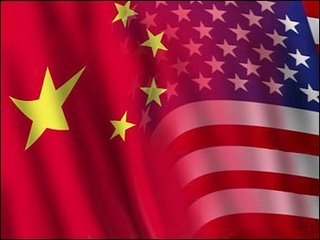
Dr. Barnett Responds on Sino-American Grand Strategy

Tuesday, January 4th, 2011

In response to my previous post A Short Analysis on The Whyte-Barnett Sino-American Grand Strategy Proposal, Dr. Thomas P.M. Barnett wrote in late this morning and I am giving him the floor:

You’re fundamentally right in your analysis.

What we heard from a senior quasi-official (and I’ll leave the description there) was that we should not present the compromises in the form of annexes but to make it a singular sign-it-or-no agreement.  Why? That path would suffer the deaths of a thousand-edits and ruin the desired dynamic. 

I agreed with the notion for this reason:  The American approach to such a document is to carve it up into pieces and to give the Iran piece to the Iran desk and the Taiwan piece to the Taiwan desk and so on, and everybody comes back saying the same thing: “American could never do this one thing!”  But, of course, the whole point of the process is to encourage the horse-trading mindset.

Do you, America, want a different path with China?

Do you, America, want the money to flow from China back into the US economy in a useful manner for all?  Do you want the trade imbalance balanced?

If you want these things, and see the wisdom of the deepened economic connectivity, then what transparency and strategic trust must be created–minimum list?

Once you see all these “demands” expressed from the Chinese side, do you see a path forward or are these things too much for Beijing to ask for?

Me personally, I want Kim’s regime collapsed–pronto.  But I cannot make that argument stand up right now, given the larger tasks at hand and the relationship to be maintained.  I hear the Chinese on that subject and I think their offer of a slow soft-kill path makes sense.  So I accept the bargain because I see a lot of negative pathways curtailed by it and profoundly positive ones created by it.

But I’m not a China expert who’s incredibly vested in the complexity and opacity of this relationship.  It gets better and I still have plenty of opportunity to pursue.  I’m also not a regional expert well versed in telling you how something is “impossible!”  I approach the issue from the long-range perspective, with more of a businessman’s tendency to look for the deal rather than wait on the perfect architecture or all the policy boxes to get checked.  I want progress, and asked the Chinese what it would cost.

I believe that if you put this package in front of the American people, they will not find the costs high at all.  But that would take seriously visionary leadership on our side (like Brzezinski’s suggestion in the NYT yesterday).  The Chinese have enough of it on their side to move forward.  I fear we do not.  We are now the muddle-through people, looking frighteningly like Brezhnevian Russia.  Nobody is creating any Deng or Gorbachev-like clarity about the path ahead.  Where is our 21st-century Alexander Hamilton?  

We argue amongst ourselves over piddling things, fighting each conversation to the death. And we lower ourselves in the eyes of others.

John Milligan-Whyte is convinced Obama is a transformational figure–a lawyer’s mind who will understand the terms and act on it.  I am less optimistic but felt it was crucial to try.

The Chinese response was–to me–stunning in its openness and flexibility of imagination.  Yes, they have their demands and when you look at it from their perspective, they are fairly reasonable, even as I, in my American mindset, find some of them too slow in unfolding.  But they took this thing with immense seriousness–even an eagerness.  They were like somebody who had long waited to eat a decent meal and were determined to gobble it up with relish, and I found all that sad, because it made me realize what a dead dialogue the SED must be, with its 1-2% improvement goal every year.

But Obama’s crew has no real strategists.  They have handlers and politicos and experts, but no strategists or deal-makers.  They are too satisfied with the “keeping all balls in the air” bit, ecstatic when China does the littlest effort to rein NorKo in for some SouKo artillery ex–like that’s some great victory!  It’s really sad, because the moment is so ripe for imaginative approaches.

We knew the package had to start from the Chinese side and I firmly expected the US side to blow it off, for its lack of proper channels.  But it does not stop there–from the Chinese perspective.  So our work continues.

A Short Analysis on The Whyte-Barnett Sino-American Grand Strategy Proposal

Tuesday, January 4th, 2011


A few comments on the proposed Whyte-Min-Barnett Grand Strategy Executive Agreement for a Sino-American partnership that Dr. Barnett has been deeply engaged with the past few months.

First, a caveat: while Tom has involved me in aa few of his past projects, I was not involved in this one and know only what I have read recently. Secondly, while I know a bit about China in an academic sense, it is not an area of research for me nor am I up to speed on the  current politics of China’s generational transfer of power/power struggle. Those readers who are avid China watchers should chime in with comments.

As an overview, I think the proposal’s specific terms should be viewed less seriously individually than the gesture itself, which represents in my view a very significant trial balloon signal from China’s leadership that they see a need to negotiate a successor to the long outgrown cornerstone of Chinese-American relations, the Shanghai Communique, signed during Nixon’s historic summit with Mao. A new agreement would provide some updated “rules of the road” that would defuse potential and existing tensions and allow the US and China to tackle some urgent problems in the global economy. By using a semi-official independent set of pundits ( Whyte and Min) and a maverick private sector American geostrategist ( Tom) with close ties to the Pentagon, China can advance it’s talking points and interest in negotiating without any loss of face that an official inquiry risks as a result of America’s fractious domestic partisan politics.

Read up on the secret diplomatic minuet that ensued between the US and China 1969-1972.

China’s leadership seems to have invested a sizable heavyweight participation in this proposal, Tom cites:

– Former Minister of Foreign Affairs;
  – Former UN ambassador,
  – Former U.S. ambassador,
  – Former Deputy Chief of the General Staff of the PLA,
  – Former Military Attaché to North Korea and Israel,
  – Former Vice Minister of Commerce,
  – President of Shanghai Institutes of International Studies,
  – China’s Central Party School Institute of International Strategic Studies,
  – Chinese People’s Institute of Foreign Affairs,
  – China Center for International Economic Exchanges,
  – China Institute For International Strategic Studies,
  – China Foundation for International & Strategic Studies,
  – Boao Forum,
  – China Institutes of Contemporary International Relations.

This has resulted in a document that unsurprisingly leans strongly towards China’s interpretation of a good Sino-American partnership but this proposal is not holy writ, it is a red flag ( pun intended) for bargaining to begin. A plea, really by a leadership craving greater certainty, medium term security and “recognition” ( i.e. “face” or “respect” – this is very much like Brezhnev and Kosygin deeply desiring that the USSR be seen as an equal to the US, except unlike the Soviets, China actually has a productive economy) Imagine a US doc shepherded by a comparable set of former and current powerbrokers, the Council of Foreign Relations, CNAS, Carnegie, CNA, SSI, Brookings, AEI, Hoover, the chairmen of the Republican and Democratic Parties and the president of Harvard. Would that catch the attention of foreign observers?

I am not sure if it is being received that way over here. My perception – and I freely admit to having large gaps of knowledge – is that US policy toward China is determined below the NSC level and not in a strategic fashion by a) Treasury b) the Fed c) PACOM in that order , pursuing contradictory policy goals and without proper coordination while State, which should be taking a lead role, is a quiet secondary voice relegated to managing lower level, day to day, routine problems in ad hoc fashion. Some carping and special pleading from Congress is erratically inserted into the mix. If someone in the Obama administration is the China policy “czar” it is obscure to me. It must be obscure to Beijing as well or they would be having their ambassador or foreign minister pushing these proposals to their American counterparts in a normal fashion instead of Tom.

Barnett, Whyte and Min devote a great deal of space to bilateral and global economics relationships. They should. The magnitude of the Sino-American monetary and trade relationship and it’s evolved distortions between two nations that are radically dissimilar, understand one another poorly and are not allied are actually scary. Immense quanties of locked up capital – and we are talking epic figures  that dwarf the interwar period European “dollar gap” or even that of the postwar era remedied by the Marshall Plan – ultimately create money scarcity elsewhere in the global economy until trade breaks down in political reaction or the ebb of a medium of mutual exchange.  That money needs to begin circulating via productive investment and Chinese policies creating this structural imbalance need to be phased out. How exactly this should be done is beyond my ken, but that something needs to be done is obvious.

Dr. Barnett, as I understand his strategic thinking, takes the long view and is willing to concede in the short term what would be impossible to sustain in the long term anyway (“locking in tomorrow’s China at today’s prices” ) and is concerned about defense contractors eager to make China the justification for hyperexpensive weapons mega-platforms ultimately inculcating over time thinking that carelessly slides the United States toward a needless great power war with China. A position mirrored by China’s own ambitious self-dealing military asshats.

Is Tom’s view the last word? No. but it is disturbing to me that a strategic relationship as we have with China is not being handled by American officials with the same attention and degree long term focus we give to Europe.

What do the Sinologists out there say?

North Korea, Juche and “sacred war”

Monday, December 27th, 2010

[ by Charles Cameron ]

Okay, I am now clear that the correct translation of the Korean phrase that has sometimes been rendered “holy war” in recent news reports is in fact “sacred war”.

I’d been wondering just what an atheist state was doing threatening “holy” or “sacred” war…

*

Juche is the state philosophy of North Korea, and is considered to be the 10th largest religion in the world by the Adherents.com portal, ranking above Judaism, Baha’i, Jainism and Shinto. It developed out of Marxist-Leninism and has more recently incorporated Confucian elements.

Sunny Lee, writing in a 2007 article in Asia Times titled God forbid, religion in North Korea?, quotes Han Sung-joo, a former South Korean foreign minister, as saying “There is a deification and a religious emotional element [in juche] in the North. The twinned photos of Kim Il-sung and Kim Jong-il are everywhere. Every speech says Kim Il-sung is still alive. I think if I stayed another two weeks, I might even see Kim Il-sung. The country worships someone who is deceased, as if he were alive.”

One Christian site goes so far as to call Juche a “counterfeit Christianity:

Recognizing the power of Christianity, Kim wanted it to be directed at himself. So he took Christianity, removed God the Father, Jesus Christ and the Holy Spirit, set up himself, his wife and son as the new trinity, and called it Juche. At its core, Juche is a counterfeit Christianity that is deathly afraid of true version, and rightfully so.

I suppose a close comparison here would be with the cult which Robert Jay Lifton described in Revolutionary immortality: Mao Tse-tung and the Chinese cultural revolution.

*

In On Junche in Our Revolution, vol II (published in English, 1977), Kim Il Sung writes:

No military threat of the US imperialists, however, can frighten the Korean people. If, in the end, the US Imperialists and their stooges unleash a new war against the DPRK, in defiance of our people’s patient efforts to prevent a war and maintain peace and the unanimous condemnation of the peace-loving people of the world, the Korean people will rise as one in a sacred war to safeguard their beloved country and the revolutionary gains. They will completely annihilate the aggressors.

So the “sacred war” phrasing has been around for a while.

I hope to learn more — these in the meantime are some clues to be going on with…

Follow-up: Martyrdom, messianism and Julian Assange

Friday, December 24th, 2010

[ by Charles Cameron ]

This is a follow-up to my earlier post on Zenpundit and ChicagoBoyz, picking up on some comments made on both sites, explaining my own interests, and taking the inquiry a little further.

On Zenpundit, Larry said, “Your need to destroy Assange is getting embarrassing. Why not make lemonaid?” and JN Kish, “The real story here should be about the data – and who is helping Assange – not Assange himself.” Meanwhile on ChicagoBoyz, a certain Gerald Attrick commented, “Ah, but as we say in in art crit: Deal with the Art and not the Man…”

To Larry I would say, I think that my post WikiLeaks: Counterpoint at the State Department? — in which I point up the irony inherent in the same State Department spokesman celebrating World Press Freedom Day and chiding Assange for “providing a targeting list to a group like al-Qaida” on the same day — could as easily be read as pro-Assange as today’s post, Martyrdom, messianism and Julian Assange can be read as calling for his destruction.

More generally, it seems to me that there are a whole lot of stories to be told here: the ones I wish to tell are those where I have a reasonably informed “nose” for relevant detail, and which tend to be overlooked by others — and thus have the potential to blindside us.

*

My own main interest is in tracking religious, mythic and apocalyptic themes in contemporary affairs, where they are all too easily overlooked, misunderstood or dismissed. Thus I have posted on Tracking the Mahdi on WikiLeaks, and added related material in section 1 of my post today.

I am also interested in concept mapping, games and creative thinking — interests which led me to post WikiLeaks: Critical Foreign Dependencies and The WikiLeaks paradox, and more lightheartedly to take an amused sideways glance at WikiLeaks in The power of network visualization.

And I certainly find Assange himself an interesting figure, and have done what I can to illuminate his background in mythology, religion and games in Wikileaks and the Search for a Cryptographic Mythology, again in Update: Wikileaks and Cryptographic Mythology and (again light-heartedly) in A DoubleQuote for Anders.

*

Let me be more explicit: I have no wish to lionize Assange, nor to feed him to the lions — I would like to understand him a little better.

I come from a scholarly tradition that doesn’t favor the demonization of new religious movements, and believes (for instance) that it is entirely plausible that the Waco inferno could have been avoided if the religious beliefs of David Koresh and the Branch Davidians had been taken seriously as such, and not dismissed out of hand as “bible babble”.

James Tabor and Eugene Gallagher in Why Waco for instance, write:

The Waco situation could have been handled differently and possibly resolved peacefully. This is not unfounded speculation or wishful thinking. It is the considered opinion of the lawyers who spent the most time with the Davidians during the siege and of various scholars of religion who understand biblical apocalyptic belief systems such as that of the Branch Davidians. There was a way to communicate with these biblically oriented people, but it had nothing to do with hostage rescue or counterterrorist tactics. Indeed, such a strategy was being pursued, with FBI cooperation, by Phillip Arnold of the Reunion Institute in Houston and James Tabor of the University of North Carolina at Charlotte, one of the authors of this book. Arnold and Tabor worked in concert with the lawyers Dick DeGuerin and Jack Zimmerman, who spent a total of twenty hours inside the Mount Carmel center between March 29 and April 4, communicating directly with Koresh and his main spokesperson, Steve Schneider. Unfortunately, these attempts came too late. By the time they began to bear positive results, decisions had already been made in Washington to convince Attorney General Janet Reno to end the siege by force.

Jane Seminaire Docherty’s Learning Lessons from Waco, similarly, “offers a fresh perspective on the activities of law enforcement agents. She shows how the Waco conflict resulted from a collision of two distinct worldviews-the FBI’s and the Davidians’—and their divergent notions of reality. By exploring the failures of the negotiations, she also urges a better understanding of encounters between rising religious movements and dominant social institutions.” [Syracuse UP]

I’d therefore be hesitant to drag Assange into a somewhat murky association with the “cult milieu” – but Assange himself was quite open in talking with Raffi Khatchadourian of the New Yorker about the man his mother lived with and had a child by, then ran away from, after her marriage to Assange’s father broke up. Khatchadourian writes:

When I asked him about the experience, he told me that there was evidence that the man belonged to a powerful cult called the Family—its motto was “Unseen, Unknown, and Unheard.” Some members were doctors who persuaded mothers to give up their newborn children to the cult’s leader, Anne Hamilton-Byrne. The cult had moles in government, Assange suspected, who provided the musician with leads on Claire’s whereabouts.

Wikipedia’ has an account of that group, also known as the Santiniketan Park Association.

And as you might expect, there’s a bizarre and frankly conspiracist take on this connection already out and about on the web.

*

For a more detailed and indeed harrowing view of the Santiniketan Park Association from a member who left, see this excerpt from Sarah Moore’s book, Unseen, Unheard, Unknown.

A couple of odd remarks here strike me:

Some of us had multiple birth certificates and passports, and citizenship of more than one country. Only she knows why thus was and why we were also all dressed alike, why most of us even had our hair dyed identically blond.

The motto of the sect is ‘Unseen, Unheard and Unknown’, and even now the thought of the consequences of betraying that motto still worries me sometimes.

We weren’t often allowed to see newspapers, in fact that happened only after we were quite a bit older and even then they’d been censored .

and:

Looking back, I can see that any game or hobby that we started we would get hooked on, playing it over and over again in our limited spare time. If we got into a game or fantasy we tended to want to keep on with it and it assumed the utmost importance in our lives.

It might have appeared that we were obsessive kids but it was understandable considering the malevolent reality we faced outside our games. Usually Anne and the Aunties saw to it that as soon as we started enjoying ourselves, it was stopped, and a new rule would be made, forbidding us from playing that particular game. We would thus be forced to try and make up a new one within the boundaries of the rules that governed our lives, still knowing that eventually this new one would be banned also.

*

Speaking of “cults” – there are several WL cables that make reference to a cult or cults, generally in the context of a “cult of personality” (Mao, eg), and in one case with reference to Scientology. There’s also – and this where things get interesting from my POV — one intriguing reference to a cult in Iran:

Though stressing that he is not an opponent of the Islamic system, he warned that the Revolutionary Guard-based faction which “stole the election,” and is now seeking total control is “extremely dangerous to both us and you.” He repeatedly characterized this group as “a criminal cult,” motivated by its fanaticism, ignorance, and the monetary self-interest of its members. He added that the group is intent on exporting revolution. According to source, both Ahmedinejad and Ayatollah Mesbah-Yazdi are affiliates rather than “leaders” of this group, and neither will likely end up with significant power if the group successfully consolidates control over the state and its economy (see reftel).

A religious group of which “both Ahmedinejad and Ayatollah Mesbah-Yazdi are affiliates” sounds suspiciously like the Hojjatiyeh.

But that’s the topic for another upcoming post, I promise.

Switch to our mobile site

