zenpundit.com » government

Archive for the ‘government’ Category

Turning Away From Strategy

Thursday, August 23rd, 2012

It appears that the Pentagon no longer intends to educate the most talented members of the officer corps to think strategically.

I say this because the status of the premier professional military education institutions – the war colleges and NDU – have been devalued, their leadership slots demoted and their educational mission degraded. As a guest columnist for Tom Ricks noted back in June:

….The new uniformed leadership of the Armed Forces, i.e., General Dempsey and his staff, apparently intend to prune NDU back to where it was a few decades ago. There will be some modest resource savings, but since the entire university budget doesn’t amount to the cost of a single joint strike fighter, one has to wonder what is motivating all of what is happening here. In the cuts that have been discussed, Dempsey’s deputy, Marine Lt. Gen. George J. Flynn has wielded the meat axe, often with the aid of micromanaging action officers. No one here in the rank-and-file is sure if the urbane chairman is on board with the details of all of this. (Ironically, both the chairman and J-7 are NDU graduates with advanced degrees.)

This set of changes took place in stages. First, while very few general or flag officer slots were cut in the armed forces, the three-star president of the university slot was downgraded to two, and the school commandants, downgraded from two to one star. No big deal, one might say, but one would be wrong, very wrong. A three star in Washington can go head-to-head with a principal on the joint staff or a senior OSD bureaucrat to protect the university. To compound the problem, the last three star president was retired in the spring and the university was left for a few months under the command of a senior foreign service officer, a former ambassador, a woman of great diplomatic talent and experience with no clout in the Pentagon. The new commandant — a highly regarded Army two-star — will not report until deep into June, when all or most of the cuts have been set in concrete. (Interesting question: can an employee of the State Department legally or even virtually assume command of a DoD organization?)

….A new “charter” was subsequently published by the Chairman. It focused the university on joint professional military education and training, which in itself, is a good thing. Immediately, however, the research and outreach activities of the university, often more focused on national strategy than military affairs, came under intense scrutiny. These outfits had grown way beyond their original charters and had become effective and highly regarded servants of a wider interagency community. Much of their work was not done for the joint staff but for OSD Policy, and some of that in conjunction with civilian think-tanks. The research arm of the university was productive, even if not always useful in a practical way to the joint staff. It also was helpful to the colleges in a much more proximate and direct fashion than other think tanks, like RAND.

….The research, gaming, and publications arms of the university — a major part of the big-think, future concepts and policy business here — will be cut to somewhere between half and a third of their original sizes. To make things worse, many of the specific cuts appear to have been crafted in the Pentagon, and nasty emails have come down from on high, about how the university is bankrupt and going into receivership, which was never the judgment of the military and civilian accrediting officials, who inspect us regularly and have generally given the university high marks.

If it would be impressive if some of our senior generals had been as effective on the battlefield as they are in the bureaucracy.

Uncreative destruction of intellectual seed corn is a bureaucrat’s way of telling everyone to shut up, don’t question and get in line. There’s nothing wrong with having excellence at joint operations as an educational goal for most future brigadiers and major generals but our future theater commanders, combatant commanders, service chiefs and their respective staff officers need something more – they need strategy.  More importantly, the Secretary of Defense, the President, the Congress and the American people need the DoD to have an in-house capacity to generate deeply thought strategic alternatives, question assumptions and red-team any self-aggrandizing options the services or bureaucracy feel like offering up in a crisis.

The motivation here is simple, really. If you put out all the strategic eyes of the Pentagon, then the one-eyed men can be King. Or he can always contract out his strategic thinking to highly paid friends to tell him what he wishes to hear.

Naturally, this will have bad effects downstream in a superpower whose civilian leadership seldom has as good a grasp of geopolitics and the fundamentals of classical strategy as they do of law or the partisan politics of running for office. They will be in need of sound strategic advice from uniformed military leaders and they will be much less likely to get it. Instead, they will have senior officers who are less likely to balk when the President’s back-home fixer turned “adviser” or superstar academic with delusions of grandeur pushes a half-baked plan at an NSC meeting to “do something”. When that happens, the jackasses kicking down this particular barn will have long-since retired and cashed out with consultancies and sinecures on boards of directors.

While a lack of strategic thinking can undermine even a lavishly funded and well-trained military, the reverse is also true; strategic leadership can revive an army that is but a half-dead corpse.

A brief illustration:


After WWI the two states that made the most extreme cuts in military power were defeated Germany and the victorious United States. Germany was forced to do so by Versailles, but responded by opting under General von Seeckt to reduce to 100,000 men by making the Reichswehr a qualitatively superior nucleus of a future expanded German Army. Prohibited from having mass, the Germans opted for class with every long-serving recruit being considered officer material and being superbly trained (even to the extent of covert training and weapons testing jointly with the Red Army deep inside the Soviet Union to evade Allied inspections). Von Seeckt also instituted a shadow general staff office that thought deeply about tactical lessons, operations and strategy for the next war. Without the Reichswehr being what it was it is highly dubious that Hitler could have so rapidly expanded the Wehrmacht into a world-class land fighting force in so few years time.

.

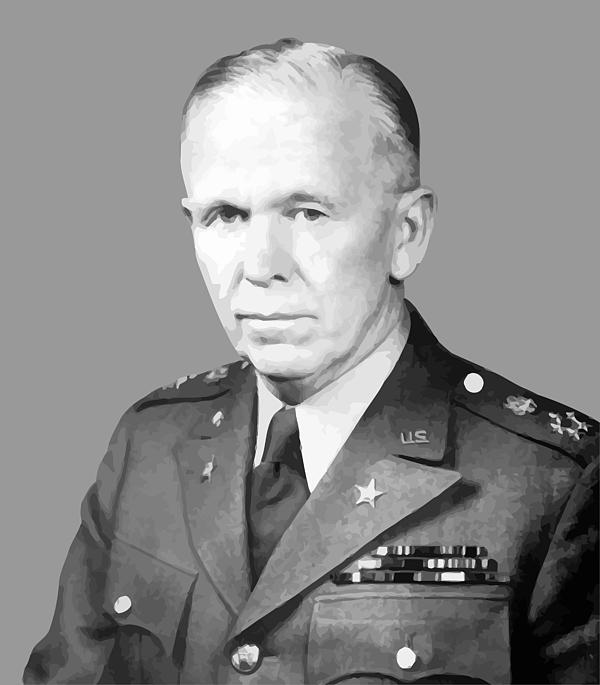
In contrast, the United States radically reduced the size of the regular Army and starved it of weapons, ammunition, gasoline, training and basic supplies. Promotions slowed to a crawl where ancient colonels and elderly majors lingered on active duty and future four and five star generals like Eisenhower, Patton, and Marshall all despaired and contemplated leaving the service. The Army’s – and to extent, America’s – salvation was in the fact that George Marshall persevered as a major and colonel in keeping a little black book of talented, forward thinking, officers and thought deeply and reflectively about building armies, helping enact “the Fort Benning Revolution” in military training. When FDR placed the power in Marshall’s hands as Chief of Staff he knew exactly what to do because he had a well-conceived vision of where the US Army needed to go to meet the national emergency of WWII. He was the American von Seeckt, except that Marshall was an infinite improvement morally, strategically and politically on his German counterpart. We were extremely fortunate to have had him.
.
We may not be as lucky next time.

State Failure is the Child of Oligarchy

Sunday, August 12th, 2012

An interesting piece in Democracy Journal by James Kwak:

Failure Is an Option

….Countries differ in their economic success because of their different institutions, the rules influencing how the economy works, and the incentives that motivate people,” write Acemoglu and Robinson. Extractive institutions, whether feudalism in medieval Europe or the use of schoolchildren to harvest cotton in contemporary Uzbekistan, transfer wealth from the masses to elites. In contrast, inclusive institutions—based on property rights, the rule of law, equal provision of public services, and free economic choices—create incentives for citizens to gain skills, make capital investments, and pursue technological innovation, all of which increase productivity and generate wealth. Economic institutions are themselves the products of political processes, which depend on political institutions. These can also be extractive, if they enable an elite to maintain its dominance over society, or inclusive, if many groups have access to the political process. Poverty is not an accident: “[P]oor countries are poor because those who have power make choices that create poverty.” Therefore, Acemoglu and Robinson argue, it is ultimately politics that matters.

The logic of extractive and inclusive institutions explains why growth is not foreordained. Where a cohesive elite can use its political dominance to get rich at the expense of ordinary people, it has no need for markets and free enterprise, which can create political competitors. In addition, because control of the state can be highly lucrative, infighting among contenders for power produces instability and violence. This vicious circle keeps societies poor. In more fortunate countries, pluralistic political institutions prevent any one group from monopolizing resources for itself, while free markets empower a large class of people with an interest in defending the current system against absolutism. This virtuous circle, which first took form in seventeenth-century England, is the secret to economic growth….

Read the rest here. 

New Article at IVN: Debt Traps, Defense & the Danger of Decline

Thursday, August 9th, 2012

Have a new short article up at IVN.us:

Debt Traps, Defense and the Danger of Decline

Traditionally, in American politics, questions of budget deficits and national debt were seen as purely domestic issues that only had ancillary effects on foreign policy. The situation today is different: debt has become a strategic problem not only because of the magnitude of American debt ($14 trillion), but because our major allies and adversaries are interlocked economically and have their own severe systemic debt and monetary issues. Even China, which enjoys high GDP growth rates, has a crisis of “hidden debt” that reputedly exceeds $1.6 trillion and may, in fact, be several times larger. Among the great powers, when it comes to accumulating risky amounts of debt, no one has clean hands.

….However, enthusiasm in Washington for shrinking the numerous missions given to the military to line them up with the Pentagon’s reduced capabilities is nonexistent. This may fool the voters back home, but it doesn’t deceive mullahs in Teheran or North Korean generals that the American ability to respond in a crisis has been circumscribed by capability and costs, particularly when key American allies like Britain and France have made sharp defense reductions of their own. Realistically, we are effective now for one crisis at a time and our ability to juggle any other major problems will be extremely limited, removing some of the “super” from our superpower status that Americans are accustomed to….

Read the rest here.

Barlow on COIN and Failure

Sunday, July 29th, 2012

Some astute observations on COIN practice from the founder of Executive Outcomes, Eeben Barlow:

….Governments, despite often being the prime reason why an insurgency starts, are often only too keen to make the armed forces responsible for establishing workable governance in areas that have become positively disposed towards the insurgency.
As it is an internal problem, countering the insurgency is essentially a law enforcement responsibility. The problem is that often the law enforcement agencies do not realise that an insurgency is developing and through ignorance and denial, mislead government – and the nation – on the seriousness of the situation. This provides the insurgents with numerous advantages, most crucial being time to organise, train and escalate the insurgency.
The end goal of the insurgency is political in nature and therefore, the main effort aimed at countering it ought to be political and not militarily. This “passing the buck” approach places the armed forces in a position they can seldom if ever win as the military’s role is not to govern but to ensure an environment in which governance can take place.  
An insurgency is neither a strategy nor a war. It is a condition based on the perception(s) of a part of the populace that poor governance exists, that government only governs for its own benefit and that they – the populace – are being marginalised or politically suppressed. In reality, an insurgency is an internal emergency that, left unchecked, can develop into a civil war. The insurgency itself is a means to an end and it is an approach aimed at either weakening or collapsing a government’s control and forcing a negotiation in the favour of the insurgents.   
Read the rest here.
As a rule, countries whose citizens  are happy, prosperous and free seldom suffer an insurgency unless they are foreign proxies. Oligarchies however, are frequently the cradle of insurgency and revolution.

It Seems the Oligarchs Distrust their own Creepy-state

Tuesday, July 10th, 2012

I previously made note of the emergence of an authoritarian Creepy-state element in American government, enjoying bipartisan popularity with this era’s predominantly Boomer elite politicians, CEOs and academic activists. Largely because this growing surveillance state is directed at controlling the rest of us and eroding the democratic and legal accountability of a self-imagined superclass.

Here’s a new (but unsurprising) wrinkle. The political-bureaucratic folks quietly building this incipient machinery of coercion already distrust and fear the men and women who are employed to run it. Evidently, the Rise of the Praetorian Class theory has been widely read.

US spy agency accused of illegally collecting personal data

WASHINGTON — One of the nation’s most secretive intelligence agencies is pressuring its polygraphers to obtain intimate details of the private lives of thousands of job applicants and employees, pushing the ethical and legal boundaries of a program that’s designed instead to catch spies and terrorists.

The National Reconnaissance Office is so intent on extracting confessions of personal or illicit behavior that officials have admonished polygraphers who refused to go after them and rewarded those who did, sometimes with cash bonuses, a McClatchy Newspapers investigation found.

The disclosures include a wide range of behavior and private thoughts such as drug use, child abuse, suicide attempts, depression and sexual deviancy. The agency, which oversees the nation’s spy satellites, records the sessions that were required for security clearances and stores them in a database.

Even though it’s aggressively collecting the private disclosures, when people confess to serious crimes such as child molestation they’re not always arrested or prosecuted.

“You’ve got to wonder what the point of all of this is if we’re not even going after child molesters,” said Mark Phillips, a veteran polygrapher who resigned from the agency in late May after, he says, he was retaliated against for resisting abusive techniques. “This is bureaucracy run amok. These practices violate the rights of Americans, and it’s not even for a good reason.”

The agency refused to answer McClatchy’s questions about its practices. However, it’s acknowledged in internal documents that it’s not supposed to directly ask more personal questions but says it legally collects the information when people spontaneously confess, often at the beginning of the polygraph test.

Even though it is against the law as well as internal regulations, the NRO management have given themselves the green light in a self-investigation to keep doing it to their own employees and anybody going through a security clearance background investigation – a vast number of people, many of whom have or will someday have incredibly sensitive positions in the defense, intelligence and national security communities.

After a legal review of Phillips’ assertions, the agency’s assistant general counsel, Mark Land, concluded in April that it did nothing wrong. “My opinion, based on all of the facts, is that management’s action is legally supportable and corrective action is not required,” he wrote.

But McClatchy’s review of hundreds of documents – including internal policy documents, memos and agency emails – indicates that the National Reconnaissance Office is pushing ethical and possibly legal limits by:

-Establishing a system that tracks the number of personal confessions, which then are used in polygraphers’ annual performance reviews.

-Summoning employees and job applicants for multiple polygraph tests to ask about a wide array of personal behavior.

-Altering results of the tests in what some polygraphers say is an effort to justify more probing of employees’ and applicants’ private lives.

Read the rest here.
.
The charitable explanation is that all this is bureaucratic overreach motivated by tiny empire building and budget-padding in the age of  austerity, where cybersecurity is one of the few “growth” areas of discretionary spending for senior bureaucrats to pursue.
.
The cynical explanation is that these are blackmail files being compiled systematically and deliberately; to be used later to compel IC/DoD/DHS/DoJ employees to stick with an agency party line, intimidate and punish whistleblowers or use their official positions to engage in illegal misconduct to benefit politically influential VIPs. Like harassing American citizens or journalists critical of an agency or administration policy or special interests.
.
There’s few good reasons for the government to do this – and those few are all narrowly related to genuine and specific security concerns we have had to live with since WWII – but many bad ones.

Switch to our mobile site