zenpundit.com » government

Archive for the ‘government’ Category

History doesn’t rhyme — it swears

Friday, May 10th, 2013

[ by Charles Cameron — finding both rhyme and obscenity here, to be honest — San Salvador then, Mexico today ]
.

**

I once had the privilege of hearing Carolyn Forché read her poems.

You can read and hear her reading the prose poem from which that excerpt is taken here — for richer background on her experiences in El Salvador, see her extraordinary essay El Salvador: An Aide-Mémoire in Granta, or find a copy of The American Poetry Review for July/August 1981, pp. 3-7.

Sources:

  • Carolyn Forché, The Country Between Us
  • Sunil S, El Narco and the Jihad in Pragati, illus credit: El cartel de San Luis
  • **

    I know, in the title of this post I’m conflating a quote attributed to Mark Twain, “History doesn’t repeat itself, but it rhymes”, with Bob Dylan‘s “Money doesn’t talk, it swears”. So be it.

    As Dylan also once said: “I said that.”

    A Brief Note on the Benghazi Hearings

    Thursday, May 9th, 2013

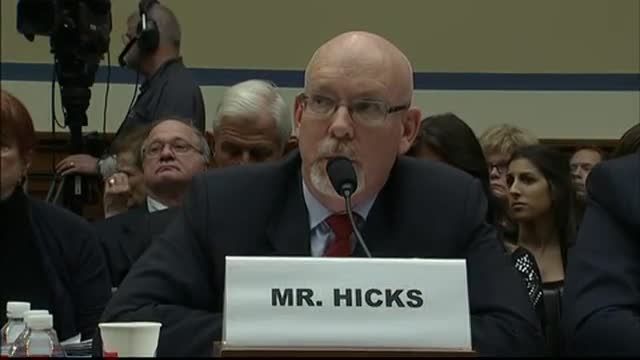
    There is legitimate room for debate if there could have been an effective military reaction to the attack in Libya by al Qaida terrorists that killed Ambassador Stevens and other US personnel.  One was apparently never seriously entertained  by senior White House, State Department and Pentagon officials. I think there ought to have been an effort to move heaven and earth and far, far greater willingness to inflict massive casualties on an attacking Libyan mob than existed, but in fairness to the Obama administration, a seat-of-the-pants, unsupported, undermanned response could also have been a replay of Blackhawk Down or Desert One. It’s a tough judgment call for any President.

    That’s not why the Obama administration is in trouble today.

    Poorly supported security and inept decision making by the State Department in Libya was likewise, disappointing but politically survivable and sadly, unsurprising.. We have seen similar bungling before and after 9/11 by most of our major national security departments and agencies at one time or another. It is a bipartisan phenomenon, albeit one we take far too lightly.

    No, as damning testimony today made clear, the Obama administration is in trouble because their poor but not remarkably so handling of Benghazi was shielded by a ridiculous lie told entirely for partisan gain and to protect the overrated reputations and overweening egos of various administration bigwigs, most notably the former Secretary of State, Hillary Clinton.

    Is there anyone today – anyone at all – who still believes that Benghazi occurred because of an obscure crackpot’s video on youtube?

    Had the administration manfully said “This attack is a terrible tragedy and we dropped the ball but you can believe we won’t make a similar mistake tracking down the people who did this and make them pay” most Americans would have accepted that. No, not rabid partisan Republicans, but most Americans would have wanted to back the President, any President, in the wake of such terrorism which is directed, in the last analysis, at all of us.

    They did not – and much of the rest of their reaction indicates that the real concern at State and the White House was and still is with the temerity of their political opponents in daring to demand they account for their actions as if we lived in a Republic or something.

    In American politics, it is the self-inflicted wounds that fester and turn gangrenous

    The Boston Bombers and Superempowerment

    Wednesday, May 1st, 2013

    My friend Dave Schuler who blogs at the excellent The Glittering Eye and on foreign policy at Dr. James Joyner’s Outside the Beltway , queried me as to what I thought of the Boston Bombers in light of the concept of the Superempowered Individual.

    For those not familiar with the concept, the term “superempowered individual” originated in phrase coined by Thomas Friedman and quickly gained traction and evolved in the .mil/strategy/defense blogosphere and communities of interest after 9/11 turned everyone’s attention to the potential reach of catastrophic terrorism. Many people, including myself have written on the topic and while no single, agreed upon, definition of SEI exists, there is a consensus around an individual having the capacity to multiply the scale of the harm they can cause by leveraging or disrupting complex systems, be they mechanical, social, cyber or some combination. I defined SEI’s this way:

    To qualify as a superempowered individual, the actor must be able to initiate a destructive event, fundamentally with their own resources, that cascades systemically on a national, regional or global scale. They must be able to credibly, “declare war on the world”.  

    Using that definition, Dzhokhar and Tamerlan Tsarnaev are far from superempowered individuals. They were not “super” anything and rather than being masters of complexity, they ginned up some primitive IEDs  and blundered miserably after their attack on the Boston Marathon. The younger of the two accidentally ran over his own brother with a car, killing him, which gives some idea of the operational amateurism of these culprits. If Islamist terrorism has a Darwin Award, the Brothers Tsarnaev are contenders

    Yet the cost of their attack, the Boston bombing, allegedly tops $330 million dollars? Why?

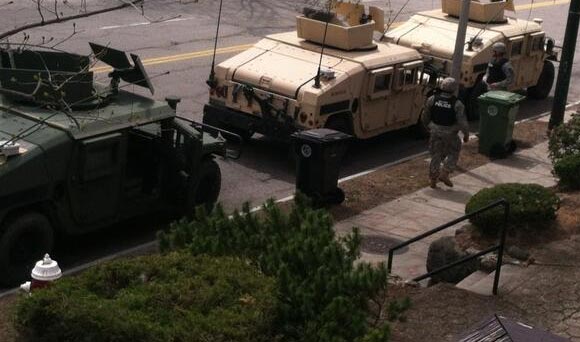
    I would argue that the US is systematically “superdisempowering” itself by VASTLY multiplying the costs of any given act of terrorism with absurd and outrageous levels of costly security theater and glitzy paramilitarization of law enforcement that continue to cascade and accumulate long after sorry nitwits like Richard Reid, Dzhokhar Tsarnaev or the amazingly incompetent Underwear Bomber have become obscure historical footnotes. It is incredibly counterproductive in every sense and has overwhelmingly negative effects that only add significantly to the costs of terrorism

    Timothy McVeigh, in a much more heinous act of terrorism, blew up a Federal building and killed 168 people and injured 800 others with a massive truck bomb and America did not feel a need to dress our police officers like extras in Starship Troopers or it’s airport security like customs officials from a minor Fascist puppet regime. This is not a criticism of police officers who do a dangerous job with professionalism and bravery but of a national policy of paternalism and creeping authoritarianism that is slowly morphing them into asphalt soldiers.

    The attacks on September 11 were thirty times worse and far more spectacular than McVeigh’s bombing, transfixing the attention of the whole world, but somehow we got along without President Bush declaring martial law and closing New York city and sending troops door to door to roust citizens in their homes without warrants or probable cause.

    We need to take a healthy step back and put the brakes on our own policy and security responses to terrorism and dial them down to a rational minimum level required for investigative effectiveness. If not because these policies have become dangerously injurious to liberty and American democracy or because they are mostly wasteful government spending then we should do it because we have become so expert at making the costs of any act of terror extremely expensive by our own reaction that we are providing the enemy and itinerant crazies with a tremendous incentive to attack us more.

    Seriously.

    The only thing superempowered right now is own own lack of strategic sense.

    Only Amateurs Negotiate in Public

    Friday, April 26th, 2013

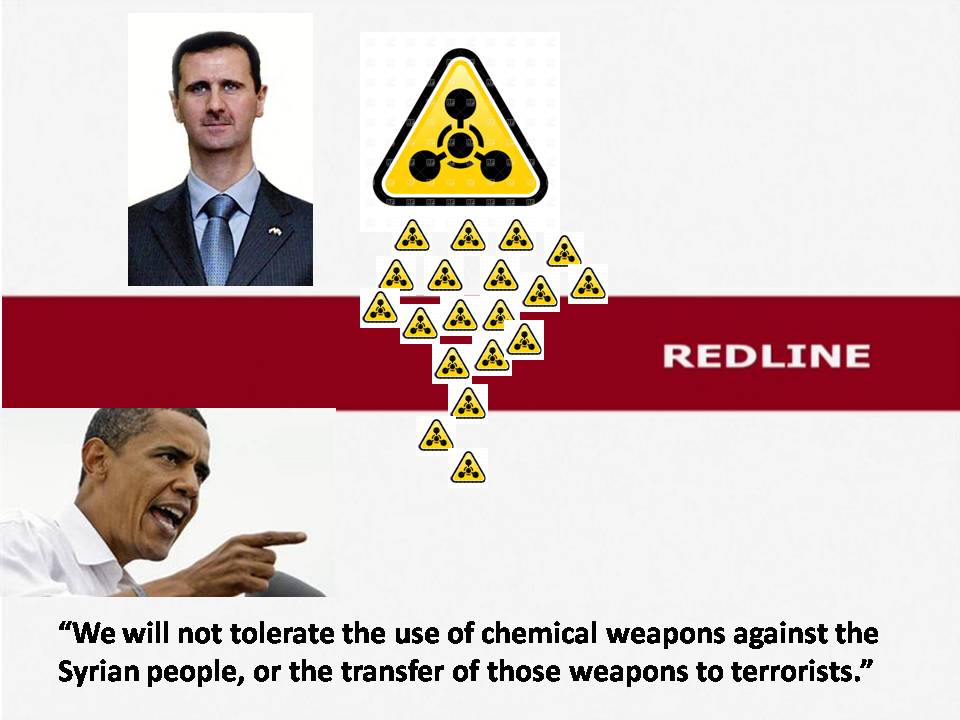
    There is much buzz right now about whether the cruel Syrian Baathist-Alawite regime of Bashar Assad, struggling to hold on to power in the midst of civil war against rebel Sunni forces, crossed   President Obama’s “red line” by using Sarin gas, a war crime. That is not really the important point for Americans. There are two things to consider here.

    First, specifically how would intervening militarily in Syria’s awful civil war be in American national interest?

    It is important to get a clear cut answer here because everyone arguing that Assad has “crossed a red line” that we will “not tolerate” is making a de facto argument for some kind of intervention on our part. Maybe if no one can define such an interest it is because there isn’t any and intervening will bring the US nothing but costs in blood and treasure without gaining anything of strategic value. I’m not against intervention per se but there really ought to be a coherent reason so we can rationally measure it against the potential costs which, from where I sit, look rather large.

    Secondly, in important matters of state, you don’t negotiate in public with a potential adversary if you really hope to gain a concession from them and if you reach the point of issuing a public ultimatum, you don’t bluff.

    The people who have advised President Obama to make these “red line” statements to Syria through the media instead of quietly through diplomatic channels are either professionally incompetent at statecraft or they were hoping to manipulate the President by getting him to back himself into a corner with tough rhetoric so that if Assad did not blink then Obama would have the choice of looking weak and foolish or of approving some kind of action against Syria. Either way, the President was poorly served by this advice. Maybe he needs some new foreign policy and national security advisers who actually know something more about the world than domestic politics and being lawyer-lobbyists.

    As a result that the President never really had any intentions of, say, invading Syria this year, we are now being treated to nervously asserted, lawyerly parsing of what really counts as “red lines” and what technical level of Sarin gas particulates constitutes “use”. It is an embarrassing climb down for the administration but also for the United States that never needed to happen. Empty posturing is not a substitute for a policy. Saying “Do something!” is not a strategy.

    This is no brief for Assad’s regime. He’s definitely a bad actor and runs a nasty and now democidal police state he inherited from his mass-murdering father, Hafez Assad. I’m open to hearing why the US should aid in a regime change because the outcome will be in our interests in some concrete and definable way. Oh, yeah, and it might help if the person making the pitch knew something about Syria and regional geopolitics, or was at least consulted about it.

    Let’s think long and hard this time.

    Tyrannicide and the Lost Republic

    Tuesday, March 19th, 2013

    “Beware the Ides of March”

    T. Greer gave me a rousing recommendation that I read the following post on the death of Julius Caesar by Burt Likko of The League of Ordinary Gentlemen blog. Greer was correct, it was outstanding. You should read the post in it’s entirety:

    Rue the Ides

    ….One of my big observations about Julius Caesar is that he took great care in his career to do nothing that he could not credibly claim that a political or military leader had not done before him. Scipio Africanus used his huge prestige from winning a massive war for Rome to monopolize all political power within his own family. The Gracchi disregarded informal controls in the cursus honorum in favor of pursuing needed reform. Pompey used extraordinary and open-ended military powers to wage a war of conquest for Rome and got personally rich doing it. Catalina had been a blue-blooded populist who thumbed his nose at the consuls in power. Both Marius and Sulla had marched on Rome; Marius was consul six times in a row and Sulla was a dictator for longer than the traditional six months and used attainders to purge the ranks of the elites of his enemies.

    So all along, when people protested to Caesar that he was making himself into a king, he could point to precedent and say he was doing nothing new, and nothing that the republic hadn’t been through before without losing its republican character. This seemed a transparent fiction to his critics. But for a legal culture steeped in and heavily reliant on precedent, it mattered a lot. Not for nothing did Caesar spend the first chapter of both his books chronicling his own military conquests on offering political justifications for what he had done.

    After all nearly two centuries of history that preceded Caesar’s rise to power demonstrated that in order for the government of Rome to be effective, it took a blue-blooded strongman brushing aside the niceties of the anti-autocratic but ossified constitution to actually do something. And that same history demonstrated to him that the public admired success much more than it did formal adherence to the law – which had grown too complex, too much a creation of the elite, and too distant from the realities of daily life and popular culture, to matter all that much to the average Roman on the street. The formalities of government were for the elites to worry about, not the common man functionally unaffected by them; justice was obtained through informal means and not through the courts.

    By the end of the civil war against Pompey and the remnants of the Scipio Africanus family’s control group, every tribune, every judge, every junior official, and every decision-maker of consequence was a client of Gaius Julius Caesar. Caesar himself held a consulship, a censorship, and a dictatorship and was quite clear that he would never let those things go – he clearly intended to hold on to all of that prestige and power and immunity from criticism until his death, and he would brook no serious opposition. [….]

    Read the rest here.

    There is much to agree with here.

    First, I think Likko understood the limitations, frustrated ambitions and political immaturity of the anti-Caesarian and Optimate conspirators very well. Tyrannicide in classical antiquity was not mere political assassination, but a noble act, usually accompanied by martyrdom, which further sanctified it. This was true of the Athenians who had put up statutes of  Harmodius and Aristogeiton who slew the tryrant Hipparchus and Lucius Junius Brutus, the ancestor of the assassin Brutus, was revered for his leadership in the overthrow of the Roman monarchy of the Tarquins.

    That the conspirators expected that the participation of Brutus in the murder of his patron Caesar would resonate symbolically as an intended gesture of patriotism with the Roman people was reasonable; the romantic hope the assassination itself would prove politically transformative was not.  Likko was correct, Rome had changed since the second century BC – and not just from the abusive political intrigues of the Patrician elite but by the Social Wars that brought the bulk of Rome’s Italian allies into their political community as Roman citizens. The “People of Rome” had changed and the mob of landless poor – whom Populares like Caesar wished to aid with reforms over optimate objections – had grown much larger and dangerous.

    This goes to Likko’s larger point that, as revered as the Republican traditional virtues and outward forms may have been in terms of lip service, in substantive practice as the first century AD progressed, they were increasingly ignored when convenient to powerbrokers, the wealthier classes or the mob.  Sulla’s attempt to “re-set” the Roman political system along traditionalist lines by blood purge and Cincinnatus-like personal example failed within a generation.  Other than the terrifying example of the proscriptions to inculcate political restraint, which lasted only so long as Sulla lived, nothing else was introduced to tamp down the subversive dynamic of unrestrained and aggressive aristocratic political competition for imperium and glory by the ambitious among Rome’s elite.

    Where Likko errs, somewhat, in my opinion, is here:

    The liberators did not think about institutions. They did not think about culture. They did not think about logistics. They did not think about government. They did not think about the contradiction inherent in a lawless act done in the name of preserving the law. They did not think about the immediate political aftermath. 

    Some of this is right – the conspirators did not think clearly about politics, given the large numbers of patricians and rich “new men” alike who had fallen under Caesar’s spell or grudgingly accomodated themselves to his personal rule after the failure of Pompey and Cato. That they expected the sort of popular sympathy Cato received -really more public respect for his incorruptibility and intrangisent virtue than any widespread desire to emulate Cato’s antiquated Roman mores or reactionary politics – is itself evidence f how out of touch they were. That said, thinking in terms of institutions would have been nigh impossible for them.  As an aristocratic Republic, Rome’s institutions that composed what we might call “the state”  were very few in number and skeletal in form. This was because the expectation was that patrician leadership, informally exercised through their extensive clientelas, their public benefactions and donations, expressions of charismatic auctoritas even when not in power, would always provide the muscle to make things happen. These in turn would be regulated by age-old custom, tribunican vetoes, the signs of the augurs, the weight of Senatorial opinion and what formal laws existed.

    When custom began to be lightly disregarded in pursuit of political vendettas and even the legions did not possess an “institutional” existence yet, there was little to stop aristocracy from transmogrifying into oligarchy and autocracy. Conceiving of institutions in the modern sense of an independent, self-regulating,  corporate body in the late 1st century BC would have been a radical innovation to say the least. Even Octavian’s assumption of imperial power was done under the mantle of amalgamating republican offices in his own person that took many lifetimes to crystallize “princeps” into an institutionalized, tyrannical, office of  “emperor” as understood later in the time of the Dominate.  Brutus, the wayward follower of Cato, could no more have conceived of institutionally-based constitutional reform to renovate Roman government than he could have invented an airplane

    This however, is a mere quibble about a minor point in an excellent post.


    Switch to our mobile site