zenpundit.com

Heavy breathing on the line: Crouching hero, Hidden nitwit

June 15th, 2013

[dots connected by Lynn C. Rees]

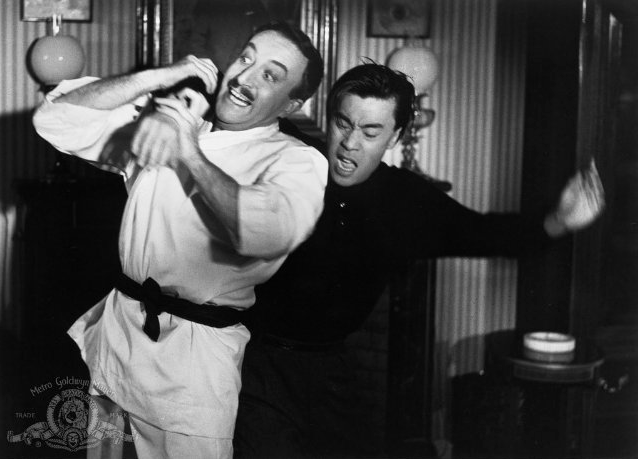
Sigh

Sigh

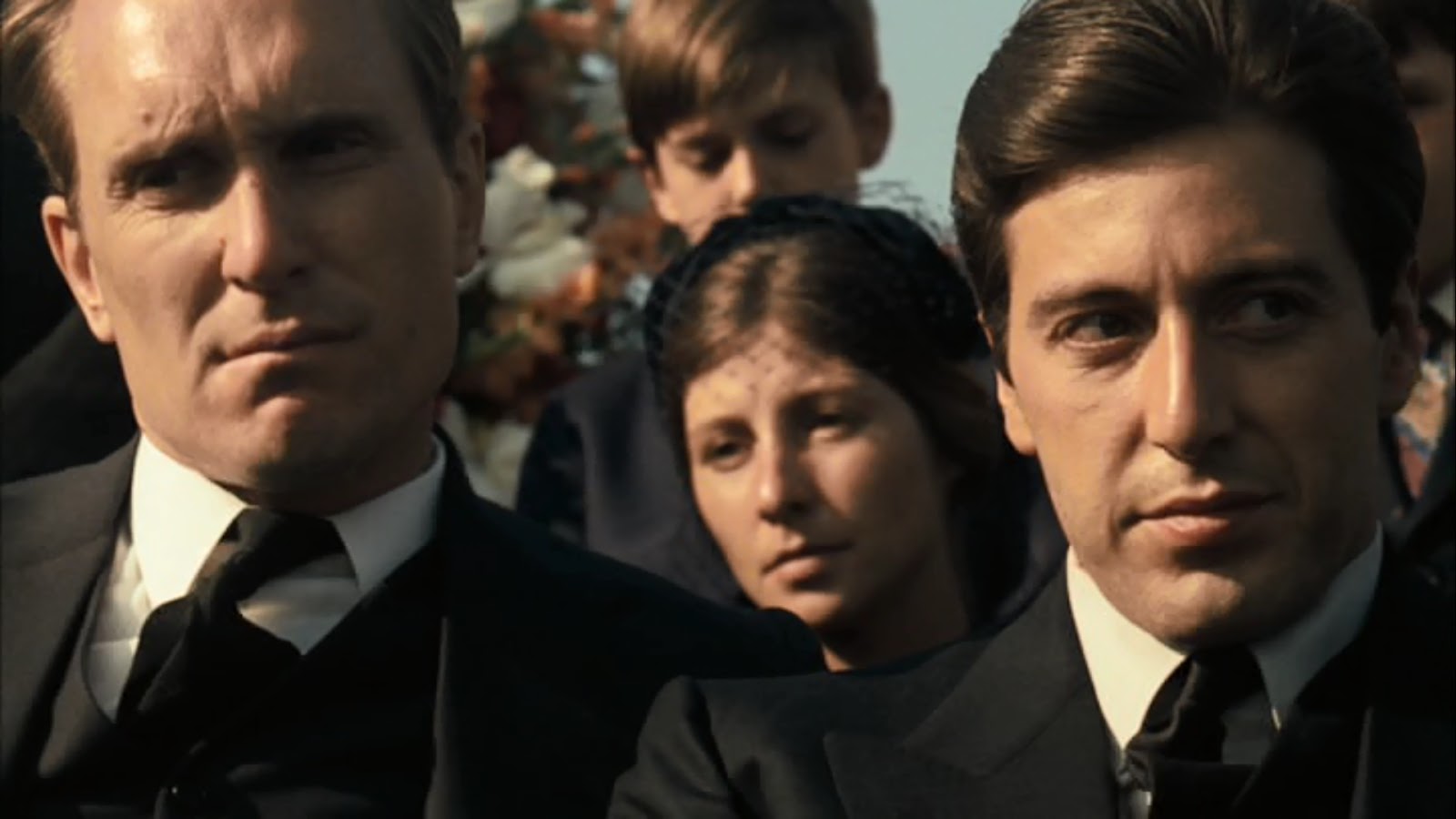
What did Lucius Aemilius Paullus know and when did he know it?

Colonel Hamilton

Colonel Hamilton

Alexander Hamilton thought he knew. And who is Colonel Hamilton (as he so liked to be called) that he should know?
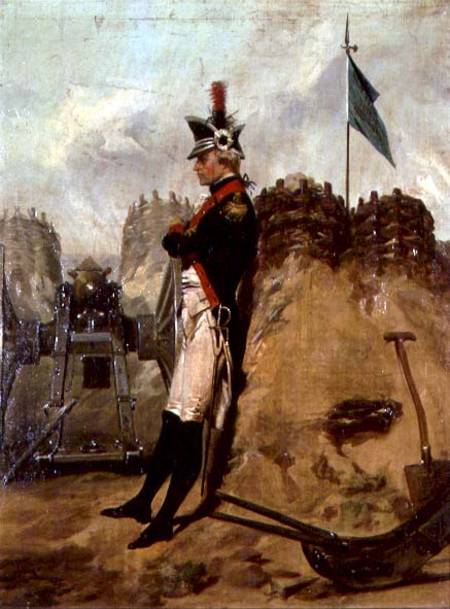
Not (then) Colonel Hamilton

Not (then) Colonel Hamilton

Recommendations on LinkedIn? Glowing:
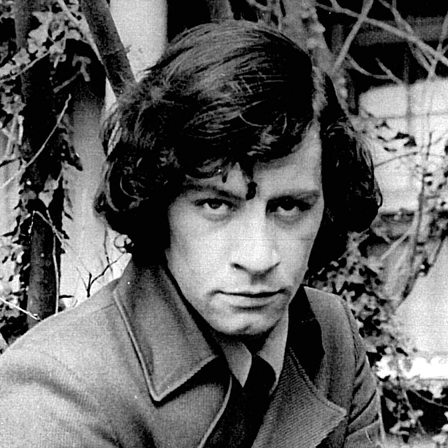
Je considère Napoleon, Fox, et Hamilton comme les trois plus grands hommes de notre époque, et si je devais me prononcer entre les trois, je donnerais sans hesiter la première place à Hamilton. Il avait deviné l’Europe.

Reviews on RateMyFounder.com? Less glowing:

Consider, the profligacy of his life; his fornications, adulteries and his incests… lol 😉

[He is] an insolent coxcomb who rarely dined in good company, where there was good wine, without getting silly and vaporing about his administration like a young girl about her brilliants and trinkets, yet I lose all patience when I think of a bastard brat of a Scottish pedlar daring to threaten to undeceive the world in their judgment…This creature was in a delirium of ambition; he had been blown up with vanity by the tories, had fixed his eyes on the highest station in America, and he hated every man, young or old, who stood in his way or could in any manner eclipse his laurels or rival his pretensions.

lol :O

GLOWING HERO OF DESTINY:

How far Colo. Hamilton, of whom you ask my opinion as a financier, has turned his thoughts to that particular study I am unable to answer because I never entered upon a discussion on this point with him; but this I can venture to advance from a thorough knowledge of him, that there are few men to be found, of his age, who has a more general knowledge than he possesses, and none whose Soul is more firmly engaged in the cause, or who exceeds him in probity and Sterling virtue…

In every relation, which [he has] borne to me, I have found that my confidence in [his] talents, exertions and integrity, has been well placed. I the more freely render this testimony of my approbation, because I speak from opportunities of information which cannot deceive me, and which furnish satisfactory proof of [his] title to public regard.

fevered preening nitwit:

Hamilton’s character is extremely unfortunate. An opinion has grown out of it, which at present obtains almost universally, that his character is radically deficient in discretion, and therefore [we] ask, what avail the most preeminent talents—the most distinguished patriotism—without the all important quality of discretion? Hence he is considered as an unfit head…and we are in fact without a rallying point. 🙁

GLOWING HERO OF DESTINY:

Colonel Hamilton was indisputably pre-eminent. This was universally conceded. He rose at once to the loftiest heights of professional eminence by his profound penetration, his power of analysis, the comprehensive grasp and strength of his understanding, and the firmness, frankness, and integrity of his character.

He generally spoke with much animation and energy and with considerable gesture. His language was clear, nervous, and classical. His investigations penetrated to the foundation and reason of every doctrine and principle which he examined, and he brought to the debate a mind filled with all the learning and precedents applicable to the subject. He never omitted to meet, examine, and discover the strength or weakness, the truth or falsehood of every proposition with which he had to contend. His candor was magnanimous and rose to a level with his abilities. His temper was spirited but courteous, amiable and generous, and he frequently made pathetic and powerful appeals to the moral sense and patriotism, the fears and hopes of the assembly, in order to give them a deep sense of the difficulties of the crisis and prepare their minds…

fevered preening nitwit:

An indiscretion got him into trouble with W— for whom he served as confidential secretary; other indiscretions obliged him to leave C— in ?83. He has a little too much pretension and too little prudence.

He is only too impetuous and because he wants to control everything, he fails in his intentions. His eloquence is often out of place in public debates, where precision and clarity are preferred to a brilliant imagination. It is believed that Mr. Hamilton is the author of the pamphlet entitledThe Federalist. He has again missed his mark. This work is of no use to educated men and it is too learned and too long for the ignorant. lol 😉

It was in this Federalist that Col. Hamilton, one of the three fevered GLOWING nitwits OF DESTINY of his epoch, said what he thought Lucius Aemilius Paullus knew and when he knew it:

The experience of other Nations will afford little instruction on this head. As far, however, as it teaches anything, it teaches us not to be enamored of plurality in the Executive. We have seen that the Achæans, on an experiment of two Prætors, were induced to abolish one. The Roman history records many instances of mischiefs to the Republic from the dissensions between the Consuls, and between the Military Tribunes, who were at times substituted for the Consuls. But it gives us no specimens of any peculiar advantages derived to the State from the circumstance of the plurality of those magistrates. That the dissensions between them were not more frequent or more fatal, is a matter of astonishment, until we advert to the singular position in which the Republic was almost continually placed, and to the prudent policy pointed out by the circumstances of the State, and pursued by the Consuls, of making a division of the Government between them. The Patricians engaged in a perpetual struggle with the Plebeians for the preservation of their ancient authorities and dignities; the Consuls, who were generally chosen out of the former body, were commonly united by the personal interest they had in the defence of the privileges of their order. In addition to this motive of union, after the arms of the Republic had considerably expanded the bounds of its empire, it became an established custom with the Consuls to divide the administration between themselves by lot one; of them remaining at Rome to govern the city and its environs; the other taking the command in the more distant provinces. This expedient must, no doubt, have had great influence in preventing those collisions and rivalships which might otherwise have embroiled the peace of the Republic.

Boy

Undoubtedly inspired by Boy, the Aemili Paulli’s kept historian. And Boy did glow for Lucius Aemilius Paullus:

Next morning the two Consuls broke up their camp, and advanced to where they heard that the enemy were entrenched. On the second day they arrived within sight of them, and pitched their camp at about fifty stadia distance. But when Aemilius observed that the ground was flat and bare for some distance round, he said that they must not engage there with an enemy superior to them in cavalry; but that they must rather try to draw him off, and lead him to ground on which the battle would be more in the hands of the infantry.

He refused to let his glow so shine for Gaius Terentius Varro, Paullus’ consular colleague for 216 B.C.:

But Caius Terentius being, from inexperience, of a contrary opinion, there was a dispute and misunderstanding between the two leaders, which of all things is the most dangerous. It is the custom, when the two Consuls are present, that they should take the chief command on alternate days; and the next day happening to be the turn of Terentius, he ordered an advance with a view of approaching the enemy, in spite of the protests and active opposition of his colleague.

Hannibal set his light-armed troops and cavalry in motion to meet him, and charging the Romans while they were still marching, took them by surprise and caused a great confusion in their ranks. The Romans repulsed the first charge by putting some of their heavy-armed in front; and then sending forward their light-armed and cavalry, began to get the best of the fight all along the line: the Carthaginians having no reserves of any importance, while certain companies of the legionaries were mixed with the Roman light-armed, and helped to sustain the battle. Nightfall for the present put an end to a struggle which had not at all answered to the hopes of the Carthaginians.

GLOWING HERO OF DESTINY:

But next day Aemilius, not thinking it right to engage, and yet being unable any longer to lead off his army, encamped with two-thirds of it on the banks of the Apennines…For the other third of his army he caused a camp to be made across the river, to the east of the ford, about ten stades from his own lines, and a little more from those of the enemy; that these men, being on the other side of the river, might protect his own foraging parties, and threaten those of the enemy…Aemilius, dissatisfied with his position, and seeing that the Carthaginians would soon be obliged to shift their quarters for the sake of supplies, kept quiet in his camps, strengthening both with extra guards.

fevered preening nitwit:

After waiting a considerable time, when no one came out to attack him, Hannibal put the rest of the army into camp again, but sent out his Numidian horse to attack the enemy’s water parties from the lesser camp. These horsemen riding right up to the lines and preventing the watering, Caius Terentius became more than ever inflamed with the desire of fighting, and the soldiers were eager for a battle, and chafed at the delay. For there is nothing more intolerable to mankind than suspense; when a thing is once decided, men can but endure whatever out of their catalogue of evils it is their misfortune to undergo…When he took over the command on the following day, as soon as the sun was above the horizon, Caius Terentius got the army in motion from both the camps…

GLOWING HERO OF DESTINY:

Though he had been from the first on the right wing, and had taken part in the cavalry engagement, Lucius Aemilius still survived. Determined to act up to his own exhortatory speech, and seeing that the decision of the battle rested mainly on the legionaries, riding up to the center of the line he led the charge himself, and personally grappled with the enemy, at the same time cheering on and exhorting his soldiers to the charge…

Lucius Aemilius fell, in the thick of the fight, covered with wounds: a man who did his duty to his country at that last hour of his life, as he had throughout its previous years, if any man ever did. As long as the Romans could keep an unbroken front, to turn first in one direction and then in another to meet the assaults of the enemy, they held out; but the outer files of the circle continually falling, and the circle becoming more and more contracted, they at last were all killed on the field; and among them Marcus Atilius and Gnaeus Servilius, the Consuls of the previous year, who had shown themselves brave men and worthy of Rome in the battle.

fevered preening nitwit:

While this struggle and carnage were going on, the Numidian horse were pursuing the fugitives, most of whom they cut down or hurled from their horses; but some few escaped into Venusia, among whom was Caius Terentius, the Consul, who thus sought a flight, as disgraceful to himself, as his conduct in office had been disastrous to his country.

Contemptible, if true“, as our third Vice President once observed.

And that’s why the NSA records (meta)data on all Americans.
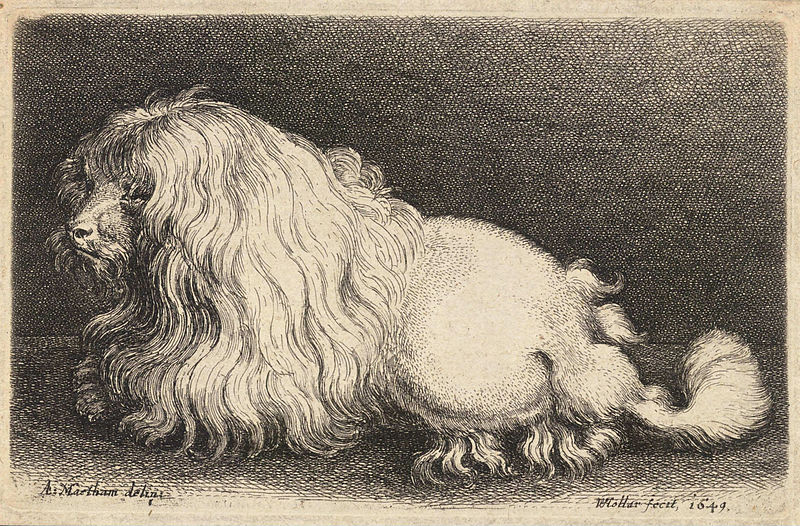
Heavy breathing on the line: Follow the money

June 14th, 2013

[dots connected by Lynn C. Rees]

Sigh

Sigh

What did Lucius Aemilius Paullus know and when did he know it?

Follow the money.

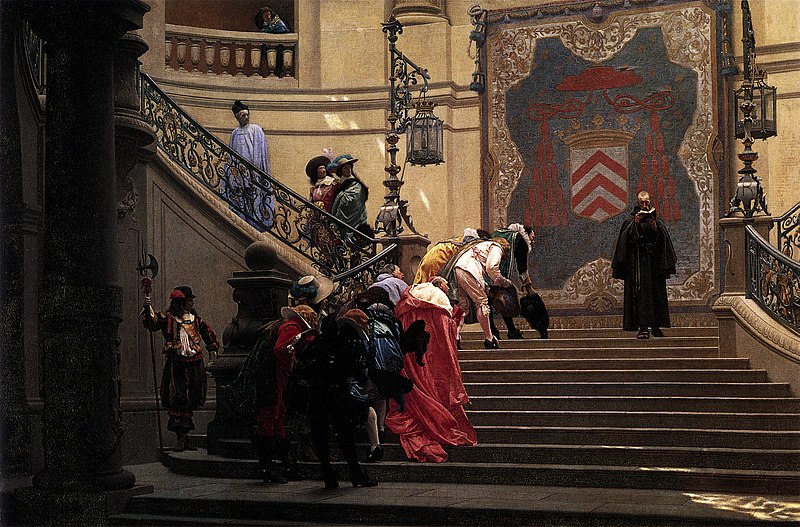
The Aemilii Paulii called him “Boy“:

Boy

Boy

[Boy]…was one of the 1,000 Achaean nobles who were transported to Rome as hostages in 167 BC, and was detained there for 17 years. In Rome, by virtue of his high culture, [Boy] was admitted to the most distinguished houses, in particular to that of Aemilius Paullus, the conqueror in the Third Macedonian War, who entrusted [Boy] with the education of his sons, Fabius and Scipio Aemilianus (who had been adopted by the eldest son of Scipio Africanus). As the former tutor of Scipio Aemilianus, [Boy] remained on cordial terms with his former pupil and remained a counselor to him when he defeated the Carthaginians in the Third Punic War…When the Achaean hostages were released in 150 BC, [Boy] was granted leave to return home, but the next year he went on campaign with Scipio Aemilianus to Africa, and was present at the capture of Carthage, which he later described.

Well before Blair

Well before Blair

Follow the money.

Trailing glory

Trailing glory

Consider the primary sources of the primary source’s considerations.

Do Disturb

Do Disturb

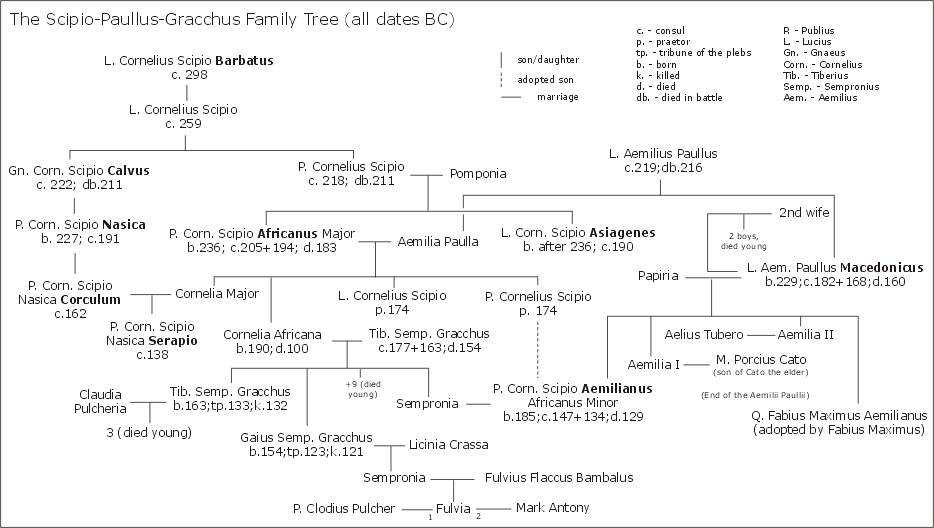
Then there was Gaius Laelius.

Gaius Laelius (left?) with Publius Cornelius Scipio Africanus Major

Gaius Laelius (left?) with Publius Cornelius Scipio Africanus Major

Gaius Laelius (left?) with Publius Cornelius Scipio Africanus Major

Gaius Laelius (left?) with Publius Cornelius Scipio Africanus Major

Gaius Laelius was the Nick Carraway of the Second Punic War: somehow everywhere yet somehow nowhere. Consider Wikipedia’s Laelian words: “obscure”, “obscurity”,  “suggests”, “apparently”, “may have”, “largely unknown”, “not clear”. His epitaph might as well have been “Laelius appears to have died some years after 160 BC, but his year of death is mentioned by neither Livy nor Polybius.” Laelius often seems digitally inserted into the Second Punic War. You find him (maybe) at Ticinus, New New City, IlipiaZama. Laelius’ life was like a box of chocolates: you might get a tasty treat or wake up to your favorite thoroughbred’s severed head on the bed sheets.

Father's day is just around the corner

Father’s day is just around the corner

The story we have of the Second Punic War is not Boy’s. While, to a certain extent, it might be young Scipio’s or middling Fabius Maximus’, the history that rolled down through Boy and Boy groupies like Titus Livius Patavinus or Lucius Mestrius Plutarchus is Gaius Laelius’ history.

He gave Boy an offer he couldn’t refuse. Grey Narrator as Grey Eminence.

Be like Boy

Be like Boy

Graecia capta ferum victorem cepit. However, even if you’re Boy bringing gifts, you don’t bite the hand that feeds you if the hand bites back harder. And rude victors bite even as they beware.

Boy played his part in Laelius’ scheme. And what was this scheme?

Follow the money.

Photo Booth

Photo Booth

Laelius was Scipio’s Horatio. Much like Marcus Vipsanius Agrippa was for Gaius Julius Caesar, his rise was due to his role as Scipio’s shadow. A rising Scipio lifts all Laelii.

Laelius was at the bridge between Scipio’s current controversy and future immortality. He had to hold it against Marcus Porcius Catos at the gates who’d casually destroy Scipio’s reputation after talking about ways to improve Roman trash collection, animal control, or even destroying those wascally Phoenicians.

Marcus Porcius Cato Major (the Censor)

Marcus Porcius Cato Major the Censor

Lealius had to protect Scipio.

And that’s why the NSA records (meta)data on all Americans.
What could have stopped Snowden

June 13th, 2013

[ by Charles Cameron — mini-rant on importance of humans, human errors, and insight ]
.

OK, I watch TV & this screencap is from *Lie to Me* - this is about more than that


.

One proficient judge of human character with a good combo of micro-observation skills and / or gut instinct present at a Booz Allen job interview might very well have made a substantial difference, no?

**

I see this as a case to consider in terms of the human intelligence : number crunching ratio, or HUMINT : SIGINT balance.

Or rich data : Big Data or mind : machine question.

Or am I missing something?

**

Just one piece of the puzzle:

Microexpressions, from Wikipedia:

A microexpression is a brief, involuntary facial expression shown on the face of humans according to emotions experienced. They usually occur in high-stakes situations, where people have something to lose or gain. Microexpressions occur when a person is consciously trying to conceal all signs of how he or she is feeling, or when a person does not consciously know how he or she is feeling. Unlike regular facial expressions, it is difficult to hide microexpression reactions. Microexpressions express the seven universal emotions: disgust, anger, fear, sadness, happiness, surprise, and contempt. Nevertheless, in the 1990s, Paul Ekman expanded his list of basic emotions, including a range of positive and negative emotions not all of which are encoded in facial muscles. These emotions are amusement, contempt, embarrassment, excitement, guilt, pride, relief, satisfaction, pleasure, and shame. They are very brief in duration, lasting only 1/25 to 1/15 of a second.

Microwizards, from Wikipedia — which may not be quite the same as the ability to detect microexpressions:

O’Sullivan and Ekman identified only 50 people as Truth Wizards after testing 20,000 (~0.25%) from all walks of life, including the Secret Service, FBI, sheriffs, police, attorneys, arbitrators, psychologists, students, and many others. Surprisingly, while psychiatrists and law enforcement personnel showed no more aptitude than college freshmen, Secret Service agents were the most skilled.

**

That’s all, folks. It’s a beginning — what say you all?

Around and around on the carousel

June 12th, 2013

[ by Charles Cameron — carnival atmosphere, ballerina / acrobat girlfriend, NSA ]
.

I have enough prurient interest to have checked out the GF’s blog. OTOH, I don’t want to go whole NSFW on you with the unfortunate young lady’s pole dancing videos — you can find them easily enough, and besides, this image has a hint of pole acrobatics.

I also think it says quite a bit about Edward Snowden‘s life and style in Hawaii, indeed about the whole sorry NSA business. Take it as my comment on the state of the world:
.


.

Her final, sad tweet:

If you check it out on Google, you’ll find (from the Columbia Journalism Review of all places) that it isn’t even original

Moral Degeneration in the Crucible of War

June 12th, 2013


The recent post on Is 4GW Dead? stirred a great deal of interest, so I would like to extend the discussion on a point that that is critical not only for those who have responsibility for conducting military campaigns, but for statecraft and policy as well.

One of more important tenets of 4GW was the importance of “the moral level of war”, drawn from Colonel John Boyd’s thinking on the strategic impact of a combatant’s behavior, immoral  or exemplary, on all observers – belligerents, civilian noncombatants, neutral third parties, the media, the combatant’s own soldiers and citizens back home. Here is Boyd:

Morally our adversaries isolate themselves when they visibly improve their well being to the detriment of others (allies, the uncommitted), by violating codes of conduct or behavior patterns that they profess to uphold or others expect them to uphold.

· Morally we interact with others by avoiding mismatches between what we say we are what we are and the world we have to deal with, as well as by abiding by those other cultural codes or standards we are expected to uphold.

In a Reader’s Digest version of Boyd,  heroic, noble and magnanimous  behavior is admirable and attractive while hypocrisy, cruelty and cowardice are repulsive and antagonizing characteristics. While the former won’t guarantee your victory and the latter, unfortunately, won’t ensure your defeat, they will be a significant factor in ameliorating or generating friction.  The impression given by an army impacts the will of the enemy to fight, the morale and discipline of the soldiers, the restiveness of the civilians, the loyalty of allies and the goodwill of neighbors.

Boyd developed his thinking about the moral level of war in Patterns of Conflict  all the way up to grand strategy and above. The rub about the moral level  is that war is a crucible that puts every “cultural code” or “standard” to the test, as well as the character of the men fighting it and their leaders upon whom great responsibility rests.  Even with the best of intentions in policy and careful generalship in the field, the horrors of war can erode moral fiber and military discipline in an army, in a company or in the heart of one man. Nor does every army begin with good intentions and effective discipline – some fighting forces are scarcely to be regarded as “armies” at all while others embrace the darkness as a matter of policy.

In terms of warfare, let us define “moral degeneration” as a degraded state of moral decline where a belligerent has effectively abandoned the operational and tactical restraints on conduct mandated by the Laws of War (i.e. war crimes are SOP) and in some instances, the vestiges of civilization.

A textbook example of this kind of moral degeneration came to light a few weeks ago when a jihadi lunatic in Syria, a rebel commander Khalid al-Hamad, who goes by the name of “Abu Sakkar”, cut out the heart of a (presumably) dead government soldier and ate it on video. Charles Cameron expounded at length upon this minor atrocity here. I am not, to say the least, a fan of radical, revolutionary, transnational Sunni Islamism but I cannot honestly say that its proponents like Abul Mawdudi , Sayid Qutb, Abdullah Azzam, Osama bin Laden and their ilk ever openly advocated cannibalism. It is much more likely that Mr. al-Hamad’s behavior is explained by the ferocity of the civil war in Syria eroding customary norms of the combatants than  it is by Islamist ideology.

Moral degeneration in war seems to spring from two directions:

a) As a calculated act of Policy, from the top down, enforced by the leadership by military discipline and bureaucratic control.

b) As a spontaneous reaction by soldiers or fighters, appearing from the bottom up, without orders and frequently, in spite of them, possibly due to a breakdown in the chain of command, an erosion of discipline or sheer mutiny for the age-old purpose of reprisal, pillage and rapine.

The first category often occur with war as a convenient cover rather than a cause of grave crimes against humanity that leaders and  ideologues had long wished to carry out. The Armenian Genocide, as John Keegan wrote, belongs properly to the history of Ottoman imperial policy than it did WWI; in truth, the Genocide was the greatest and worst in a long succession of vicious pogroms that the Ottomans had launched against their Armenian Christian subjects during the reign of Abdul Hamid and the Young Turks. The Holocaust (which had some inspiration in Hitler’s mind, from the fate of the Armenians) was more closely tied to the evolution of  Nazi war policy but once Operation Barbarossa opened up the vast spaces of Soviet Eurasia, “the East” in Nazi parlance, the war itself increasingly took a backseat to expediting Hitler and Himmler’s ghastly and murderous racial priorities. This is a pattern of a priori planning, an escalating ideological radicalization of society that tends to be present with most of the large scale democides and genocides. It is the organizational powers of  coercion utilized by the state, or a mobilized faction of , it that makes the enormous scale of death possible, not the war.

What is different and also dangerous about moral degeneration from the bottom-up, is that it is cultural evolution driven by the psychological effects of extreme violence at work and, unlike an act of policy, more likely to be diffused widely across society as a permanent change for the worse. Too many German soldiers in WWI, former peasants and artisans and boys from middle-class families, returned from the Western Front morally coarsened and addicted to the adrenalin rush of combat and became in succession Freikorps paramilitaries, Communist streetfighters, Nazi Stormtroopers and SS men. The World War also gave Russia the men of the Cheka, the Red terror and the first Gulags on the Bolshevik Left and brutal and mad warlords on the White Right.

In more recent two decades, the break-up of Yugoslavia unleashed atavistic passions of ethnic hatred and atrocity, while organized society in Western African states and central Africa broke down entirely in transnational regional civil wars with unrestrained massacres and mass rape. As a result, there is little that is political but much that is primeval, at this juncture, to explain Joseph Kony’s motivations; he resembles nothing so much as a 21st century Kurtz. Mexico too is degenerating from the escalating violence of cartel insurgency and narco-cultas – there is not much tactical or strategic value in pagan death cults or human sacrifice but it is spreading:

…Our impression is that what is now taking place in Mexico has for some time gone way beyond secular and criminal (economic) activities as defined by traditional organized crime studies.3 In fact, the intensity of change may indeed be increasing. Not only have de facto politicalelements come to the fore-i.e., when a cartel takes over an entire city or town, they have no choice but to take over political functions formerly administered by the local government- but social (narcocultura) and religious/spiritual (narcocultos) characteristics are now making themselves more pronounced. What we are likely witnessing is Mexican society starting to not only unravel but to go to war with itself. The bonds and relationships that hold that society together are fraying, unraveling, and, in some instances, the polarity is reversing itself with trust being replaced by mistrust and suspicion. Traditional Mexican values and competing criminal value systems are engaged in a brutal contest over the ?hearts, minds, and souls‘ of its citizens in a street-by-street, block-by-block, and city-by-city war over the future social and political organization of Mexico. Environmental modification is taking place in some urban centers and rural outposts as deviant norms replace traditional ones and the younger generation fully accepts a criminal value system as their baseline of behavior because they have known no other. The continuing incidents of ever increasing barbarism-some would call this a manifestation of evil even if secularly motivated-and the growing popularity of a death cult are but two examples of this clash of values. Additionally, the early rise of what appears to be cartel holy warriors may now also be taking place. While extreme barbarism, death cults, and possibly now holy warriors found in the Mexican cartel wars are still somewhat the exception rather than the rule, each of these trends is extremely alarming, and will be touched upon in turn.

The crucible of war either tempers a people or it breaks them.


Switch to our mobile site