zenpundit.com » diplomacy

Archive for the ‘diplomacy’ Category

Follow-up: Martyrdom, messianism and Julian Assange

Friday, December 24th, 2010

[ by Charles Cameron ]

This is a follow-up to my earlier post on Zenpundit and ChicagoBoyz, picking up on some comments made on both sites, explaining my own interests, and taking the inquiry a little further.

On Zenpundit, Larry said, “Your need to destroy Assange is getting embarrassing. Why not make lemonaid?” and JN Kish, “The real story here should be about the data – and who is helping Assange – not Assange himself.” Meanwhile on ChicagoBoyz, a certain Gerald Attrick commented, “Ah, but as we say in in art crit: Deal with the Art and not the Man…”

To Larry I would say, I think that my post WikiLeaks: Counterpoint at the State Department? — in which I point up the irony inherent in the same State Department spokesman celebrating World Press Freedom Day and chiding Assange for “providing a targeting list to a group like al-Qaida” on the same day — could as easily be read as pro-Assange as today’s post, Martyrdom, messianism and Julian Assange can be read as calling for his destruction.

More generally, it seems to me that there are a whole lot of stories to be told here: the ones I wish to tell are those where I have a reasonably informed “nose” for relevant detail, and which tend to be overlooked by others — and thus have the potential to blindside us.

*

My own main interest is in tracking religious, mythic and apocalyptic themes in contemporary affairs, where they are all too easily overlooked, misunderstood or dismissed. Thus I have posted on Tracking the Mahdi on WikiLeaks, and added related material in section 1 of my post today.

I am also interested in concept mapping, games and creative thinking — interests which led me to post WikiLeaks: Critical Foreign Dependencies and The WikiLeaks paradox, and more lightheartedly to take an amused sideways glance at WikiLeaks in The power of network visualization.

And I certainly find Assange himself an interesting figure, and have done what I can to illuminate his background in mythology, religion and games in Wikileaks and the Search for a Cryptographic Mythology, again in Update: Wikileaks and Cryptographic Mythology and (again light-heartedly) in A DoubleQuote for Anders.

*

Let me be more explicit: I have no wish to lionize Assange, nor to feed him to the lions — I would like to understand him a little better.

I come from a scholarly tradition that doesn’t favor the demonization of new religious movements, and believes (for instance) that it is entirely plausible that the Waco inferno could have been avoided if the religious beliefs of David Koresh and the Branch Davidians had been taken seriously as such, and not dismissed out of hand as “bible babble”.

James Tabor and Eugene Gallagher in Why Waco for instance, write:

The Waco situation could have been handled differently and possibly resolved peacefully. This is not unfounded speculation or wishful thinking. It is the considered opinion of the lawyers who spent the most time with the Davidians during the siege and of various scholars of religion who understand biblical apocalyptic belief systems such as that of the Branch Davidians. There was a way to communicate with these biblically oriented people, but it had nothing to do with hostage rescue or counterterrorist tactics. Indeed, such a strategy was being pursued, with FBI cooperation, by Phillip Arnold of the Reunion Institute in Houston and James Tabor of the University of North Carolina at Charlotte, one of the authors of this book. Arnold and Tabor worked in concert with the lawyers Dick DeGuerin and Jack Zimmerman, who spent a total of twenty hours inside the Mount Carmel center between March 29 and April 4, communicating directly with Koresh and his main spokesperson, Steve Schneider. Unfortunately, these attempts came too late. By the time they began to bear positive results, decisions had already been made in Washington to convince Attorney General Janet Reno to end the siege by force.

Jane Seminaire Docherty’s Learning Lessons from Waco, similarly, “offers a fresh perspective on the activities of law enforcement agents. She shows how the Waco conflict resulted from a collision of two distinct worldviews-the FBI’s and the Davidians’—and their divergent notions of reality. By exploring the failures of the negotiations, she also urges a better understanding of encounters between rising religious movements and dominant social institutions.” [Syracuse UP]

I’d therefore be hesitant to drag Assange into a somewhat murky association with the “cult milieu” – but Assange himself was quite open in talking with Raffi Khatchadourian of the New Yorker about the man his mother lived with and had a child by, then ran away from, after her marriage to Assange’s father broke up. Khatchadourian writes:

When I asked him about the experience, he told me that there was evidence that the man belonged to a powerful cult called the Family—its motto was “Unseen, Unknown, and Unheard.” Some members were doctors who persuaded mothers to give up their newborn children to the cult’s leader, Anne Hamilton-Byrne. The cult had moles in government, Assange suspected, who provided the musician with leads on Claire’s whereabouts.

Wikipedia’ has an account of that group, also known as the Santiniketan Park Association.

And as you might expect, there’s a bizarre and frankly conspiracist take on this connection already out and about on the web.

*

For a more detailed and indeed harrowing view of the Santiniketan Park Association from a member who left, see this excerpt from Sarah Moore’s book, Unseen, Unheard, Unknown.

A couple of odd remarks here strike me:

Some of us had multiple birth certificates and passports, and citizenship of more than one country. Only she knows why thus was and why we were also all dressed alike, why most of us even had our hair dyed identically blond.

The motto of the sect is ‘Unseen, Unheard and Unknown’, and even now the thought of the consequences of betraying that motto still worries me sometimes.

We weren’t often allowed to see newspapers, in fact that happened only after we were quite a bit older and even then they’d been censored .

and:

Looking back, I can see that any game or hobby that we started we would get hooked on, playing it over and over again in our limited spare time. If we got into a game or fantasy we tended to want to keep on with it and it assumed the utmost importance in our lives.

It might have appeared that we were obsessive kids but it was understandable considering the malevolent reality we faced outside our games. Usually Anne and the Aunties saw to it that as soon as we started enjoying ourselves, it was stopped, and a new rule would be made, forbidding us from playing that particular game. We would thus be forced to try and make up a new one within the boundaries of the rules that governed our lives, still knowing that eventually this new one would be banned also.

*

Speaking of “cults” – there are several WL cables that make reference to a cult or cults, generally in the context of a “cult of personality” (Mao, eg), and in one case with reference to Scientology. There’s also – and this where things get interesting from my POV — one intriguing reference to a cult in Iran:

Though stressing that he is not an opponent of the Islamic system, he warned that the Revolutionary Guard-based faction which “stole the election,” and is now seeking total control is “extremely dangerous to both us and you.” He repeatedly characterized this group as “a criminal cult,” motivated by its fanaticism, ignorance, and the monetary self-interest of its members. He added that the group is intent on exporting revolution. According to source, both Ahmedinejad and Ayatollah Mesbah-Yazdi are affiliates rather than “leaders” of this group, and neither will likely end up with significant power if the group successfully consolidates control over the state and its economy (see reftel).

A religious group of which “both Ahmedinejad and Ayatollah Mesbah-Yazdi are affiliates” sounds suspiciously like the Hojjatiyeh.

But that’s the topic for another upcoming post, I promise.
Martyrdom, messianism and Julian Assange

Thursday, December 23rd, 2010

[ by Charles Cameron ]

Martyr and messiah are two of the more intense “roles” in the religious vocabulary, and unlike mystics and saints, both martyrs and messiahs tend to have an impact, not just within their own religious circles but in the wider context of the times.

Martyr and messiah are also words that can be bandied about fairly loosely — so a simple word-search on “messiah” will reveal references to a third-person platform game with some gunplay and the white messiah fable in Avatar, while a search on “martyr” might tell you how to become a martyr for affiliate networks, just as a search on “crusade” will turn up crusades for justice or mental health – my search today even pointed me to a crusade for cloth diapers.

1. Martyrdom and messianism in WikiLeaks

Unsurprisingly, perhaps, both terms crop up occasionally in WikiLeaks, with the Government of Iraq, for instance, banning use of the word “martyr” for soldiers who died in the war with Iran, and US diplomats wiring home a report by an opposition psychiatrist to the effect that “Morally, Chavez [of Venezuela] combines a sense of tragedy and romanticism (a desire for an idyllic world) to project a messianic image.” Indeed, the whole paragraph is choc-a-bloc with that kind of imagery, and worth quoting in full:

Ideologically, Chavez wants to project an image of a “utopian socialist,” which de Vries described as someone who is revolutionary, collectivist, and dogmatic. In reality, de Vries argues, Chavez is an absolute pragmatist when it comes to maintaining power, which makes him a conservative. Coupled with Chavez’ self-love (narcissism), sense of destiny, and obsession with Venezuelan symbolism, this pragmatism makes Chavez look more like fascist, however, rather than a socialist. Morally, Chavez combines a sense of tragedy and romanticism (a desire for an idyllic world) to project a messianic image. De Vries, however, said Chavez is a realist who uses morals and ethics to fit the situation.

PM Netanyahu of Israel was using the term “messianic” with a little more precision when he described the Iranian regime as “crazy, retrograde, and fanatical, with a Messianic desire to speed up a violent ‘end of days.'”

2. Julian Assange in the role of martyr

The words martyr and messiah, then, carry a symbolic freight that is at the very least comparable to that of flags and scriptures – so it is interesting that both terms crop up in the recent BBC interview with Julian Assange.

My reading of the interview suggests that it is Assange himself who introduces the meme of martyrdom, though not the word itself, when he answers a question about the impact of the sexual accusations against him, “What impact so you think that will have on your organisation and what sort of figure do you think you, Julian Assange, cut in the face of all this. How will you be regarded? What will it do to you?” with the response, “I think it will be quite helpful for our organisation.”

In the follow up, interviewer John Humphrys twice uses the word “martyr” explicitly:

Q: Really? You see yourself as a martyr then?

JA: I think it will focus an incredible attention on the details of this case and then when the details of this case come out and people look to see what the actions are compared to the reality of the facts, other than that, it will expose a tremendous abuse of power. And that will, in fact, be helpful to this organisation. And, in fact, the extra focus that has occurred over the last two weeks has been very helpful to this organisation.

and:

Q: Just to answer that question then. You think this will be good for you and good for Wikileaks?

JA: I’ve had to suffer and we’ve had incredible disruptions.

Q: You do see yourself as a martyr here.

JA: Well, you know, in a very beneficial position, if you can be martyred without dying. And we’ve had a little bit of that over the past ten days. And if this case goes on, we will have more.

3. Julian Assange in the role of messiah

If the role of martyr implies, at mimimum, that one suffers for a cause, that of messiah implies that one leads it in a profound transformation of the world. Both terms are now found in association with the word “complex” – which applies whenever a individual views himself or herself as a martyr or messiah – but a “messianic complex” is presumably more worrisome than a “martyr complex” if only for the reason that there are many more martyrs than messiahs, many more willing to suffer for a cause than to lead it.

It is accordingly worth noting that it is the interviewer, John Humphrys, who introduces both the word “messianic” and the concept of a “messianic figure” into the interview, although Assange makes no effort to wave it away…

Q: Just a final thought. Do you see yourself… as some sort of messianic figure?

JA: Everyone would like to be a messianic figure without dying. We bringing some important change about what is perceived to be rights of people who expose abuses by powerful corporations and then to resist censorship attacks after the event. We are also changing the perception of the west.

Q: I’m talking about you personally.

JA: I’m always so focussed on my work, I don’t have time to think about how I perceive myself… I had time to perceive myself a bit more in solitary confinement. I was perfectly happy with myself. I wondered what that process would do. Would I think “my goodness, how have I got into this mess, is it all just too hard?”

The world is a very ungrateful place, why should I continue to suffer simply to try and do some good in the world. If the world is so viciously against it ,why don’t I just go off and do some mathematics or write some books? But no, actually, I felt quite at peace.

Q: You want to change the world?

JA: Absolutely. The world has a lot of problems and they need to be reformed. And we only live once. Every person who has some ability to do something about it, if they are a person of good character, has the duty to try and fix the problems in the environment which they’re in.

That is a value, that, yes, comes partly from my temperament. There is also a value that comes from my father, which is that capable, generous men don’t create victims, they try and save people from becoming victims. That is what they are tasked to do. If they do not do that they are not worthy of respect or they are not capable.

4. Julian Assange, martyr and messiah?

I think it is clear that both Assange and his interviewer are in effect reframing the religious terms “martyr” and “messiah” in non-religious, basically psychological senses — although I don’t suppose Assange is exactly claiming to have the two “complexes” I mentioned above.

Here’s what’s curious about this reframing, from a religious studies point of view:

Assange’s implicit acceptance of a “messianic” role undercuts the specific force of the role of “martyr” – one who gives his life for the cause. “Everyone” he says, “would like to be a messianic figure without dying.” Assange wouldn’t exactly object to being a martyr without dying, too.

Now Reading Luttwak

Thursday, December 23rd, 2010

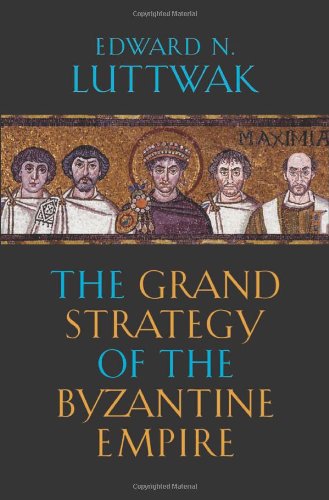
The Grand Strategy of the Byzantine Empire by Edward Luttwak

Just starting reading this magnum opus by eminent strategist Edward Luttwak and I am thoroughly enjoying it; particularly, the context-building historical digressions that enrich the text.  Highly recommended.

WikiLeaks: Critical Foreign Dependencies

Thursday, December 9th, 2010

[ by Charles Cameron ]

The most interesting part of the WikiLeaks-posted State Department Request for Information: Critical Foreign Dependencies, it seems to me, is the part that ties in with Zen’s recent post Simplification for Strategic Leverage.

Zen referenced Eric Berlow‘s recent TED talk to the effect that sometimes a complex network can be made effectively simple by reducing it to the graph of nodes and links within one, two or three degrees of the node you care about and wish to influence.

“Simplicity often lies on the other side of complexity”, Dr Berlow says, and “The more you step back, embrace complexity, the better chance you have of finding simple answers, and it’s often different than the simple answer that you started with.”

*

This resonates neatly with a few things I’ve been thinking and talking about for some time now.

1. There’s the need for visualization tools that don’t operate with as many nodes as there are data points in a database like Starlight — I’ve been wanting to reduce the conceptual “load” that analysts or journos face from thousands, sometimes tens of thousands of nodes, to the five, seven, maybe ten or twelve nodes that the human mind can comfortably work with:

What I’m aiming for is a way of presenting the conflicting human feelings and understandings present in a single individual, or regarding a given topic in a small group, in a conceptual map format, with few enough nodes that the human mind can fairly easily see the major parallelisms and disjunctions, as an alternative to the linear format, always driving to its conclusion, that the white paper represents. Not as big as a book, therefore, let alone as vast as an enormous database that requires complex software like Starlight to graphically represent it, and not solely quantitative… but something you could sketch out on a napkin, showing nodes and connections, in a way that would be easily grasped and get some of the human and contextual side of an issue across.

2. There’s the fact that the cause is typically non-obvious from the effect. In the words of Jay Forrester, the father of stocks and flows modeling:

From all normal personal experience, one learns that cause and effect are closely related in time and space. A difficulty or failure of the simple system is observed at once. The cause is obvious and immediately precedes the consequence. But in complex systems, all of these facts become fallacies. Cause and effect are not related in either time or space… the complex system is far more devious and diabolical than merely being different from the simple systems with which we have experience. Though it is truly different, it appears to be the same. In a situation where coincident symptoms appear to be causes, a person acts to dispel the symptoms. But the underlying causes remain. The treatment is either ineffective or actually detrimental. With a high degree of confidence we can say that the intuitive solutions to the problems of complex social systems will be wrong most of the time.

3. There’s the need to map the critical dependencies of the world, which became glaringly obvious to me when we were trying to figure out the likely ripple effects that a major Y2K rollover glitch – or panic – might cause.

Don Beck of the National Values Center / Spiral Dynamics Group captured the possibility nicely when he characterized Y2K as “like a lightening bolt: when it strikes and lights up the sky, we will see the contours of our social systems.” Well, the lightning struck and failed to strike, a team from the Mitre Corporation produced a voluminous report on what the material and social connectivity of the world boded in case of significant Y2K computer failures, we got our first major glimpse of the world weave, and very few of the possible cascading effects actually came to pass.

I still think there was a great deal to be gleaned there — as I’m quoted as saying here, I’m of the opinion that: “a Y2K lessons learned might be a very valuable project, and even more that we could benefit from some sort of grand map of global interdependencies” – and agree with Tom Barnett, who wrote in The Pentagon’s New Map:

Whether Y2K turned out to be nothing or a complete disaster was less important, research-wise, than the thinking we pursued as we tried to imagine – in advance – what a terrible shock to the system would do to the United States and the world in this day and age.

4. That such a mapping will necessarily criss-cross back and forth across the so-called cartesian divide between body & mind (materiel and morale, wars and rumors of wars, banks and panics):

You will find I favor quotes and anecdotes as nodes in my personal style of mapping — which lacks the benefits of quantitative modeling, the precision with which feedback loops can be tracked, but more than compensates in my view, since it includes emotion, human identification, tone of voice.

The grand map I envision skitters across the so-styled “Cartesian divide” between mind and brain. It is not and cannot be limited to the “external” world, it is not and cannot be limited to the quantifiable, it locates powerful tugs on behavior within imagination and powerful tugs on vision within hard, solid fact.

Doubts in the mind and runs on the market may correlate closely across the divide, and we ignore the impacts of hope, fear, anger and insight at our peril.

*

Getting back to the now celebrated WikiLeak, which even al-Qaida has noticed, here’s the bit — it’s really just an aside –that fascinates me:

Although they are important issues, Department is not/not seeking information at this time on second-order effects (e.g., public morale and confidence, and interdependency effects that might cascade from a disruption).

It seems to me that the complex models which Starlight provides, and Eric Berlow pillories, overshoot on one side of the problem – but avoiding all second-order effects?

One cause, one effect, no unintended consequences?

What was it that Dr Berlow just said? “if you focus only on that link, and then you black box the rest, it’s actually less predictable than if you step back, consider the entire system”…

Avoid all second-order effects?

If you ask me, that’s overshooting on the other side.

WikiLeaks: Counterpoint at the State Department?

Wednesday, December 8th, 2010

[ by Charles Cameron ]

[ note: all links are to youtube videos ]

The pianist Glenn Gould is celebrated for his ability to bring the different and at times positively oppositional voices in a fugue by Bach to our attention, so that we follow each one separately while hearing all at the same time as a single whole. What is less known is that he liked to sit at a table in a truck stop and listen to the different conversations at the other tables and booths, mentally braiding their pale or brightly colored threads of human together into an analogous tapestry — one voice harmonizing with or conflicting against another, here a new subject introduced, there an echo of an earlier idea heard in a fresh context, with the murmurings of waitresses punctuated by the kaching! of the cash register, the hydraulic hiss of a door closing — conversation as counterpoint.

Organizations and individual alike, we all have different and at times dissonant voices, and strive to bring them to some kind of resolution. The many stakeholders debating an issue in town halls, blogs or letters to the editor, the many drives within each one of us, idealistic, hopeful, defeated, paralytic, angry, evasive, sluggish, vengeful, curious, alert, defiant, all have voices, all constitute an experience of polyphony, a “music of many voices”, in point counter point.

One of my interests is to find a way to score these many fugues, these musics of meaning.

My DoubleQuotes, then, can be considered as two-part inventions, attempts to show the multiple tracking of the mind — whether of a single individual, as in this case, or of a group, a community, a world divided – so that something of the music begins to be visible, and some of the dissonances can move towards necessary resolution.

*

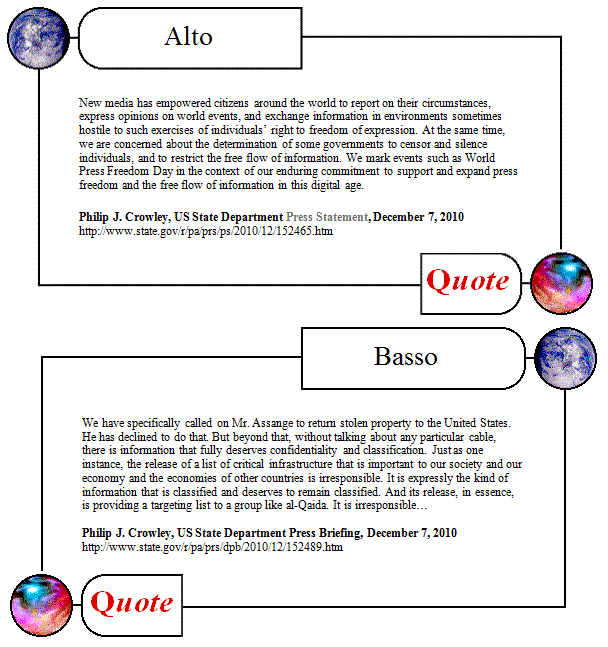
QUOwikileaks

*

I believe there is unresolved irony between these two statements, made on the same day by Philip J Crowley, the US State Department’s Assistant Secretary, Bureau of Public Affairs – but each has its reasons, and there are arguments to be made for both transparency and opacity, diplomacy and publicity, secrets and revelations.

Between them lies the possibility I think of as a virtual music of ideas.

*

Bach published a series of two-part inventions, BWV 772–801, and wrote of them that he intended to offer them as an honest method

by which the amateurs of the keyboard – especially, however, those desirous of learning – are shown a clear way not only (1) to learn to play cleanly in two parts, but also, after further progress, (2) to handle three obligate parts correctly and well; and along with this not only to obtain good inventions (ideas) but to develop the same well; above all, however, to achieve a cantabile style in playing and at the same time acquire a strong foretaste of composition…

Later comes the Art of Fugue.


Switch to our mobile site