zenpundit.com » framing

Archive for the ‘framing’ Category

To what End?

Friday, November 11th, 2011

[ by Charles Cameron — prophecy, millennial date-setting, when prophecy fails, scenario planning, hubris ]

.
when-prophecy-fails-9781578988525.jpg

To what End, prophecy and prediction?

Stephen O’Leary was right in his guess that Harold Camping would “recalculate” if and when (emphasis on the “when”) his May 22 prediction for the end of the world earlier this year failed. Camping did indeed recalculate, and his new prediction, for October 21, similarly passed without trumpets of the sort to be expected. This time, Camping apologized, admitting:

when it comes to trying to recognize the truth of prophecy, we’re finding that it is very very difficult.

He also said, with respect to his own failed prophecies:

God has done to us similarly to what he did to a couple of other great men of faith, one being Abraham…

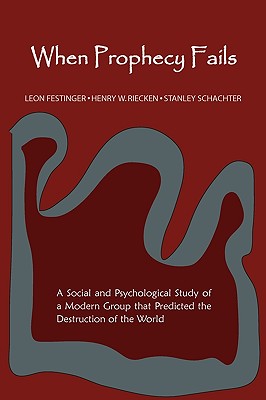
First, the point I want to make. Then, more from Harold Camping, for those who are interested in the great question that’s raised When Prophecy Fails

1.

Here’s what I want to explore. Stephen O’Leary writes:

One thing that apocalyptic predictions throughout history have in common is that, without exception, they have all been proven wrong.

Stephen is an old friend of mine, and the author of the classic work Arguing the Apocalypse: a theory of Millennial Rhetoric (Oxford, 1994), and in the quote above he’s writing on May 19th in the Wall Street Journal’s “Speakeasy” blog.

What Stephen is saying here is something of a commonplace among millennial scholars, and his colleague Richard Landes, with whom he founded the Center for Millennial Studies, also a friend, picks up on it at the very end of his magisterial (I’ve used that term for this book before, and will again) Heaven on Earth: The Varieties of the Millennial Experience (Oxford, 2011), when he writes:

Whereas the rule, “apocalyptic prophecies are always wrong” holds, it does not hold about the future, especially a future in which humankind has the ability to self-destruct or, short of that, inflict cataclysmic damage on itself and the miraculous and crowded planet on which we live.

Religious predictions of the Coming One have (thus far) all failed, in other words, but scenarios of an End based on human behavior in aggregate may yet prove out.

Which then raises another question:

What is the relation of prophecy to scientifically informed prediction? Are religious predictors of apocalypse perhaps intuiting what some scenario planners are also anticipating – and thought to be foolish only because they express it in religious language, their native tongue?

Are they merely noting that Pride comes before (as well, perhaps, as after) a Fall?

2.

For those who may be interested, here’s more from the tail end of Camping’s statement [Family Radio: “Messages from Mr. Camping” 11/8/2011]:

We were ready to say, “Good bye to them. It’s all over. It’s all over. It’s time for the end.”

And now at the last moment, God has come and said, “No, no, it’s not the end. I still have some other plans.”

So what do we do? What do we do? Do we argue with God: “Wait a minute God. You said it so plainly. We were so convinced. There were so many proofs of the Bible, that it cannot have been that we were incorrect — maybe in a tiny detail here or there, but no God, we’re sure that it had to happen.”

But it didn’t happen. And we know that God brought it right to the very edge, right to the very day and past the day that the, there should have been judgment seen all over the world.

So, the first question I have to ask all of us — I have to ask myself this very, very carefully — Are we ready see that we did not understand God’s plan altogether? Are we ready to stand back and wait and do some more studying and recognize that maybe God is not finished with bringing salvation to the world.

As a matter of fact, we know that only about a third of the world had ever heard of the Bible before five months ago. Now by God’s mercy through the actions of Family Radio, as stupid as some may think they may have been, as incorrect as some may think they may have been, yet they all fit into a part of a plan where now the whole world has heard about the Bible. They’ve heard about the God of the Bible. God now is ready for the next action based on that kind of information, what will that be?

And that is where we have to start our thinking. We have to begin to think it out, “How does all of that impact our future teaching of the Bible?” And so, in our next study, we’re going to begin to examine that. Thank you very much.

3.

And so the wheel turns, the road goes ever on.

Does it?
Idle thoughts: on wars, justice and banking

Sunday, September 18th, 2011

[ by Charles Cameron — reality, appearance and virtuality ]

.

quo-functions.gif

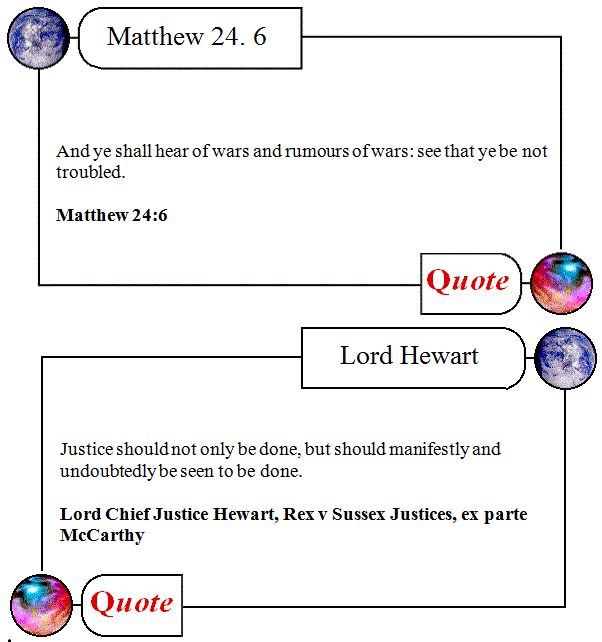
These two phrases, wars and rumors of wars and done and seen to be done have apparently been rattling around in my head for long enough that they finally dodged all the other stuff about Mahdis and Glass Bead Games and met.

Okay, I’d already thought of the first one in terms of “Cameron’s Function”:

f(x) = x + rumors of x           (i)

because it seemed to “apply” to other things than war — the instance that gave me that insight was the run-up to the Year 2000, during which it became abundantly clear that rumors of bank runs were precisely what bank runs themselves were about — which in turn became my classic instance of the need for mapping that “crossed over” between the subjective and objective realms — or morale and materiel, as I called them in a recent post.

And so here comes “Cameron’s Function #2”:

f(x) = x + seen to be x         (ii)

What I’m wondering now is whether the two of them are essentially the same “function” — any thoughts? They’re twins — but are they identical?

Syed Saleem Shahzad: AQ, Khorasan and the Mahdi

Thursday, September 15th, 2011

[ by Charles Cameron — Mahdism and Khorasan, strategic implications re Afghanistan, Pakistan, India and the West ]

.

kunar.jpg

photo:  http://www.syedsaleemshahzad.com

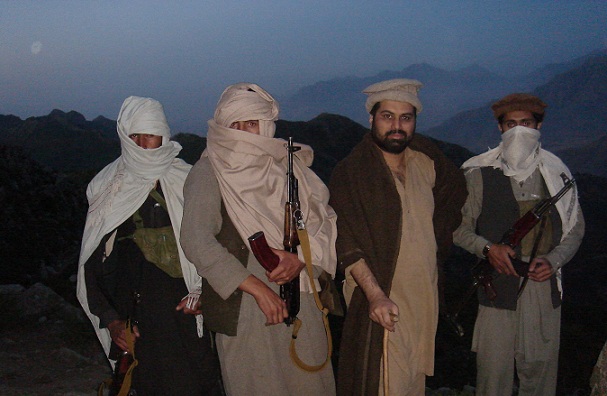
Syed Saleem Shahzad, the recently murdered Pakistani reporter (above) profiled by Dexter Filkins in The New Yorker a couple of days ago, recently published a book with Pluto Press titled Inside Al-Qaeda and the Taliban: Beyond bin Laden and 9/11.

Reading the New Yorker piece, I was struck by the explicitly Mahdist tenor of the book’s final paragraph, which Filkins quoted, and a quick glance at pages available on the Amazon site makes it clear that Shazad’s sense of AQ strategy (a) is strongly eschatological, (b) includes India in its scope, and (c) leads from greater Khorasan to Jerusalem.

Since I’ve been harping on (a) and (c) for some while now, and (b) “fits” well enough with a few other loose ends, analytically speaking, I’ll be very interested to read (and hopefully review) the whole thing. For now, I’d just like to draw your attention to the opening and closing paragraphs of the book…

Shahzad begins his Prologue (p. xiii) with these words :

The 9/11 attacks in 2001 aimed to provoke a war in South Asia. The 26/11 Mumbai assaults in 2008 warned that Al-Qaeda was expanding its war to the east, from Central Asian republics to India and Bangladesh, and that many more such actions would follow. In the ideological perspective of Al-Qaeda, this was to be a preparation for the “End of Time” battles which were referred to by the Prophet Muhammad (in what is now known as the Hadith). These pointed to parts of modern-day Iran, Afghanistan, Pakistan, and Central Asia as ancient Khurasan. Khurasan was to be the first battleground for the End of Time battles, before a decisive confrontation against the West, with the last battle being fought in the Middle East for the liberation of Palestine and all occupied Muslim lands.

In the meantime, Al-Qaeda aimed to trap the world’s most powerful states in the impossible terrain of Afghanistan. The aim was to lead them to exhaust their energies there, before the expansion of the theater of war against the West from Central Asia to Bangladesh…

His book closes (pp. 225-26) with these words:

However, the saga of Al-Qaeda’s One Thousand and One Nights tales continues with new strategies and new characters. For Al-Qaeda these are just measures to keep the West running from pillar to post until it exhausts itself and Al-Qaeda can announce victory in Afghanistan. Al-Qaeda next aims to occupy the promised land of ancient Khurasan, with its boundaries stretching all the way from Central Asia to Khyber Paktoonkhwa throiugh Afghanistan, and then expand the theater of war to India.

The promised messiah, the Mahdi, will then rise in the Middle East and Al Qaeda will mobilize its forces from Ancient Khurasan for the liberation of Palestine, where a final victory will guarantee the revival of a Global Muslim Caliphate.

Shahzad was not always the most reliable of reporters by all accounts – but certainly one of the most intrepid, and one with unparalleled contacts among the major players. The fact that he pitches his book along so clear a Mahdist through-line should give us all pause.

The imagery of religion and war

Friday, September 9th, 2011

[ by Charles Cameron — graphical analysis, selling bibles to teenage boys, tge Mass in time of war ]

.

Following on from my post on the work of Al Farrow, and leading towards a series of posts on ritual and ceremonial, I’d like to show you two very different images at the overlap of war and religion.

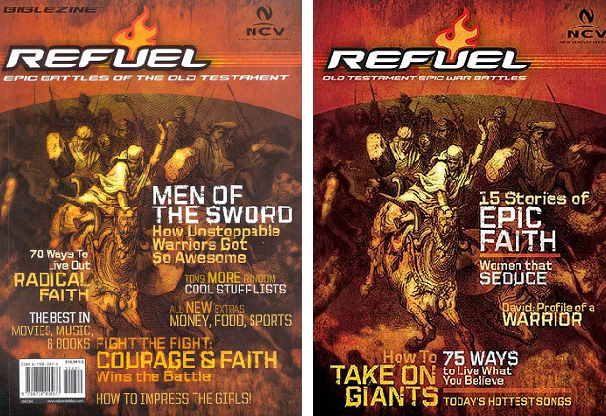
The first shows two different covers of the books of Joshua, Judges, Ruth, I & II Samuel, I & II Kings, Ezra and Nehemiah, as featured in a “biblezine” edition of the New Century Version of the Bible pitched at teenage testosterone.

double.png

Each of will have our own sense of whether that’s fun, stupid,  Biblical, unBiblical, enticing, disgusting or simply uninteresting — but whatever your aesthetic and/or belief-based response, there’s a powerful lesson there in the choice of subtitles:

how unstoppable warriors got so awesome…
courage and faith wins the battle…
how to impress the girls!
how to take on giants!
women that seduce…
tons more random cool stuff lists…

I’m not a fan of this kind of thing myself, but I picked up a copy when I saw one at the thrift the other day — the one with Men of the Sword on the cover — and as someone who has done a fair amount of copy-editing in my day, was surprised to see “courage and faith wins the battle” (sic) had slipped past the editorial eyes at Nelson Books

The New Testament in the same series is a bit better — the cover still features “dynamic stories of daring men” –but the, ahem, romantic element has been toned down a bit, with the catch phrase “class act: how to attract godly girls” replacing the Old Testament’s “how to impress the girls”.

* * *

Okay, I’m not as young as I once was, and maybe I’ve been mean enough at the expense of these people who want to market the Bible as though it was an invitation to warfare washed down with sex.

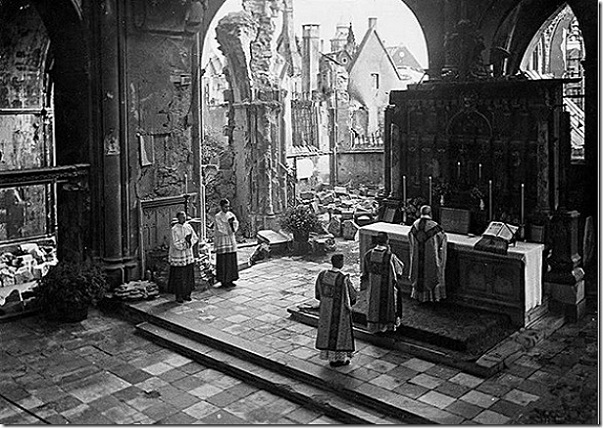
The other image I found recently comes a great deal closer to my own taste, and will serve as an excellent introduction to the idea of religious ceremonial as an oasis of peace in time of war:

missa_thumb3.jpg

Again, I suppose there may be some who will find the idea of religious ritual boring and irrelevant rather than beautiful — but it is its capacity to move us at a deep level — even (and perhaps particularly) when high tides of  circumstance and emotion are breaking over us — that I wish to focus on and, to the extent that it is possible, explore and explain in  some upcoming posts.

In my view, it was this kind of beauty, verging on the austere and the timeless, rather than the snazzy and faddish “impress the girls — draw in the kids” kind, that Pope Benedict XVI had in mind when he said:

Like the rest of Christian Revelation, the liturgy is inherently linked to beauty: it is veritatis splendor. The liturgy is a radiant expression of the paschal mystery, in which Christ draws us to himself and calls us to communion. As Saint Bonaventure would say, in Jesus we contemplate beauty and splendor at their source.

* * *

I am not a Catholic, though my sympathies run in that direction, and my examples of ceremonial will not be drawn only from Catholic or Christian sources — part of what i want to explore is the universal quality of ritual as a powerful source of motivation and inspiration, while another aspect has to do with the interweaving of military, religious and state symbols, but the point I would most like to make in each case is the profound impact that such symbols and rituals can have on the receptive heart.

I hope to touch on a wide range of ritual expressions, from the Requiem for a departed princely Habsburg to the Lakota sweat lodge, and from to the fire-walking ceremonial of the Mt Takei monks of Japan to the Spanish bull-fight, with a close look at the ritual surrounding coronation in my own British tradition.

For those who would like to peer deeper into these matters, I would suggest these four books:

Victor Turner, The Ritual Process
Geoffrey Wainwright, Eucharist and Eschatology
William Cavanaugh, Torture and Eucharist
Josepha Zulaika, Basque Violence: Metaphor and sacrament

The first explains “how ritual works” from an anthropological point of view, the second deals with the purposeful interweaving, accomplished within ritual, of time with the timeless, the third with the way in which sacramental transcendence is the very antithesis of torture, and the fourth with the impact of a sacramental sensibility within terrorism.

Each one is a masterpiece of intelligence and profound feeling.

Formats for civil online debate II — inspired by Hesse’s Bead Game

Tuesday, August 16th, 2011

[ by Charles Cameron — hypertext, rhetoric, glass bead games, civility ]

.

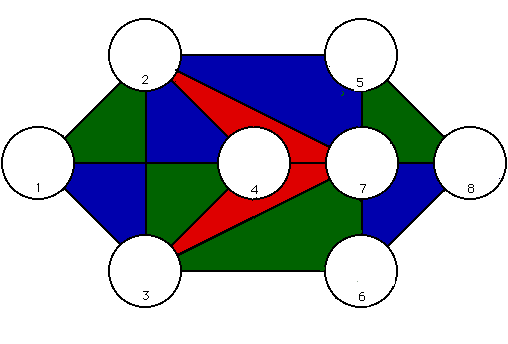
My second attempt at a format for online debate is, as I said, a variant on the “Dart Board” sometimes used for playing my HipBone Games (see, for instance, my solo game War is Sexy, says Dawn).

*

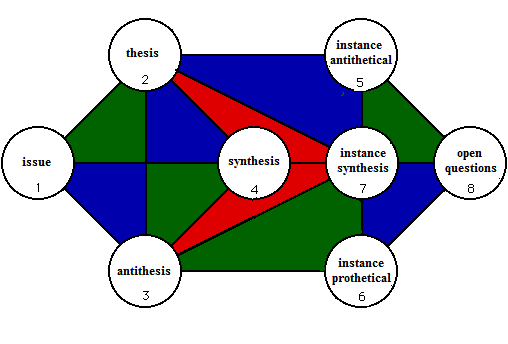
The idea here would be to format a blog post and series of 7 comments by a Querent (the one with the Question) who may also be the Umpire — both roles would be issue-neutral — a Proponent who would propose and support a thesis, and an Antagonist who would oppose it.And I should add, right at the outset, that this is a formal process for the named participants — as a white tie debate at the Oxford Union is a formal process — no matter how raucus the kibitzers may get, and accordingly requires a day or two between moves to allow for consideration, research and preparation.
dartbdwhitedebatesetup.png

The Querent makes the first move in the first position on the board, giving it short move title (short enough to be typed on the board graphic in the space currently occupied by the word “issue‘) and a paragraph or so of move content setting forth concisely the issue to be discussed — ideally via an issue neutral anecdote or quote. After each move, the Querent (or a graphically inclined observer) would ideally update and post the game board after inserting the relevant move title.

[ Those who are not among the named participants may of course kibitz at any time… ]

The Proponent next carefully chooses a pithy quote or anecdote, gives it a move title (as above), and posts the move title, the chosen move content (the anecdote or quote selected), the link claimed (setting forth concisely the nature of his or her argument as it relates to the move content of the Querent‘s issue), and if she or he so chooses, a comment (the comments in a HipBone Game are intended for meta-conversations among the various players).

The Antagonist then similarly chooses an anecdote or quote, and posts move title, move content, links claimed — in this case, showing the links with both the issue as stated at position 1 in the Querent’s move, and the thesis as stated in position 2 in the Proponent’s move — and a comment if so desired.

Okay, that’s thesis and antithesis, the Umpire then posts a move title, some move content and links claimed to all three positions in play, with a comment if so desired, in the fourth position (labeled synthesis).

The rule is that whenever playing in a position which links via a board line to one or more previous moves, the links claimed must include explanations of how the move relates to those previous moves.

The Antagonist plays next in position 5 — playing move title, move content, links claimed, comment — providing an instance with which to dispute the thesis, and linking as per the rule just stated to the thesis proposed at position 2 — only!

Since position 5 is only connected to position 2 of those positions in play, no other links should be claimed.

Similarly, the protagonist then plays in position 6, a move which I’ve called the “prothetical” instance without a clue as to whether prothetical is a real word — tho’ I like it — linking only to the antithesis in position 2, which it seeks to refute.

Move 7 is by far the trickiest of the game, and is made by the Umpire, who now has to provide move content that synthesizes the game thus far, explaining links claimed to positions 2, 3, 4, 5 and 6 (ie to the original thesis, antithesis and synthesis, but moving the synthesis to encompass also the two instances)…

But the Umpire can take consolation in the fact that in the final move 8, the Querent gets to raise afresh those questions which remain — now that both sides have had their say, and the Umpire has attempted reconcile them.

*

Three quotes, the first one on debate:

Harmony among conflicting viewpoints, not the victory of one of them, should be the ultimate goal…

— from Bizell & Herzberg, The Rhetorical Tradition, as quoted here

The second moving from debate to dialog:

One way of helping to free these serious blocks in communication would be to carry out discussions in a spirit of free dialogue. Key features of such a dialogue is for each person to be able to hold several points of view, in a sort of active suspension, while treating the ideas of others with something of the care and attention that are given to his or her own. Each participant is not called on to accept or reject particular points of view; rather he or she should attempt to come to understanding of what they mean.

David Bohm, Science Order and Creativity, p 86

And the third, from Buddhist Madhyamika philosophy, moving into the contemplative realm where all answers are seen as the stepping off points for open questions:

I wanted to use one word in Tibetan that I’ve found very useful for myself… and this is the word zöpa.. this translates usually as patience or endurance or tolerance, but there’s this very subtle translation of zöpa, which is the ability to tolerate emptiness basically, which is another ways of saying the ability to tolerate that things don’t exist in one way, that things are so full and infinite and leave you so speechless, and so undefinably grand – and these are just descriptive words, but you have to use some words to communicate, I guess — the ability bear that, that fullness, like we’ve been talking about, not turning away, not turning away.

Elizabeth Mattis-Namgyel, in (if I recall) a Shambhala-sponsored retreat video

*

A blank Dart board, downloadable for your convenience:

dartbdwhitedebateblank.png


Switch to our mobile site