zenpundit.com » wwii

Archive for the ‘wwii’ Category

The End

Tuesday, January 24th, 2012

The End by Ian Kershaw

I have a deadline to meet this week for a publisher, so my posts are going to be short and to the point.

Just received the above title as a gift from my father-in-law. Having read Kershaw’s 2 volume bio of Hitler, as a historian, he merits the accolade “critically acclaimed” and is one of number that I direct students to read who express an interest in WWII or the history of the Third Reich. Here Kershaw explores the Nazi Gotterdammerung of 1944-45; a worthwhile lesson for those who hold supreme confidence in the ultimate rationality of states in existential matters of war and peace.

That Hitler had been unfathomable to the blinkered and idealistic Neville  Chamberlain seems all too comprehensible, but that the Fuhrer also took in the wily, Georgian monster who ruled of the USSR is less so – until you grasp Hitler’s obsession with triumph or death.  In matters of war the difference between the 20th century’s greatest dictators was that Josef Stalin miscalculated on small stakes while Adolf Hitler gambled for the pot.

Recklessly.

Wylie’s Military Strategy

Saturday, July 23rd, 2011

 by J. Scott Shipman

Wylie

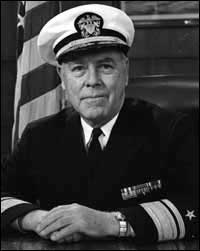
Military Strategy, by Rear Admiral J.C. Wylie, Jr., USN (1911-1993)

This is a very brief review and recommendation for a book that I discovered recently. Admiral Wylie’s short Military Strategy (about 85 pages in the original edition) was published in 1967, but written in the mid-fifties while Wylie was “at sea in a single-screw low-speed amphibious cargo ship.” He remarked these ships were “not demanding  of a captain’s attention as is, for instance, a destroyer.”My copy was published in 1989 by the  Naval Institute Press  as part of their Classics of Seapower series and has an excellent preface by John B. Hattendorf that will give those unfamiliar with Wylie’s life experience a good foundation. This copy also has a postscript written by Wylie “twenty years later” and three related essays published previously in Proceedings magazine.

Given Military Strategy’s brevity, I’ll resist the urge to provide long quotes. Wylie and an associate’s search for articulating the relevance of the navy in the never-ending budget battles brought them in contact with the famed mathematician John von Neumann of Princeton. Wylie used a paraphrase of von Neumann as a starting point: “With respect to strategy as a subject of study, its intellectual framework is not clearly outlined, and its vocabulary is almost nonexistent. These two primary tasks are badly in need of doing…” He sets out to do just that and does a nice job.

Wylie defines strategy as: “A plan of action designed in order to achieve some end; a purpose together with a system of measures for its accomplishment.” He discusses the military mind and strategy, and how often the military focuses on principles to the exclusion of real strategy. Wylie outlines methods of studying strategy that are simple and well thought-out. Wylie makes a compelling case for a general theory of strategy. He says: “A theory is simply an idea designed to account for actuality or to account for what the theorist thinks will come to pass in actuality. It is orderly rationalization of real or presumed patterns of events.” Further, he continually stresses the importance of assumptions being based in reality, and not wishful thinking or the last war/battle.

His chapter on existing theories is worth the price of the book. He provides a type of Cliff’s Notes overview of the four theories he sees as core: the maritime, the air, the continental, and the Maoist. Of the last, he masterfully lifted sections from Mao’s On Guerilla Warfare, Che Guevera on Guerilla Warfare, and Vo Ngugen Giap’s People’s War People’s Army. He observed of the later, “these books are not only theory, the portray a hard reality of contemporary warfare.” To our people in uniform, in particular, unfamiliar with these books, Wylie provides an accessible and informative introduction to the type of war being waged by Islamic jihadists and how they attempt shape the battle field.

He develops a brilliant point that destruction doesn’t necessarily translate into control, and that often destruction is driven more by emotion than strategy.

Wylie goes on to provide a general theory of strategy that, using his words, has “substance and validity, and practicality.” As Seydlitz89 said in a recent comment thread here: “Wylie is amazing.  So many ideas in such a small book!  He misread Clausewitz and overrated Liddell Hart – which are probably connected, but overall?  He comes up with some very basic ideas about strategic theory which are ever sooooo useful.  I’ve re-read his small book several times and always come up with something that either I’d forgotten or that I had missed earlier.  Wylie’s basic approach to theory is as a practitioner, not as an academic, much like Clausewitz before him.”

Indeed, Wylie provides a nice scaffold for any type of strategy, military or business. For me his approach was refreshing in a genre where, more often than not, dogma and ego walk hand-in-hand.  Time and again, he offers that his ideas may be wrong and encourages readers to think and wrestle with the concepts provided. Wylie writes in his postscript: “As far as I know, no one as ever paid attention to it [the book]. I don’t know whether this is because it is so clear and obviously valid that no one needs to, or because it is of no use at all. I suspect it could be the latter, but I really do not know.”

This little book comes with my highest recommendation. If you’re in uniform and just getting started with strategic concepts/thinking, this is an excellent place to start.

Interesting referenced titles:

Military Concepts and Philosophy, Henry E. Eccles 

The Military Intellectuals in Britain, 1918-1939, Robin Higham 

An Introduction to Strategy, General Andre Beaufre 

Theory of Games and Economic Behavior, John von Neumann 

Strategy in Poker, Business and War, John McDonald 

All van Creveld, All the Time

Tuesday, June 28th, 2011

Darth Creveld explains the strategic dark side to SWJ

Michael Few pinged me regarding an interview Martin van Creveld gave to SWJ with the always interesting interlocuter, Octavian Manea:

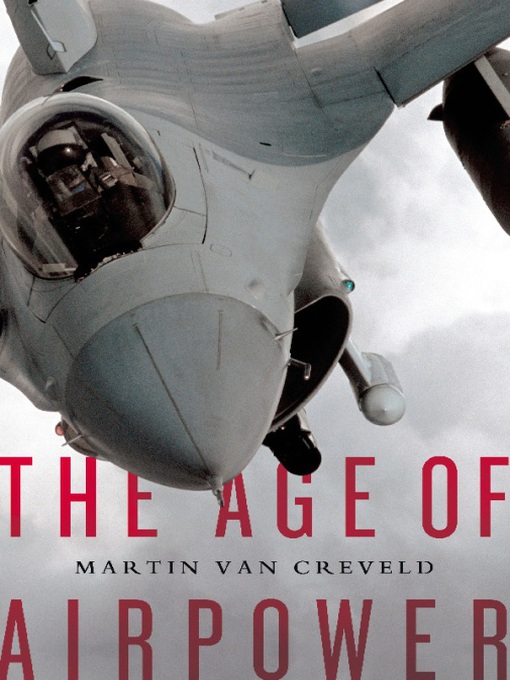
The Age of Airpower

Q: It is stated that Operations Rolling Thunder in Vietnam was the wrong way of using airpower in order to break the will of an opponent. Why? And which is the right way?

MvC: As Jesus once said, by their fruit will thou know them. Given the vast cost of Rolling Thunder, and the meager results it yielded, there can be no question that it was a foolish waste of resources. It was only made possible by the fact that it was carried out by the richest nation in history at the very peak of its economic power and psychological hubris.

The real question is, had the “gradual approach” been replaced by a short, sharp, all-out attack, would it have worked any better? To my mind the answer is almost certainly negative. Look at “Shock and Awe” as carried out both in Afghanistan and in Iraq. Both of these offensives employed weapons infinitely more sophisticated, and in many ways much more powerful, than the ones the Americans used in Vietnam almost forty years earlier (though some aircraft, notably the venerable B-52s, may well have taken part in both campaigns). Both depended their success, if indeed one can talk of success, on the presence of troops of the ground. Vietnam, though, was primarily a guerrilla war. Expanding ground operations into North Vietnam, as some in Washington DC demanded, would merely have made things even more difficult for the Americans.

Postscript: 

Adam has his take on the Infinity article.

Mini-Reviews: Liddell-Hart and Keeley

Saturday, June 25th, 2011


The German Generals Talk by BH Liddell-Hart

War Before Civilization by Lawrence Keeley

The German Generals Talk

A must-read book for those interested in strategy, the history of the Third Reich or the military history of WWII. That said, The German Generals Talk as a text must be treated very cautiously due to the author’s lack of objectivity, the disadvantage of his interview subjects at the time of their captivity and Liddell-Hart’s well documented efforts to use his interview subjects for self-promotional purposes.  Nevertheless, the commentaries by major Wehrmacht generals and field marshals, especially Gerd von Rundstedt, Wilhelm Ritter von Thoma, Hasso von Maneuffel, Günther Blumentritt and Heinz Guderian, are informative and at times, provocative. Liddell-Hart’s critiques of German military campaigns are often insightful, usually colorful, frequently sycophantic, but usually to the point – though they often used as a foil for advancing Liddell-Hart’s strategic ideas.

War Before Civilization

Two of the smarter, myth-debunking books I have read in the past year or so have been older, still in print, works by academic archaeologists. Much like Joseph Tainter’s The Collapse of Complex Societies, Lawrence Keeley overturns dogmatic archetypes about “primitive” warfare in prehistoric and pre-contact societies held by social scientists and military historians in War Before Civilization. Not only was prehistoric warfare more violent, more “total” and less restrained than modern warfare but Keeley argues that primitive “warriors” tended to best disciplined “soldiers” in wars when all other things were equal, except when the “soldiers” enlisted their own savage proxies (or adopted morally unconstrained  primitive tactics). It was a sliding scale; the barbaric Vikings terrorized “civilized” European and English men-at-arms, but were in turn themselves routed and expelled by the more savage Native Americans and Inuit warriors of North America.

More Books!

Friday, November 26th, 2010

Just picked up a few new reads…..


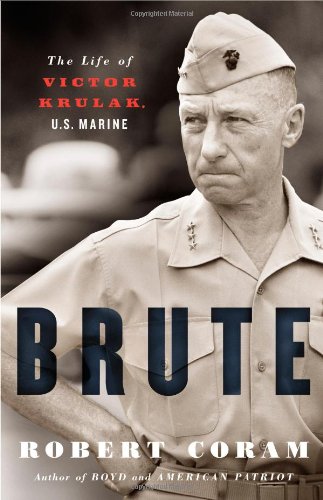
Brute: The Life of Victor Krulak, U.S. Marine by Robert Coram

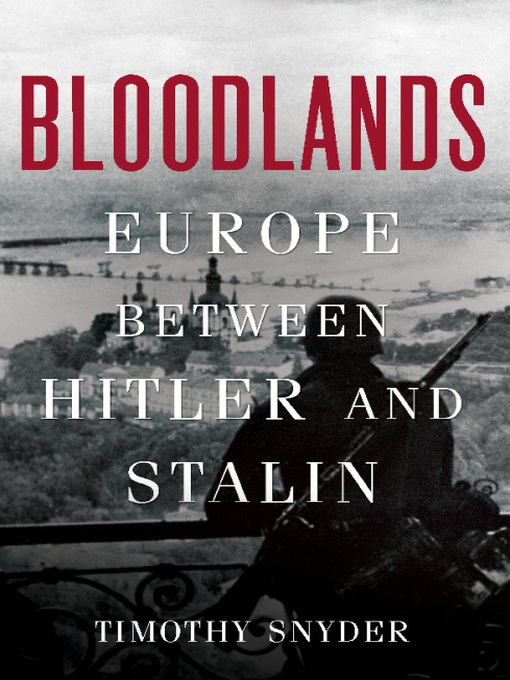
Bloodlands: Europe Between Hitler and Stalin by Timothy Snyder

Robert Coram, whom I had the pleasure of meeting at Boyd ’07, has a new biography of the legendary military visionary and Marine Lt. General Victor “Brute” Krulak, reviewed here by Max Boot and here by Tony Perry (Hat tip to Dr. Chet Richards). Having thumbed a few pages, Krulak appears a complicated man – gifted, dauntless and extremely driven but also possessed of a mean streak, edging at times toward petty cruelty.

Bloodlands I intend to read in a “Hitler-Stalin/Nazi-Soviet Comparison” series along with Richard Overy’s The Dictators: Hitler’s Germany, Stalin’s Russia, Robert Gellately’s Lenin, Stalin, and Hitler: The Age of Social Catastrophe , Richard J. Evans’ The Third Reich at War and Alan Bullock’s classic dual biography Hitler and Stalin: Parallel Lives.  I’d also recommend, for those with the stomach for historiographic commentary, Robert Conquest’s Reflections on a Ravaged Century and John Lukac’s The Hitler of History

CURRENTLY READING:

Human Face of War by Jim Storr

After reading approxmately a third of The Human Face of War by  Dr. Jim Storr, a retired Lt. Colonel, King’s Regiment and an instructor at the UK Defence Academy, I will say that if you are going to read only one book on modern military thought this year, it should be The Human Face of War. It’s that good.

Aside from a reflexive hostility toward John Boyd’s OODA Loop ( though not, strangely enough, toward the substantive epistemology advocated by Boyd that the diagram represented), Storr’s tome is an epistle of intellectual clarity on military theory that deserves to be widely read.

ADDENDUM:

NDU Press recommends, and I concur, this review of The Human Face of War by Col. Colonel Clinton J. Ancker III. Ancker, like Storr, is an expert on military doctrine, so it is a well-informed review by a professional peer.


Switch to our mobile site