Archive for the ‘swj blog’ Category

Debating the Mexican Cartel Wars at SWJ Blog
Monday, February 14th, 2011
Only Some Dare Call it “Insurgency”
A “must read” article by Dr. Robert J. Bunker at SWJ Blog:
The Mexican Cartel Debate: As Viewed Through Five Divergent Fields of Security Studies
….What is clear is that complex post-modern threats-such as those posed by the Mexican cartels and, for that matter, Al Qaeda and its affiliate network- do not fit into neat categories and well-defined security fields. What is needed is for
a U.S. governmental „honest broker? or supra-security organization to come into the Mexican cartel debate and leverage the five fields of security studies highlighted in this essay into a broader networked effort. This effort must further be tied into issues pertaining to the trans-operational environments involving U.S. engagement with Mexican cartels and their affiliates. We can no longer afford the luxury of watching numerous fields of study and security response organizations-each with their own form of „extreme specialization?- independently going about their activities in a totally uncoordinated manner. Instead, attention should be directed at creating a hemispheric strategy for the Americas, possibly even global in scale, to directly challenge the rise of the Mexican cartels and their mercenary and gang affiliates along the entire threat continuum highlighted in this essay.
That the narco-cartels originally had illicit economic motivations and lack Maoist ambitions is apparently a very large obstacle for some orthodox counterinsurgency experts to wrap their heads around – despite the fact that if a group with a political identity were beheading rivals, assassinating police chiefs, kidnapping mayors, using propaganda of word and deed, setting off car bombs and fighting the Army, they’d call it “insurgency”.
While the USG is not supposed to call the narco-cartel war an “insurgency“, we appear to be starting to treat it as one.
Thanks Dave!
Thursday, February 10th, 2011SWJ Blog has linked to Is COIN Dead. A discussion has ensued there and at SWC.
Is COIN Dead?
Thursday, February 10th, 2011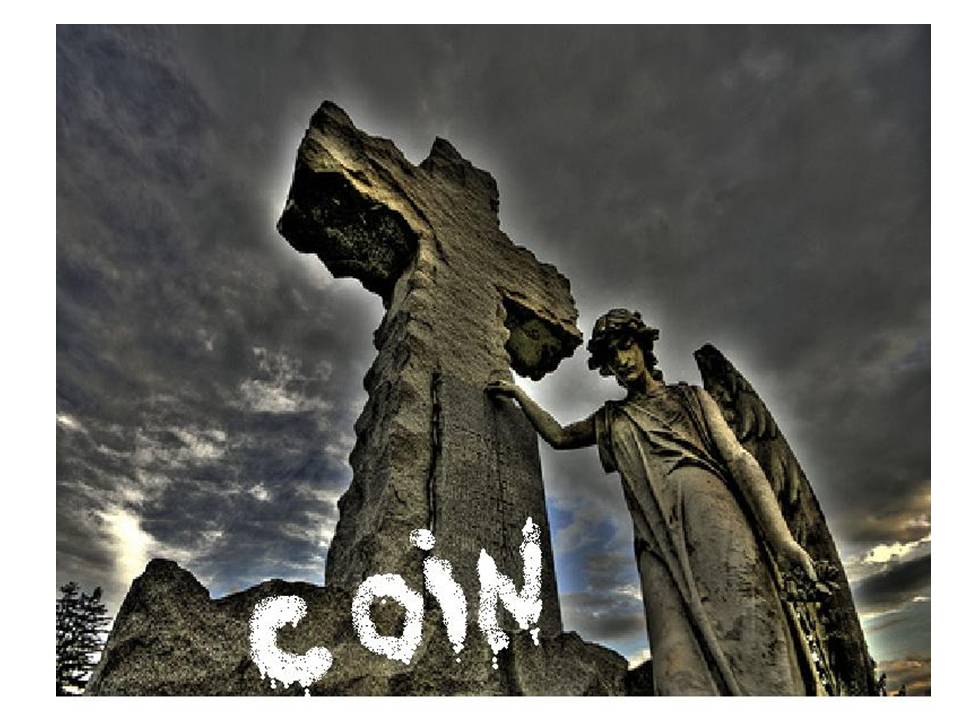
By that, I mean contemporary, mid-2000’s “pop-centric” COIN theory as expressed in FM 3-24 – is it de facto dead as USG policy or is COIN theory formally evolved to officially embrace strong elements of CT, targeted assassinations, FID, “open-source counterinsurgency” and even bare-knuckled conventional warfare tactics?
Mind you, I have nothing against pragmatic flexibility and think that, for example, moves to arm more Afghan villagers for self-defense are realistic efforts to deal with the Taliban insurgency, and I prefer USG officials speaking frankly about military conditions as they actually exist. Doctrinal concepts should not be used to create a “paint-by-numbers” military strategy – it is a starting point that should be expected to evolve to fit conditions.
But having evolved operations and policy as far as the USG military and USG national security agencies have, with the current draconian budgetary restraints looming – are we still “doing COIN”? Or is it dead?
Thoughts?
Interviews at SWJ Blog
Wednesday, December 15th, 2010I very much like the turn toward the publication of short interviews with experts occurring of late at SWJ BLog, for example the COIN series by FP’s Octavian Manea. To toot my own horn for a moment, I did an early one for SWJ when I interviewed Tom Barnett.
There are two new ones up right now that I recommend:
Octavian Manea – Thinking Critically about COIN and Creatively about Strategy and War An Interview with Colonel Gian Gentile
Q: To what extent should Algeria be a warning for present?
A: The warning it should provide is that you should never think that improved tactics, whether it is a conventional or a counterinsurgency war, can rescue a failed strategy or policy. Sun Tzu offers one of the most profound statements on the relationship between tactics and strategy: Strategy without tactics is the slow road to victory, but tactics without strategy is the noise before defeat. Another historical example comes to mind. The German army up to a certain point in WWII was arguably one of the finest tactically fighting armies in history. But it lost. The warning is to be careful how much faith you place in the idea that better tactics can save a failed strategy or policy (or in the case of the Vietnam War – better tactics rescuing a war that was unwinnable in the first place)
Mike Few –A Conversation with Dr. Douglas Porch Relooking French Encounters in Irregular Warfare in the 19th Century
A: Alas, Arquilla’s representation of these incidents as primitive versions of modern concepts are a stretch, when not total misrepresentations. At worst, his examples are lifted from context, include material factual inaccuracies, and misconstrue reasons for French “success.” (The “successes” themselves are debatable.) Finally, Arquilla perpetuates the fundamental COINdanista heresies that tactics can rescue flawed policy and defective strategy, while “modernizing” Western occupations will be perceived as “liberation” by indigenous societies. I will take each of Arquilla’s examples in turn to explain their context, in the process illustrating why an incomplete history can lead to misleading results.
Under Suchet, Aragon did in fact enjoy the reputation as the most pacified Spanish province in Spain. But Suchet’s achievement was temporary, contingent and a “success” only when contrasted with the overall catastrophic outcome of Napoleon’s Spanish project. Aragon and the sliver of bordering Catalonia over which Suchet had charge only shines in context: The French totally lost the narrative in Spain. Napoleon’s deposition and imprisonment of the Bourbon Ferdinand VII — whom he replaced with his brother Joseph Bonaparte in 1808 — established a government regarded as illegitimate, not only in Spain, but in Europe and Latin America as well. The obligation imposed by the Napoleon that the Spaniards pay the costs of occupation meant high taxes and requisitions of Church lands. “Modern” French secular ideas taken from the French Revolution were an affront to the values of conservative Spaniards, who were horrified that Napoleon had imprisoned two Popes and annexed the Papal States to the Roman Republic. The fact that Napoleon was unable to vanquish Great Britain, and the presence
Kudos to Bill and Dave! Keep’em coming!


