zenpundit.com » war

Archive for the ‘war’ Category

Congratulations….

Wednesday, January 26th, 2011
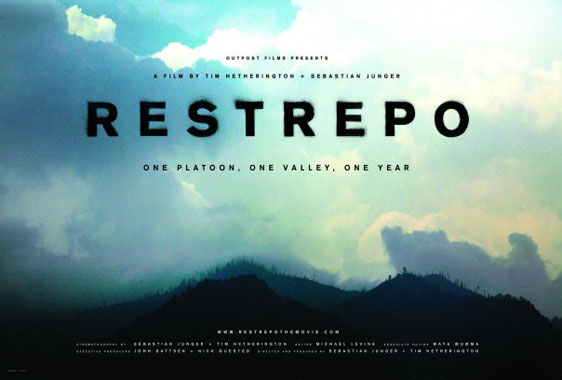
To the men of Battle Company, Sebastian Junger and Tim Hetherington for RESTREPO receiviong a nomination for an Academy Award for Best Documentary.

From blogfriend HistoryGuy99:

Restrepo Earns a Well Deserved Nomination

The filimakers, Sebastian Junger and Tim Hetherington spent 15 months off and on with the soldiers capturing the essence of men under fire and how they reacted to the mundane and the profane. During the filming, an action took place that saw the Medal of Honor won by Sgt Sal Giunta the only live soldier since the Vietnam War to receive the award.No mention of this fine film would be complete without mention of a new blog friend who besides being an Army surgeons wife, writer, and blogger, was the film’s promoter who was instrumental in getting it shown across the country. Kanani Fong deserves praise for her time and devotion to supporting the troops as well as organizing efforts to assist returning veterans and the families of those deployed. This morning after the nomination Kanai posted this about the film.

Making the film was the hard part. Promoting it was easy (at least for me). Because for those of us with loved ones in the war, Restrepo was always personal. I mean, for me… my husband was the surgeon in Asadabad. The Korengal was a hop, step and a jump away.

In the long, dusty corridors of war with its stale smell of punditry, assumptions, and stereotypes along came this film. It helped us put our thoughts about war into some kind of order. Finally, we saw where our loved ones where, it added texture to what we already knew. I was the smallest cog in the PR machine, which if you must know –wasn’t that big. Think of it as a small, efficient machine, with all the parts working to bring this film into the bosom of the American public.

It is well worth a few minutes to visit and read Kanani’s whole post and the heart felt thank you from the filmmakers.

“We heard the news this morning about the Academy Award nominations – and wanted to thank you all for your support for Restrepo. While the nomination is a recognition of the movie, we hope it’s a fitting tribute to those who have fought and died in places like Afghanistan and Iraq. We made this movie because we wanted to bring the war into people’s living rooms back home. We hope the nomination will continue to promote an open and constructive dialogue about the war. Thanks again for all your continued support in making the movie a success.

-Tim and Sebastian

I think of Cordoba

Friday, January 21st, 2011

[ by Charles Cameron ]

1.

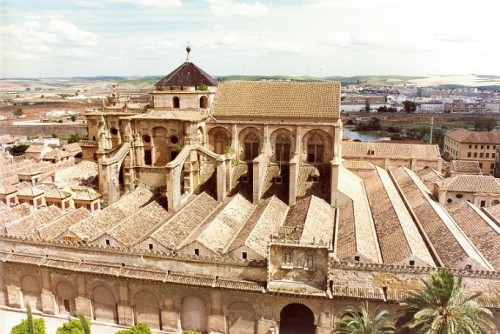
I think of how the Mezquita, once a mosque, must have looked when its whole floor was a single, arched space of prayer:

before Moorish Cordoba was conquered, and the conquerors built a cathedral in the very heart of the place:

like the petals of a flower opening inside the sepals, or a cancer sprouting within the body – for so much depends on your understanding of prayer.

2.

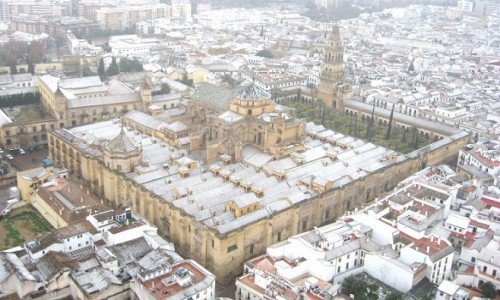
And I think how lovely it still looks, cathedral nestled within mosque under the snow, to this photographer’s eye:

3.

And I think of Seymour Hersh, who has drawn flak for comments in a recent speech about the Bush war in Iraq, and Obama’s continuation of Bush policies – and here’s the part that caught my eye:

“In the Cheney shop, the attitude was, ‘What’s this? What are they all worried about, the politicians and the press, they’re all worried about some looting? … Don’t they get it? We’re gonna change mosques into cathedrals. And when we get all the oil, nobody’s gonna give a damn.'”

“That’s the attitude,” he continued. “We’re gonna change mosques into cathedrals. That’s an attitude that pervades, I’m here to say, a large percentage of the Joint Special Operations Command.”

And I think then of the great cathedral of Hagia Sophia in Constantinople, that was conquered and became a mosque:

and is now a museum. So these things go, in times of war.

4.

As for the Mezquita, its history is more complex than I have suggested: it was first a pagan temple, then a Christian church, then shared between Muslims and Christians, then made into a mosque, then a church again – and the cathedral as we see it today was built during the Renaissance…

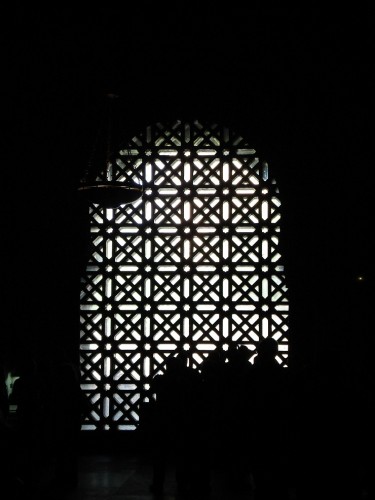
And I think at last how much depends on lofty spaces, and on silence, and on prayer:

Narcos Over the Border

Friday, January 21st, 2011

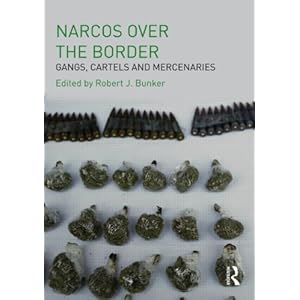
Narcos Over the Border: Gangs, Cartels and Mercenaries by Dr. Robert J. Bunker (Ed.)

Just received a review copy courtesy of Dr. Bunker and James Driscoll of Taylor & Francis – could not have arrived at a better time given several research projects in which I am engaged.

The 237 page, heavily footnoted, book is organized into three sections: Organization and Technology Use by the narcos networks, Silver or Lead on their carrot and stick infiltration/intimidation of civil society and the state apparatus, and Response Strategies for the opponents of the cartels. Bunker’s co-authors Matt Begert, Pamela Bunker, Lisa Campbell, Paul Kan, Alberto Melis, Luz Nagle, John Sullivan, Graham Turbiville, Jr., Phil Wiliams and Sarah Womer bring an array of critical perspectives to the table from academia, law enforcement, intelligence, defense and security fields as researchers and practitioners.

Looks good – will get a full review here at a later date, but a work that will definitely of interest to those readers focusing on national security, COIN, 4GW, irregular or Hybrid war, terrorism, transnational organized crime and black globalization.

Quantum COIN

Tuesday, January 18th, 2011


With quantum mechanics being used as a metaphor.

The New Physics: Key to Strengthening COIN by  A. Lawrence Chickering

….At the present time, most of what is being done for COIN is driven by old physics concepts, while many things we ought to be doing are understandable more in terms of the new physics.

One can see the difference between these two concepts in terms of the distinction between helping and empowering.3 The importance of this distinction is implicit in the widely quoted statement that T.E. Lawrence made in 1917 about the importance of empowering people and giving them ownership by letting them do things. -Do not try to do too much with your own hands,? Lawrence wrote.4 -Better the Arabs do it tolerably than that you do it perfectly. . . .?5 Helping is a powerful example of simple, Newtonian causation; it produces -concrete, measurable results,? which are the central concern of most philanthropy and donor programs. Unfortunately, the concrete results it produces are far weaker than the outcomes that result from empowerment and ownership.

Helping? is Newtonian and objective. You build a well, and the -measurable result? is a well. -Empowering? and -ownership? are post-Newtonian and subjective. You cannot -see? empowerment or ownership. These concepts have power when they are felt by people. Following Lawrence‘s statement, empowering and ownership are the key in COIN.

Empowering people, encouraging them to do things for themselves, shows the importance of non-local causation and results based only on probabilities. When a local community becomes empowered, there is no certainty what it will do. They will do things people care about-things they value. If you work in 100 communities, you cannot say what each village will do, but you can predict that some percentage will build wells, and some other percentage will build schools-and so on.

You know that empowering will not produce the -concrete, measurable results? you can get if the -helper? does the work, but when the helper does the work, there will be no community ownership and no sense of responsibility for security or maintenance of the -improvement?. With empowerment and ownership, people will protect a well or school and will maintain it. That explains why the well built by -an Arab? (Lawrence‘s phrase) is worth so much more than one built by -us? (the helpers).

The author has a solid point about top-down, outsider-controlled, hierarchically-organized aid activities cultivating an attitude of dependency, passivity or fatalism in populations that COIN forces are attempting to win over.

If we see symptoms of “welfare dependency” and disengagement from civil society in American neighborhoods with minimal levels of employment, high levels of violent crime and atomized social structures, as partly the product of intervention by social workers, police, state court systems and Federal programs, how much more so is this the case with third-country COIN? With bad people running around with RPG’s and AK-47’s? What would you, the impoverished and unarmed farmer of the village do? Stick out your neck? Or keep your head down?

Bunker and Sullivan’s One-Stop Narco-Insurgency Shop

Thursday, January 13th, 2011

Actually, an article at SWJ with an impressive list of resources on Mexico’s burgeoning cartel war:

Criminal Insurgencies in Mexico: Web and Social Media Resources by Dr. Robert Bunker and John Sullivan

The authors of this piece, individually, collectively, and in cooperation with other scholars and analysts, have written about the criminal insurgencies in Mexico and various themes related to them in Small Wars Journal and in many other publications for some years now. The Small Wars publications alone include “State of Siege: Mexico’s Criminal Insurgency,” “Plazas for Profit: Mexico’s Criminal Insurgency,” “Cartel v. Cartel: Mexico’s Criminal Insurgency,” “The Spiritual Significance of ¿Plata O Plomo?,” “Explosive Escalation?: Reflections on the Car Bombing in Ciudad Juarez,” and “The U.S. Strategic Imperative Must Shift From Iraq/Afghanistan to Mexico/The Americas and the Stabilization of Europe.” Certain truths have become evident from such writings and the raging conflicts that they describe and analyze.

First, the criminal insurgencies in Mexico have been increasing in intensity since the formal declaration of war-penned with the initial deployment of Army units into Michoacán and Ciudad Juárez against the insurgent gangs and cartels-by the Calderón administration in December 2006. Over 30,000 deaths in Mexico, just over ten-times the death toll from the 9-11 attacks, have now resulted from these conflicts with 2010 surpassing the earlier end of year tallies with almost 13,000 total killings. While most of these deaths have been attributed to cartel on cartel violence, an increasing proportion of them include law enforcement officers (albeit many of them on cartel payroll), military and governmental personnel, journalists, and innocent civilians. While some successes have been made against the Mexican cartels, via the capture and targeted killings of some of the capos and ensuing organizational fragmentation, the conflicts between these criminal groups and the Mexican state, and even for neighboring countries such as Guatemala, is overall not currently going well for these besieged sovereign nations. Recent headlines like those stating “Mexico army no match for drug cartels” and “Drug gang suspects threaten ‘war’ in Guatemala” are becoming all too common. Further, it is currently estimated that in Mexico about 98% of all crimes are never solved-providing an air of impunity to cartel and gang hit men and foot soldiers, many of whom take great delight in engaging in the torture and beheading of their victims.


Switch to our mobile site