zenpundit.com » creativity

Archive for the ‘creativity’ Category

We spend far too much time on content, and not enough time on form

Tuesday, December 13th, 2011

[ by Charles Cameron — recursion as form — this one’s for analysts: poets should know it already ]

.

We spend far too much time on content, and not enough time on form.

We spend far too much time on the data, and not enough time on relationships. It is pattern that connects the dots with accuracy, not more dots – quality of insight, not quantity of information.

And pattern is underlying form.

Haiku is a form. The sonnet is a form, the sonata is a form. And just to juxtapose sonnet and sonata is to recognize the formal relationship between them.

1.

Recursion is the form that Doug Hofstadter explores in his book, Godel Escher Bach, and you’ll find it every time one mirror reflects another mirror (what color does a chameleon turn when placed on a mirror?), every time there’s a doll inside a doll inside a Matrioshka doll, often in the form of a paradox (“this sentence is meaningless”) – and when people take photos of themselves holding photos of themselves…

as in the pic of Noam Chomsky and Morris Halle and (in case your politics doesn’t agree so much with Chomsky) the one below them of Jacob Appelbaum and Donald Knuth in my “specs” image at the top of this post.

2.

Content can be powerful, but form really doubles up on the power. Here’s one way of thinking about it: form is what tightens information into meaning.

A couple of news reports in the last couple of days have caught my attention because of their form:

Charter of Open Source Org is Classified, CIA Says

Open Source Works, which is the CIA’s in-house open source analysis component, is devoted to intelligence analysis of unclassified, open source information. Oddly, however, the directive that established Open Source Works is classified, as is the charter of the organization. In fact, CIA says the very existence of any such records is a classified fact.

“The CIA can neither confirm nor deny the existence or nonexistence of records responsive to your request,” wrote Susan Viscuso, CIA Information and Privacy Coordinator, in a November 29 response to a Freedom of Information Act request from Jeffrey Richelson of the National Security Archive for the Open Source Works directive and charter.

“The fact of the existence or nonexistence of requested records is currently and properly classified and is intelligence sources and methods information that is protected from disclosure,” Dr. Viscuso wrote.

This is a surprising development since Open Source Works — by definition — does not engage in clandestine collection of intelligence. Rather, it performs analysis based on unclassified, open source materials.

That’s hilarious, it’s so misguided: I don’t know whether to laugh or barf (not a word I ever expected to use in my writings, but there you go).

3.

That’s sad, this one’s just plain tragic:

Protesters calling for religious tolerance attacked with stones, threatened with death

Police are investigating a violent attack on a ‘silent protest’ calling for religious tolerance, held at the Artificial Beach to mark Human Rights Day.

Witnesses said a group of men threw rocks at the 15-30 demonstrators, calling out threats and vowing to kill them.

One witness who took photos of the attacked said he was “threatened with death if these pictures were leaked. He said we should never been seen in the streets or we will be sorry.”

Killing your enemies for reasons of religion is one thing: killing those who work for peace between you and your religious enemies is no worse of the face of it – it’s religious killing, no more and no less, in both cases — but it drives the point home with considerable, poignant force.

Keep your eye out for recursion, it’s an interesting business. And respect form – it empowers content.

4.

You’ll find recursion right at the heart of Shakespeare: his plays were performed in a round theater (the “wooden O” of Henry V) called the Globe, whose motto was “totus mundus agit histrionem” – roughly, “the whole world enacts a play” – a notion which Shakespeare put into the mouth of the melancholy Jaques in As You Like It:

All the world’s a stage,
And all the men and women merely players.
They have their exits and their entrances,
And one man in his time plays many parts…

A martial version of this idea, indeed, can be found in the philosopher Plotinus, who wrote in his Enneads (3.ii.15):

Men directing their weapons against each other — under doom of death yet neatly lined up to fight as in the pyrrhic sword-dances of their sport — this is enough to tell us that all human intentions are but play, that death is nothing terrible, that to die in a war or in a fight is but to taste a little beforehand what old age has in store, to go away earlier and come back the sooner. So for misfortunes that may accompany life, the loss of property, for instance; the loser will see that there was a time when it was not his, that its possession is but a mock boon to the robbers, who will in their turn lose it to others, and even that to retain property is a greater loss than to forfeit it.

Murders, death in all its guises, the reduction and sacking of cities, all must be to us just such a spectacle as the changing scenes of a play; all is but the varied incident of a plot, costume on and off, acted grief and lament. For on earth, in all the succession of life, it is not the Soul within but the Shadow outside of the authentic man, that grieves and complains and acts out the plot on this world stage which men have dotted with stages of their own constructing.

5.

I thought it would be interesting to see if recursion had power, too, in the field of religion, and this passage from Ephesians (4.8) sprang to mind…

When he ascended up on high, he led captivity captive, and gave gifts unto men…

That’s a lovely recursion, “leading captivity captive”. But I think we can go deeper. John Donne‘s sonnet Death be not proud reaches to the very heart of the Christian message, it seems to me –it parallels the passage from Ephesians closely, while focusing in on the hope of resurrection with its stunning conclusion:

Death, thou shalt die.

Here’s the whole thing: profound content in impeccable form:

Death be not proud

Death be not proud, though some have called thee
Mighty and dreadfull, for, thou art not so,
For, those, whom thou think’st, thou dost overthrow,
Die not, poore death, nor yet canst thou kill me.
From rest and sleepe, which but thy pictures bee,
Much pleasure, then from thee, much more must flow,
And soonest our best men with thee doe goe,
Rest of their bones, and soules deliverie.
Thou art slave to Fate, Chance, kings, and desperate men,
And dost with poyson, warre, and sicknesse dwell,
And poppie, or charmes can make us sleepe as well,
And better then thy stroake; why swell’st thou then;
One short sleepe past, wee wake eternally,
And death shall be no more; death, thou shalt die.

6.

What do you think?

The Haqqani come to high Dunsinane

Wednesday, November 23rd, 2011

[ by Charles Cameron — why is non-actionable (useless) intelligence sometimes the most intelligent (useful)? – importance of multiple frames for complex vision ]
.

spec-taliban-to-high-dunsinane.png

I have fun choosing my data points, I’ll admit, and I enjoy the art of juxtaposition for its own sake — but the particular juxtaposition above is frankly useless.

Readers of the Chuang-Tzu, however, will be familiar with the idea that the useless is not without its uses

Here, then, is the method to this madness.

What I want to establish in myself – and in others who choose to follow me – is a rich supply of frames, of analogies, of patterns that can be seen at a glance. And the ways to do this are (a) to read widely in those arts and sciences which make frequent use of symmetry, analogy, metaphor, and pattern, and (b) to practice, oneself, the techne of analogy-, metaphor-, symmetry-, and pattern-making.

1.

In the two image-frames above, the lower image shows a still from a Haqqani network training video from SITE — which could be viewed as the fulfillment (albeit in Afghanistan, and waking reality) of a prophecy made earlier (about Scotland, a not-entirely-dissimilar country, mountainous, clannish, proud), in suitably oracular fashion, in Shakespeare’s Macbeth Act IV Scene 1 (shown in the upper frame, from the First Folio edition).

Here, you might say, the Taliban come to high Dunsinane Hill.

But…

This is not actionable intelligence.

The injunction to “keep a lookout for people on the move pretending to be trees” is not a useful addition to tradecraft.

It is, however, vivid. And it’s an instance of “the leap” from one idea to another that’s at the heart of the process of insight and discovery. It is an example of a specific skill of considerable analytic importance.

2.

Karl Weick and Kathleen Sutcliffe, in Managing the Unexpected: Assuring High Performance in an Age of Complexity, p. 42, [quoted in Fishbein and Treverton and Jeffrey Cooper ] define mindfulness thus:

By mindfulness we mean the combination of ongoing scrutiny of existing expectations, continuous refinement and differentiation of expectations based on new experiences, willingness and capability to invent new expectations that make sense of unprecedented events, a more nuanced appreciation of context and ways to deal with it, and identification of new dimensions of context that improve foresight and current functioning.

How’s that for a prose version of the basic OODA insight?

3.

Obviously, I am not talking about the kind of tactical intelligence that is concerned with materiel and logistics here, but with mindset and morale.

This may get overlooked, since…

Emphasizing current intelligence for actionable exploitation may have created an unintended mind-set that undervalues the immense importance of knowing and understanding the adversary’s intentions throughout the course of the confrontation, even at cost of foregoing exploitation of these sources for temporary advantage on the battlefield or in the diplomatic conference room.

[Cooper, Curing Analytic Pathologies: Pathways to Improved Intelligence Analysis, p.30]

4.

What I am talking about here is that “willingness and capability to invent new expectations that make sense of unprecedented events, a more nuanced appreciation of context and ways to deal with it, and identification of new dimensions of context that improve foresight and current functioning mentioned above.

New dimensions of context? What this boils down to is multiple frames of vision… which the IC understands very well, as expressed in the often-repeated chess master analogy — good for strategic thinkers of all stripes. Here’s Robert Sinclair‘s version, in Thinking and Writing: Cognitive Science and Intelligence Analysis, p. 13:

Simon estimates that a first-class player will have 50,000 of these patterns to call on — by no means a small number, but orders of magnitude less than the theoretical possibilities that flow from any given position. The expert can use them to drastically reduce the number of choices he must consider at any point in a game, with the result that he often hits on an effective move with such speed that the observer attributes it to pure intuition.

Enter Neustadt and May, whose book Thinking in Time Zen reviewed here just the other day — enter, in fact, history, as a store of stories.

Richards Heuer explains [Psychology of Intelligence Analysis, p. 38]:

An analyst seeks understanding of current events by comparing them with historical precedents in the same country, or with similar events in other countries. Analogy is one form of comparison. When an historical situation is deemed comparable to current circumstances, analysts use their understanding of the historical precedent to fill gaps in their understanding of the current situation. Unknown elements of the present are assumed to be the same as known elements of the historical precedent. Thus, analysts reason that the same forces are at work, that the outcome of the present situation is likely to be similar to the outcome of the historical situation, or that a certain policy is required in order to avoid the same outcome as in the past.

And the analogies and insights can come from fiction as well as history, as Charles Hill is quoted here as saying:

That is why Alexander the Great carried the Iliad with him on his conquests, and why Queen Elizabeth studied Cicero in the evenings. It is why Abraham Lincoln read, and was profoundly influenced by, Walt Whitman’s “Leaves of Grass,” and why Paul Nitze paged through Shakespeare on his flights to Moscow as America’s chief arms negotiator.

Further, the appropriate insights and possible framings can come from future and/or speculative histories — hence the meetings between IC members and various science fiction authors and thriller screenwriters which then DDI Jami Miscik arranged in an attempt “to see beyond the intelligence report and into a world of plot development”.

As I noted a few days back, I’m particularly impressed by Frank Herbert‘s ability to recognize the importance of the oil / desert / ecology / major powers / jihad / Mahdi complex – back between 1957 and 1965, while writing Dune.

5.

But all this takes me back to a comment I made a while back on Mark Stout‘s On War and Words blog, on “the notion of the kinship of spycraft and literature.” I wrote there:

I think that idea has a lot of merit. Chaucer was a spy, as was Kit Marlowe, and Wordsworth, and Basil Bunting. Somerset Maugham and Graham Greene spied, and John le Carre – and if I’m not mistaken, much of the early OSS was recruited from the Yale literature department by the likes of Archibald MacLeish…

My own suggestion would be that this is because the literary mind is well suited to understanding and expressing complex relationships, just as (it has been suggested) the engineering mind is suited to seeing things in black and white – you’ve probably seen Diego Gambetta and Steffen Hertog’s paper on Engineers of Jihad, in which they determine that “engineers, in particular, were three to four times more likely to become violent terrorists than their peers in finance, medicine or the sciences”.

I don’t know whether that allegation is accurate, or just an artifact of their research methods – but if it’s true that literature offers a different (and in some ways more subtle) means of modeling the kinds of complex situation we’re all facing these days, maybe we need to increase the intake of lit and humanities majors into the IC, and stop being so tech-centric about our analytic methods. The human mind might just be better at selecting and connecting the right dots than our datamining programs.

Keith Oatley‘s paper Shakeapeare’s invention of theatre as simulation that runs on minds might give us a hint or two.

And we’re back to Shakespeare.

6.

Why?

Because what’s important in all this is the quality of imagination expressed. And the core insight is that the greatest poets, dramatists, science fiction writers and historians create pocket universes — worlds invented or perceived in which the logics of the many binary oppositions, tides, undertows, tipping points and emergent patternings of our profoundly complex world are found in miniature.

The mind in a nutshell, the world in a grain of sand…

Perhaps clearest statement of this perspective comes from the great scientist Gregory Bateson, who writes about poetry in these terms:

One reason why poetry is important for finding out about the world is because in poetry a set of relationships get mapped onto a level of diversity in us that we don’t ordinarily have access to. We bring it out in poetry. We can give to each other in poetry the access to a set of relationships in the other person and in the world that we are not usually conscious of in ourselves. So we need poetry as knowledge about the world and about ourselves, because of this mapping from complexity to complexity.

7.

If it is great imaginative power that provides the deepest insights into a complex world, great minds and hearts will be those you need to follow — not minds cowed by the pressures of bureacracy and success.

“You want some new ideas? Read some old books” Marine Gen. James Mattis told his audience at the 14th annual American Veterans Center conference the other day, in a speech which “recommended books by and about leaders like Nelson Mandela, Martin Luther King Jr., George Washington and Abraham Lincoln.”

Great hearts, great minds. And not always well-tolerated by those around them.

8.

Jami Miscik again, at a conference discussing “The Power of Impossible Thinking: A Prerequisite for Profitable Growth“:

Embrace the maverick.

Miscik is clear that the purpose isn’t only to be widely read, but to be independently and courageously thoughtful.  Bureaucracies are not by nature the most friendly places for independent thinking, stove-piping and soloing, seniority and comfort all militate against it — hence the need to embrace the maverick, to develop (in fact) a culture that embraces the maverick.

Miscik addresses that issue, too: “She also warned the audience that a single spate of change is not enough; an organization will always have to change again.”

Or as Sinclair has it in Thinking and Writing (op. cit., p. 9):

I do believe diversifying the workforce in this way would require a cultural shift at least comparable to that involved in a shift to online substantive collaboration. Without such a shift, the directorate, like any organism under threat, would identify people who failed to fit the dominant pattern as foreign bodies and extrude them.

9.

I am thinking, in all this, of those whose task it is to provide the richest, highest level analysis of “the adversary’s intentions” — the readers of minds by which history is about to be written.

Those whose job it is to be concerned about the threats that face us, from the Haqqani, from the Chinese, from Pakistan, from wherever, will do their job better, with greater insight – with greater critical doubt and critical confidence – if their minds are richly sown with myths and histories, matter for analogies pattern languages, than if they have focused down along the scope of a single silo…

As Mattis, Hill, Miscik, Sinclair, Bateson, Oatley, Heuer and company, each in their own way, suggest…

10.

When you come right down to it, audacious, insightful thinking is its own form of special ops.

On War as an Unfinished Symphony

Thursday, November 3rd, 2011

cvcforming.jpg

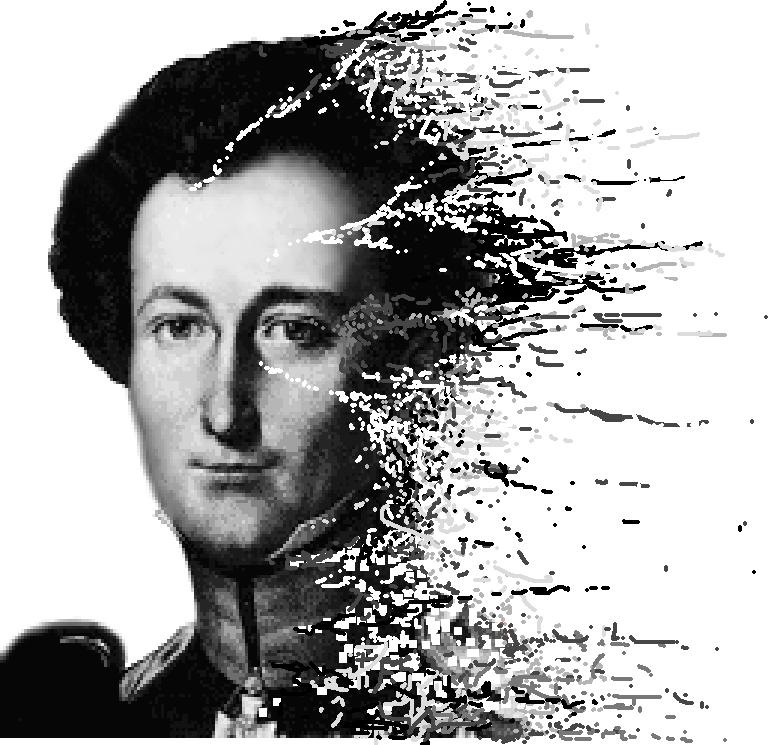
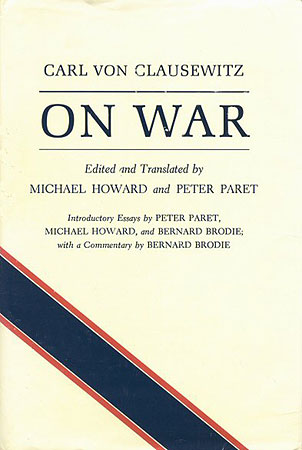
On War by Carl von Clausewitz has been the most influential book on strategy and war of all time.

We can say this because On War is the standard by which all other works of strategy are measured and only a few compared – notably Sun Tzu’s Art of War and The Peloponnesian War by Thucydides. The odd thing is that we can say this despite the fact that On War is more frequently shelved, cited or understood secondhand rather than read, even by military professionals. And furthermore, within the narrow demographic that reads Clausewitz seriously and critically, there can be heated dispute over what he meant, due to the difficulty of the text. Then there are the secondary effects, historical and military, of Clausewitz having been misunderstood, forgotten, ignored or at times, his strategic philosphy consciously rejected.

The shadow cast by On War is all the more remarkable given it’s circumstances of publication. Clausewitz died in 1831, at fifty-one, of cholera, having finally risen to a military post his talents merited. He had been writing On War since 1816 and it was far from completed or refined to his satisfaction and it is highly unlikely, in my view, that Clausewitz would have consented to it’s publication in the condition in which he left it. His determined and intellectually formidible widow, Marie von Clausewitz, further shaped the manuscript of On War, guided by her intimate knowledge of her husband’s ideas and was likely the best editor Clausewitz could have posthumously had.


Nevertheless, to my mind On War remains a magnificent unfinished symphony.

What would On War have looked like if Clausewitz had lived another twenty-five or thirty some years? Assuming continued good health, Clausewitz would have seen, perhaps commanded in, the First Schleswig War and at least studied the Crimean War from afar. He would have had another quarter-century of reading and mature reflection on his subject. Clausewitz, who had a keen understanding of history, would have also witnessed the grand European upheaval of liberal revolution in 1848 that rocked the Hohenzollern monarchy to it’s core. What new insights might Clausewitz have gleaned or expanded upon? Would his later chapters On War have evolved to equal the first?

Having outlived Marie (who died in 1836), would Clausewitz have become a deeply changed man?

What I find it difficult to believe is that Clausewitz, with his creatively driven and philosophically exacting mind,  would have been content to let the manuscript of On War rest where it stood in 1831. Or that we read today what Carl von Clausewitz ultimately intended.

Steve Jobs by Walter Isaacson, a review

Thursday, October 27th, 2011

 [by J. Scott Shipman]

steve-jobs.jpeg

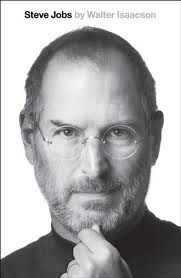
Steve Jobs by Walter Isaacson

Walter Isaacson, the acclaimed author of biographies of Benjamin Franklin and Albert Einstein, has produced a definitive and up-close biography of Steve Jobs. The book is a very readable 571 pages that took only a couple of days to read. Jobs approached Isaacson to write his bio in 2004, but Isaacson resisted until 2009 when  Jobs’ wife Laurene Powell “said bluntly, “If you’re ever going to do a book on Steve, you’d better do it now.”” Isaacson insists no restrictions were placed on him, in fact, Jobs and his wife facilitated access to many people who do did not hold Jobs in high regard—the man excited passions good and bad. I found it ironic that Jobs, a man who obsessed with control would willingly relinquish control in what will probably be the definitive biography of his life.

Isaacson offered early that his book is really about innovation. He offers: “At a time when the United States is seeking ways to sustain its innovative edge, and when societies around the world are trying to build creative digital-age economies, Jobs stands as the ultimate icon of inventiveness, imagination, and sustained innovation.” Given Apple’s growth, his point is well taken.

Isaacson clearly admires Jobs, but he does not spare the reader of Jobs volatile and brutal out-bursts directed at just about anyone he considered a “bozo” or worse. From the beginning, Jobs was a very difficult person to work with. He did not tolerate mediocrity and punished what he thought was mediocre thinking, often publicly. Isaacson offers some insights and ideas as to the cause of Jobs distinctly caustic personality, but most ring hollow. Jobs was a driven and passionate man, with very little empathy—even for family members. Isaacson suggests “people who were not crushed ended up being stronger” and many of the folks interviewed agreed—Jobs drove people to do things they didn’t know they could do. As one of Jobs colleagues Debi Coleman said, “You did the impossible, because you didn’t realize it was impossible.” So the folks he didn’t scare off, appear to have been inspired. Tim Cook, Jobs’ successor offered, “What I learned about Steve was that people mistook some of his comments as ranting or negativism, but it was really just the way he showed passion. So that’s how I processed it, and I never took issue personally.”

My favorite parts of the book were Isaacson’s liberal use of quotes from Jobs. Some quotes bristle with passion, and a few were profound. This one appealed to my notions on pattern cognition:

Your thoughts construct patterns like scaffolding in your mind. You are really etching chemical patterns. In most cases,  people get stuck in those patterns, just like grooves in a record, and they never get out of them.

Isaacson covers Jobs journey at Apple, NeXT, Pixar, and his triumphant return to Apple. I did not know much about Jobs at Pixar and found it interesting that Jobs was CEO at both companies simultaneously—and both companies had a “different” versions of Jobs. Isaacson says, “Pixar was a haven where Jobs could escape the intensity of Cupertino. At Apple, the managers often excitable and exhausted, Jobs tended to be volatile, and people felt nervous about where they stood with him….It was a Pixar that he learned to let other creative people flourish and take the lead.” Jobs was more hands-on at Apple I sense because he considered it his creation—essentially an extension of his person. I suspect Jobs viewed his role at Pixar as more that of a steward in comparison.

Jobs hated slide presentations (I agree—one great thing about Boyd & Beyond is the general ban on PowerPoint) and said, “People who know what they’re talking about don’t need PowerPoint.” There is a poignant passage towards the end where Jobs was meeting with his team of doctors and the doctor had a PowerPoint presentation. Jobs gently suggested the Apple Keynote program was better.

Jobs, despite his bristly exterior, reached deep in his Zen training and life experience (particularly after his cancer diagnosis) when he spoke at the 2005 Stanford commencement:

Remembering that I’ll be dead soon is the most important tool I’ve ever encountered to help me make the big choices of life. Because almost everything—all external expectations, all pride, all fear of embarrassment or failure—these things just fall away in the face of death, leaving only what is truly important. Remembering that you are going to die is the best way I know to avoid the trap of thinking you have something to lose. You are already naked. There is no reason not to follow your heart.  

We are a Apple/MacBook Pro family, we have iPhones, iPods, and the iPad on our wish list. Isaacson discusses one thing I’ve noticed with every Apple purchase; the thought put into packaging of the product. Apple packaging is patented and it shows. Jobs alter ego and head Apple designer Jonathan Ive, said, “Steve and I spend a lot of time on the packaging…I love the process of unpacking something. You design a ritual of unpacking to make the product feel special. Packaging can be theater, it can create a story.” I believe we have kept every box our Apple products arrived in—they are works of art.

This book will elicit the spectrum of emotions, there are parts where I was embarrassed or appalled at Jobs poor behavior, there were tender moments towards the end of his storied life that brought a tear to my eye. Isaacson has given us a valuable portrait of a man mathematician Mark Kac “called a magician genius, someone whose insights came out of the blue and require intuition more than mere mental processing power.”

Isaacson’s Steve Jobs comes with my highest recommendation.

NOTE: This is admittedly a different book review for this site. I’ll admit up front that I’m a fan of Jobs and his products—and I know many people hate him passionately and with good reason. I’m sharing this review because Jobs was an iconoclast very similar to John Boyd: people either loved him or hated him. Both men were driven, had poor people skills, and both left rich legacies in completely different areas, and are eminently interesting figures.

More on Boyd & Beyond II and Boydian Theory

Wednesday, October 19th, 2011

Two posts of note:

USNI Blog (Lucien Gauthier) – Training Sailors to be Autodidactic

….The conference spent a lot of time on the first half of the OODA-Loop, Observing and Orienting.  At some point I became convinced that the type of Sailor we need is one that is a “situational autodidact”.  Major Marcus Mainz, USMC, during his presentation made the brilliant comment that “training is for the known, education is for the unknown” in this sense, the spirit in which we must educate our Sailors must be towards making them capable of educating their self as needed when the unknown presents itself to them.

….For Sailors to take greater advantage of their experiences, they need to actively question their actions.  By this, I mean that a person analyses a question more than they do a statement.  But, it has been my experience that when someone recants an experience they had, it is a rare thing to hear someone say anything in terms of ‘why’ they did something.  Much more often someone only tells the ‘what’ of their actions.  Think of the Socratic Method, where Socrates would answer his students questions with another question.  A Sailor who has internalized such a ‘Socratic process’ would be in a position to provide more cogent feedback as well as learn from their mistakes more often than we do today.

What I am saying is not that the training we offer Sailors falls short of its objectives as they stand today.  But, that the spirit of the training is not where it needs to be-we focus our objectives too much on acting rather than orienting.  The training our Sailors receive are based on concrete and testable objectives that can be measured, quantified and turned into metrics, that fit well into powerpoint.  We do no help Sailors to become autodidactic-we are not training them to become students of their environment, but rather students of their school house.

We start to approach training Sailors to be autodidacts of their environment in the Operational Risk Management training we receive (One thing about ORM:  It is Boyd’s OODA-Loop operationalized.  The Navy has totally ripped off Boyd, and yet we never mention his name outside of the Warfare Universities-shame on us).  We need more and deeper training on ORM and how this method applies to everything we do, whether we consciously realize it or not.  In giving this deeper level or ORM, we should also find Sailors able to be more articulate of the process they’ve gone through.  Thereby becoming able to better train others of their experiences….

Naval affairs is not my bailwick, but my understanding of following online discussions by experts in the field like General Robert Scales, is that Professional Military Education across all the services is a) in need of significant reform and b) is facing a future of restricted budgets and possible deep cuts. My only firsthand knowledge of PME comes from a brief stint in June at The Army War College, courtesy of Dr. Steve Metz. The AWC curriculum was explained to me in detail by Col. Bill Lord, and while they were hitting the right notes in terms of trying to inculcate a strategic epistemology, the time frame allowed for doing so is extremely compressed.

Fast TransientsBoyd’s Conceptual Spiral – New Edition

This is from Dr. Chet Richards as well as Chuck Spinney….

Download Conceptual Spiral (152 KB PDF), Boyd’s take on the origin and importance of novelty:

Novelty is not only produced by the practice of science/engineering and the pursuit of technology, it is also produced by the forces of nature, by our own thinking and doing as well as by others. Furthermore, novelty is produced continuously, if somewhat erratically or haphazardly. Now, in order to thrive and grow in such a world, we must match our thinking and doing, hence our orientation, with that emerging novelty. (28)

Adds the original page numbers, which may seem a little odd because for readability this edition spreads several of Boyd’s originals over two or even three pages.  All of these will have the same number.

We are wired to crave and be attracted to novelty, it sets us thinking and generates insights and stimulates our creativity.


Switch to our mobile site