zenpundit.com » islamist

Archive for the ‘islamist’ Category

Adding to the Bookpile

Sunday, February 9th, 2014

[by Mark Safranski, a.k.a. “zen“]
  

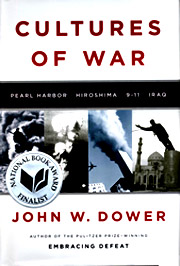
Cultures of War: Pearl Harbor / Hiroshima / 9-11 / Iraq by John Dower 

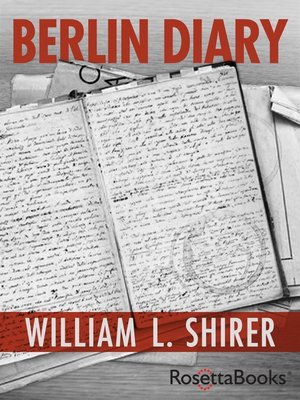
Berlin Diary: The Journal of a Foreign Correspondent, 1934-1941 by William Shirer

Moral Combat: Good and Evil in World War II by Michael Burleigh 

Picked up a few more books for the antilibrary.

Dower is best known for his prizewinning Embracing Defeat: Japan in the Wake of World War II, which unfortunately, I have never read.  Berlin Diaries I have previously skimmed through for research purposes but I did not own a copy. Shirer’s The Rise and Fall of the Third Reich: A History of Nazi Germany was an immensely bestselling book which nearly everyone interested in WWII reads at some point in time. I would put in a good word for Shirer’s lesser known The Collapse of the Third Republic: An Inquiry into the Fall of France in 1940 . It was a very readable introduction to the deep political schisms of France during the interwar and Vichy years which ( as I am not focused on French history) later made reading Ian Ousby’s Occupation: The Ordeal of France 1940-1944 more profitable.

I am a fan of the vigorous prose of British historian Michael Burleigh, having previously reviewed  Blood and Rage: A Cultural History of Terrorism here and can give a strong recommendation for his The Third Reich: A New History.  Burleigh here is tackling moral choices in war and also conflict at what Colonel John Boyd termed “the moral level of war” in a scenario containing the greatest moral extremes in human history, the Second World War.

The more I try to read, the further behind I fall!

My lunch with a jihadi 2: enter the Mahdi

Wednesday, January 22nd, 2014

[ by Charles Cameron — more food for thought — same article, different topic ]
.

Here’s the part of the conversation where we hear about the Mahdi. IMO, it’s well worth your time to read it… the first part is more serious, the second part more light hearted.

Now it was Abu Hassar who laughed right in my face. “For your government, it’s no worse a position than the one they’re in now. We used to be friends, remember, in Afghanistan, in the ‘80s. If we went from being allies to enemies that means we can go from being enemies to allies.”

“Okay, so how does that end?” I asked. “My government arms the Islamists. Tell me how that ends?”

“You really want to know?”

I nodded.

“The Prophet predicted all this,” began Abu Hassar, speaking as if from some place of deep personal knowledge. “He said it begins with the boys, writing and speaking messages of a new future in the streets.” Abu Hassar stopped and looked at Abed for a moment. In that look, it seemed Abed and the democratic activists of 2011 were the boys Abu Hassar was speaking about. “The messages spread, breeding outrage and a war fought by the men. This is what we see now. In that war, an Islamist Army rises, uniting to destroy all others. Then a tyrant is killed. This is Assad. His army will fall. Afterwards, among the Islamists, there will be many pretenders. The fighting among them will go on.”

Abu Hassar looked down at my notepad. I hadn’t been writing anything down. This seemed to bother him. “You know all this?” he asked.

“It’s all happening right now,” I said. “The infighting, the rise of the Islamists, how does that end?”

“The Syrian people thirst for an Islamic State,” said Abu Hassar. “After so much war, they want justice. After Assad falls and when there is fighting among the pretenders, a man will come. He is a common man, but he will have a vision. In that vision, God will tell him how to destroy His enemies and bring peace to all peoples. That man is the Mahdi.”

I wrote down the word: Mahdi, a heavy and dissatisfied dot above the ‘i’.

“You don’t believe me?” said Abu Hassar.

I stared back at him, saying nothing.

“You think as poorly armed as we are, we can’t defeat Assad and his backers?”

“It’s not that,” I said.

Abu Hassar continued: “Our weapons don’t matter as much as you think. Even Albert Einstein predicted what’s happening now. He said that the Third War would be a nuclear war, but that the Fourth War would be fought with sticks and stones. That’s how we beat you in Iraq, with sticks and stones. Whether we are helped or not, this is how we will create our Islamic State even with the super powers of the world against us.”

“So the plan is to wait for the Mahdi?”

“He walks among us now, a simple man of the people, the true redeemer.”

I shut my notebook. Our waiter was lurking across the room. I caught his eye and made a motion with my hand, as if I were scribbling out the bill for our lunch. He disappeared into the back of the restaurant.

“What will you do if this is true?” Abu Hassar asked me.

“If the Mahdi comes?”

He nodded.

“That means there will be a peaceful and just Islamic State?”

Again, he nodded.

“Then I’ll come visit you with my family.”

“And you will be welcome,” said Abu Hassar, grinning his wide ear-to-ear grin and resting his heavy hand on my shoulder.

We’d been sitting for hours, and it was early afternoon. Abu Hassar excused himself to take the day’s fourth prayer in a quite corner of the restaurant. Abed, seemingly exhausted from translating, stood stiffly and went to use the bathroom. I sat by myself, the empty plates of our lunch spread in front of me.

“Syrie?” he asked, pointing to where Abu Hassar and Abed had been sitting.

I nodded.

Our waiter pointed to where Abu Hassar had been sitting. He stroked his face as if he had a thick and imaginary beard, one like Abu Hassar’s. “Jabhat al-Nusra,” he said.

I shrugged.

“Amerikee?” he asked, pointing at me, seemingly confused as to why an American would spend so much time sitting with two Syrians, especially one Islamist.

“New York,” I said.

He shook his head knowingly, as if to intone the word ‘New York,’ were to intone a universal spirit of ‘anything goes’.

I handed over the money for lunch. Abed and Abu Hassar returned and we left the restaurant. Outside the gray morning rain was now gray afternoon rain. The cafés were still full of people sitting on green Astroturf lawns, sipping tea that steamed at their lips. Nothing had changed.

We piled into the black Peugeot and returned to the road. For a while, we didn’t speak. We were tired of our own voices. There was just the noise of the broken wiper in front of me, stuttering across the windshield. Above us, the overcast sky lost its light. Below, Akçakale camp spread in all directions, as gray as a second sky. Something heavy and sad came over Abu Hassar and the heaviness of that thing came over me. He and I had spent the day somewhere else, in a different time. Now he’d go back to the camp and I’d go back to the road.

But we weren’t there yet. With about a mile left to go, Abu Hassar put his hand on my shoulder. “So you will come visit when the war is over?” he asked.

“Of course,” I said. “If it’s safe for someone like me.”

“It would have to be. You would never pass for a Muslim,” said Abu Hassar. He pointed at me and spoke to Abed: “He is such a Christian, he even looks like Jesus!”

I took a look at myself in the rearview mirror. I hadn’t shaved in a couple weeks. My face was a bit gaunt, my kinked hair a bit unkempt. “Maybe I look like Einstein?” I answered.

As we pulled over by his brother’s shop, Abu Hassar and I were still laughing.

“If I look like Jesus,” I said, “you look like the Prophet Muhammad.”

Abu Hassar shook his head. “No, I don’t look like the Prophet, peace be upon him.” He opened his door and a cold breeze filled our car. I could feel the rain outside hitting my neck. Abu Hassar grabbed my shoulder with his thick and powerful hands. He pushed his face close to mine. Again he was grinning.

“I look like the Mahdi.”

That comment, “He and I had spent the day somewhere else, in a different time” is particularly interesting from psychological, anthropological and theological angles.
My lunch with a jihadi

Wednesday, January 22nd, 2014

[ by Charles Cameron — food for thought ]
.

From the article titled My lunch with a jihadi by Elliot Ackerman yesterday on The Beast:

When I was first in the jihad, I was like a starving man feasting on the action. When I got older, I learned to eat more slowly, to be more patient. Even Al-Qaeda’s best men became too aggressive in Iraq. When they began to kill Christians and Jews who weren’t actively against the jihad, this was a mistake. In the Qu’ran it says not to do this. In the Bukhari, it is even written that the Prophet once left his armor in the possession of a Jew so it would be protected!

Bukhari, Volume 3, Book 45, Number 690:

Narrated ‘Aisha:

Allah’s Apostle bought some foodstuff from a Jew and mortgaged his armor to him.

Bewley’s more colloquial translation gives:

It is related that ‘A’isha said, “The Prophet, may Allah bless him and grant him peace, bought some food from a Jew on credit and left his armour as security.”

That’s it, folks.

Materials from the Archive 1: Cameron on Abu Musab al-Suri

Tuesday, January 14th, 2014

[ by Charles Cameron — capturing items no longer at their original links ]
.

I’m grateful to the Internet Archive for still holding copies of web-pages I occasionally want to link to, but which have disappeared from their original URLs. I’m reposting a couple of them here, and will use the “Materials from the Archive” beading for any others that come along.

First, from The [US] Air force Research Institute site, my review of Jim Lacey‘s Terrorist’s Call to Global Jihad

**

A Terrorist’s Call to Global Jihad: Deciphering Abu Musab al-Suri’s Islamic Jihad Manifesto

Jim Lacey’s Terrorist’s Call to Global Jihad is an abridged translation (from 1,600 to 200 pages) of the premier contemporary manual of jihad, Abu Musab al-Suri’s Call to Global Islamic Resistance (Da‘wat al-muqawamah al-islamiyyah al-‘alamiyyah). US Joint Forces Command sponsored this book and two others as part of the Terrorist Perspective Project, which aims to allow “joint warfighters to get inside the terrorists’ decision cycle” by understanding the “mind of the jihadi movement.” The other members of the trilogy, all edited by Lacey and all published by the Naval Institute Press in 2008, include The Terrorist Perspectives Project: Strategic and Operational Views of Al Qa’ida and Associated Movements, which provides an overall synthesis of jihadist thought, and The Canons of Jihad: Terrorists’ Strategy for Defeating America, which supports this synthesis by offering selections from a variety of important jihadist texts. Thus, taken together, the three books offer a background in jihadist thought, some significant historical and near-contemporary readings from that tradition, and a detailed study of its most significant single document. In many ways, Jim Lacey is an appropriate choice as editor of Terrorist’s Call to Global Jihad given his position as an analyst with the Institute for Defense Analyses and his experience as an infantry officer and  a journalist for Time magazine, embedded with the 101st Airborne during the invasion of Iraq.

Al-Suri is also the subject of Architect of Global Jihad: The Life of Al-Qa’ida Strategist Abu Mus’ab al-Suri, a biography by Norwegian scholar Brynjar Lia of the Norwegian Defense Research Establishment. That book complements Terrorist’s Call to Global Jihad by offering us a portrait of the man and an unabridged translation of two key chapters from al-Suri’s work. In the context of other jihadist literature, al-Suri’s Call to Global Islamic Resistance is a major event. In their article “Stealing Al Qaeda’s Playbook” (Studies in Conflict and Terrorism, June 2006), Jarret Brachman and William McCants write that “as the author of a massive handbook on global insurgency—or, as he calls it, ‘the remedy for the U.S. disease’—Mustafa Setmarian Nasar [i.e., al-Suri] has written his way into the intellectual heart of today’s jihadi-Salafi movement.” An individual named “Bearer of the Sword,” posting a comment about the Fort Hood shootings on the English language Ansarnet forum, called al-Suri “the greatest military theoretician our Ummah have had in this age.” Clearly, Lacey and Lia are introducing us to a major treatise on contemporary jihadism.

Biographically speaking, Lacey’s portrait of al-Suri is brief, but he quotes a memorable remark from CNN journalist Peter Bergen, who contacted al-Suri for a celebrated interview with bin Laden: “He seemed to be a very intelligent guy, a very well informed guy, and a very serious guy. . . . He was certainly more impressive than bin Laden.” Prior to his capture in Quetta, Pakistan, in October 2005, Suri received military training from the Iraqi and Egyptian militaries, served as an instructor in the Afghan-Arab camps in Afghanistan during the late 1980s, lived in Spain and the United Kingdom in the 1990s, and served as a media liaison for al-Qaeda in Afghanistan.

Lacey suggests that al-Suri’s work is comparable to Hitler’s Mein Kampf, and Lia terms it “the most significant written source in the strategic studies literature on al-Qa’ida.” Obviously, it is crucial to understand what Lacey offers us of al-Suri’s work and what he omits. The preface lays out the book’s program: “Recognizing that 1,600-page documents of densely written ‘jihadi thought’ would deter all but the most dedicated analyst, Lacey has produced this condensed version and translation of al-Suri’s work capturing the essence of his thoughts.” What follows is an analysis of the jihadist current, beginning with al-Suri’s own experiences in Syria (1980), passing via Madrid (1991) and London (1996) to Afghanistan (1997–2001), and following through to include the US invasion of Iraq (2003–4)—presented as background for the “third generation” of mujahideen “created by the events of September (9/11/2001), the occupation of Iraq and the apex of the Palestinian intifada.” Chapters explore the status of Muslims today, sharia rulings appropriate to the situation, and a history of jihad from 1990 onwards (in three chapters), omitting a major discussion of al-Qaeda, which Lacey deems inappropriate since (1) it would require book-length treatment and (2) the war on that front is ongoing.  He closes with chapters on the doctrinal foundations of jihad, sharia-based decision making, and the role of the media.

The book does suffer from one serious omission. As mentioned in the preface, “Where appropriate, we have also removed most of the repetitive theological justifications undergirding these beliefs.” The final pages of Call to Global Islamic Resistance are what Jean-Pierre Filiu terms “a hundred-page apocalyptic tract” concerning “signs of the end times.” Sadly, both Lacey and Lia pay little attention to this specifically Mahdist element. In al-Suri’s reading of jihadist history, “one event brings another event and then another, leading inevitably to the arrival of the Mahdi.” Given the importance of apocalyptic expectation as a potential (and potent) force multiplier, we await the English translation of Filiu’s L’Apocalypse dans l’Islam for further insight into a serious and hitherto neglected part of al-Suri’s message.

Lacey’s Terrorist’s Call to Global Jihad opens a significant window on the jihadist mind-set. However, downplaying the religious doctrine that al-Suri includes alongside his strategic guidance blocks our view of the importance of religion in persuading people to follow that guidance.


Charles Cameron

Forestville, California

A Terrorist’s Call to Global Jihad: Deciphering Abu Musab al-Suri’s Islamic Jihad Manifesto edited by Jim Lacey. Naval Institute Press, 2008, 205 pp., $19.00.

Making Historical Analogies about 1914

Friday, January 10th, 2014

[by Mark Safranski, a.k.a. “zen“]

The Independent has a short, quasi-sensationalist, article featuring historian Margaret MacMillan discussing what is likely to become the first pop academic cottage industry of 2014….making historical analogies about 1914 and World War I! MacMillan is a senior scholar of international relations and administrator at Oxford ( where she is Warden of St Antony’s College)  with a wide range of research interests, including the First World War on which she has published two books.  I am just going to excerpt and comment on the historical analogies MacMillan made – or at least the ones filtered by the reporter and editor – she’s more eloquent in her own writing where each of these points are treated at greater length:

Is it 1914 all over again? We are in danger of repeating the mistakes that started WWI, says a leading historian 

Professor Margaret MacMillan, of the University of Cambridge, argues that the Middle East could be viewed as the modern-day equivalent of this turbulent region. A nuclear arms race that would be likely to start if Iran developed a bomb “would make for a very dangerous world indeed, which could lead to a recreation of the kind of tinderbox that exploded in the Balkans 100 years ago – only this time with mushroom clouds,”

…..While history does not repeat itself precisely, the Middle East today bears a worrying resemblance to the Balkans then,” she says. “A similar mix of toxic nationalisms threatens to draw in outside powers as the US, Turkey, Russia, and Iran look to protect their interests and clients. 

Several comments here. There is a similarity in that like the unstable Balkan states of the early 20th century, many of the Mideastern countries are young, autocratic, states with ancient cultures that are relatively weak  and measure their full independence from imperial rule only in decades.  The Mideast is also like the Balkans, divided internally along ethnic, tribal, religious, sectarian and linguistic lines.

The differences though, are substantial. The world may be more polycentric now than in 1954 or 1994 but the relative and absolute preponderance of American power versus all possible rivals, even while war-weary and economically dolorous, is not comparable to Great Britain’s position in 1914.  The outside great powers MacMillan points to are far from co-equal and there is no alliance system today that would guarantee escalation of a local conflict to a general war. Unlike Russia facing Austria-Hungary over Serbia there is no chance that Iran or Russia would court a full-scale war with the United States over Syria.

On the negative side of the ledger, the real problem  is not possible imperial conquest but the danger of regional collapse. “Toxic nationalism” is less the problem than the fact that the scale of a Mideastern Sunni-Shia sectarian conflict is so enormous, as are the implications . Nothing in the Balkans after the turn of the century compares to Syria, then Iraq and then other states sliding into a Muslim version of the Thirty Year’s War. An arc of failed states from Beirut to Islamabad is likelier than, say, a new Persian empire run by Tehran’s mullahs.

Modern-day Islamist terrorists mirror the revolutionary communists and anarchists who carried out a string of assassinations in the name of a philosophy that sanctioned murder to achieve their vision of a better world

Agree here. The analogy between 21st revolutionary Islamists and the 19th century revolutionary anarchists is sound.

And in 1914, Germany was a rising force that sought to challenge the pre-eminent power of the time, the UK. Today, the growing power of China is perceived as a threat by some in the US.

Transitions from one world power to another are always seen as dangerous times. In the late 1920s, the US drew up plans for a war with the British Empire that would have seen the invasion of Canada, partly because it was assumed conflict would break out as America took over as the world’s main superpower.

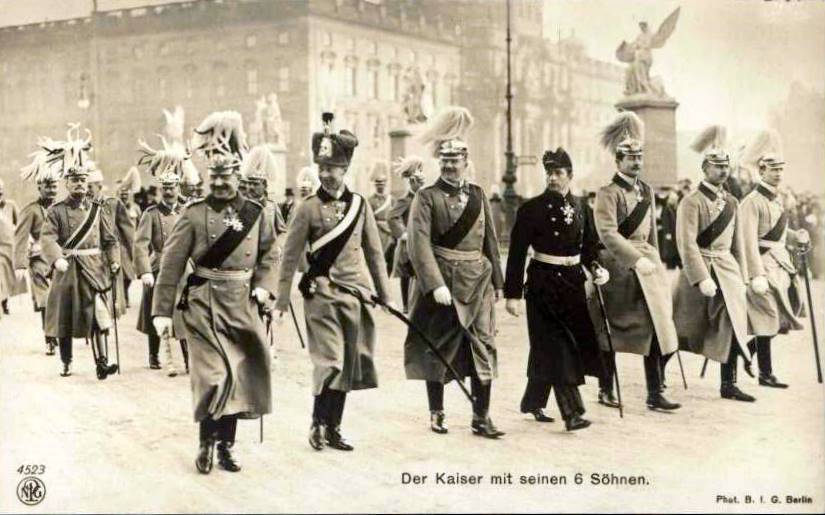
Imperial Germany’s growing power was less troublesome to Edwardian British statesmen than the strategic error of the Kaiser and von Tirpitz to pursue a naval arms race with Great Britain that did not give Germany’even the ability to break a naval blockade but needlessly antagonized the British with an existential threat that pushed London into the French camp.

As to military plans for invading Canada (or anywhere else), the job of military planning staffs are to create war plans to cover hypothetical contingencies so that if a crisis breaks out, there is at least a feasible starting point on the drawing board from which to begin organizing a campaign. This is what staff officers do be they American, French, Russian, German, Chinese and even British. This is not to be taken as serious evidence that the Coolidge or Hoover administrations were hatching schemes to occupy Quebec.

More importantly, nuclear weapons create an impediment to Sino-American rivalry ending in an “August 1914” moment ( though not, arguably, an accidental or peripheral clash at sea or a nasty proxy conflict). Even bullying Japan ultimately carries a risk that at a certain point, the Japanese will get fed-up with Beijing, decide they need parity with China, and become a nuclear weapons state.

Professor MacMillan, whose book The War That Ended Peace was published last year, said right-wing and nationalist sentiments were rising across the world and had also been a factor before the First World War

In China and Japan, patriotic passions have been inflamed by the dispute over a string of islands in the East China Sea, known as the Senkakus in Japan and Diaoyus in China. “Increased Chinese military spending and the build-up of its naval capacity suggest to many American strategists that China intends to challenge the US as a Pacific power, and we are now seeing an arms race between the two countries in that region,” she writes in her essay. “The Wall Street Journal has authoritative reports that the Pentagon is preparing war plans against China – just in case.” 

“It is tempting – and sobering –to compare today’s relationship between China and the US with that between Germany and England a century ago,” Professor MacMillan writes. She points to the growing disquiet in the US over Chinese investment in America while “the Chinese complain that the US treats them as a second-rate power”.

The “dispute” of the Senkakus has been intentionally and wholly created by Beijing in much the same way Chinese leaders had PLA troops provocatively infringe on Indian territory, claim the South China Sea as sovereign territory and bully ships of all nearby nations other than Russia in international or foreign national waters. This is, as Edward Luttwak recently pointed out, not an especially smart execution of strategy. China’s recent burst of nationalistic bluffing, intimidation and paranoia about encirclement are working along the path of self-fulfilling prophecy.

Another similarity highlighted by the historian is the belief that a full-scale war between the major powers is unthinkable after such a prolonged period of peace. “Now, as then, the march of globalisation has lulled us into a false sense of safety,” she says. “The 100th anniversary of 1914 should make us reflect anew on our vulnerability to human error, sudden catastrophes, and sheer accident.

Agree that globalization is no guarantee against human folly, ambition or the caprice of chance.

What are your thoughts?


Switch to our mobile site