zenpundit.com » islamist

Archive for the ‘islamist’ Category

The Boston Bombers and Superempowerment

Wednesday, May 1st, 2013
My friend Dave Schuler who blogs at the excellent The Glittering Eye and on foreign policy at Dr. James Joyner’s Outside the Beltway , queried me as to what I thought of the Boston Bombers in light of the concept of the Superempowered Individual.

For those not familiar with the concept, the term “superempowered individual” originated in phrase coined by Thomas Friedman and quickly gained traction and evolved in the .mil/strategy/defense blogosphere and communities of interest after 9/11 turned everyone’s attention to the potential reach of catastrophic terrorism. Many people, including myself have written on the topic and while no single, agreed upon, definition of SEI exists, there is a consensus around an individual having the capacity to multiply the scale of the harm they can cause by leveraging or disrupting complex systems, be they mechanical, social, cyber or some combination. I defined SEI’s this way:

To qualify as a superempowered individual, the actor must be able to initiate a destructive event, fundamentally with their own resources, that cascades systemically on a national, regional or global scale. They must be able to credibly, “declare war on the world”.  

Using that definition, Dzhokhar and Tamerlan Tsarnaev are far from superempowered individuals. They were not “super” anything and rather than being masters of complexity, they ginned up some primitive IEDs  and blundered miserably after their attack on the Boston Marathon. The younger of the two accidentally ran over his own brother with a car, killing him, which gives some idea of the operational amateurism of these culprits. If Islamist terrorism has a Darwin Award, the Brothers Tsarnaev are contenders

Yet the cost of their attack, the Boston bombing, allegedly tops $330 million dollars? Why?

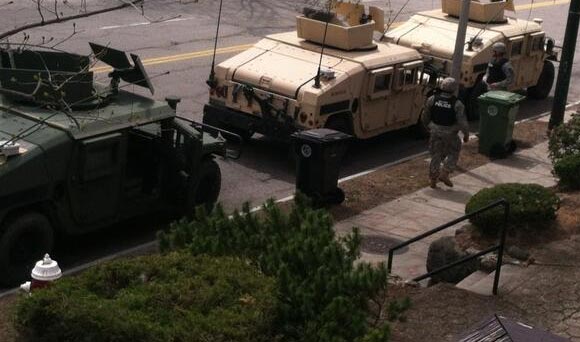
I would argue that the US is systematically “superdisempowering” itself by VASTLY multiplying the costs of any given act of terrorism with absurd and outrageous levels of costly security theater and glitzy paramilitarization of law enforcement that continue to cascade and accumulate long after sorry nitwits like Richard Reid, Dzhokhar Tsarnaev or the amazingly incompetent Underwear Bomber have become obscure historical footnotes. It is incredibly counterproductive in every sense and has overwhelmingly negative effects that only add significantly to the costs of terrorism

Timothy McVeigh, in a much more heinous act of terrorism, blew up a Federal building and killed 168 people and injured 800 others with a massive truck bomb and America did not feel a need to dress our police officers like extras in Starship Troopers or it’s airport security like customs officials from a minor Fascist puppet regime. This is not a criticism of police officers who do a dangerous job with professionalism and bravery but of a national policy of paternalism and creeping authoritarianism that is slowly morphing them into asphalt soldiers.

The attacks on September 11 were thirty times worse and far more spectacular than McVeigh’s bombing, transfixing the attention of the whole world, but somehow we got along without President Bush declaring martial law and closing New York city and sending troops door to door to roust citizens in their homes without warrants or probable cause.

We need to take a healthy step back and put the brakes on our own policy and security responses to terrorism and dial them down to a rational minimum level required for investigative effectiveness. If not because these policies have become dangerously injurious to liberty and American democracy or because they are mostly wasteful government spending then we should do it because we have become so expert at making the costs of any act of terror extremely expensive by our own reaction that we are providing the enemy and itinerant crazies with a tremendous incentive to attack us more.

Seriously.

The only thing superempowered right now is own own lack of strategic sense.
Inscription on the flag of the Mahdi’s army?

Tuesday, April 30th, 2013

[ by Charles Cameron — how to tell an authentic Mahdist “black banner” — from a false flag, perhaps? ]
.

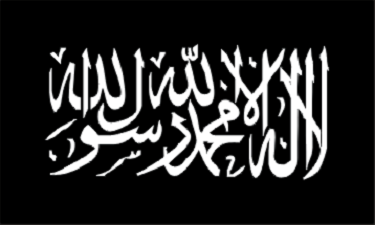
There has been considerable talk about black flags featuring the Shahada:

This is the creed of Islam, and reads, “There is not God but God, and Muhammad is the Prophet of Allah.”

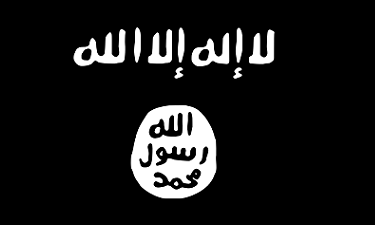
And more recently, of black flags featuring the seal of Muhammad:

Will McCants wrote of this:

When the ISI adopted the flag, it issued a statement in 2007 explaining its design. In the statement, the group relates oral traditions portraying Mohammad’s battle flag as either black or white (other traditions say yellow) with the words “No god but God, Mohammad is the messenger of God” written on it. The ISI chose black for its flag because most accounts say the Prophet’s flag was black, and chose the Muslim testimony of faith because many accounts said it was written on the Prophet’s flag.

For the second half of the testimony of faith, “Mohammad is the messenger of God,” the ISI reproduces the Prophet’s seal. They contend that the seal’s design is preserved in Ottoman manuscripts and its three-lined text, “God/Messenger/Mohammad,” is mentioned in oral traditions about the Prophet. They have added this seal to their flag, they explain, because some Muslim scholars say that it appeared on the Prophet’s flag.

**

I therefore thought it worth noting that al-Islam.org — which presents Islam “with particular emphasis on Twelver Shia Islamic school of thought” — has a section on The Slogan on the Flag of the Uprising in Chapter 7, The Uprising of the Imam of the Time (‘atfs) of Najmuddin Tabasi‘s An Overview of the Mahdi’s (‘atfs) Government, which reads:

Every government has a flag by which it can be recognized, and uprisings and revolutions also have particular flags whose logos bespeak of the objectives of their leaders. The global revolution of Hadrat al-Mahdi (‘a) has also a specific flag on which a slogan has been inscribed. Of course, although there are differences with respect to the slogan on his flag, there is a common point in all the statements and that is: It invites the people to obey him (‘a).

Now, it would suffice to mention some pertinent instances:

It has been recorded in a hadith: “It is thus written on the flag of Hadrat al-Mahdi (‘atfs): ‘Listen and obey him’.”

Elsewhere, we read: “The slogan of al-Mahdi’s (‘atfs) flag is al-bay‘atu lillah (the allegiance for the sake of Allah).”

**

Just a little different, eh?

Well, that’s it — just a footnote to ponder.

Syria is Not Rwanda

Monday, April 29th, 2013

Anne-Marie Slaughter had a short but bombastic WaPo op-ed on Syria and chemical weapons use that requires comment:

Obama should remember Rwanda as he weighs action in Syria 

….The Clinton administration did not want to acknowledge that genocide was taking place in Rwanda because the United States would have been legally bound by the Genocide Convention of 1948 to intervene to stop the killing. The reason the Obama administration does not want to recognize that chemical weapons are being used in Syria is because Obama warned the Syrian regime clearly and sharply in August against using such weapons. “There would be enormous consequences if we start seeing movement on the chemical-weapons front or the use of chemical weapons,” he said. “That would change my calculations significantly.”

….But the White House must recognize that the game has already changed. U.S. credibility is on the line. For all the temptation to hide behind the decision to invade Iraq based on faulty intelligence about weapons of mass destruction, Obama must realize the tremendous damage he will do to the United States and to his legacy if he fails to act. He should understand the deep and lasting damage done when the gap between words and deeds becomes too great to ignore, when those who wield power are exposed as not saying what they mean or meaning what they say.

This is remarkably poorly reasoned advice from Dr. Slaughter that hopefully, President Obama will continue to ignore.
.
The President, on the basis of advice very much in the spirit of this op-ed, drew a public “red-line” about chemical weapons use for Bashar Assad, or some variation of that, on six occasions, personally and through intermediaries. On the narrow point, Slaughter is correct that this action was ill-considered, in that the President wisely does not seem to have much of an appetite for jumping into the Syrian conflict. Bluffing needlessly is not a good practice in foreign policy simply to pacify domestic critics, but it is something presidents do from time to time. Maybe the POTUS arguably needs better foreign policy advisers, but doubling down by following through with some kind (Slaughter fails to specify) military intervention in Syria is not supported in this op-ed by anything beyond mere rhetoric.
.
First, as bad as the Syrian civil war is in terms of casualties it does not remotely approximate the Rwandan Genocide in scale, moral clarity, military dynamics or characteristics of the major actors. This is a terrible analogy designed primarily to appeal to emotion in the uninformed. Syria is engaged in civil war, not genocide.
.
Secondly, the “credibility” argument has been lifted by Slaughter from it’s Cold War historical context where the United States capacity to provide a nuclear umbrella and effective deterrent for allied states was tied to the perception of our political will to assume the appropriate risks, which in turn would help avoid escalation of any given conflict to WWIII. This psychological-political variable of “credibility” soon migrated from the realm of direct US-Soviet nuclear confrontation in Europe to all manner of minor disputes (ex. –Quemoy and Matsu, civil unrest in the Dominican Republic) and proxy wars. It was often misapplied in these circumstances and “credibility” assumed a much greater exigency in the minds of American statesmen than it it did in our Soviet adversaries or even our allies, to the point where American statecraft at the highest level was paralyzed by groupthink in dealing with the war in Vietnam. By 1968, even the French thought we were mad.
.
Absent the superpower rivalry that kept the world near the brink of global thermonuclear war, “credibility” as understood by Johnson, Rusk, Nixon and Kissinger loses much of it’s impetus. If “credibility” is the only reason for significant US intervention in Syria it is being offered because there are no good, hardheaded, reasons based on interest that can pass a laugh test.
.
The historical examples President Obama should heed in contemplating American intervention in Syria is not Rwanda, but Lebanon and Iraq.

A second comment on Hegghammer & Lacroix

Sunday, April 28th, 2013

[ by Charles Cameron — because the Bene Gesserit understand the power of Mahdism and jihad ]
.

Further reading:

  • Frank Herbert, Appendix II: The Religion of Dune
  • Peter Tarchin, The ‘Dune Hypothesis’
  • Peter Tarchin, Psychohistory and Cliodynamics
  • Peter Tarchin, Science on Screen: DUNE
  • Peter Tarchin, How to Overthrow an Empire – and Replace It with Your Own
  • Ibn Khaldun, The Muqaddimah: An Introduction to History
  • Doris Lessing, Canopus in Argos: Archives
  • **

    As T Greer, friend of this blog, notes in a comment to that last Tarchin post, his explorations would fit in nicely with the work at Grand Blog Tarkin

    A Question for Hegghammer & Lacroix

    Sunday, April 28th, 2013

    [ by Charles Cameron — a single word in a very small book, and the world that hangs in the balance ]
    .

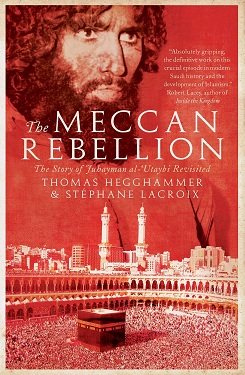
    I’ve just read Hegghammer & Lacroix on The Meccan Rebellion. At 78 pages and 5.3 x 8.3 inches, it’s a tiny book in hardback and quite a delight to hold — the electricity in my city block went out for a while the other day, and I took pleasure in reading it out under the sun — and it contains, in essence, the two authors’ paper, Rejectionist Islamism in Saudi Arabia (Int. J. Middle East Stud. 39 (2007), 103–122) and a companion piece by Lacroix titled Between Revolution and Apoliticism: Nasir al-Din al-Albanai and his Impact on the Shaping of Contemporary Salafism.

    Blog posts tend to present a point of view – whether to preach to the choir, promote it to unbelievers, stir up trouble, or simply add detail or a fresh angle to an existing narrative. Seldom do they ask questions.

    My own instincts — in line with Madhyamaka as I briefly encountered it in the teachings of Elizabeth Mattis-Namgyel — lead me to leave some kinds of questions open: I use my DoubleQuotes format to set the juices flowing, by providing nudges to thought rather than outright statements – but on this occasion I have a question to ask, and as it’s too long for Twitter I’ll post it here.

    **

    Here’s my question. Juhayman al-Utaybi believed one of his companions, Muhammad al-Qahtani, was the Mahdi, the awaited Coming One of Islam — and that, in our authors’ words, “consecrating him [al-Qahtani] in Mecca on the turn of the hijra century” would ”precipitate the end of the world”.

    In my view, a great deal rests on that simple word, “precipitate”. Would “usher in” do as well? Or “mark the beginning of” perhaps? Or is the idea of forcing the hand of God present, as it is in Reuven Paz’ phrase, “hot-wiring the apocalypse”?

    There’s a lot riding on that issue: whether or not it is possible to force the hand of God, to accelerate destiny, to hasten apocalypse.

    **

    Okay, let’s go light-footed into this issue. In The Question in the DC Comics universe, we have a character described thus:

    During service in Vietnam Jeremiah Hatch got insane, he began to hear the voice that urged him to do the will of the Lord by serving the Devil. He thought that his mission was “to hasten the corruption, to nurture the foulness until the almighty has no choice but to rain down fire and brimstone and overthrow the cities and the plain and all the inhabitants of cities and all that grows on the ground…”

    **

    Hastening the apocalypse — it’s an idea you can find in the world of DC Comics, but it was Israeli analyst Dr Reuven Paz who presented it to us in canonical “national security” form in his paper, Hot-wiring the Apocalypse, where his actual words are:

    The Jihadi and nationalist insurgency in Iraq, which feeds the motivations and enthusiasm of growing number of Islamist youth to search for Jihad, look for the “culture of death and sacrifice,” and self-radicalize themselves, is another factor in the growing sense of Jihadi pride, which also hotwires the sense of the apocalypse.

    That’s a faily imprecise form of words (‘The sense of apocalypse”) from a careful scholar, and Paz applies the concept in a specifically Sunni context. This, however, doesn’t prevent a popular Christian writer such as Joel Rosenberg from applying the same idea to the Shi’ite rulers of Iran:

    Only when we understand the eschatology currently driving Iranian foreign policy, can we truly begin to understand how dangerous the regime in Tehran is. Only then can we fully appreciate how events like the revolution underway in Egypt only encourages Twelvers like Khamenei to take still further provocative and perilous actions to hasten the coming of the Twelfth Imam.

    So the idea is afloat that both Sunni jihadists in Iraq and the Shi’ite state of Iran ay be about the “hastening” business.

    **

    Blog-friend Dr. Timothy Furnish, as I’ve noted here before, rebuts the application of Paz’ concept by Rosenberg, Glenn Beck and others to the situation in Iran, saying of it:

    It posits that there is a strain of Islamic eschatological thought which hopes to force Allah’s hand in sending the Mahdi, as it were, via sparking a major conflagration (nuclear, or otherwise) with the West (either the U.S. or Israel). This may be true of some of the Sunni jihadits with an apocalyptic bent, but there is very little evidence that such an idea is operative in the upper echelons of the Islamic Republic of Iran. The ayatollahs may be cut-throat, anti-Israeli and anti-American-but they are not stupid. They know full well that any nuclear attack on Israel of the U.S. would be met with a crushing retaliation. (Besides, what good would it do for the Mahdi to come and establish his global caliphate over smoking radioactive ruins?)”

    **

    And if I might ask a follow-up question — is the first of the Juhayman Letters, which is devoted to the theme of the coming of the Mahdi, available in English?


    Switch to our mobile site