Kudos to Dan Trombly of Fear, Honor and Interest. Why?
First, for drawing attention to the debate between Dan Drezner and Anne-Marie Slaughter over, hmm, “Real-world Realism” in American foreign policy:
Dan Drezner – Meet the new foreign policy frontier…. same as the old foreign policy frontier
….Well, this is… this is… I’m sorry, I got lost among the ridiculously tall strawmen populating these paragraphs. I’ll go out on a limb and posit that not even Henry Kissinger thinks of the world the way Slaughter describes it. Just a quick  glance at, say, Hillary Clinton’s recent speech in Hong Kong suggests that actual great power foreign policies bear no resemblance whatsoever to that description of “traditional foreign policy.”
Slaughter knows this very well, given that she was Clinton’s first director of policy planning. She also knows this because much of her writing in international relations is about the ways in which traditional governments are becoming more networked and adaptive to emergent foreign policy concerns.
Rebuttal time…..
Anne-Marie Slaughter– The Debate Is On! A Response to Dan Drezner
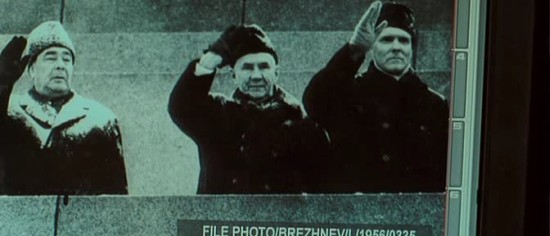
….I’ll take that bet. I think it’s exactly how Henry Kissinger still thinks of the world. Indeed, he has just published a  book on China — of course, because from the traditional realist perspective China is by far the most important foreign policy issue in the 20th century, as it is the only possible military and economic competitor to the United States. Hence, as realists/traditionalists never tire of repeating, the U.S.-China relationship is the most important global relationship of the 21st century: what matters most is ensuring that as both nations pursue their power-based interests they do not collide catastrophically. Never mind that an avian flu virus that is both fatal and aerosol-borne arising anywhere in Asia could do far more damage to global security and the economy than China ever could — just see the forthcoming movie Contagion.
The second reason for giving Mr. Trombly props is that his excellent post in response to the above was a lot more interesting and substantive than their pleasantly jocular and Friedmanesque exchange:
Old School realism and the problem of society
….Waltz cares about states because states, in the time periods he examines, are the primary bearers of power. Power, not the state, is likely the more long-standing differentiation between the liberal/idealist and realist schools of international affairs. Realists generally care more about who has power, and particularly coercive power, because in the realist view, it is the power to control – not to collaborate, connect, or convince – which is the final arbiter and source of other forms of socio-political-economic behavior.
For most of the history of thinkers identified with realism, the state did not exist, nor did the conception of the state as a unitary actor. Thucydides, long identified as one of the fathers of Western realism, was not a Waltzian structural realist in the slightest. As most early realists did, he cited the origins of political behavior in irrational and rational drives, which originate in the hearts and minds of men. There were no states in Thucydides’s day, but city-states, empires, and various other forms of political organization which did not survive to the present day. Thus one had to be quite conscious not just of particular parties and factions, but even individuals, who, in a polis such as Athens could completely upturn the designs of the Athenian state. In his description of the varying governments and systems of organization at play, Thuycdides actually shows a keen awareness of how regime types and the social composition can influence international politics, but only insofar as it involves the exercise of power. The exchange of goods, culture, and ideas matters far less to him. Slaughter does offhand mention that an Avian flu could kill far more than a war and be more likely. Interestingly enough, the plague of Athens does play an important role in Thucydides’s history
….This pessimism about the dangers of those lacking political virtue, or restraint of their passions, from acquiring power colors, in one way or another, much of the subsequent 2,500 years of realist thought. Ultimately, the interactions and aims of the various interest groups that Slaughter describes, and Drezner dismissed, are not necessarily prescriptively ignored but the subjects of active disdain, fear, and scorn
Much to like in this fairly lengthy post, which I recommend you read in full.
Now for my two cents.
First, as a factual matter, it would not be hard to establish that Dr. Slaughter is correct and Dr. Drezner is not that Henry Kissinger does think like that. He most certainly did while he was in power, as is amply recorded in the National Archives, Kissinger’s memoirs and secondary works by historians and biographers who made Kissinger their subject. To all appearances, Brent Scowcroft, Kissinger’s protege thinks the same way, as did Kissinger’s master, Richard Nixon, whose private remarks regarding the unimportance of ephemeral actors to geopolitics were brutal. The UN, for example, Nixon dismissed as a place for “just gassing around” and Nixon was happy to use the UN (and George Bush the Elder) as unwitting props in his China Opening.
Policy makers do not think like IR academics do, even when they are IR academics like Dr. Slaughter or Dr. Kissinger. They don’t have the time or luxury of remove from events. The cool, detached, analytical, Harvard intellectual who wrote Nuclear Weapons and Foreign Policy became the emotive, egoistic, domineering, slightly hysterical, bureaucratic operator and diplomatic tactician as National Security Adviser. I suspect a six days a week, sixteen hour days of crisis management culture as Policy Planning Director at State likewise tempered Slaughter’s time for theorizing speculations.
That said, there is some room present for Dr. Drezner’s skepticism and Mr. Trombly’s “active disdain, fear and scorn”of non-state actors (which I think is a spot on gestalt of the Metternich-worshipping Henry the K).
The state as an organization of coercion and defense is unrivaled in human history by any other political form except the tribe. The state is fine-tuned to be a beast of prey and open challeges to the state, in all it’s panolpy of might, without a long preparatory period of eroding it’s legitimacy and attriting it’s will to power, seldom turn out well unless the challenger is another state. Non-state actors who challenge state authority tend to survive and thrive initially only by being elusive, deceptive, adaptive, faster and by inflicting moral defeats until they accumulate enough armed power to co-opt, thwart, deter or topple the state by force. This requires the challenger engaging the state in such a way that it habitually reacts with excessive restraint punctuated by poorly directed outbursts of morally discrediting excessive violence ( see Boyd’s OODA Loop)
When non-state actor challengers gain sufficient political momentum and break into a full-fledged armed insurgency, a dangerous tipping point has been reached because insurgencies are generally very difficult, expensive and bloody to put down, often representing a much larger pool of passive political discontent. The advantage begins to turn to the challenger because the mere existence of the insurgency is itself an indictment of the state’s competence, authority and legitimacy. Some states never manage to regain the initiative, slipping into state failure and co-existing with the insurgency for decades or being ignominously defeated.
We live in an era of state decline, or at least an era of erosion of the state’s willingness to use force in self-defense with the unconstrained savagery of a William Tecumseh Sherman or a Curtis LeMay. While overall, the zeitgeist favors the non-state actor, challenging the state a much harder trick when it is ruled by a charismatic sociopath, an authoritarian lunatic or when the machinery of security is organized on the basis of extreme and homicidal paranoia. Very little political “room” exists in such circumstances for non-state actors of any size to emerge because the state has used terror to atomize society and dissolve natural bonds of social trust; dissidents, if they are to be effective, often must rely upon external support and patronage.
This is not to say that the power Dr. Slaughter commends, to “collaborate and connect” is unimportant. Far from it, as it represents a very formidible long term threat to the omnipotence of states by permitting a highly networked and wealthy global civil society to self-organize to check their power. At the inception though, “collaboration and connection” is very fragile and vulnerable to state interdiction. Representing oneself as a political challenge to the state before power is acquired to any significant degree is unwise; if empowering civil society in tyrannies through “collaboration and connection” is the goal of the USG, it ought to be done under the radar with plausible pretexts and without an obvious affiliation to American sponsorship.
That would only be…..realistic.

 after the Soviet War. Attracted to secular military theory, guerrilla warfare tactics and strategy rather than theological disputes, hating the West but despising Salafist radicals, Lia’s Abu al-Suri is an isolated and anomalous figure in “the jihadi current” of the 1990’s and post-9/11 era.

