zenpundit.com » academia

Archive for the ‘academia’ Category

E.O. Wilson on the Evolutionary Origin of Creativity and Art

Thursday, April 4th, 2013

E.O. Wilson 

Last summer, eminent sociobiologist E.O. Wilson published an article in Harvard Magazine:

On the Origins of the Arts 

….By using this power in addition to examine human history, we can gain insights into the origin and nature of aesthetic judgment. For example, neurobiological monitoring, in particular measurements of the damping of alpha waves during perceptions of abstract designs, have shown that the brain is most aroused by patterns in which there is about a 20 percent redundancy of elements or, put roughly, the amount of complexity found in a simple maze, or two turns of a logarithmic spiral, or an asymmetric cross. It may be coincidence (although I think not) that about the same degree of complexity is shared by a great deal of the art in friezes, grillwork, colophons, logographs, and flag designs. It crops up again in the glyphs of the ancient Middle East and Mesoamerica, as well in the pictographs and letters of modern Asian languages. The same level of complexity characterizes part of what is considered attractive in primitive art and modern abstract art and design. The source of the principle may be that this amount of complexity is the most that the brain can process in a single glance, in the same way that seven is the highest number of objects that can be counted at a single glance. When a picture is more complex, the eye grasps its content by the eye’s saccade or consciously reflective travel from one sector to the next. A quality of great art is its ability to guide attention from one of its parts to another in a manner that pleases, informs, and provokes

This is fascinating.  My first question would be how we could determine if the pattern of degree of complexity is the result of cognitive structural limits (a cap on our thinking) or if it represents a sufficient visual sensory catalyst in terms of numbers of elements to cause an excitory response (neurons firing, release of dopamine, acetylcholine etc. ) and a subsequent feedback loop. Great art, or just sometimes interesting designs exhibiting novelty can hold us with a mysterious, absorbing fascination

Later, Wilson writes:

….If ever there was a reason for bringing the humanities and science closer together, it is the need to understand the true nature of the human sensory world, as contrasted with that seen by the rest of life. But there is another, even more important reason to move toward consilience among the great branches of learning. Substantial evidence now exists that human social behavior arose genetically by multilevel evolution. If this interpretation is correct, and a growing number of evolutionary biologists and anthropologists believe it is, we can expect a continuing conflict between components of behavior favored by individual selection and those favored by group selection. Selection at the individual level tends to create competitiveness and selfish behavior among group members—in status, mating, and the securing of resources. In opposition, selection between groups tends to create selfless behavior, expressed in
greater generosity and altruism, which in turn promote stronger cohesion and strength of the group as a whole 

Very interesting.

First, while I am in no way qualified to argue evolution with E.O. Wilson, I am dimly aware that some biological scientists might be apt to take issue with Wilson’s primacy of multilevel evolution. As a matter of common sense, it seems likely to me that biological systems might have a point where they experience emergent evolutionary effects – the system itself has to be able to adapt to the larger environmental context – how do we know what level of “multilevel” will be the significant driver of natural selection and under what conditions? Or does one level have a rough sort of “hegemony” over the evolutionary process with the rest as “tweaking” influences? Or is there more randomness here than process?

That part is way beyond my ken and readers are welcome to weigh in here.

The second part, given Wilson’s assumptions are more graspable. Creativity often is a matter of individual insights becoming elaborated and exploited, but also has strong collaborative and social aspects. That kind of cooperation may not even be purposeful or ends-driven by both parties, it may simply be behaviors that incidentally  help create an environment or social space where creative innovation becomes more likely to flourish – such as the advent of writing and the spread of literacy giving birth to a literary cultural explosion of ideas and invention – and battles over credit and more tangible rewards.

Need to ponder this some more.

On Socrates and his Legacy, Part II: Stone, Socrates and Religion

Tuesday, March 26th, 2013

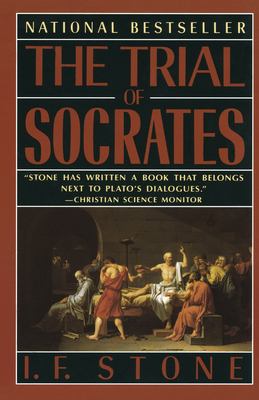
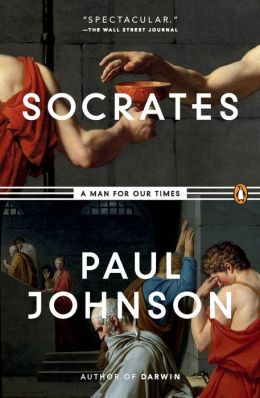
This is the second in a series of posts regarding Socrates and his modern legacy that began with a discussion of the books and authors involved – The Trial of Socrates by I.F. Stone and Socrates: A Man for Our Times by Paul Johnson . We are also getting some direction from a foremost academic authority on Socrates and Plato, the late Gregory Vlastos in the form of  his last book,  Socrates: Ironist and Moral Philosopher

The greatest divergence between Johnson and Stone is on the matter of Socrates and religion. This is is some importance because one of the charges leveled at Socrates by his accusers Anytus and Meletus was not believing in “the gods of city”and introducing new ones.

The sincerity of this specific charge is an interesting question. As both authors indicated, the century of pre-Socratic philosophers in Athens laid the cornerstone of empirical and rational thought about nature that were the forerunners of both materialism as well as science in the form of natural philosophy. This coincided with the rise of Athens to greatness and empire and a possible change in Athenian civic culture, not so much a secularization but an emphasis on humanism over mysticism in political affairs. This point Johnson was at pains to emphasize as the core nature of “the cultural revolution” wrought by “the Periclean regime” , where Protogoras was prominent sophist. Stone regards the transition to one where religion was “demoted…reduced to venerable fables and metaphorical personifications of natural forces and abstract ideas” which renders the religious question at Socrates’ trial a “distraction”.  The primitive awe in which the Greek gods were held during archaic times, gave way to a more ritualistic and cultural reverence in the classical period, or so this line of argument goes.

I am not certain this interpretation is correct to that exaggerated degree. It strikes me far more likely as a representation of the beliefs of  educated elite Athenians at the time than those of the middle classes or the thetes, or of Greeks from other cities. Pagan folk religion probably retained the same influence over public and private life in Athens as Christianity does in America in our own times. That is to say there were likely differences in religiosity between the aristocratic elite and the masses in democratic Athens and between political factions (democratic, moderate and extreme oligarchic).

Some contrasting examples: Nicias, whose political reputation with the Assembly was anchored in trust of his admirable piety, brought final disaster upon the Sicilian Expedition and himself with his obstinate, superstitious, deference to religious signs and soothsayers when the path of escape still remained open. Xenophon, in delicately rebuffing calls to accept rulership over the 10,000 in The Anabasis of Cyrus used pious arguments with the soldiers that he himself probably viewed with some degree of cynicism because they were an effective excuse to pass the leadership to a Spartan. Speaking of the Spartans, they were known in this time as “the craftsmen of war” not because of battle art but because of their zealous adherence to military religious ceremonials and divination of sacrificial animals to discern the will of the gods.

That does not sound much like a people for whom Zeus and Apollo were merely enjoyable campfire fables for children, figures of comic sport in the theater or convenient metaphors for chance or the weather.

Stone argued that Athenian religion had been “demoted” but did so for purposes of rebutting the claim of Socrates that decades of comic poets lampooning him in their plays (like The Clouds, by Aristophanes) had prejudiced the jury against him. Stone was also writing  The Trial of Socrates after the time when standards of  “traditional morality” had been challenged culturally and theologically during the sixties and seventies and were rejected by a significant part of the Baby Boom generation:

….As for not believing in gods, the Athenians were accustomed to hearing the gods treated disrespectfully in both the comic and the tragic theater. For two centuries before Socrates, the philosophers had been laying the foundations of natural science and metaphysical inquiry. Their gigantic pioneering in free thought still awes us as we pore over the fragments of these so-called pre-Socratics. Almost all the basic concepts of science and philosophy may be found there in embryo. They first spoke of evolution and conceived the atom. In the process the gods were not so much dethroned as demoted and bypassed. They were reduced to venerable fables or metaphorical personifications of natural forces and abstract ideas.

These philosophers were rationalists and rarely bothered with what we call “theology”. The very term was unknown to them. Indeed it does not appear in Greek until the century after Socrates. The word theologia – talk about gods – turns up for the first time in the Republic when Plato is explaining what the poets in utopia will not be allowed to say about the divine powers. In his ideal society a Socrates would have indeed been punishable for deviating from the state-sanctioned theologia, but not in Athens.

….Polytheism was, by it’s pluralistic nature, roomy and tolerant, open to new gods and new views of old ones. It’s mythology personified by natural forces and could be adapted easily, by allegory, to metaphysical concepts. These were the old gods in a new guise, and commanded a similar but fresh reverence.

Atheism was little known and difficult for a pagan to grasp because he saw divinity all about him, not just on Olympus but in the hearth and boundary stone, which were also divinities though of a humbler sort…..

….It was the political, not the philosophical or theological views which finally got Socrates into trouble. The discussion of religious views diverts attention from the real issues. 

Stone develops this theme further in his explanation of how Socrates might have won acquittal, had the old philosopher not been determined to antagonize his jury:

The indictment’s two counts are equally vague. No specific acts against the city are alleged. The complaints are against the teaching and beliefs of Socrates. Neither in the indictment – nor at the trial – was there any mention of any overt act of sacrilege or disrespect to the city’s gods or any overt attempt or conspiracy against it’s democratic institutions. Socrates was prosecuted for what he said, not for anything he did.

In other words, the charges against Socrates were of a very different character than the ones which had been made during the Expedition to Syracuse against the close associate and student of  Socrates, the ambitious demagogue Alcibiades. The latter had been charged with sacrilege, specifically defaming and vandalizing the Eleusinian Mysteries, forcing his recall as joint strategos over the expedition and summoning him back to Athens for trial. This ill-fated and poorly timed indictment may or may not have been false, but it had certainly been politically motivated and was the catalyst for the subsequent treason of Alcibiades and the military disaster in Sicily, both so damaging to Athens. That charge, unlike the one against Socrates however, was based upon real acts that had taken place, whether Alcibiades had been the culprit or not.

….on the impiety charge, Socrates is as vague as the indictment. He never discusses the accusation that he did not respect or believe in – the Greek verb used, nomizein, has both meanings – the gods of the city. Instead, he traps the the rather dim-witted Meletus into accusing him of Atheism, a charge he easily refutes. But there was no law against atheism in ancient Athens either before or after the trial. Indeed, the only place we find such a law proposed is in Plato’s Laws. In this respect, Plato was the exception to the tolerance that paganism showed to diverse cults and philosophic speculation about the gods.

….it was monotheism that brought religious intolerance into the world. When the Jews and Christians denied divinity to any god but their own, they were attacked as atheos or “godless”. This explains how – to borrow Novalis’s characterization of Spinoza – a “God-intoxicated” Jew and Christian like St. Paul could be called an “atheist” by pious and indignant pagans.” 

We will see later that Johnson takes a normatively very different, but logically complementary view to Stone on “Socratic monotheism”, who concludes:

By trapping Meletus into calling him an atheist, Socrates evaded the actual charge in the indictment. It did not accuse him of disbelief in Zeus and the Olympian divinities, or in gods generally. It charged disbelief in ‘the gods of the city”.

This was in the ancient Greek sense, a political crime, a crime against the gods of the Athenian polis. This is a crucial point often overlooked.

In Athens, Democracy was itself deified and personified, at least to the extent of having it’s own ritual priest in the annual theater of Dionysus – and what was old Socrates in the view of Stone but the teacher of antidemocratic and antipolitical doctrines in a city where the Democracy had been overthrown by the Thirty?

End Part II.

Discovering a New Circle of Hell

Monday, March 4th, 2013

There is an understandable buzz when a historical event as well known and deeply investigated as  the Holocaust has suddenly been found to have been underestimated by an order of magnitude.

From The New York Times:

The Holocaust Just Got More Shocking 

….As early as 1933, at the start of Hitler’s reign, the Third Reich established about 110 camps specifically designed to imprison some 10,000 political opponents and others, the researchers found. As Germany invaded and began occupying European neighbors, the use of camps and ghettos was expanded to confine and sometimes kill not only Jews but also homosexuals, Gypsies, Poles, Russians and many other ethnic groups in Eastern Europe. The camps and ghettos varied enormously in their mission, organization and size, depending on the Nazis’ needs, the researchers have found.

The biggest site identified is the infamous Warsaw Ghetto, which held about 500,000 people at its height. But as few as a dozen prisoners worked at one of the smallest camps, the München-Schwabing site in Germany. Small groups of prisoners were sent there from the Dachau concentration camp under armed guard. They were reportedly whipped and ordered to do manual labor at the home of a fervent Nazi patron known as “Sister Pia,” cleaning her house, tending her garden and even building children’s toys for her.

When the research began in 2000, Dr. Megargee said he expected to find perhaps 7,000 Nazi camps and ghettos, based on postwar estimates. But the numbers kept climbing — first to 11,500, then 20,000, then 30,000, and now 42,500.

The numbers astound: 30,000 slave labor camps; 1,150 Jewish ghettos; 980 concentration camps; 1,000 prisoner-of-war camps; 500 brothels filled with sex slaves; and thousands of other camps used for euthanizing the elderly and infirm, performing forced abortions, “Germanizing” prisoners or transporting victims to killing centers.

In Berlin alone, researchers have documented some 3,000 camps and so-called Jew houses, while Hamburg held 1,300 sites.

….The lead editors on the project, Geoffrey Megargee and Martin Dean, estimate that 15 million to 20 million people died or were imprisoned in the sites that they have identified as part of a multivolume encyclopedia

Read the rest here.

Perhaps some of you will recall the controversy in the late 1990’s surrounding the release of Hitler’s Willing Executioners by Daniel Goldhagen where Goldhagen argued that Nazi genocide was only possible with the widespread complicity and often enthusiastic participation of “ordinary Germans” who were not themselves Gestapo agents or Nazi fanatics.  One of the primary charges against Goldhagen by academic historians was his generalizing indictment of a generation of Germans for Nazi policy that was, for all intents and purposes, officially a state secret.  After all, the closest thing to a “public” discussion in the Third Reich of the Final Solution was a terrifying speech by SS-Reichsfuhrer Heinrich Himmler at the Posen Conference to an assembly of Gauleiters  and Reichsleiters who constituted the aristocracy of the Nazi Party.

The sheer geographic density and social ubiquity of the Nazi machinery of repression and genocide documented by researchers severely undermines the critics of Goldhagen. While it is well documented that most Germans, unless they were political opponent or social misfits, did not personally feel the heavy hand of the Gestapo in the way Soviet citizens experienced the NKVD, Germans during the war years irrefutably lived cheek by jowl with the miserably wretched slaves of the Reich.

Some of the shock produced by this investigation is due to an artificial “parsing of genocide” by historians into distinct categories of death-dealing instead of looking at Nazi democide as a whole cloth or continuum.

In the immediate aftermath of the war, there was little interest beyond the Nuremberg  Tribunal in delving into the depths of Nazi crimes. Reconstruction of Europe and “getting on with life” or the exigencies of the Cold War and the ominous threat of the Soviets took far greater precedence. Even among Holocaust survivors themselves, there was initially an effort to “move on” from the unimaginable, or to make a anguished pretense of so doing, as expressed in the critically acclaimed Rod Steiger film, The Pawnbroker. When historians began more serious examinations of Nazi crimes in the 1960’s and 1970’s, there was a tendency to separate the Holocaust from related or similar atrocities due in part to the overriding ideological emphasis the most extreme Nazis placed upon the total and absolute elimination of all Jews – every last one – at all costs,. Even over and above winning the war.

However, that genocidal crusade by the SS against the Jews also facilitated the deaths of millions of others – including the Gypsies (marked for nearly complete extermination), the “useless eaters“, some 700,000 Serbs to please the Ustase puppet regime, political opponents who disappeared into the Night and Fog, and a vast democide of Slavic peoples to feed the Third Reich’s inexhaustible need for slave labor. Albert Speer wrote that Himmler coldly planned a further massive reduction of the Russian and Ukranian populations west of the Urals to build a post-war Nazi racial empire in vanquished Russia.

The scale of murder by totalitarian governments in the 20th century approaches the mythic, a phenomena for which the Holocaust has become a totem.

Elkus on Policy Relevance

Monday, February 18th, 2013

Intriguing and vigorously argued piece by Adam over at Abu Muqawama

Relevant to Policy?

Are we in a 1914 scenario in East Asia? How often do guerrillas succeed? Did counterterrorism law erode national sovereignty? These are just a few of the important questions that political science has some bearing on. Yet barely a couple months goes by without an op-ed decrying political science’s alleged lack of relevance to the outside world.

Political scientists are frequently told their research is too arcane, mathematical, and self-involved to be of possible value to anyone in Washington dealing with real-world policy problems. There’s a grain of truth here. As international political economy whiz Kindred Winecoff observes, political scientists need to make a better “elevator pitch.” But here’s the problem: at the end of the day, there is a difference between what Max Weber dubbed science as a vocation and the subjective policy lessons we can take from our study. Part of that gap is reflected in the difficulties that people with purely policy interests inevitably encounter in PhD programs.

From my own (minor) experience so far, it is grueling, necessitates the assimilation of difficult methodologies, and involves having to think about intellectual questions that many people would regard as hopelessly arcane. Even a good PhD program that directly tackles policy questions will likely demand the student grapple with questions of esoteric theory and method. And not all research that tackles highly abstract questions is policy-irrelevant. Highly technical analysis of game theory and economics generated useful policy applications form the World War II convoy system to nuclear strategy and wargaming.

All of these advances began from the desire to grapple with difficult questions to produce knowledge, something many critics of political science research do not acknowledge. Take Greg Ferenstein, who penned an article supporting Eric Cantor’s call to defund the NSF. His gripe is familiar. Political science is obscuratist, hyper-mathematical, and disconnected from the policy world. Political scientists don’t do enough to make their research accessible to policymakers. Ferenstein wants a political science that his mother-in-law can understand, and he thinks starving academia of resources will motivate hungry researchers to do better. So is modern political science irrelevant to policy needs?

Contra Ferenstein, policymakers have thrown substantial $$ at the kind of research he regards as navel-gazing arcana. The RAND Corporation got a lot of mileage using what Ferenstein derides as “clever mathematical models” during the Cold War.  I’m not sure that Jay Ulfelder, who worked for the intelligence community-funded Political Instability Task Force, would agree that his quantitative forecasting methodologies must pass a mother-in-law test to be valuable. And when New York University’s game theory guru Bruce Bueno De Mesquita speaks, the CIA listens. Drew Conway, a man that could easily teach a computer programming course just as well as poli-sci 101, gives invited talks at West Point on analyzing terrorist networks. I don’t think Ulfelder, Mesquita, or Conway have sleepless nights pondering the relevance of their research to the govermment!

Read the rest here 

As an aside, I have found Ulfelder’s posts on his research or comments on the field at Dart Throwing Chimp to be very useful and worth reading.


On Socrates and His Legacy, Part I.

Thursday, February 14th, 2013

Recently, I finished two books on the iconic ancient Athenian philosopher Socrates, both of which pointed me to a third. The books were of a very different character and quality, yet together raised an important dichotomy about a man who lived 2400 years ago, whose intellectual legacy contributed to the shaping of Western civilization. The Stoics and Cynics looked back to Socrates as their forerunner; Socrates’ greatest student Plato became the most influential philosopher of the written word of all time, rivaled only by his own protege, Aristotle. So definitive was the influence of Socrates and his inexhaustible store of questions that all the Greek philosophers who came before him are reckoned “the pre-Socratics“. Yet he was put to death by the Democracy that had proudly boasted of being the “the school of Hellas“.

Who then, was the historical Socrates?

Socrates shares, to a lesser degree, the enigmatic quality of Buddha, Jesus and his own near contemporary, Confucius; we know more about Socrates than we do the others, but as with the others, it is all secondhand. Having written nothing himself, we must rely on the apologia of his disciples, the barbs of his critics, some statuary relics and the commentary of philosophers and historians from later in antiquity who had access to sources now lost to tell us of Socrates.

Here are the books:


The Trial of Socrates by I.F. Stone

Socrates: A Man for Our Times by Paul Johnson  

Both authors were splendid prose writers, otherwise they are a study in contrasts. The late I.F. Stone was a famous radical, an antifascist, an investigative, “muckraking” journalist of the mid twentieth century and, for a time,  a Soviet agent during the “Red decade” of the Thirties. Stone, who was noted for his diligence with using government documents as a reporter, unearthing scoops everyone else had missed, became, in his retirement, a scholar of antiquity who read deeply in the classics in the original ancient Greek.

Paul Johnson began his career as a prolific writer and popular historian on the British Left with The New Statesman and over time shifted rightward to become a leading Anglo-Catholic conservative public intellectual, an adviser to Margaret Thatcher and an author of 40 books. Johnson is most known for his best-sellers that tackled panoramic and encompassing subjects – The Birth of the Modern, Intellectuals and The History of the Jews, often written from a highly idiosyncratic, as well as a conservative, perspective.

Of the two books, Stone’s  The Trial of Socrates is by far the most substantive. Stone relies heavily, though not exclusively, upon primary sources in the original Greek to build his argument, which is that Socrates was executed because of his militant, arch-reactionary, “antipolitical” opposition to self-government, especially in the form of the Democracy; and further, that Socrates’ actions at his trial were perversely designed to inflame the jury which might easily have acquitted him.  Socrates:A Man for our Times by Johnson is based on English translations of primary sources and secondary sources, is lighter in tone and much closer to being an essay. Johnson is evaluating the importance of Socrates in a broad, civilizational, context while Stone trying to tell what really happened while simultaneously judging Socrates culpability.

One point on which both authors have agreement is the mendacity and artistry with which Plato has made this task more difficult. I.F. Stone generally sees a “sneering” antidemocratic political continuity between Socrates and all of his disciples Plato, Xenophon, Charmides, Critias, Antisthenes and Alcibiades but even Stone cannot stomach Plato’s casual misuse (or abuse) of Socrates in his later dialogues to vent petty gripes and snobbish airs. Writing of an insulting passage in The Republic:

….Plato put this into the mouth of Socrates many years after the latter’s death. There is no evidence that the historical Socrates ever spoke so unkindly or pretentiously. Otherwise Socrates could not have had the lifelong affection of his oldest disciple, the “low-born” Antisthenes; his mother was a Thracian, hence he was twitted for not being of pure Attic blood (Diogenes Laertes, 6.1). Several scholars believe this was Plato’s slur against his fourth century rival – and Socrates’ old friend – Isocrates.[255]

Paul Johnson goes much further; attributing much that scholars regard as negative in Socrates’ reputation to the machinations of Plato using his late master as “a ventriloquist’s dummy”, a caricature Johnson calls “PlatSoc” to add authority to his own views and theories in which Socrates never believed or more likely, never even had heard:

….As an intellectual he [Plato] began to formulate his own ideas. As an academic he quickly merged them into a system. As a teacher he used Socrates to spread and perpetuate it. In his earlier writings Plato presented Socrates as a living breathing, thinking person, a real man. but as Plato’s ideas took shape, demanding propagation, poor Socrates whose actual death Plato had so lamented, was killed a second time, so that he became a mere wooden man, a ventriloquist’s doll, to voice not his own philosophy but Plato’s.

….So the act of transforming a living, historical thinker into a mindless, speaking doll – the murder and quasi-diabolical possession of a famous brain – became in Plato’s eyes a positive virtue. That is the only charitable way of describing one of the most unscrupulous acts in intellectual history. Thus Plato, with no doubt the best of intentions, created like Frankenstein, an artificial monster-philosopher [11]

There are other sources of information regarding Socrates than Plato, of course.  Xenophon, also wrote an apologia; Aristophanes and other comic poets satirized Socrates in their plays, the philosopher being a “public figure” in Athens as much as was Pericles or Cleon (Socrates apparently could take a joke much better than the litigious and bloodthirsty demagogue Cleon); Aristotle had informed speculations regarding Socrates based on his long (and one suspects trying) tutelage under Plato and there are Roman writers such as Cicero who had access to sources now lost, but Plato remains the most prolific.

This is important, because the central thesis in The Trial of Socrates is that Socrates is not merely an “antidemocratic” gadfly in Athens, but an arch-reactionary teacher of “antipolitical” doctrines. That is to say that Stone argued that Socrates and his followers rejected the concept of the self-governing “polis” itself, oligarchy as much as democracy, that men were a “herd” fit only for a shepherd, an absolute Homeric ruler defined by Socrates as “the One who Knows”. Stone argues, with accuracy, that Socrates disciples, despite differences in personality and philosophy, shared a common disdain for democratic politics and furthermore, that Socrates teaching repeatedly led to cohorts of aristocratic, pro-Spartan,”Socratified youth” who twice supported the overthrow of the Democracy. In short that Socrates was tried because his activities, his “examinations”, were ultimately politically subversive to the state in a time of danger and instigated civil strife.

This means, to judge Stone’s argument requires that we discern Socrates from Plato that in turn requires some expertise on Plato. This need to sift Platonic dialogues explains why both Johnson and Stone, despite Stone’s ability to work with the primary texts in the original Greek, turned to the scholarship of Gregory Vlastos for guidance. Vlastos was a seminal figure in the field of Platonist philosophy whose work is described by other scholars as “transformative” and having “a vast influence” who best parsed Socrates from his artfully prolix disciple. Because of Stone and Johnson, I have picked up what is regarded by many as “the best book on Socrates” – Socrates: Ironist and Moral Philosopher by Gregory Vlastos.

Vlastos, in this final book, ultimately came closer to Johnson’s position in the sense that some of what  moderns find disagreeable in Socrates and what Stone criticizes in particular – the harsh antidemocratic edge – is more a product of Plato’s literary handiwork than the philosophy of the historical Socrates. Vlastos writes:

I have been speaking of a “Socrates” in Plato. There are two of them. In different segments of Plato’s corpus two philosophers bear that name. The individual remains the same. But in different sets of dialogues he pursues philosophies so different that they could not have been depicted as cohabitating in the same brain throughout unless it had been the brain of a schizophrenic

The early Socrates of the Elenctic Dialogues is the most genuine in the view of Vlastos.

End Part I.


Switch to our mobile site