zenpundit.com » freedom

Archive for the ‘freedom’ Category

Remarkable

Tuesday, January 11th, 2011

A popular and respected Democratic member of Congress is shot by a lunatic and her partisan colleagues honor her by proposing to restrict political speech, give themselves special privileges at airports and to give all members of Congress and, apparently, the Federal judiciary, the statutory status of the President if the United States.

“We’ve had some incidents where TSA authorities think that congresspeople should be treated like everybody else,” he [ Rep. Clyburn] said. “Well, the fact of the matter is, we are held to a higher standard in so many other areas, and I think we need to take a hard look at exactly how the TSA interact with members of Congress.”

The indignity of it all! A Congressman, treated as if he was under the same laws as his fellow citizens. An outrage. Maybe with that “harder look” Representative Clyburn can take a little time for how his fellow Americans are being treated by TSA as well.

Perhaps granting the Democratic House minority leadership and their children a few hereditary titles of nobility and some estates on Federal lands would cut to the chase for what these people are really after. At a minimum that would be as relevant a response to the shooting of Rep. Giffords as empowering the FCC to censor FOXnews and force Rush Limbaugh off of the airwaves – and it would do our constitutional order a whole lot less harm. I am perfectly content to refer to Rep. Clyburn as Viscout, Prince-bishop or Archduke if he in turn agreed to, say, read the Bill of Rights. Better late than never, I say.

Incidentally, making credible death threats against anyone is already a crime in most jurisdictions I am aware of, albeit one insufficiently prosecuted by DA’s. Threatening USG officials is a Federal offense.

Seeing Like A State

Sunday, January 2nd, 2011

Liberal-left economist Brad DeLong knew his Austrian economics better than the author of Seeing Like a State did. Amusing.

Hat tip to John Hagel.

The Mob of Virtue

Sunday, August 1st, 2010


Small “r” republican virtue, to be precise.

A wise man once told me that a weakness of our Constitutional system was that the Framers implicitly presumed that people of a truly dangerous character, from bullies to bandits to political menaces to the community, would primarily be dealt with in age-old fashion by outraged neighbors whose rights had been trespassed and persons abused one time too many. They did not prepare for a time when communities would be prohibited from doing so by a government that also, as a whole, had slipped the leash. Indeed, having read LockeMontesquieuCicero, Polybius, Aristotle and Plato, they expected that such a state of affairs was “corruption” of the sort that plagued the Old World and might happen here in time. A sign of cultural decadence and political decay. They gave Americans, in the words of Benjamin Franklin, “A republic, if you can keep it”. It remains so only with our vigilance.

It is happening now.

We have forgotten – or rather, deliberately been taught and encouraged to forget – the meaning of citizenship.

We have let things slip.

Joseph Fouche superbly captures this implicit element, the consequences of the loss of fear of  informal but very real community sanction, in his most recent post:

People Like Us Give Mobs a Bad Name

….A classic American mob could exhibit any or all of these strategies. It could be a saint inciting a mob to attack others who deviated from a shared narrative. It could be a knave in saint’s clothing inciting an attack on personal rivals. It could be a moralist inciting a mob against the local knaves. The one constant is that an American mob was an expression of communal self-government by moralists seeking to punish what they saw as deviant, even if its manifestation was frequently unpleasant. It was a sign the local people were engaged.

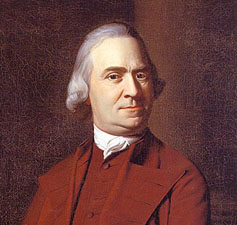
Samuel Adams was the Lenin of the American Revolution. He conceived a hatred for the British Empire and a desire for American independence well before anyone else did. Adams skillfully used mobs alongside legal pretense to incrementally spread his agenda. Others followed his example. In the Worcester Revolution of 1774, the local population shut down the normal operations of royal government in west and central Massachusetts and drove royal officials out of those regions (the book to read is Ray Raphael’s The First American Revolution: Before Lexington and Concord). The British crown lost control of inland Massachusetts before Lexington and Concord were even fought.

However, eleven years later, when many of the same local residents attempted to do the same thing in protest of the policies of a now independent Massachusetts, the state government put down their rebellion with Samuel Adams’s strong support. The difference? An apocryphal remark attributed to Adams captures some of the truth behind his attitude: “the man who dares to rebel against the laws of a republic ought to suffer death”. Mobs protesting the actions of an unrepresentative government like the British Parliament, Adams argued, were valid. Mobs protesting the actions of a representative government like Massachusetts’s state government, on the other hand, were treasonous. This doctrine, supported by other Revolutionary leaders, especially the cabal behind the Order of the Cincinnati, was eventually enshrined as the higher law of the land in the slow motion coup d’etat that overthrew the Articles of Confederation and replaced it with the more authoritarian United States Constitution in 1787-1788.

While mobs continued to combine, they were gradually neutered by the conscious agenda of American elites who sought to replace informal norms enforced by communal censure with formal norms applied under the professional supervision of “wiser heads”. This was a collusion between saints and knaves against moralists. Saints got purer standards that were not reliant on the whims of moralists who got stirred up in unpredictable ways that might violate the saints’ prevailing narrative while knaves got credentials that allowed them to entrench their positions and agendas under the cover of serving a higher good. The same sense of community morality and punishment that gave nineteenth century self-government its vigor and occasional excess was weakened as moralists were tuned out by saints embedded in holy isolation and knaves concerned only with advancing personal priorities. Moralists saw the knaves getting away with free riding off of them and began to opt out, leaving room for more knaves to free ride. For a little formal pretense, the returns on rent seeking were enormous.

The ideal went from a citizenry engaged in self-government to a system designed to advance the best and brightest. Meritocracy sounds good in theory and has some positives in reality. However, a perfect meritocracy is a perfect tyranny. All of the leaders are on once side and all the followers are on the other. This tendency toward the separation of the best from the rest may only be checked by the tendency of those on the ascendant to favor their own children, whatever their merit, over strangers that are more meritorious. This will force some aspiring meritocrats to side with the followers and bring about a rotation of elites. But the transition may take a while and its best to start before you have a meritocratic problem….

Read the whole post here.

Today’s circumstances, with the elite determinedly crafting rules for the mass but not for their class, have an ominous portent for the future of America as a democratic republic, but violence is not yet required.

Political engagement is.

A Few Thoughts on Data Aggregation

Monday, May 17th, 2010


Big Brother on the Make….or perhaps, the take….

Outside of specific and targeted investigational contexts for law enforcement and intelligence, the Federal government really does not need to know what products we buy at the grocery store, what books we buy or check out at the library, the magazines to which we subscribe, our car payments, what kind of food we eat, the websites we visit, how we use our credit cards and where. It’s not actually the government’s business, and presumably, the 4th Amendment indicates they need a compelling interest before they are allowed to snoop.

Senator Chris Dodd (D-Conn) is working hard….to make sure the Feds are watching your every move. Unless you are an illegal alien of course.

What passes for Liberalism these days is a strange ideology – American citizens are to be treated as criminals to be kept under continuous government surveillance but if you are a foreigner who enters the country illegally, you should get special dispensations from police questioning.  Or unless you are a foreign terrorist overseas or in communication with one. WTF?

Adaptive Thinking, Resilient Behavior

Tuesday, April 20th, 2010

Two items:

RAND emeritus David Ronfeldt called my attention today (thanks David!) to this article by futurist David Brin:

Forgetting our American tradition:The folly of relying exclusively on a professional protector caste

Today we face (but largely ignore) a major historical anomaly. From our nation’s birth all the way until the end of the Vietnam War, America’s chief approach to dealing with danger — both anticipated threats and those that took us by surprise — was to rely upon a robust citizenry to quickly supplement, augment and reinforce the thin veneer of professionals in a relatively small peacetime warrior-protector caste.  Toward this end, society relied primarily upon concepts of robustness and resilience, rather than attempting to anticipate and forestall every conceivable danger. 

This emphasis changed, dramatically, starting with the Second World War, but accelerating after Vietnam. Some reasons for the shift toward professionalism were excellent and even overdue.  Nevertheless, it is clearly long past-time for a little perspective and reflection.

Over the course of the last two decades, while doing “future threats” consultations for DoD, DTRA, NRO, CIA, the Navy, Air Force, etc., I have watched this distinction grow ever-more stark — contrasting an older American reflex that relied on citizen-level resilience vs. the more recent emphasis on anticipation and the surgical removal of threats.  Inexorably, the Protector Class has increasingly come to consider itself wholly separate from the Protected.  In fact, our military, security and intelligence services have reached a point where – even when they engage in self-critical introspection – they seem unable to even ask questions that ponder resilience issues.

Instead, the question always boils down to: “How can we better anticipate, cover, and overcome all conceivable or plausible threat envelopes?”

While this is a worthy and admirable emphasis for protectors to take, it is also profoundly and narrowly overspecialized.  It reflects a counterfactual assumption that, given sufficient funding, these communities can not only anticipate all future shocks, but prepare adequately to deal with them on a strictly in-house basis, through the application of fiercely effective professional action…..

Read the rest here.

Secondly, I wanted to highlight that Don Vandergriff, a student of John Boyd’s strategic philosophy and the pioneer of adaptive leadership training , recently received a glowing mention in Fast Company magazine:

How to Buck the System the Right Way

….What GM is doing is mining the talent of its leaders in the middle. To lead up effectively, there are three characteristics you need to leverage.

Credibility. You must know your stuff especially when you are not the one in charge. When you are seeking to make a case to senior manager, or even to colleagues, what you know must be grounded in reality. At the same time, so often, as is the case at GM, you need to be able to think and act differently. So your track record reinforces your credibility. That is, what you have done before gives credence to what you want to do in the future.

Influence. Knowing how to persuade others is critical for someone seeking to effect change. If you do not have line authority, how else but through influence can you succeed? Your influence is based on credibility, but also on your proven ability to get things done. Sometimes persuasion comes down to an ability to sweet talk the higher ups as well as put a bit of muscle on colleagues (nicely of course) in order push your initiative through.

Respect. Mavericks, which GM said it was looking for, may not always be the most easiest people to get along with on a daily basis. After all, they are ones seeking to buck the system. But mavericks who succeed are ones who have the best interests of the organization at heart and in time earn the respect of thier colleagues.

One maverick I know who has been pushing to change the way the U.S. Army trains and promotes its officer corps is Don Vandergriff. A former Army major and twice named ROTC instructor of the year while at Georgetown, Vandergriff has tirelessly badgered the Army’s senior leadership to institute changes that would recognize and promote officers who knew how to lead from the middle.

And now, after more than a decade of his writing and teaching, it is paying off. West Point has become the latest but perhaps the most prestigious Army institution to teach principles of adaptive decision making that Don developed. Many of Don’s students have implemented such lessons successfully under combat situations in Iraq and Afghanistan.

Read the rest here

Don’s methods excel at getting students to think creatively under the constraints of limited information, situational uncertainty and time pressure ( making the cognitive effect somewhat akin to the effects produced by the Socratic method and complex game playing).

ADDENDUM:


This would also be a suitable post to remind readers that Dr. Chet Richards has moved his blogging operations to a new site, Fast Transients.

Adjust your favorites and blogrolls accordingly.

Switch to our mobile site