zenpundit.com » state department

Archive for the ‘state department’ Category

A Tale of Two Victories and Two Falls

Sunday, November 11th, 2012
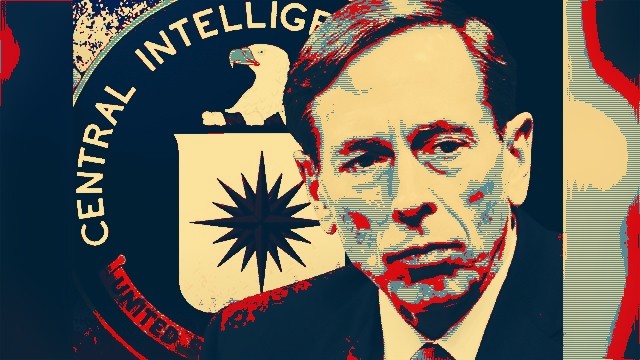
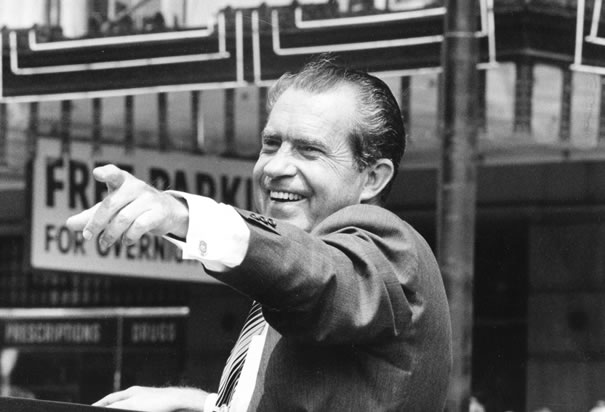
My co-blogger Charles Cameron is fond of his “DoubleQuotes” postings that feature frequently uncomfortable juxtapositions designed to prod thinking. Here’s a wordier one from me:

….Planning for a second term has been under way for months, with Lew and Pete Rouse, the counselor to the president and Obama’s internal management guru, preparing lists of possible promotions and nominations. The staff process has been gossiped about by the staff, but details have been kept secret, even from insiders.

“They haven’t even made calls. People haven’t been asked,” said a Democrat familiar with the situation. “They’re more targets than they are potential nominees.”

Now, officials will start to cement their departure dates, and aides will sound out colleagues about possible new roles. Among the top current officials expected to go: Treasury Secretary Timothy Geithner, Secretary of State Hillary Clinton, Defense Secretary Leon Panetta, Energy Secretary Steven Chu, Interior Secretary Ken Salazar and Lisa Jackson, administrator of the Environmental Protection Agency.

Attorney General Eric Holder and Transportation Secretary Ray LaHood might not be far behind — or may even beat them out the door.

There’s also a growing list of people the administration is looking to find spots for: Massachusetts Gov. Deval Patrick most of all, as well as former Michigan Gov. Jennifer Granholm and outgoing North Dakota Sen. Kent Conrad.

Obama has overseen one of the most stable cabinets in history — the only departures have been Defense Secretary Robert Gates, and Gary Locke and John Bryson from Commerce. But what’s about to happen amounts to an almost full-scale second transition: 


….At eleven o’clock in the morning, Nixon met with his staff in the Roosevelt Room. To many in the room he seemed oddly cool and quietly angry as he thanked them all for their loyalty and said something few of them understood. He said that he had been reading Robert Blake’s Disraeli and was struck by his description a century ago of William Gladstone’s ministers as “exhausted volcanoes” – and then mumbled something about embers that once shot sparks into the sky.

“I believe men exhaust themselves in government without realizing it” the president said “You are my first team, but today we start fresh for the next four years. We need new blood, fresh ideas. Change is important…..Bob, you take over.”

Nixon left then, turning the meeting over to Haldeman. The men and women of the White House stood to applaud his exit, then sat down. The chief explained what Nixon’s words meant: a reorganization of the administration. He told them that they were expected to deliver letters of resignation before the end of the day, then passed out photocopied forms requiring them to list all official documents in their possession. “These must be in by November 10,” he said. “This should accompany your pro forma letter of resignation to be effective at the pleasure of the President”. They were stunned. Speechless. Were they being fired? Haldeman said they would know within a month whether or not they could remain. At noon, the same drama was played out with the entire Cabinet, with Haldeman again passing out the forms.

Ironically, one of the many Cabinet secretaries Nixon ignominiously fired in his bid to centralize power in his White House staff was his former 1968 primary rival, HUD Secretary George Romney, father of 2012 Republican nominee, Governor Mitt Romney.  A blow from which George Romney’s political career never recovered. Nixon’s relationship with Romney had been an acrimonious one, formally polite on the surface with public shows of confidence by Nixon and machiavellian intrigues behind the scenes to undermine Romney and reverse the policies he had been advancing in Nixon’s name.

This latest Cabinet reshuffle to build a “Team without Rivals”, comes in the context of an explosive story, the abrupt resignation Friday of CIA Director General David Petraeus, citing an extramarital affair and accepting responsibility for “extremely poor judgment” and “unacceptable conduct”. The affair, allegedly conducted with his official biographer, came to light during a still not fully explained FBI investigation into unauthorized accessing of Petraeus’ private email account. The resignation of the highly regarded General Petraeus comes just before he was expected to testify before Congress regarding discrepancies and questions in the administrations handling of the terrorist attack in Benghazi that killed Ambassador Chris Stevens and other Americans. It also coincides with the Secretary of State Hillary Clinton, declining to testify.

It is difficult to say if General Petraeus public career will survive this scandal that he has brought upon himself, an action which stands in jarring contrast to his sterling, some might say superhuman, record of service to America, or if he will, like George Romney, fade away. Certainly, the CIA badly needed to stop the revolving door on the Director’s office and have a strong, visionary, hands-on leader who could reform and invigorate the Agency not merely in terms of covert action but in terms of rebuilding of capacity in deep cover clandestinity and the acquisition of strategic intel. I do not often find myself in agreement with Senator Feinstein but she is correct, this resignation hurts because it is also a significant institutional opportunity cost for the IC. I too wish it had not been accepted  – at one time it wouldn’t have been – but that is the President’s prerogative.

What however are the real issues? What should we be looking for?

Two things: As with Richard Nixon’s second term machinations, with such sweeping changes personnel changes in the offing for the Obama administration, ask yourself as events unfold: “Where is power flowing? And Why?”

If you do you will be in a better position to game out the direction of the next four years, especially in foreign policy and national security.

The White House has attempted to sell a story that the FBI doing a low-level harassment investigation  stumbled upon a security breach and – on their own authority, mind you – tapped the email account of the Director of the CIA and kept him under surveillance and investigated his mistress and, oh, yeah, the President was only informed of this business after the election on Thursday. Wait! And the DNI ( a three star general whose career was primarily intel administration) on his own initiative called the CIA Director ( a four star general and former theater and combatant commander) in on the carpet and fired him told him to resign. Right.

No, what most likely happened was that the minute the special agents realized who was involved in their investigation and the magnitude of the implications, they stopped and informed their superiors and the matter went up the chain to the FBI Director’s desk. The FBI Director, a former prosecutor with a political antennae circumspect enough to be appointed by George W. Bush and have his term be extended by Barack Obama, would have duly informed the Attorney-General of the United States before proceeding further and – I expect – the National Security Adviser, White House Chief of Staff and the DNI. Worst case scenario thinking in terms of national security would have been one driver. Another would be the fear of an all too juicy story leaking and the media catching an unbriefed POTUS unaware on the campaign trail with a blockbuster scandal before the election. How would that have gone over?

I would further expect that we will in the next few days and weeks hear the most salacious contents of the emails between Petraeus and his biographer, leaked by anonymous officials, timed to coincide with difficult days of testimony regarding Benghazi or new appointments to the administration that could, on a slow media day, prove controversial.

Instead of being distracted by prurient nonsense unrelated to the stewardship of the Republic, time would be better spent scrutinizing the host of nominations to come, not as individuals but as “teams” for particular areas of national security and foreign affairs cutting across bureaucracies – ex. arms control, Russian relations, Mideast etc. What commonalities or congruencies emerge?

I suggest this because back when the Obama administration decided on their “pivot” to Asia, the people they selected for second to third tier workday management related to the Asia-Pacific region were all accomplished, decent, honorable public servants, but their greatest common characteristic was a lack of any professional expertise with China. We saw the same personnel gambit with the Bush administration in the run-up to the war with Iraq where the greatest disqualifier for a job with the CPA was familiarity with the Arab world, Islam or Iraq. When you want careful stratagems, you solicit the advice of experts; when you want grand and revolutionary gestures, the wheels of policy are better greased with bold ignorance. There’s a reason Nixon appointed William Rogers Secretary of State – he knew the State Department bureaucracy would largely oppose his foreign policy initiatives and he wanted someone ill-suited and uninformed in charge there who he could more easily manipulate and keep in the dark.

The sixties radicals used to assert “the personal is the political”; in the eighties, Ronald Reagan in staffing his first administration understood that “the personnel are the political” and picked people culled from Heritage and Cato. My intuition is that in the second decade of the 21st century, the inside circle of the Obama administration have discovered that ” the political are the patterns”.

The story unfolding is no longer the “smoking gun” or the compromising jigsaw piece but the entirety of the puzzle.


Let not thy left hand know what thy right hand doeth

Tuesday, October 2nd, 2012

[ by Charles Cameron — this post is about comparisons — what you make of them, and what they make of you, death calculus, and Handel ]
.


.

Scraped from my morning read, these two quotes — a tweeted headline from Breitbart and a gobbit of the Jerusalem Post — neatly illustrate a paradox I’ve been wrestling with, the way more profound souls wrestle with angels [link is to Rilke].

It’s the paradox of comparison.

**

On the one hand, I can barely imagine what it would be like to build — with, say, enough funds for a latter-day Manhattan Project — a Department whose job it was to monitor all activities and ensure even-handedness in the allocation of resources.

So that not ever would a Presidential aide on vacation receive a security detail until each and every ambassador had an equivalent force of marines around them at any given moment, in embassy or out.

I mean, what about consuls, or CIA heads of station — are they ambassadorial enough? Members of the cabinet on vacation? Members of the National Security Council? How far do we need to go with our even-handedness? Is Benghazi different from London? Londonistan?

How would one possibly assure oneself that no “hand” of government, left, right, center, upper, lower, or oblique to all of the above, ever arranged things in a way that compared foolishly with the way some other “hand” of government had arranged something more or less similar?

**

Let’s go to what my friend Bryan Alexander calls the death calculus. Since we’re interested in terrorism here, I’ll pull quotes from a couple of pieces that you can read in full if this topic interests you. Two paras from TomDispatch:

In 2008, 14,180 Americans were murdered, according to the FBI. In that year, there were 34,017 fatal vehicle crashes in the U.S. and, so the U.S. Fire Administration tells us, 3,320 deaths by fire. More than 11,000 Americans died of the swine flu between April and mid-December 2009, according to the Centers for Disease Control and Prevention; on average, a staggering 443,600 Americans die yearly of illnesses related to tobacco use, reports the American Cancer Society;5,000 Americans die annually from food-borne diseases; an estimated 1,760children died from abuse or neglect in 2007; and the next year, 560 Americans died of weather-related conditions, according to the National Weather Service, including 126 from tornadoes, 67 from rip tides, 58 from flash floods, 27 from lightning, 27 from avalanches, and 1 from a dust devil.

and:

The now-infamous Northwest Airlines Flight 253, carrying Umar Farouk Abdulmutallab and his bomb-laden underwear toward Detroit on Christmas Day 2009, had 290 passengers and crew, all of whom survived. Had the inept Abdulmutallab actually succeeded, the death toll would not have equaled the 324 traffic fatalities in Nevada in 2008; while the destruction of four Flight 253s from terrorism would not have equaled New York State’s 2008 traffic death toll of1,231, 341 of whom, or 51 more than those on Flight 253, were classified as “alcohol-impaired fatalities.”

Two paras from a Salon piece [copied here sans links and emphases]:

“The number of people worldwide who are killed by Muslim-type terrorists, Al Qaeda wannabes, is maybe a few hundred outside of war zones. It’s basically the same number of people who die drowning in the bathtub each year,” said John Mueller, an Ohio State University professor who has written extensively about the balance between threat and expenditures in fighting terrorism.

Last year, McClatchy characterized this threat in similar terms: “undoubtedly more American citizens died overseas from traffic accidents or intestinal illnesses than from terrorism.” The March, 2011, Harper’s Index expressed the point this way: “Number of American civilians who died worldwide in terrorist attacks last year: 8 — Minimum number who died after being struck by lightning: 29.” That’s the threat in the name of which a vast domestic Security State is constructed, wars and other attacks are and continue to be launched, and trillions of dollars are transferred to the private security and defense contracting industry at exactly the time that Americans — even as they face massive wealth inequality — are told that they must sacrifice basic economic security because of budgetary constraints.

**

My points?

On the one hand, that the world is far too complex to avoid disparities that can draw mockery down on the heads of those one might wish to mock.

And on the other, that comparisons also have an invaluable role to play in giving us a sense of the relative peaks and valleys of the terrain we live in — and may be literally or metaphorically mountaintop removal / valley fill coal mining in preparation for our children’s children…

**

Here’s a “DoubleQuote” for you:

Or for the musically inclined:

Now there’s a fascinating comparison (between the mining and the music) that doesn’t tell you much. Or does it?

**

Onwards to the issue of that sacred plateau in Jerusalem, featured as my second “reading for the day” at the top of this post.

It appears that you can be arrested for carrying a concealed knife on the Noble Sanctuary — or tallit or tefillin on Temple Mount — same place, different perspective.

That’s the sort of comparison that makes me catch my breath with wonder.

As the Famous Thinkers School might ask, giving you a pencil and a blank sheet of paper: can you draw this conclusion?

**

The full text of Matthew 6.3 reads in the KJV:

But when thou doest alms, let not thy left hand know what thy right hand doeth:

Marangolo P and associates uses a significant variant of that verse in the title of a learned paper: Let not thy left hand know what thy right hand knoweth. The case of a patient with an infarct involving the callosal pathways.

Brain malfunctions (and brain surgeries) can provide windows of considerable interest on our human condition, as the writings of Oliver Sacks so eloquently demonstrate.

New Book: Mission Revolution by Jennifer Morrison Taw

Sunday, September 16th, 2012

Mission Revolution: The US Military and Stability Operations by Jennifer Morrison Taw

Columbia University Press just sent me a review copy of Mission Revolution: The US Military and Stability Operations by Jennifer Morrison Taw, an assistant professor of IR/Security Studies at Claremont McKenna College.  Taw has written a very timely book given the looming threat of sequestration – she has investigated and analyzed the institutional and strategic impact of the US having elevated MOOTW (military operations other than war) in 2005 to a DoD mission on par with war-fighting, terming the change a “Revolution”.

[ Parenthetical aside: I recall well Thomas Barnett loudly and persistently calling for the Pentagon to deal with MOOTW by enacting an institutional division of labor between a heavy-duty Leviathan force to handle winning wars and a constabulary System Administration force to win the peace, manage stability, defend the connectivity. Instead, in Iraq and Afghanistan we had one Leviathan force trying to shoehorn in both missions with a shortage of boots, a river of money and a new COIN doctrine. Soon, if budget cuts and force reduction are handled badly we could have one very expensive, poorly structured, force unable to do either mission.]

Thumbing through Mission Revolution, it is critical and well focused take on the spectrum of problems the US has faced in the past ten years trying to make a “whole of government” approach an effective reality in stability operations and counterinsurgency. Taw covers doctrine, training, bureaucratic politics, procurement, policy, grand strategy, mission creep, counterterrorism and foreign policy visions of the civilian leadership, all with generous footnoting.

I am looking forward to reading Mission Revolution and giving it a detailed, in-depth, review in the near future.

Obama’s Foreign Policy Gamble on the Moderate Islamists

Wednesday, September 12th, 2012

As you probably already know, the US Embassy in Cairo Egypt was stormed today by Islamists supposedly angry about a video on Youtube supposedly made or endorsed by anti-Muslim Quran-burner and bigot Rev. Terry Jones. The embassy, deliberately left without sufficient protection by the Egyptian government of Islamist President  Mohamed Morsi, was overrun, Islamists tore down the US flag and hoisted the black flag of al Qaida while a senior Muslim Brotherhood official has called on the US to “apologize”. All on the anniversary of 9/11.

The US Consulate in Benghazi, Libya was attacked by an Islamist militia with RPGs and small arms, sacked and burned, killing at least one American.

The Obama administration has gambled heavily upon a Mideast policy of engagement verging into appeasement and sponsorship of Sunni Islamist groups’ political and even revolutionary aspirations in the hopes of  co-opting “moderate” or “pragmatic” Islamists into a durable partnership with the United States. The new regime of American-educated Mohammed Morsi, represents the cornerstone of this policy, alongside the Libyan Revolution that toppled Gaddafi. This initiative has been delicately balanced, Nixon-style, with a very tough campaign of unapologetic targeted drone strikes on hard-core al Qaida terrorists in Afghanistan, Pakistan, Yemen and Somalia.

If you have a sense of deja vu, you are harkening back to 1979, when another Democratic administration and an arrogantly uninformed group of senior State Department officials severely misread another, that time Shia, Islamist revolution. We lost several embassies then as well and endured a national humiliation of the Iranian hostage crisis.

But give the Carter administration, it’s due: when the embassy in Teheran was seized or the one in Islamabad burned by military-sponsored Islamist mobs, no State Department official at the time responded with quite this level of truckling moral cowardice and incompetence:

@Mbaha2

@USEmbassyCairo you say all humans are equal but the truth is you hate Muslims and describe us as terrorists when u are the real terrorists

@USEmbassyCairo

@mbaha2 No, that’s not true. We consistently stand up for Muslims around the world and talk abt how Islam is a wonderful religion

Perhaps the time for anxiously politically correct FSOs describing Islam as “a wonderful religion” to an online Salafist hater could wait a few days, at least until Egypt restored the American embassy to it’s sovereign status with an apology and the body of the slain American diplomat is returned to their family from Libya for a decent burial?

The administration’s policy teeters on a knife’s edge. Their so far craven and confused response today to two of our diplomatic missions being attacked by the forces they themselves have engaged could potentially cause a snowball effect across the region. Their would-be “allies” are  currently calculating the costs of biting the hand that fed them vice the dangers of their own swarming fanatics in the streets. The administration’s officials as of today seem to have little awareness of the effects of their bizarrely conciliatory words and a stubborn determination to double-down rather than correct their course  have begun to reevaluate at least their rhetoric. The policy is another question.
.
Perhaps for our next hostage crisis, we will see an American ambassador beheaded live on al Jazeera……
.
UPDATE:
.
Events in Libya were worse than news reports yesterday indicated. Ambassador Stevens and three other diplomatic personnel were killed and the security situation in Libya remains dicey.
.
When this terrible incident is examined by Congressional committees, one focus will be on the security provided to the embassy and Ambassador Stevens by the State Department and the government of Libya, whose security minister reported that the government safe house sheltering American diplomatic personnel had been discovered by the attackers. “Where were the Marine guards?” is a question already being asked privately by national security and defense professionals which will soon be put forward in public.
.
UPDATE II:
.
Now policy may be changing sharply in the direction of realism. Good

The Twilight War—a review

Monday, July 23rd, 2012

[by J. Scott Shipman]

The Twilight War, The Secret History of America’s Thirty-year Conflict with Iran, by David Crist

When President Obama made a heartfelt opening, a smug Iranian leadership viewed it as a ruse or the gesture of a weak leader. Iran spurned him. Obama fell back on sanctions and CENTCOM; Iran fell back into its comfortable bed of terrorism and warmongering. Soon it may no longer be twilight; the light is dimming, and night may well be approaching at long last. [emphasis added]

Thus concludes senior government historian David Crist’s The Twilight War, and be assured Crist’s language is not hyperbole. Crist masterfully details the tumult of U.S.-Iranian relations from the Carter administration to present day. Using recently released and unclassified archived data from principals directly involved in shaping and making American foreign policy, Crist provides the reader an up-front view of “how the sausage is made;” and, as with sausage, the view often isn’t pretty for either side. Crist’s access wasn’t limited to U.S. policy makers, as he conducted interviews with principles on the other side as well, for instance, he had secret meetings/interviews with pro-Iranian Lebanese officials in south Beirut. In all, Crist estimated he interviewed over “four hundred individuals in the United States and overseas.”

Crist begins his story with the Shah of Iran in the last days of his leadership, as popular sentiment was turning against both his regime, as well as his American enablers. He reveals the Carter administration’s fleeting notion of military intervention following the fall of the Shah, and includes details how the clerics reigned in professional Iranian military members, purging the “unreconstructed royalists.” From the start, the U.S. learned how difficult, if indeed impossible, relations were going to be with the new Iranian leadership. One State Department report summed up the situation:

It is clear that we are dealing with an outlook that differs fundamentally from our own, and a chaotic internal situation. Our character, our society are based on optimism—a long history of strength and success, the possibility of equality, the protection of institutions, enshrined in a constitution, the belief in our ability to control our own destiny. Iran, on the other hand has a long and painful history of foreign invasions, occupations, and domination. Their outlook is a function of this history and the solace most Iranians have found in Shi’a Islam. They place a premium on survival. They are manipulative, fatalistic, suspicious, and xenophobic.

While I am certain the writer of this report was not intending to be prophetic, as it turns out this paragraph captures the essence of our conflict. Each American president has thought himself equal to the challenge and each has thus far failed.

The Twilight War includes the birth of Hezbollah, accounts of the Marine barracks bombing in 1983 (from the men who were there), and the details of the Kuwaiti request for American protection of their tanker fleet from the Iranians. From this decision, the U.S. committed military force to protect Middle East oil—a difficult and at times, contentious decision. This decision resulted in continued sporadic confrontations between the U.S. and Iranian forces in the Persian Gulf.

Crist’s book is an illustration writ-large of a book previously reviewed here at Zenpundit.com; Derek Leebaert’s Magic and Mayhem, The Delusions of American Foreign Policy—as both “magic” and “mayhem” figure large in our on-going relationship with Iran. Most U.S. administrations when dealing with Iran came to rely on the “magic, ” and often divorced, or worse, ignored the realities.

At 572 pages, the fast paced narrative is a must read for anyone wanting insight into the origins and issues that remain in the ongoing U.S.-Iran conflict. The Twilight War is exhaustively sourced.  Crist says in the Notes his book was twenty-years in the making and it shows. Further, this book comes with excellent maps, so keeping up with the geography is made easier.

Tom Ricks said, “this is the foreign policy book of the year, perhaps many years,” and Ricks may be right. The Twilight War is an important and timely book on a vital topic, and comes with my strongest recommendation.

Postscript:

A copy of The Twilight War was provided to this reviewer by the publisher.


Switch to our mobile site

