zenpundit.com » series

Archive for the ‘series’ Category

Sunday surprise: Damages and House of Cards

Sunday, August 7th, 2016

[ by Charles Cameron — two opening credit sequeces that rhyme, also sheep & starlings ]
.

As you know, I’m interested in twinnings of various sorts — the sound twinnings we call rhyme, visual twinnings in films we call graphic match, the contrapuntal twinnings of melody in canons and fugues, the twinnings when history “rhymes” — oh, and the ever popular plagiarism. Recently I’ve been watching the TV show Damages — an old friend is in it — and having the eerie feeling every time the opening credits rolled that they were just like the opening credits from House of Cards. So I thought I’d look them up, and see if they’d been put together by the same team.

**

Damages:

House of Cards:

I didn’t get as far as finding out who put them together, but I did run across a blog post by Alicatte from 2013 titled House of Cards Opening: Deja Damages which more than amply vindicated my far less detailed intuition.

**

And while it’s still Sunday, let’s take a look at another couple of videos that have some twinning to them. A friend of mine, Bob Crosby — ecological engineer par excellence — of Biorealis, posted them on a private group with the fake names I’ll give you above each one:

An aerial view of the American electorate being herded by corporate media pundits…

and:

An EEG video of neurons forming a thought...

Have fun..
From the Forgiveness Chronicles: Rwanda

Wednesday, June 15th, 2016

[ by Charles Cameron — a reminder from 2014 — for those who preach love, for those who preach mercy ]
.

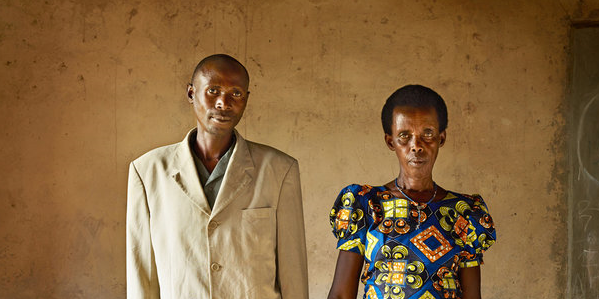
Rwanda detail
Dominique Ndahimana, Perpetrator (left); Cansilde Munganyinka, Survivor

**

Dominique Ndahimana:

The day I thought of asking pardon, I felt unburdened and relieved. I had lost my humanity because of the crime I committed, but now I am like any human being.

Cansilde Munganyinka:

After I was chased from my village and Dominique and others looted it, I became homeless and insane. Later, when he asked my pardon, I said: ‘I have nothing to feed my children. Are you going to help raise my children? Are you going to build a house for them?’ The next week, Dominique came with some survivors and former prisoners who perpetrated genocide. There were more than 50 of them, and they built my family a house. Ever since then, I have started to feel better. I was like a dry stick; now I feel peaceful in my heart, and I share this peace with my neighbors.

**

Rwanda

**

Another perpetrator / survivor pair:

François Ntambara

Because of the genocide perpetrated in 1994, I participated in the killing of the son of this woman. We are now members of the same group of unity and reconciliation. We share in everything; if she needs some water to drink, I fetch some for her. There is no suspicion between us, whether under sunlight or during the night. I used to have nightmares recalling the sad events I have been through, but now I can sleep peacefully. And when we are together, we are like brother and sister, no suspicion between us.

Epiphanie Mukamusoni:

He killed my child, then he came to ask me pardon. I immediately granted it to him because he did not do it by himself — he was haunted by the devil. I was pleased by the way he testified to the crime instead of keeping it in hiding, because it hurts if someone keeps hiding a crime he committed against you. Before, when I had not yet granted him pardon, he could not come close to me. I treated him like my enemy. But now, I would rather treat him like my own child.

**

Source:

  • Pieter Hugo, Portraits of Reconciliation: 20 years after the genocide in Rwanda
  • photos by Susan Dominus
  • On the felicities of graph-based game-board design: eight

    Tuesday, June 7th, 2016

    [ by Charles Cameron — omega worms in science and scripture ]
    .

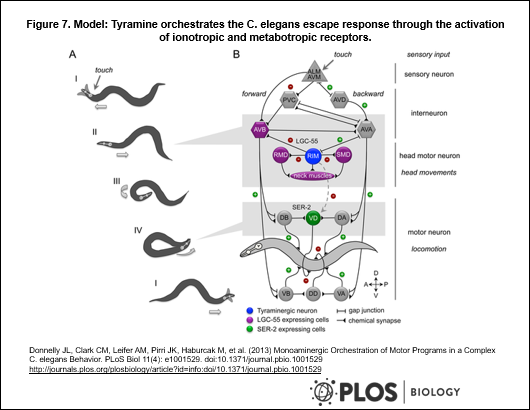
    As regular readers know, I am interested in Omega — the End, in “alpha and omega” terms — so I was naturally intrigued by this tweet, with Adam Elkus kindly put in my twitter feed and those of others who follow him:

    I’m not a “worm scientist” but wanted to know what an omega turn is, so I browsed around a bit and found this diagram:

    journal.pbio.1001529.g007
    Donnelly et al, Monoaminergic Orchestration of Motor Programs in a Complex C. elegans Behavior

    **

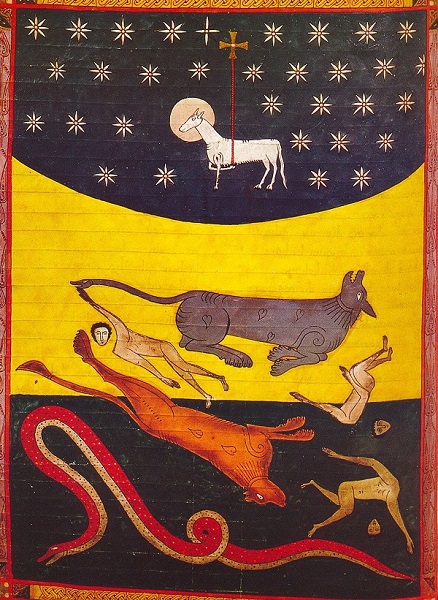
    Now please don’t imagine I know what that means to a worm scientist — I was expecting something more like the worm in the lowest section of thIs Beatus Apocalypse:

    B_Facundus_230v

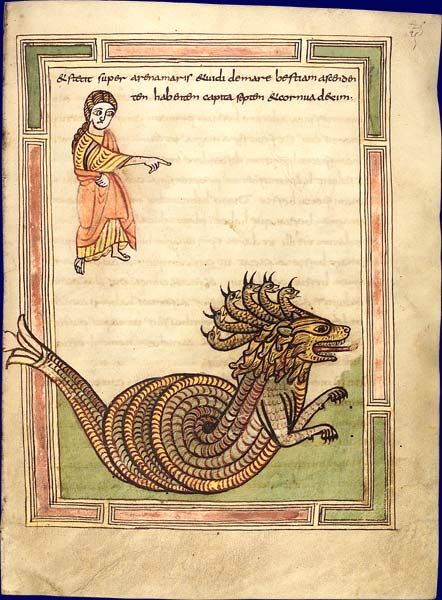
    or maybe this:

    Beatus worm turns

    from a different Beatus manuscript, where it appears the worm has turned quite a few times.

    **

    In the unlikely event that I should attempt a translation of St John‘s revelatory vision on the Isle of Patmos into science fiction, be assured that I shall include a reference to that image among my illustrations, with a footnote perhaps, pointing to Mark 9.48:

    Where their worm dieth not, and the fire is not quenched.

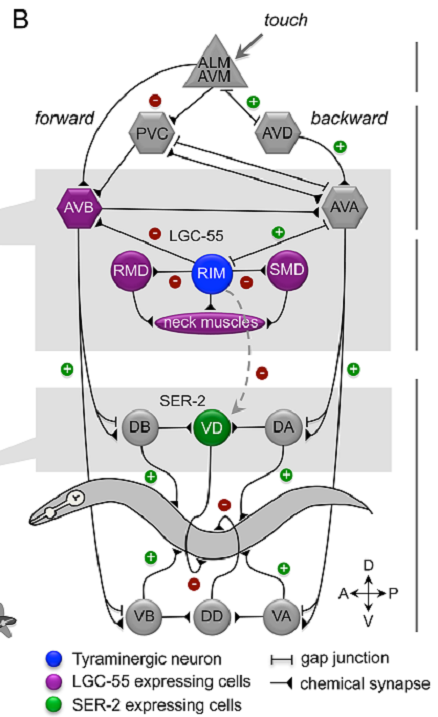
    Today, however, my appreciation for all things apocalyptic must give way to another interest of mine, that of the pervasive use of [node and edge] graphs in our contemporary world. Here again is the central column of that image:

    journal.pbio.1001529.g007-middle

    It interests me here as yet another illustration of the degree to which graphs serve as a fundamental substrate of our understanding of the world — and hence my continuing interest in their use in game board design — both of which I’ve been exploring in other posts in this series:

  • On the felicities of graph-based game-board design: preliminaries
  • On the felicities of graph-based game-board design: two dazzlers
  • On the felicities of graph-based game-board design: three
  • On the felicities of graph-based game-board design: four
  • On the felicities of graph-based game-board design: five
  • On the felicities of graph-based game-board design: six
  • On the felicities of graph-based game-board design: seven
  • **

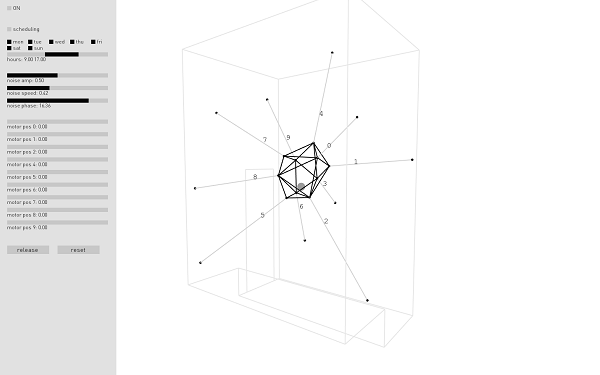
    After the glamour of Beatus manuscripts and PLOS worm diagrams, it may seem almost a let down to turn to irregular polyhedra — but the move from two-dimensional graphs to their three-dimensional cousins is a short one, and since we live in what at least appears to be a (spatially) three-dimensional world, one which should also be considered in terms of game board and concept-modelling design.

    The following illustration —

    irregular_polyhedron3

    — and accompanying video, from Filip Visnjic, Irregular Polyhedron Study #1 – Vertex, edge and volume, may accordingly be of interest:

    Irregular Polyhedron Study #1 from Bjørn Gunnar Staal on Vimeo.

    On the felicities of graph-based game-board design: five

    Tuesday, October 20th, 2015

    [ by Charles Cameron — Hofstadter Langdon Kim — for Gabi Nasemann, & in recognition of Gödel Escher Bach ]
    .

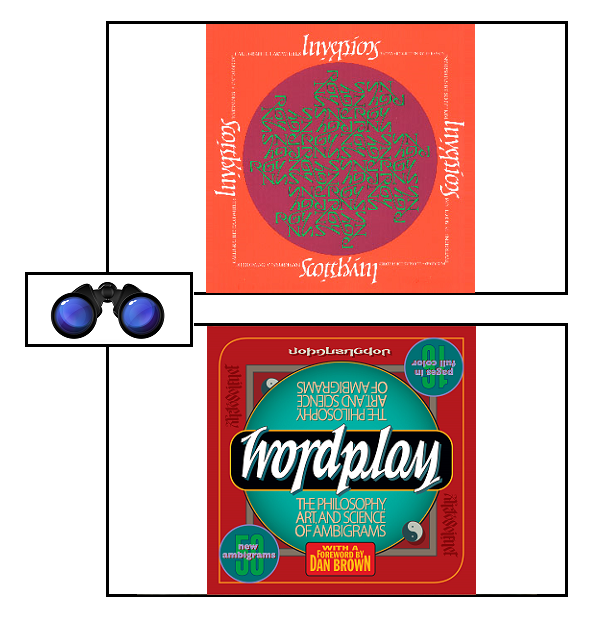
    My friend the photographer Gabi Nasemann recently inquired whether I knew John Langdon‘s book, Wordplay, and I responded, DoubleQuote-style, with Scott Kim‘s Inversions:

    SPEC kim langdon

    I had the pleasure of meeting Scott Kim lo these many years past at the Computer Game Developers Conference, and he was kind enough to say of my HipBone Games:

    Your game does seem to really call to mind the Bead Game. Almost a divination system, much more metaphorical than most games.

    **

    Scott Kim and his friend Doug Hofstadter both have a keen interest in Bach, so I thought it might be neat to see Scott’s treatment of the name — an ambigram, lower panel below — and how John Langdon might treat it — upper panel:

    SPEC bach

    Langdon’s Bach I assembled from his own typeface, Biform, which apparently seeped from his grasp into the wider world under the entirely irrelevant name Lampoon.

    **

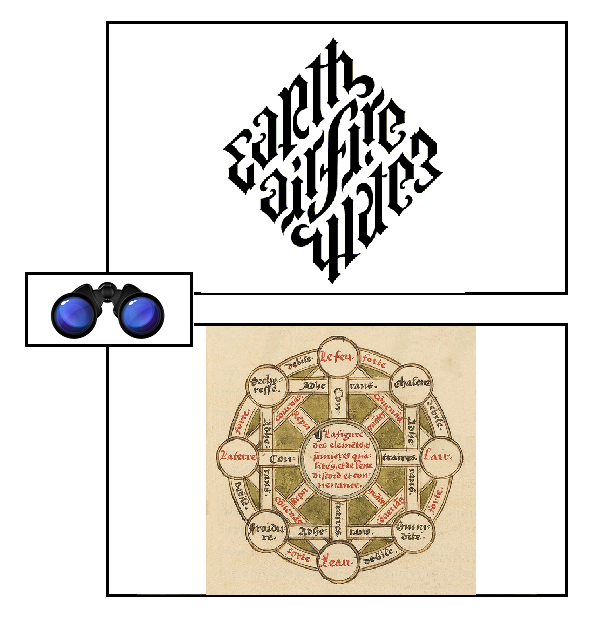
    Of all Langdon’s ambigrams, the one that’s no doubt best known — since Dan Brown used it in one of his execrable books — is his square of the four elements, upper panel, below:

    SPEC langdon oronce

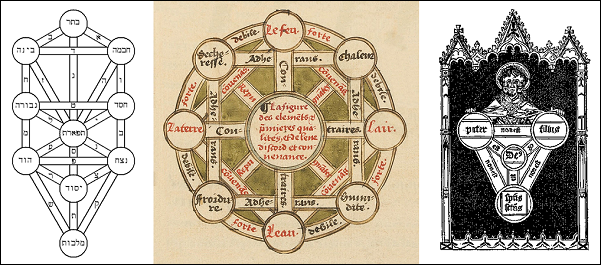
    It was a nice touch, though, that Brown offered Langdon an hommage by naming his professor of symbiology after him. No doubt the fictional Robert Langdon would be familiar with the glorious diagram of the elements created by Oronce Fine, which he’d have run across in a 1549 Harvard Houghton Library volume, Le Sphere du Monde, and which I have elsewhere compared with Jewish and Christian diagrams:

    Sembl and HipBone gameboards are in the same genre.. being games of linkage that you play with your mind:

    games you play in your mind

    **

    Sources and further readings:

  • John Langdon, Ambigrams
  • Scott Kim, Ambigrams on Google Search
  • Scientific American, Remembering Martin Gardner, with Douglas Hofstadter
  • Slate, Can You Really Be a Professor of Symbology?
  • The New Yorker, Harvard_ No Symbology Here
  • Wikipedia, Robert Langdon
  • Random House, The Official Website of Harvard Symbologist Robert Langdon
  • John Langdon, Biform
  • John Langdon, Lampoon
  • Triple Canopy, This is your brain on paper
  • DoubleQuotes, DQs in the Wild, DQs @pmarca style

    Sunday, October 11th, 2015

    [ by Charles Cameron — first post in a series, with brief intro to series on top ]
    .

    Okay, a three-post series coming up, of which this is post one. To help you navigate:

  • This post reports a conversation between Adam Elkus, Marc Andreessen (briefly) and Daniel Griffin about “@pmarca style” DoubleQuotes
  • DoubleQuotes — origins discusses the seeds of my own DoubleQuotes practice in the form of a visualization game from 1994
  • DQs in the Wild and DQs @pmarca style offers links to a number of examples of “prior art” relating to all of the above.
  • Some readers may be interested in all three, which would delight me — for myself, they’re an attempt to corral a dispersed set of matching ideas, mostly for the record.

    **

    So here’s the conversation, as far as I managed to track it. It opens with Adam quoting a paragraph from Jean-Marie Guéhenno‘s The Problem with Coalition Airstrikes in Syria, which he finds paradoxical, followed by his comment to that effect:

    **

    It was in fact Adam who first drew my attention Andreessen’s style of “double-tweeting”, as we’ll see in the final post in this series.

    Next up: DoubleQuotes — origins, or what the HipBone Games looked like, shortly before I first considered playing them on a board.


    Switch to our mobile site