Archive for the ‘tribes’ Category
Possible Shifts in AfPak
Tuesday, July 12th, 2011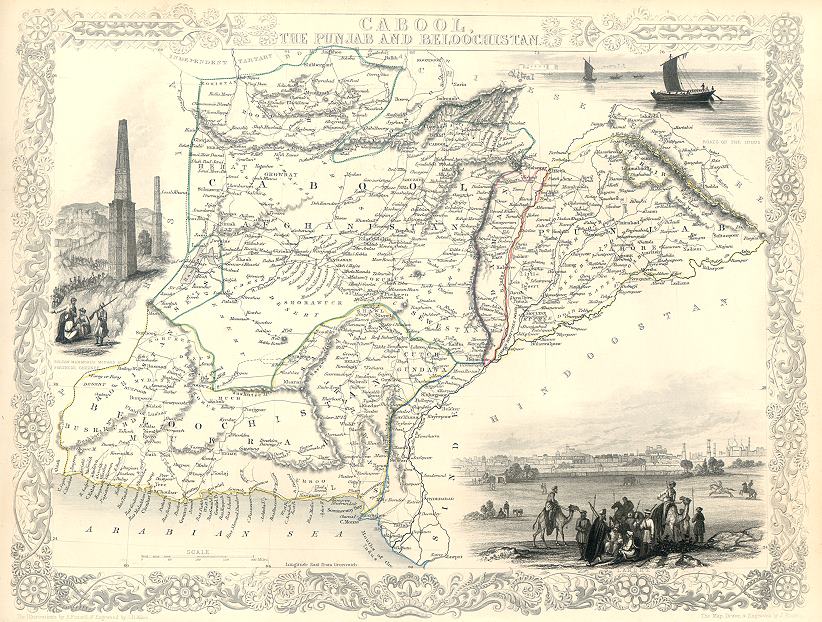
On Pakistan policy, credit where credit is due: the Obama administration has found the stones to respond to evidence of systemic and brazen bad faith on the part of our Pakistani “allies” and show their displeasure by witholding $ 800 million dollars in aid from Islamabad. There are already squeals of Pakistani unhappiness at this modest decrease of aid that all too frequently gets diverted to preparing to make war on India or, for that matter, on American soldiers and Marines. Former dictator General Pervez Musharraf, who cannot go back home to Rawalpindi for fear his brother officers will assassinate him, told a well appointed crowd in Houston that the aid cut “will be disastrous….if Pakistan is weakened, how will it fight terrorism?“.
Cynics might note that we could replace “fight” with “fund” in the former Pakistani ruler’s question and achieve greater historical accuracy.
On Afghanistan, it might be advisable for the new American commander, Lieutenant General John Allen, in carrying out his extremely difficult mission of “Afghanization” and “punitive raiding” the Taliban, to first ponder history and “Remember Herat“.
In 1979, before the Soviet invasion of Afghanistan, the entire garrison of Soviet advisers in Herat was slaughtered, including the dependent women and children, by an angry mob that was aided by the local Afghan Communist Army units who, led by Ismail Khan, conveniently revolted and turned on their Russian allies. If British military history is more to Lt. General Allen’s taste, the Afghans massacred British garrisons in Kabul twice in the 19th century, Major Cavagnari’s in 1878 and that of Sir William McNaghten and Sir Alexander Burnes in 1841, though most of the British died to all but the last man on the retreat to Jalalabad in 1842.
The cape wearing, election-stealing, lotus-eater whom we thanklessly prop up, may be more incompetent than Nur Mohammed Taraki and less legitimate a client than Shah Shuja, but he has a demonstrated talent for inciting anti-western violence exceeded only by his enterprise in looting aid money. Is crazy Karzai above lighting a match to a tense situation the US military itself has already described as a “rapidly growing systemic threat“? Not in my view.
When the American drawdown begins in earnest, General Allen will need to watch the backs of his troops
ADDENDUM:
Ahmed Wali Karzai, the notorious fixer and feared enforcer of the Afghan regime and the brother of President Hamid Karzai was assassinated today. The Taliban claimed credit, but AWK has too many enemies to be certain yet.
Wilf Owen on Killing Your Way to Control
Tuesday, July 5th, 2011Wilf Owen, noted Clausewitzian and Editor of Infinity Journal has a provocative new piece up at SWJ Blog:
The population is not the prize. The population are the spectators to armed conflict. The prize is the control the government gains when the enemy is dead and gone. Control only exists when it is being applied, and it exists via the rule of law. The population will obey whoever exercises the power of law over them. Power creates support. Support does not create power. This is the source
of great confusion.….In general terms killing the wrong people (civilians) may undermine the political objective being sought. Whether it does or does not will be the policy context. How proportionately, precisely or discriminately lethal force is applied will be dependant on the tactics employed. Thus Rules of Engagement (ROE) are those limitations on lethal force and military activity that armed forces use to ensure that force does not undermine policy.
….All the new counter-insurgency theorists concede, some killing is required but to quote FM3-24 while necessary, especially with respect to extremists [killing] by itself cannot defeat an insurgency. Again this makes no sense, unless as part of a defence mounted to preserve the idea that you cannot kill and capture your way to success. Those who are extremists do not become apparent or may not even exist until the ranks of the enemy have been thinned by death, desertion and surrender. Until lethal force is focused on the enemy, the extremists may not be apparent, and who is and is not an extremist is irrelevant if they are clearly armed and thus a legitimate target within the ROE.
Killing and capturing are important, because lesser forms of operation aimed at disrupting or dislocating while useful, may allow the enemy to survive. Dead and captured cannot return at some later date to re-contest any issue they see fit. Warfare against irregular forces is won in a similar way to warfare against regular forces. The only major differences is that force usually has to be employed far more precisely, discriminately and proportionately. This is because lethal force will be applied close to or within a population that you are politically/legally required to protect. The other difference is that lethal force will be focussed at the individual level. This is a general distinction from that of fighting regular forces where operations would seek to defeat units and formations in part or as a whole.
The case of Algeria, during the 1990’s with the battle between Islamist rebel-terrorists and a radical Arab-socialist dictatorship provides some support for Owen’s ideas regarding killing and the separation of opponents into extremists and moderates. The government, which applied force with minimal constraints, did succeed in killing off the leadership cadres of the FIS, GIA and MIA faster than they could be properly developed, leaving leadership in the hands of either younger, more radical but less experienced men or causing the groups to accept government amnesty.
Algeria of course enjoyed several advantages that the West lacks in places like Afghanistan – the Algerian rebels were isolated from the outside world and enjoyed minimal foreign support and the Algerian dictatorship conducted operations without regard to the laws of war in a media blackout, getting a pass from the international community because the behavior of the rebels was even worse. In Afghanistan, the center of gravity of the Taliban movement is the support of Pakistan’s ISI whch is using them as proxies to drive ISAF out of Afghanistan and the kind of punitive raiding into Pakistan to decimate Taliban manpower is forbidden by policy.
ADDENDUM:
Spencer Ackerman offers a spirited rebuttal to Wilf Owen:
Please, God, No More Stupid Anti-Counterinsurgency Arguments
…. Where to begin. Sometimes, as in nearly all counterinsurgency fights, the counterinsurgent cannot easily distinguish the insurgent from the civilian. That’s not always because of poor tactical intelligence or ignorance of a foreign culture. It’s because the guy who gives his old cellphone to his cousin so his old neighborhood friend can use it to construct IEDs for the guy paying a good going rate — quick, is he an insurgent or not? If you can’t immediately answer, Owen’s argument falls apart.
Even if you unflinchingly decide the guy’s an insurgent, killing the guy can easily inspire the whole neighborhood to rally to the insurgents’ cause. Quick: do you kill the guy so you can approach the Magic Number of dead insurgents that assures you victory? Or does not killing the guy take you further away from the Magic Number?
I know, I know. Counterinsurgency is OVER. Whatever context, wisdom or experience led people to consider it a least-bad option ought to be ignored. Its unsuitability for Afghanistan has rendered the entire enterprise inert. What, you didn’t read that National Journal piece?
My only comment here is that Pop-centric COIN is only one brand of COIN that fits some situations better than others. I suspect much of the time in the near future, US military forces will be limiting themselves to FID, largely for budgetary reasons, and the host nation may see COIN differently than our current doctrine prescribes.
Mini-Reviews: Liddell-Hart and Keeley
Saturday, June 25th, 2011

The German Generals Talk by BH Liddell-Hart
War Before Civilization by Lawrence Keeley
The German Generals Talk
A must-read book for those interested in strategy, the history of the Third Reich or the military history of WWII. That said, The German Generals Talk as a text must be treated very cautiously due to the author’s lack of objectivity, the disadvantage of his interview subjects at the time of their captivity and Liddell-Hart’s well documented efforts to use his interview subjects for self-promotional purposes. Nevertheless, the commentaries by major Wehrmacht generals and field marshals, especially Gerd von Rundstedt, Wilhelm Ritter von Thoma, Hasso von Maneuffel, Günther Blumentritt and Heinz Guderian, are informative and at times, provocative. Liddell-Hart’s critiques of German military campaigns are often insightful, usually colorful, frequently sycophantic, but usually to the point – though they often used as a foil for advancing Liddell-Hart’s strategic ideas.
War Before Civilization
Two of the smarter, myth-debunking books I have read in the past year or so have been older, still in print, works by academic archaeologists. Much like Joseph Tainter’s The Collapse of Complex Societies, Lawrence Keeley overturns dogmatic archetypes about “primitive” warfare in prehistoric and pre-contact societies held by social scientists and military historians in War Before Civilization. Not only was prehistoric warfare more violent, more “total” and less restrained than modern warfare but Keeley argues that primitive “warriors” tended to best disciplined “soldiers” in wars when all other things were equal, except when the “soldiers” enlisted their own savage proxies (or adopted morally unconstrained primitive tactics). It was a sliding scale; the barbaric Vikings terrorized “civilized” European and English men-at-arms, but were in turn themselves routed and expelled by the more savage Native Americans and Inuit warriors of North America.
Guest Post: David Ronfeldt on Dignity and Democracy
Thursday, May 26th, 2011
Blog-friend David Ronfeldt, until recently Senior Social Scientist with the RAND International Policy Dept., is author / co-author of such seminal works as Networks and Netwars; In Athena’s Camp; In Search of How Societies Work: Tribes — the First and Forever Form; and The Zapatista “Social Netwar” in Mexico. Today he offered a detailed comment on Zen‘s post, Skulls & Human Sacrifice — the central portion of which we felt deserved to stand as a post of its own, and attract its own body of discussion. We are accordingly delighted and honored to offer it here as David’s first guest-post on Zenpundit. –CC
______________________________________________________________________________________________
For months, many arab commentators have observed that the uprisings are mainly about “dignity”: e.g., identity and dignity, or dignity and freedom, or some other combination — but always dignity.
In contrast, American observers keep saying the uprisings are mainly about “democracy” — freedom and democracy in particular. some Arabs include a call for democracy with their call for dignity; but Americans only occasionally acknowledge their parallel pursuit of dignity. in fact, Americans rarely think about dignity; we’re raised to assume it. Language about dignity slides right through our modernized minds.
Yet, in many cultures, dignity is a more crucial concept than democracy. Dignity (along with its customary companions: respect, honor, pride) goes to the core of how people want to be treated. it’s an ancient tribal as well as personal principle. indeed, it’s central to the tribal form. tribal and clannish peoples think and talk about dignity far more than do americans and other westerners in advanced liberal democratic societies.
In the Arab spring, what many arabs seem concerned about is thus more primal than democracy. They’re fed up with the indignities inflicted by corrupt, rigged patronage systems, by rulers and functionaries who act in predatory contemptuous ways, by the endless abuse of personal rights and freedoms — in other words, by all the insults to their daily sense of dignity. Of course, many Arabs seek democracy too; and dignity and democracy (not to mention justice, equality, and other values) overlap and can reinforce each other. But dignity and democracy are not identical impulses, nor based on identical grievances. in some situations, the desire for dignity trumps the desire for democracy.
This interplay between “dignity” and “democracy” may have implications for US policy and strategy. I’m not exactly sure what they are, but it seems to me that we ought to be analyzing and operating as much in terms of dignity as democracy. I bring this up not only because americans tend to overlook the significance of the dignity principle, but also because I detect a dignity-democracy fault-line among the Arab-spring’s protagonists — a fault-line that may relate to whether the Arab spring ends up having democratic or re-authoritarian consequences.
My sense is that the younger modernizing protagonists of the Arab spring may well be pursuing democracy (along with dignity) as their strategic goal, but the older, more traditionalist elements operating alongside them are more interested in pursuing dignity, without necessarily favoring democracy. and the latter may be stronger than we have observed. if so, the quest for dignity may be satisfied by outcomes that have little to do with democracy: say, for example, a shift in tribal and clan balances, an enhanced appeal for islamic law (shariah), or a charismatic call for strong government devoid of foreign influence. It may be easier, and more popular, to gratify a quest for dignity than a quest for democracy.
*
I’m led to these observations via the TIMN framework about the four major forms of organization that lie behind social evolution: tribes + hierarchical institutions + markets + info-age networks. the young modernizing protagonists of the arab spring express the nascent +N part of TIMN, while the older traditionalist elements remain steeped in the ancient pro-T part — and therein lies the fault-line I mentioned earlier.
_______________________________________________________________________________________________
For further details of Dr. Ronfeldt’s published work, see his RAND portfolio.His current interests include in particular:
- Development of a framework (TIMN) about the long-range evolution of societies, based on their capacity to use and combine four major forms of organization: tribes, hierarchical institutions, markets, and networks
- Development of a framework (STA) for analyzing people’s mind-sets and cultural cosmologies in terms of basic beliefs about the nature of social space, social time, and social action
He blogs recent thinking on both frameworks at Visions from Two Theories.


