zenpundit.com » army

Archive for the ‘army’ Category

Carl Prine interviews Don Vandergriff

Wednesday, April 6th, 2011

Investigative reporter, Iraq veteran and Military.com columnist/blogger Carl Prine has an excellent interview with blogfriend Don Vandergriff at Prine’s Line of Departure:

Not So Quiet Goes the Don!

….DON VANDERGRIFF: Yeah. Well, it goes back to the competency approach – Leave No Child Behind.

It’s like training for the test or rote memorization. And that’s what PowerPoint is. It’s a tool of the competency theory of education, if you think about it.

There’s no thought being put into it. It follows a format. People find out what the boss likes to see and they put it into that format. They depend on that. Because – as you and I know- if you really know what you’re talking about, they get up there and just tell it.

PRINE OF DEPARTURE: You and I have known each other for years. And we’ve been talking about “Careerists” and what they do to a military culture.

And the reason why I ask this is because there’s this young captain who I really respect. He’s one of the best young captains I’ve ever met. And he asked me, “Carl, how do you define a ‘careerist?’ What is a ‘careerist?'”

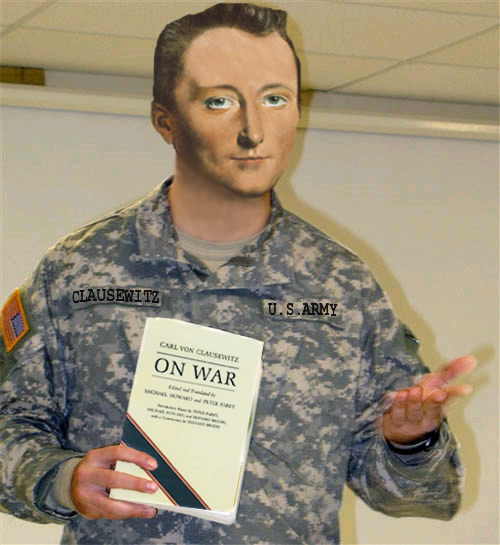
DON VANDERGRIFF: A “Careerist” is a courtier. All he’s interested in doing is flattering the King. Courtiers form together and you get “groupthink.”

There are a lot of problems that come from Careerists. A Careerist is someone who puts self before service. A Careerist doesn’t understand that by making your subordinates better than you are, you’re actually making your entire organization better.

PRINE OF DEPARTURE: And you’re making yourself better.

DON VANDERGRIFF: Right.

DON VANDERGRIFF: To get to the bottom line, it’s selfish leadership….

Read the rest here.

The Existence of the Operational Level of War, For and Against

Wednesday, March 16th, 2011

I was involved in a discussion elsewhere regarding the excellent and thought provoking article at SWJ by General Huba Wass de Czege on operation art, design and thinking:

Operational Art is Not a Level of War

Strongly recommend you read the article first. My remarks follow, slightly revised:

I have only read a few pieces by General Wass de Czege, those published at SWJ but the caliber of the general’s self-reflective, professional, thinking is something we should strive to emulate.

Here is what seems to be the crtical point in his article, after which I have a comment:

 “We doctrine writers of the 1980’s inserted operational art as a mid-level of war between tactics and strategy – making it the art of translating the governing strategy into the implementing tactics of the “tactical echelons.” And thus, making operational art the province of “campaigning” generals. Because of the way I was conditioned to think then, that strategy was the business of the upper echelons and tactics the business of the lower ones, I miss-translated an idea borrowed from Soviet doctrine about the mediation between strategy and tactics. I was then a product of indoctrination in the US Army’s War and Command and Staff Colleges. These institutions, and the business schools of the time, taught based on the industrial age organizational model of the head (where strategic decisions are made) and the rest of the body (where tactical decisions implement the strategy). I now believe that, without violating the historical meaning of the terms strategy and tactics, this is a much more useful and natural way to think of the relationship between tactics, strategy and operational art.

In fact, this allows one to close the conceptual gap between our bifurcated way of thinking about warfare between nation states and that between states and armed movements of any kind. It also helps do the same for the two tactical operating modes that have recently surfaced in new Army concepts – “combined arms maneuver” and “wide area security.”

Campaigning, another word for operational art, can occur at any scale, and in any milieu, as a close look at what our best company, battalion, and brigade commanders have been doing in Iraq and Afghanistan. “

I think maybe this should be qualified – re; operational art is not a “level”. It is a level of war and it is not at the same time.
 
The difference between the two I think is *how* we are employing the term: “Operational art” as a historical, taxonomic, description of how a military-political command structure has behaved/behaves as a warfighting institutional culture vs. methodologically how they *could* and *should* think about warfare and in turn behave at any “level”.
 
It is not surprising to me, thinking in terms of history, that Wass de Czege, where he wrote that he was in error, was drawing from Soviet examples. If we think about “operational art” as a “level of war” we are led to military powers where powerful ideological constraints systemically interfered with the “natural” clausewitzian connection between Policy and Strategy.
 
The USSR’s Red Army, from the early days of Commissar-Commander relationships in battle, through the Stalinist era to the more modern and restrained (i.e. non-murderous) controls of the Army’s Political Department and vetting security checks for promotion carried out jointly by the military, State Security and Party organs, created an atmosphere where deferral of political implications caused a) a segregation of an officer’s intellectual initiative to organizational and technical military questions and b) constructing military strategy and operational campaigns to at least nominally reflect Marxist-Leninist dogma and the Party line as a matter of necessity, and for a period, in an effort to try and avoid being physically liquidated.
 
Most of the Soviet Union’s most gifted military strategists and tacticians were unsuccessful in this regard and perished (ex. Svechin, Tukhachevskii, Blyukher). Arguably that left an institutional legacy in it’s wake that narrowed the conceptual framework with which Soviet Marshals and generals approached planning for war, including nuclear war.
 
Germany is another example, with the policy-strategy split favoring a professional military focus on operational art emerging as early as 1870 in tensions between Bismarck and Moltke over the war with France, growing worse during the Great War until during the Third Reich, a state of enforced paralysis occurs after 1942 on the Eastern Front. In theory, Hitler, who was his own war minister and commander-in-chief of the Army in addition to being the Supreme Commander, Fuhrer and Reich Chancellor, could (like Stalin) have resolved any contradictions or discordance between Policy and Strategy. Hitler deliberately chose not to do so and his paranoia led him to eventually limit even his field commander’s tactical flexibility (some generals, like Rommel, resisted this more effectively than others).
 
The US military, in my view, suffers a similar fixation. The reasons are very different – proper constitutional deference to civil authority coupled with a limited or absent capacity of most civilian political authorities to think in a complementary strategic fashion that would allow them to best guide their military commanders in jointly constructing a seamless bridge between policy-strategy-operational campaign. Another reason, though I do not want to go into it here, is a cultural reaction to the experience of the Vietnam War that became embedded in the officer corps during the shift to the AVF starting with the Nixon administration.
 
Tom Ricks had a very interesting post at Best Defense while back on the Hew Strachan article in which Ricks argued against the existence of an operational level of war, but as we are not discussing platonic forms, militaries are at whatever “level” of war for which their culture institutionally encourages officers to think about and plan. So in that sense, Wass de Czege is absolutely correct – they can and should be thinking across the whole range and not in “slots”. However, if they don’t do what he suggests and if they do predominantly focus on one “level” as most of their thinking and planning, be it tactics, operations, strategy. Then that level “exists”, it leaves a bureaucratic “trail”, grows a structure to execute it and will be put into practice during a war – at least initially until events force a change of practice from below (the field) or above ( political leaders).

Clausewitz vs. Sun Tzu

Monday, December 13th, 2010


This article at SWJ blog has stirred a lively debate in the comments section with some very able practitioner-scholars weighing in.

….Sun Tzu?s ancient military philosophy of indirectness and gradualism runs counter-culture with much of mainstream western military strategy. Western reliance on superior technology and firepower shaped American counterinsurgency doctrine to be largely lethal in nature and enemy focused. Clausewitz instructed generations of military officers that the destruction of the enemy?s army is the primary goal in all combat1; therefore, all political-military conflict results in offensive action where attrition of the enemy force becomes a universal requirement. Clausewitzian war theory „worked? in both world wars in that the Allies did accomplish their desired goals; however critics such as Israeli strategist Shimon Naveh raise valid questions on whether Clausewitz?s fixation on offensive action and attrition warfare helped or hindered the Allied causes2. Despite Clausewitzian strategy?s seemingly illogical structure, application of his theories in the major 20th century conflicts created an enduring military school of war strategy with „On War? taking a sacred position.

In fairness to Clausewitz, this is over the top.

The US military could use more Sun Tzu; it is far more Clausewitzian in the perspective of the officer corps than it is “Sun Tzuite”, but the armed services are not the Children of Clausewitz. Not even the US Army. We’d probably be better off if the American military was more thoroughly one or the other in terms of strategic culture than the industrial age, bureaucratic, ad hoc, legacy thinking non-strategic hodgepode that currently prevails.

I do not expect that to change. American military organizational culture is driven more by appropriations than by ideas.

Some Related Links:

Sonishi.com Interview with Martin van Creveld on Sun Tzu

Sonishi.com Interview with Chet Richards on Sun Tzu and Boyd

Christopher Bassford on Sun Tzu, Jomini and Clausewitz

Colin Gray on Clausewitz and the Modern Strategic World

The Clausewitz Roundtable

Strategy of the Headless Chicken

More on Galula

Wednesday, November 24th, 2010

At SWJ Blog:

Octavian ManeaPros and cons on Galula model

In response to the interest raised on the relevance of the Galula model for understanding and dealing with today’s insurgencies, I conducted a brief inquiry with key experts on the topic – Peter Mansoor, Steven Metz, David Betz, and Alex Marshall.

Dr. Peter Mansoor

The Galula model applies in those cases where the population of a country is more concerned about the effectiveness and legitimacy of its government than in its sectarian or ethnic make-up. “Classic” counterinsurgency efforts to improve the legitimacy of a government are then operative. In those cases where sectarian or ethnic identity trumps other factors (e.g., Sri Lanka or Chechnya), then protecting the people will avail the counterinsurgent little in the way of gaining their trust and confidence. In these cases, other strategic or operational approaches need to be considered….

Dr. Steven Metz

To me, the Cold War/Maoist model of insurgency applied in situations where new segments of a society were becoming politically aware or mobilized and thus made demands on the state which it could not fulfill. These demands were both tangible–infrastructure, security, education–and intangible (a sense of identity). That’s why I think it has very little applicability to current insurgencies. Granted current insurgencies attempt to emulate the Maoist strategy because it worked in the past, but I think this will lead to failure.

Dr. David Betz

The work of the French officer David Galula was clearly very influential on the thinking of the authors of FM 3-24 Counterinsurgency. There is certainly a lot to like. For one thing, his book Counterinsurgency Warfare is less than 150 pages long which makes it an easy read-four cups of tea and a Sunday afternoon will get you through it. For another, it’s written in a very aphoristic style which is highly memorable. So if you’re trying to get across to a large number of people a number of ‘best practices’ or paradoxes of COIN then Galula is a very good assigned reading. The truth is though that most COIN best practice would fit on a bumper sticker. In fact the new UK Field Manual on COIN comes with a laminated credit card sized aide memoire on one side of which are printed the principles of COIN and on the other ISAF’s game plan for stabilizing Afghanistan. I’m not criticizing-I think it’s a handy thing; my point is rather that Galula and his interpreters sometimes sound a bit like Kipling’s ‘Just So’ stories. In practice, it’s complicated, as one sees in Galula too if you read his longer, messier, more ambiguous and more rewarding book Pacification in Algeria. Anyway, to get to the point I have three main reservations about Galula…..

Dr. Alex Marshall

My issue with the Maoist Paradigm is really two-fold.

My first reservation, as a historian, is that we lack a definitive English-language study of Maoist insurgency itself beyond some fairly stereotyped notions of a three-stage or five-stage revolutionary process (from political agitation to guerrilla conflict to regular warfare). Galula and Thompson were great generalizers, but one can scarcely call their work proper historical studies-their general view was that Maoist-style insurgencies involved a degree of mass brainwashing for example. We possess some interesting case studies of how Maoist mobilization worked in practice on the ground, in individual villages or Shanghai for example, but there is so much more that could be done. Thus Western writing during the Cold War in general generated a shorthand stereotype, when in reality insurgency practice was often more diverse. The reason was simple I suggest-most successful insurgents aren’t particularly pithy writers (Guevara and Mao were exceptions), most unsuccessful ones are very quickly dead.

My second concern is more overarching however. The majority of discourse on COIN doesn’t take into account the strategic context, remaining locked into the operational level instead…..

Read the whole thing here.

A very productive piece by Manea and the gents above. Galula’s historiographic importance in COIN should be undisputed and his contribution to theory acknowledged and respected. Application of Galula’s framework (or, really, anybody’s) for understanding COIN, in analyzing insurgencies should be used cautiously or lightly until there is enough of an emprical understanding of the structure and motivations of the insurgents and the political deficiencies of the state, to see to what extent the model fits, before the operational assumptions of a military bureaucracy and theater command harden into place.

Lacking the reliable contingency of a superpower patron on an ideological crusade in the 21st century to impose a stamp of identity and tactics on it’s proxies, insurgencies are likely to be as diverse as La Familia is from FARC, the Taliban or the Real IRA.

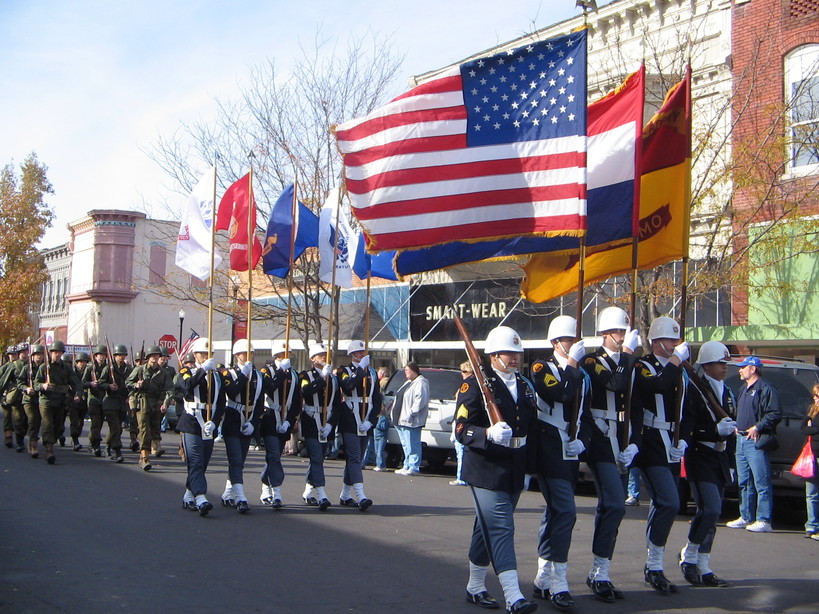
Happy Veteran’s Day!

Thursday, November 11th, 2010

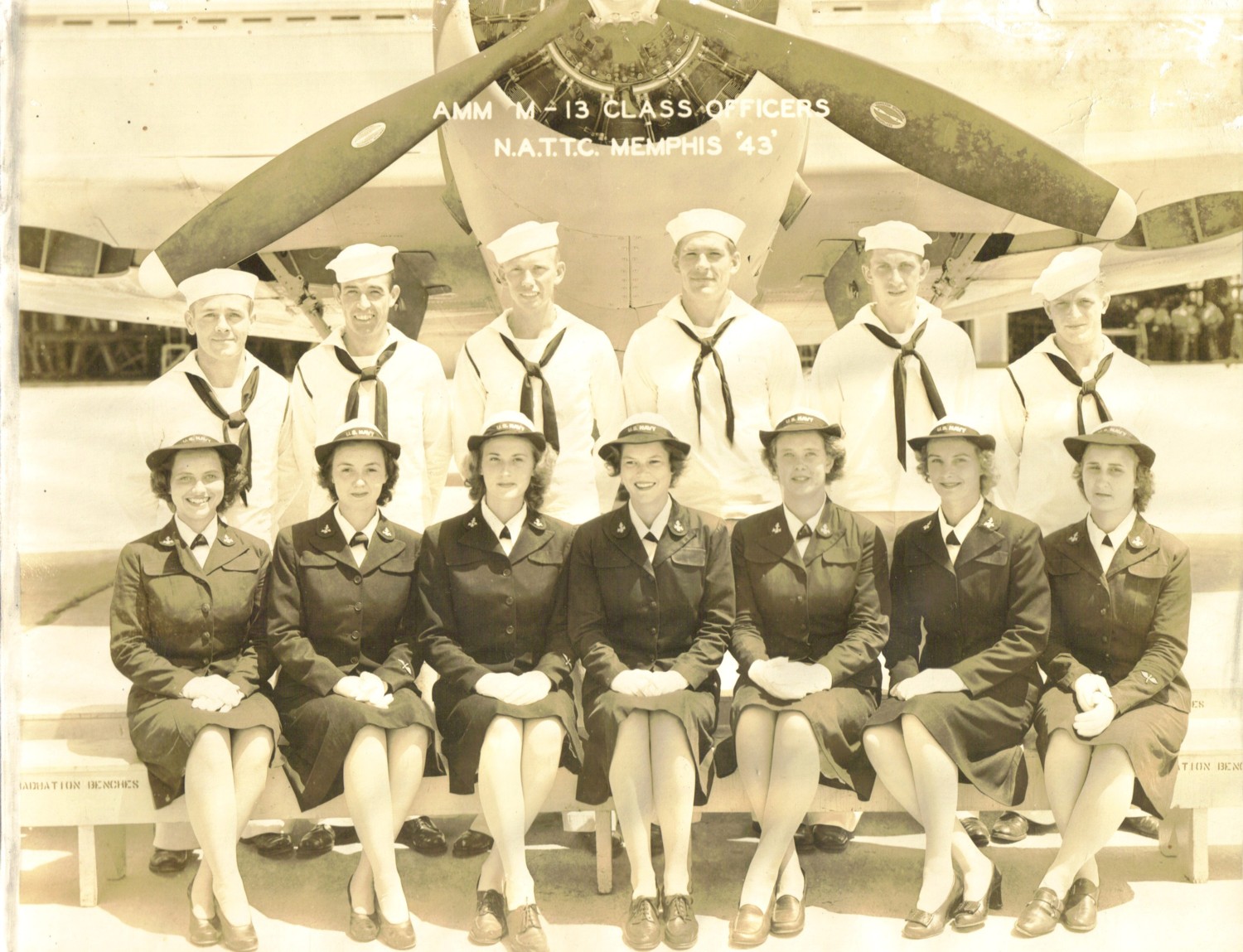
Thank you to all who have served and who are serving now.


Switch to our mobile site