zenpundit.com » 21st century

Archive for the ‘21st century’ Category

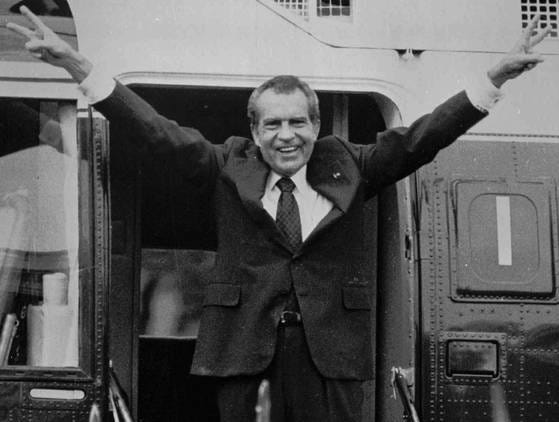
A Century of Nixon and the Nixonian Century

Wednesday, January 9th, 2013

Richard Milhous Nixon, 37th President of the United States of America and the only man to resign that office would was born one hundred years ago.  His life spanned from the Great War, included service in the Second World War and saw the end of the Cold War – an American victory to which Nixon substantially contributed with the deft statesmanship that was his greatest strength. Nixon stood for national office five times and was on the winning ticket in four of them, a political record matched in American history only by Franklin Roosevelt, a record that includes re-election by the second greatest landslide in history. A triumph that was undone by the paranoia, insecurity and bitterness that ate away at him and led Nixon to betray his oath to uphold the Constitution and forced him out of the Oval Office in disgrace.

So numerous and far-reaching were Nixon’s actions that we can justly say, for good and ill, that a century of Richard Nixon may have helped usher in a Nixonian century.

Richard Nixon named four justices to the Supreme Court, shifting the judicial branch in a more conservative direction, built upon by later Republican presidents; he created the EPA and the first affirmative action program, cut the dollar from it’s last tie to the gold standard,  declared war on drugs, ended the draft and began the All-Volunteer Force and began the movement to decentralize power from Washington bureaucracies to the states.

Some of these policies were ultimately disasters and some were a great success, but domestic policy (in contrast to politics) was never more than an irritating chore to Richard Nixon, one he frequently delegated to Bob Haldeman and John Ehrlichman. Nixon’s true, all-consuming passion – from his first days as a freshman member of Congress to his grim final moments “alone in the White House” to a winter street in Moscow as an elder statesman – was foreign affairs. It was on the world stage that Nixon yearned to not just be “in the arena” but win the game.

Sometimes he did.

Richard Nixon, an inveterate poker player, came into office in 1969 with a bad hand and too few chips on the table. The Nixon administration were the victors in a three-way presidential race inherited a losing war in Vietnam begun by the Democratic “Best and the Brightest” that had savagely divided the American people like no other conflict since the Civil War. Richard Nixon in partnership with Henry Kissinger managed to accomplish, by design and improvisation, a restructuring of American relations and the world order. They blunted a potential nuclear war between Communist China and the USSR, opened up detente with the Soviet Union, negotiated the first SALT and ABM treaty with the Soviets, unilaterally initiated the international monetary regime of floating currencies. In the Mideast, Nixon saw critical American support of Israel during the Yom Kippur War  as an opportunity to move toward a future general Arab-Israeli peace negotiation, that later came to pass in the Camp David Accords during the Carter administration.:

TO:        Secretary Kissinger

FROM:  The President

  1. I have just written a note to Brezhnev emphasizing to him that you speak with my full authority and the commitments you may make in the course of your discussions with him have my complete support.  I also told him that you would be conveying to him my strong commitment to devote my personal efforts toward bringing a lasting peace to the area.
  2. I believe that, beyond a doubt, we are now facing the best opportunity we have had in 15 years to build a lasting peace in the Middle East.  I am convinced that history will hold us responsible if we let this opportunity slip by.
  3. The current Israeli successes at Suez must not deflect us from going all out to achieve a just settlement now.  There is no reason to believe that Israel will not win this war now, as it has won all the previous ones, but you and I know that, in the long run the Israelis will not be able to stand the continuing attrition which, in the absence of a settlement, they will be destined to suffer.
  4. It is therefore even in Israel’s best interests for us to use whatever pressures may be required in order to gain acceptance of a settlement which is reasonable and which we can ask the Soviets to press on the Arabs. [….]

And torturous secret negotiations with Hanoi in Paris led to the painful but necessary American withdrawal from the Vietnam while Nixon’s greatest and most far-reaching triumph was opening relations with Communist China:

While some would argue that China’s opening to the world was inevitable, an isolated China at Mao’s death might have seen power pass into the hands of the Gang of Four, with terrible consequences for the Chinese people. It remains Richard Nixon who changed the strategic geopolitical balance at a time of acute weakness for the United States and set forces in motion that have transformed China and have only yet begun to shake the world.

Nixon’s most important achievements in foreign affairs came at the price of managing his administration first through secrecy, then guile then machiavellian intrigue against even his closest associates and finally with a resentful, angry, ill-will that seemed to consume Nixon and turn every “win” sour:

….At eleven o’clock in the morning, Nixon met with his staff in the Roosevelt Room. To many in the room he seemed oddly cool and quietly angry as he thanked them all for their loyalty and said something few of them understood. He said that he had been reading Robert Blake’sDisraeli and was struck by his description a century ago of William Gladstone’s ministers as “exhausted volcanoes” – and then mumbled something about embers that once shot sparks into the sky.

“I believe men exhaust themselves in government without realizing it” the president said “You are my first team, but today we start fresh for the next four years. We need new blood, fresh ideas. Change is important…..Bob, you take over.”

Nixon left then, turning the meeting over to Haldeman. The men and women of the White House stood to applaud his exit, then sat down. The chief explained what Nixon’s words meant: a reorganization of the administration. He told them that they were expected to deliver letters of resignation before the end of the day, then passed out photocopied forms requiring them to list all official documents in their possession. “These must be in by November 10,” he said. “This should accompany your pro forma letter of resignation to be effective at the pleasure of the President”. They were stunned. Speechless. Were they being fired? Haldeman said they would know within a month whether or not they could remain. At noon, the same drama was played out with the entire Cabinet, with Haldeman again passing out the forms. 

The man who had campaigned in 1968 as the smiling “New Nixon” did not want a chief of staff anymore. Nixon craved a “Lord High Executioner” who would keep underlings at bay and reporters and Congressmen away.

H.R. Haldeman, Nixon’s tirelessly faithful right hand man, obliged, even as he struggled in a losing battle to keep Nixon’s dark side and worst impulses under wraps, tabling orders he deemed vindictive, politically unwise or crazy from being carried out until Nixon had calmed down and had time to reflect. Most of the time Nixon sheepishly thanked Haldeman, but Nixon found other willing hands in Colson, Liddy, Hunt and others. It is probable that Nixon himself approved of the Watergate break-in, but even if he had not done so specifically in that instance, he consented to abuses of power and an illegal apparatus with which to carry them out. The most malign proposal toward American democracy during the Nixon administration, known as “The Huston Plan“, was rejected even by J. Edgar Hoover, was later partially revived during the writing of The Patriot Act. An authoritarian trend that will haunt us for a long time to come.

If Richard Nixon is the father of the multipolar world and contributed greatly to the defeat of Communist totalitarianism, he also laid the foundations of the Creepy-state here at home through Watergate, which damaged the faith of Americans in their government and tarnished democracy. This is as much a part of Nixon’s legacy as Detente or China. Nixon had badly needed the free and absolute pardon that he received from Gerald Ford.

Richard Nixon managed a final comeback as an elder statesman, dispensing often wise geopolitical advice at private dinners where, in his early eighties, Nixon held forth at length, speaking without notes, on the dynamics of how the world really worked, at least through the prism of brutal realpolitik which he saw it. He lived to see the husband of the woman who once sought his prosecution, solicit his counsel in the Oval Office. His funeral drew tens of thousands of mourners and four former presidents of the United States. To the very end, Richard Nixon never gave up. We can’t take that away from him.

Let history judge.
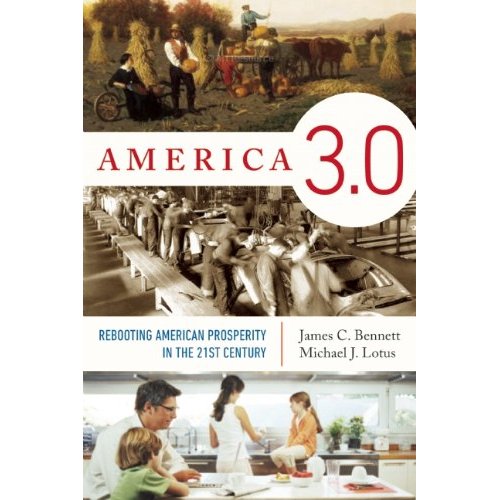
New Book: America 3.0 — Now Available for Pre-Order

Thursday, January 3rd, 2013

Re-posting this from Chicago Boyz blog on behalf of Lexington Green and James Bennett who have a new book coming out in May:

America 3.0 — Now Available for Pre-Order 

As previously announcedJim Bennett and Mike Lotus (a/k/a Lexington Green), have co-authored a book:

America 3.0: Rebooting American Prosperity in the 21st Century – Why America’s Greatest Days Are Yet to Come.

The book is currently in the hands of our publisher, Encounter Books and editing is underway.

There is now an Amazon pre-order page for the book.

All such early orders would be very greatly appreciated.

The book is coming out in May. Promotional plans are chugging away. Any ideas anyone may have would be very much appreciated, and can be left in the comments on this post or future posts related to the book.

A friend asked for a three sentence summary. This is what I came up with:

America’s greatest days are yet to come. Just as the world of family farms and small businesses, America 1.0, gave way to the industrialized world of big cities, big business, big labor unions and big government, America 2.0, we are now moving into a new world of immense productivity, rapid technological progress, greater scope for individual and family-scale autonomy, and a leaner and strictly limited government. The cultural roots of the American people go back at least fifteen centuries, and make us individualistic, enterprising, and liberty-loving, equipping us to prosper in the upcoming America 3.0.

We will be posting frequently in the months ahead (both here and on the book’s own blog) about the America 3.0 and its arguments, and how the themes in the book relate to current events, to efforts to devise a long term strategy for the political Right in America, or to other writers or books which interest us or influenced us.

We anticipate setting up a Facebook and Twitter account for the book as well.

Stand by!

Looking forward to this one!

Guns and The New Paternalism

Thursday, December 27th, 2012

New York City Mayor Michael Bloomberg      Photo credit: The New York Times 

Longtime reader and blogfriend Eddie Beaver sent me a link to an article by NYT columnist, Ross Douthat. In my view, Douthat has written a fairly important observation of a political dynamic that is broader than the simply the new push by the elite for new and stringent gun control legislation:

Bloomberg, LaPierre and the Void

FOR a week after the Newtown shooting, the conversation was dominated by the self-righteous certainties of the American center-left. In print and on the airwaves, the chorus was nearly universal: the only possible response to Adam Lanza’s rampage was an immediate crusade for gun control, the necessary firearm restrictions were all self-evident, and anyone who doubted their efficacy had the blood of children on his hands.

The leading gun control chorister was Michael Bloomberg, and this was fitting, because on a range of issues New York’s mayor has become the de facto spokesman for the self-consciously centrist liberalism of the Acela Corridor elite. Like so many members of that class, Bloomberg combines immense talent with immense provincialism: his view of American politics is basically the famous New Yorker cover showing Manhattan’s West Side overshadowing the world, and his bedrock assumption is that the liberal paternalism with which New York is governed can and should be a model for the nation as a whole.

….Unfortunately for our country, the Bloomberg versus LaPierre contrast is basically all of American politics today. Our society is divided between an ascendant center-left that’s far too confident in its own rigor and righteousness and a conservatism that’s marched into an ideological cul-de-sac and is currently battering its head against the wall.

….The establishment view is interventionist, corporatist and culturally liberal. It thinks that issues like health care and climate change and immigration are best worked out through comprehensive bills drawn up by enlightened officials working hand in glove with business interests. It regards sexual liberty as sacrosanct, and other liberties — from the freedoms of churches to the rights of gun owners — as negotiable at best. It thinks that the elite should pay slightly higher taxes, and everyone else should give up guns, SUVs and Big Gulps and live more like, well, Manhattanites. It allows the president an entirely free hand overseas, and takes the Bush-Obama continuities in foreign policy for granted.

Douthat’s criticism of a reflexively angry but unimaginative and politically inept Right is correct, but class trumps mere Left-Right distinctions regarding gun control, with celebrity pundit Fareed Zakaria and conservative press baron Rupert Murdoch aligning with fellow Manhattan West Side billionaire and gun control zealot, Mayor Michael  Bloomberg  and various worthies in calling for UK style “gun bans”.

Britain of course, does not have a 2nd Amendment or, for that matter, a written Constitution that acts as a bar to government curtailment of civil liberties and both Parliament and British courts have different views on the limits of basic rights of free speech, self-defense (not just with guns), property and other liberties than the American norm. In light of the  2nd Amendment and District of Columbia vs. Heller, that sort of draconian legislation that makes gun ownership a privilege of the very few, would be obviously unconstitutional. If Illinois, for example must comply with a Federal Appellate Court order to permit citizens under new legislation to carry concealed guns, it is rather unlikely the Federal courts will entertain a confiscatory national gun control law that would trample not only the 2nd Amendment, but the 4th, 5th and 14th along the way. Nor would the governors of a majority of American states be on board for this, nor most Congressmen from rural states or the high tens of millions of Americans who own guns and reside in zip codes outside of Georgetown and Manhattan.

However, a healthy disregard for the strictures of Constitutional law and the liberties of ordinary citizens is a hallmark of the New Paternalism of our increasingly oligarchic elite, composed of superwealthy billionaires, hedge fund managers, Fortune 500 CEOs and the technocratic-political-legal class sporting ivy league pedigrees. They are even worse on the 4th Amendment and individual privacy than on gun rights look disapprovingly at the First, which constrains their ability to censor and punish unenlightened opinions or political criticism. Outside of gay marriage and abortion, I am hard pressed to think of a single individual liberty our elite holds in unqualified esteem or at least in as much esteem in their own presumed competence to rule.

As Douthat noted, this not merely about guns, but of this small group having a searing contempt for the way the majority of Americans live their lives and a manifest, bipartisan, desire to regulate them for their own good in matters great and small. To decide how other Americans should educate their children; whether they should go to college and if so, what they should be permitted to study;  how much and what kind of food they should be allowed to eat or drink; whether their religion should be treated with deference in public policy or dismissed for the greater good; where they should live and how far back their “middle-class” living standards should be cut or pensions reduced, transformed or eliminated for the benefit of those whose incompetently  mismanaged companies, banks and   equities firms were so recently bailed out by taxpayers and the Federal Reserve.

It would be one thing, of course, if these high minded New Paternalists intended to live under the laws they eagerly want to impose on the rest of us, but largely they intend a different set of rules for themselves. They are ardent gun-control advocates who pack heat, public pension reformers who loot their employee’s pensions to enrich themselves, ed reformers who send their kids to posh private schools , crusaders against obesity who love junk food, zealous environmentalists with giant carbon footprints and advocates of tax reform whose corporations pay no taxes. Their mismatch between words and deeds is so vast as to almost be admirable – say what you like about this cabal’s lack of humility or sense stewardship, they hit the jackpot when it came to chutzpah.

If Hubris mated with Hypocrisy, their offspring would look much like the present American leadership class.

Madness, Mass Shootings and an Open Society

Monday, December 17th, 2012


Everyone in America has seen the latest results of another dangerously mentally ill loner with family members who were in denial about the severity of his condition or disconnected from him. The killer, Adam Lanza, shot shot his own mother in the face before slaughtering twenty elementary school children and the heroic teachers and their principal who had sought to protect them, belonged in an institutional setting. The same can be said for homicidal schizophrenic Jared Loughner who shot Congresswoman Gabby Giffords, James Holmes, the Colorado shooter, has a gag order on his murder trial but his defense lawyers have already disclosed that their client is mentally ill in blocking access to his diaries under physician-client privilege. Seung-Hui Cho, who committed the Virginia Tech massacre, had previously stalked women, made suicidal threats and been ruled “an imminent danger to himself and others” was set free and unwell to be treated on “an outpatient basis” that never happened.

Predictably, a debate about gun control has erupted in the aftermath of senseless deaths. However, other countries are as heavily armed as the United States (in a few cases, more so). These countries also have severely mentally ill people, yet they don’t have the mass shootings that have become a dark cultural phenomenon we see here in America.  Or when on the rare occasions they do, the shooter is likely not to be insane, but a professional terrorist.

There have also been calls for improved school security ( the Obama administration and Congress cut school security grant funds in 2010 and 2011), stationing policemen in schools and even arming teachers, citing the example of Israeli schools and the Pearl High School shooter who was stopped by an assistant principal with a .45.  While more security is a reasonable precaution and a good idea, short of turning our schools into windowless, prison-like, fortresses and giving the staff AK-47’s,  anybody utterly willing to die in order to kill someone else stands a pretty good chance of success. If all guns vanished tomorrow, the crazies will use car bombs and IEDs instead; mass shootings are a “motivated crazy person” (or terrorist) problem – criminals with economic motives do not carry out these kinds of attacks.

There is no perfect answer here, but here are a few suggestions:

  • We need to revise our attitude toward mental illness with greater public education and access to mental health treatment, especially emergency treatment. Most mentally ill people are NOT dangerous but the warning signs of psychotic breakdown should become as widely recognized as the dangers of cigarette smoking.
  • For the very few people who are mentally ill and violent, we need to have public heath authorities accept that some degree of active supervision is required to ensure they receive treatment and take their medication if they are to live independently, and if they refuse, to institutionalize them temporarily until they do so. The key variable here is *violence* not just mental illness and strong due process safeguards must be in place to protect the individual and ensure they receive appropriate treatment with dignity.
  • Schools need much better training and planning for “active shooter” situations. At present, most schools have safety plans that emphasize locking students in enclosed rooms from which there seldom are any escape routes and the staff passively waiting for instructions from higher school authorities or police. While these plans may be good for unarmed intruders of unknown intent, they are dangerously counterproductive for heavily armed active shooters. Schools generally lack  enough secure rooms with doors that can delay such intruders for more than a few seconds and the standard emergency plan emphasis on “sitting tight” discourages the staff from engaging in reasonable risks to quickly evacuate students when the intruder is elsewhere in the building, or if possible, tactics to evade or if need be, resist, the shooter.

New Book: The Violent Image by Neville Bolt

Friday, December 14th, 2012

The Violent Image by Neville Bolt 

Columbia University Press just sent me a review copy of The Violent Image, by Dr. Neville Bolt of King’s College vaunted War Studies Department.  Initially, I was amused by the colorful book jacket, but flipping through, it belies a very weighty, heavily footnoted, academic exploration of the iterative relationship between propagandistic imagery and insurgency. Even a casual perusal indicates that The Violent Image is a book many readers of ZP will  like to  get their hands on.

From the jacket:

….Neville Bolt investigates how today’s revolutionaries have rejuvenated the nineteenth century “ptopaganda of the deed” so that terrorism no longer simply goads states into overreacting, thereby losing legitimacy. Instead the deed has become a tool to highlight the underlying grievances of communities

A small sampling of some of the section titles:

Strategic Communications:the State
Strategic Communications: the Insurgent
Networks in Real and Virtual Worlds
Images as Weapons
POTD as Insurgent Concept of Operations
Anonymity and Leaderless Revolutions
The Arab Uprisings and Liberation Technology
POTD as Metaphor

Endnotes run slightly over 90 pages and the bibliography tips the scales at 50, for those interested in such things.

Looking forward to reading this and seeing how Bolt presents his case.


Switch to our mobile site