zenpundit.com » America

Archive for the ‘America’ Category

Memorial Day

Monday, May 27th, 2013

I. The 30th day of May, 1868, is designated for the purpose of strewing with flowers or otherwise decorating the graves of comrades who died in defense of their country during the late rebellion, and whose bodies now lie in almost every city, village, and hamlet churchyard in the land. In this observance no form or ceremony is prescribed, but posts and comrades will in their own way arrange such fitting services and testimonials of respect as circumstances may permit.

We are organized, comrades, as our regulations tell us, for the purpose, among other things, “of preserving and strengthening those kind and fraternal feelings which have bound together the soldiers, sailors, and marines who united to suppress the late rebellion.” What can aid more to assure this result than by cherishing tenderly the memory of our heroic dead, who made their breasts a barricade between our country and its foe? Their soldier lives were the reveille of freedom to a race in chains, and their death a tattoo of rebellious tyranny in arms. We should guard their graves with sacred vigilance. All that the consecrated wealth and taste of the Nation can add to their adornment and security is but a fitting tribute to the memory of her slain defenders. Let no wanton foot tread rudely on such hallowed grounds. Let pleasant paths invite the coming and going of reverent visitors and found mourners. Let no vandalism of avarice of neglect, no ravages of time, testify to the present or to the coming generations that we have forgotten, as a people, the cost of free and undivided republic.

If other eyes grow dull and other hands slack, and other hearts cold in the solemn trust, ours shall keep it well as long as the light and warmth of life remain in us.

Let us, then, at the time appointed, gather around their sacred remains and garland the passionless mounds above them with choicest flowers of springtime; let us raise above them the dear old flag they saved from dishonor; let us in this solemn presence renew our pledges to aid and assist those whom they have left among us as sacred charges upon the Nation’s gratitude, — the soldier’s and sailor’s widow and orphan.

II. It is the purpose of the Commander-in-Chief to inaugurate this observance with the hope it will be kept up from year to year, while a survivor of the war remains to honor the memory of his departed comrades. He earnestly desires the public press to call attention to this Order, and lend its friendly aid in bringing it to the notice of comrades in all parts of the country in time for simultaneous compliance therewith.

III . Department commanders will use every effort to make this order effective.

By order of
JOHN A. LOGAN,
Commander-in-Chief
Grand Army of the Republic
May 5, 1868

Two Readings, and If You Read It, Why Not Review It?

Thursday, May 23rd, 2013

[by J. Scott Shipman]
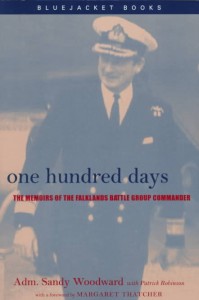
One Hundred Days, The Memoirs of the Falklands Battle Group Commander, Admiral Sandy Woodward

For professional reasons, many trusted colleagues have recommended One Hundred Days, and I finally finished it a few weeks ago. They reminded me the Falklands War “was the first modern anti-access/area-denial (A2/AD) war, pitting a joint expeditionary force against a regional power with modern land, air, and sea capabilities.” [sourced from Proceedings magazine, May 2012, by Commander Jim Griffin, U.S. Navy—strongly recommended] In other words, the scrap in the South Atlantic in 1982 was the last time a “modern” expeditionary force faced a credible adversary with modern capabilities. 

Admiral Woodward reminds that no one expected Argentina to invade the Falklands, and even if they did, no one expected the UK to respond with force (even the Royal Navy (RN) was surprised, and many had to find the islands on a map). Woodward departed with the two remaining UK carriers, the Hermes and Invincible which were already on the chopping block due to budget problems (sound familiar?). Fighting was such a distant memory for the RN, having not engaged in significant action since WWII, and Woodward recounts that many of his men had difficulty making the transition from “a sea-going job” to fighting, and possibly dying. I wondered as I read if the U.S. Navy has prepared/is prepared for this transition; and truly both officer and rates proved susceptible. The personal nature of Woodward’s account was bit of a surprise, but provides valued insight into the challenges and frequent frustrations faced by naval leaders.

Commander Griffin’s account in Proceedings referenced above has a very good list of lessons learned, and a few observations and questions are added for consideration:

  1. Naval warfare is war of attrition. Attrition can occur as a result of sinking or disabling an opponent. In the case of the Brits, many of their ships sustained non-fatal hits that, for practical purposes, removed the ship from any offensive or defensive action. Many of our enemies, while not sophisticated, understand and plan accordingly. As a result numbers are important; numbers of ships and weapons.
  2. In the age of the missile, response times were/are measured in seconds, so ships and aircraft will be lost…often, quickly.
  3. Are our systems susceptible to electro-magnetic interference (EMI)? 
  4. Could our ships navigate or fight without GPS or other satellite-dependent technologies?
  5. Can sailors onboard fix systems when they break (and they will break, see #6 below)? One RN ship had a contractor embarked who made the difference, which was blind luck. Over the last 20 years, the USN has tended towards “operators” over technicians.
  6. “Murphy” is alive and well. When things can fail (including technologies), they will, at the worst possible time.
  7. Is the theater commander in command? In the Falklands, Woodward had command of ships, but not submarines—which hampered the effectiveness of his battle group.
  8. Ship preservation (preventive maintenance) is often paid for in battle. At least two RN ships were unable to use weapons because of salt corrosion rendering missile hatches inoperable. This is engineering problem, too, to be sure, but also an example of how preventive maintenance can pay-off when it counts.
  9. Damage control training for all-hands; rigorous and often. RN sailors did a masterful job of saving several of their wounded ships.
  10. Anti-missile capabilities on logistic/support ships.
  11. Homefront politics and posturing provides fog in war as does the enemy. One curse of modern communications; having the White House Situation Room second-guessing/micromanaging the war.
  12. The press is often not your friend. On a couple of occasions, the BBC broadcast orders of battle and goals, and the Argentineans planned and acted accordingly.
  13. The motto of Captain John Coward, RN, of HMS Brilliant, “The essence of war is violence. Moderation in war is imbecility.”

Woodward’s book is the clearest account we have of naval warfare in the missile age. If it is not already, One Hundred Days should be required reading for every naval officer. Strongest recommendation.
National Security Dilemmas, Challenges & Opportunities, Colin S. Gray

Colin Gray is no stranger to the readers of Zenpundit. I read this title over the Christmas break, and have returned to review with some frequency. In fact, my copy is so littered with underlining and marginalia, these periodic “reviews” can take a couple of hours. As the title suggests, Gray outlines the challenges and opportunities facing policymakers, and in so doing provides an accurate glimpse of our current state of political-military affairs. He encourages policymakers to reacquaint themselves with the importance of the concept of victory, and on how to successfully navigate a transition of our military from our previous focus of regular warfare to the realities introduced by enemies using irregular methods. Gray discusses “revolutions in military affairs (RMA)” and deterrence and the implications of both in our thinking and planning. Gray’s concluding section on preemption and preventative war is exceptionally well-presented.

For example, Gray’s section on Achieving Decisive Victory includes:

  1. Better armies tend to win.
  2. No magic formula for victory.
  3. Technology is not a panacea.
  4. The complexity of strategy and war is the mother of invention.
  5. Know your enemies.

This book is imminently quotable, so I’ll share a few with my highest recommendation.

The idea that strategy has an essence is deeply attractive. Strategy sounds incredibly rare and valuable, like something that could be bottled and sold. Unfortunately, American understanding of and sound practice in strategy is desperately rare. Strategic thinking and behavior are endangered activities in the United States. This is hardly a stunningly original insight. However, familiar though the criticism should be, it loses none of its bite for reason of longevity. Much as the U.S. defense community periodically is prodded by irregularist anxiety to worry about insurgency and terrorism, so from time to time it remembers the value of strategy. Though American defense professionals do not know what strategy is or how it works, they know that it is a matter of grave importance. The pattern has been one wherein a politician or a senior official with a personal interest has lit the fire of genuinely strategic discussion. The fire briefly flare brightly but then dies away for want of fuel. The fire is not fed, because there is not much demand for the heat and light of truly strategic argument in the United States. Although America is not quite a strategy-free environment, such a characterization would err in the right direction. (page 169 of paperback edition)

Since, inter alia, warfare is a competition in learning between imperfect military machines, fortunately one need only be good enough. (page 178; this is a personal favorite of mine)

There needs to be a continuous, albeit “unequal,” dialogue between civilian and soldier. War and warfare are permeated with political meaning, and consequences. A competent supreme command knows this and behaves accordingly. However, this relationship carries implications for civilian participation in military decisions in wartime that run contrary to the traditional American way in civil-military relations. If the strict instrumentality of force is not to be neglected, there has to be a constant dialogue between policymaker and soldier. Policy is a nonsense if the troops cannot perform “in the field,” while the troops may be so effective in action that policy is left gasping far behind unexpected opportunities by events. (page 179, emphasis added)

Gray’s National Security Dilemmas is a must read for policymakers and practitioners. [btw: it has been my custom to provide selected referenced works in book reviews. Gray’s bibliography is so excellent and comprehensive, I could not make a list that would do it justice.]

That said, I’ll close with more questions, and an apology: Does anyone read anymore? I’m rereading Manchester’s classic American Caesar after an absence of 30+ years, and I’d forgotten how much time both MacArthur the Elder and MacArthur the Younger (Douglas) spent reading. That said, how often do we see military leaders review the books they recommend? A reading list is one thing, explaining why the book made the cut another. With blogs, the internet, and social media, there are no barriers to entry. Recommendation to senior officers, including the General Officers and Flag Officers who post required reading lists: let your folks know why, write it down, explain it—the exercise will do you good, and give your subordinates insights into your thinking.

Now for the apology: there are four of us here at Zenpundit, but I’ve been the anchor man. This is my first post in too long, and I apologize to my colleagues and you, the reader. I’ve been on a tear reading naval stuff, mostly associated with my business endeavors. That said, I’ll endeavor to eat my own cooking and review what I read/have read with greater frequency.

A Sustainable National Security Posture?

Wednesday, May 22nd, 2013

[ by Charles Cameron — and what about climate change, Mike Mazarr? ]
.

Is there even a Cheney-esque one-percent possibility that 97% of climate scientists (NASA’s estimate) are right?
.


.

**

I just opened up Michael Mazarr‘s NDU Strategy Study Group report, Discriminate Power: A Strategy for a Sustainable National Security Posture. It’s quite far from my usual apocalyptic and more generally religious interests, but he and I once co-led a Y2K scenario role-playing game at the Center for Strategic and International Studies, so I have a friendly interest in what he’s up to.

What interested me next, though, was the overview to their report that Mazarr and company present in their Introduction. Their purview:

In the coming decade, the constraints on U.S. foreign and defense policy — fiscal, social, Geopolitical — are likely to intensify. At the same time, the security environment is evolving in ways that pose a more diverse array of risks, threats and opportunities. While foreign threats have dominated national security planning in the past, for example, future wars may more typically involve nontraditional foes and means threatening the homeland. This will change how we perceive and provide for national security, even as we confront new constraints.

This paper summarizes the work of a study group chartered to assess strategy under austerity for the next ten years. A core conclusion was that the United States is buying systems, forces and capabilities increasingly mismatched to the challenges, threats, and opportunities of the emerging environment. Military power, for example, cannot resolve many of the most complex and pressing challenges we confront — and yet our investments in national security remain vastly over-weighted to military instruments. The most likely threats to the U.S. homeland will come from nontraditional challenges such as biological pathogens, terrorism, cyber, and financial instruments, and yet resources for these issues remain minimal compared to traditional military instruments. At the same time, on our current trajectory, we will end up with a national security establishment dominated by salaries, health care, retirement costs, and a handful of staggeringly expensive major weapons systems. We are spending more and more to get less and less, in terms of relevant tools and influence.

There’s some ambiguity in here. There’s a segue from “foreign threats” to “future wars” without so much as a hiccup — but the actual threats our National Security strategy will need to address are presented as “nontraditional challenges such as biological pathogens, terrorism, cyber, and financial instruments”.

That’s a far broader array than “future wars” to be sure — but maybe still within the ambit of “foreign threats”. What I’m interested in, in the present context, however, is climate change. And unless my .pdf search function is deceiving me, I can find no mention of either “climate” or “warming” in the entire report.

**

Compare these Remarks by Tom Donilon, National Security Advisor to the President At the Launch of Columbia University’s Center on Global Energy Policy from a month ago:

The national security impacts of climate change stem from the increasingly severe environmental impacts it is having on countries and people around the world. Last year, the lower 48 U.S. states endured the warmest year on record. At one point, two-thirds of the contiguous United States was in a state of drought, and almost 10 million acres of the West were charred from wildfires. And while no single weather event can be directly attributed to climate change, we know that climate change is fueling more frequent extreme weather events. Last year alone, we endured 11 weather-related disasters that inflicted a $1 billion or more in damages – including Hurricane Sandy.

Internationally, we have seen the same: the first twelve years of this century are all among the fourteen warmest years on record.

Or the White House’s National Security Strategy of 2010:

Climate Change: The danger from climate change is real, urgent, and severe. The change wrought by a warming planet will lead to new conflicts over refugees and resources; new suffering from drought and famine; catastrophic natural disasters; and the degradation of land across the globe. The United States will therefore confront climate change based upon clear guidance from the science, and in cooperation with all nations — for there is no effective solution to climate change that does not depend upon all nations taking responsibility for their own actions and for the planet we will leave behind.

And given what WSJ SWJ calls the Obama administration’s strategic shift to the East — what about Navy Admiral Samuel J. Locklear III?

America’s top military officer in charge of monitoring hostile actions by North Korea, escalating tensions between China and Japan, and a spike in computer attacks traced to China provides an unexpected answer when asked what is the biggest long-term security threat in the Pacific region: climate change.

Harvard’s 2012 Climate Extremes: Recent Trends with Implications for National Security report?

Or the Council for Foreign Relations report, Climate Change and National Security: An Agenda for Action — from 2007?

**

I know, the CIA has (quietly) closed its Center on Climate Change and National Security, although as the NYT’s Green blog told us:

Todd Ebitz, a C.I.A. spokesman, said that the agency would continue to monitor the security and humanitarian challenges posed by climate change as part of its focus on economic security, but not in a stand-alone office.

But if you’re still interested, take a look at The Center for Climate & Security’s page On the Record: Climate Change as a Security Risk According to U.S. Administration Officials.

Their list is far more comprehensive than mine.

Okay. I know Mazarr’s report will have been written to fulfill certain criteria, specified or unspecified, and I’m not the one who set them — but isn’t climate change a part of the context that would need to be addressed, if “how we perceive and provide for national security, even as we confront new constraints” is the topic under discussion?

Great question!

Tuesday, May 21st, 2013

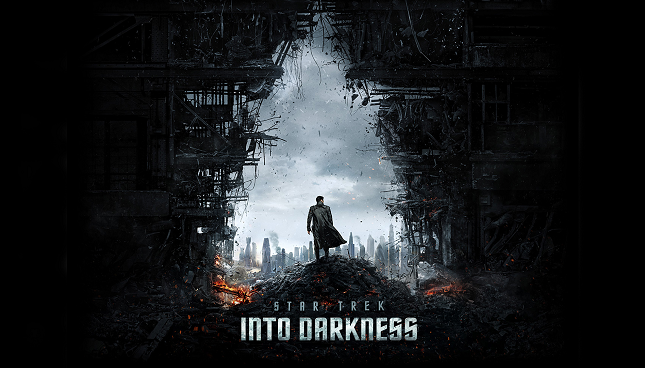
[ by Charles Cameron — from Paradise Regained: Overcoming Terrorism in Star Trek Into Darkness ]
.


.

Matt Ford, guest-blogging at Grand Blog Tarkin [includes spoilers] asks:

How many young Americans learned Arabic and Pashto or studied counterterrorism and international relations because nineteen men flew three planes into a building and one into the ground, killing thousands?

Great question!

And how many in the UK after 9/11? — and after 7/7?

**

Also worth reading [and also includes spoilers]:

Amy Davidson, Is “Star Trek into Darkness” a drone allegory?

New Book: America 3.0 is Now Launched!

Tuesday, May 21st, 2013

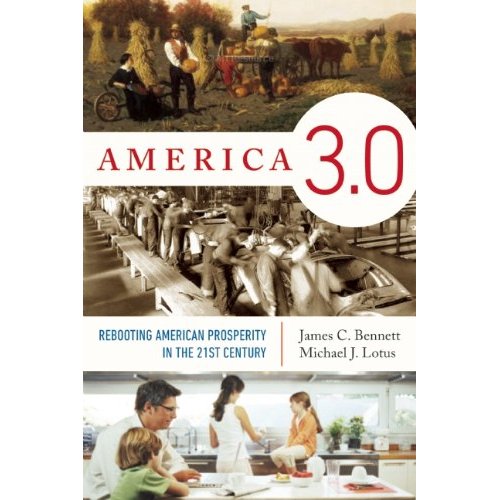
America 3.0: Rebooting American Prosperity in the 21st Century – why America’s Best Days are Yet to Come by James C. Bennett and Michael Lotus

I am confident that this deeply researched and thoughtfully argued book  is going to make a big political splash, especially in conservative circles – and has already garnered a strong endorsement from Michael Barone, Jonah Goldberg, John O’Sullivan and this review from  Glenn Reynolds in USA Today :

Future’s so bright we have to wear shades: Column 

….But serious as these problems are, they’re all short-term things. So while at the moment a lot of our political leaders may be wearing sunglasses so as not to be recognized, there’s a pretty good argument that, over the longer time, our future’s so bright that we have to wear shades.

That’s the thesis of a new book, America 3.0: Rebooting American Prosperity In The 21st Century.The book’s authors, James Bennett and Michael Lotus, argue that things seem rough because we’re in a period of transition, like those after the Civil War and during the New Deal era. Such transitions are necessarily bumpy, but once they’re navigated the country comes back stronger than ever.

America 1.0, in their analysis, was the America of small farmers, Yankee ingenuity, and almost nonexistent national government that prevailed for the first hundred years or so of our nation’s existence. The hallmarks were self-reliance, localism, and free markets.

At the end of the 19th century and the beginning of the 20th, people were getting unhappy. The country was in its fastest-ever period of economic growth, but the wealth was unevenly distributed and the economy was volatile. This led to calls for what became America 2.0: an America based on centralization, technocratic/bureaucratic oversight, and economies of scale. This took off in the Depression and hit its peak in the 1950s and 1960s, when people saw Big Government and Big Corporations as promising safety and stability. You didn’t have to be afraid: There were Top Men on the job, and there were Big Institutions like the FHA, General Motors, and Social Security to serve as shock absorbers against the vicissitudes of fate.

It worked for a while. But in time, the Top Men looked more like those bureaucrats at the end of Raiders Of The Lost Ark, and the Big Institutions . . . well, they’re mostly bankrupt, or close to it. “Bigger is better” doesn’t seem so true anymore.

To me, the leitmotif for the current decade is supplied by Stein’s Law, coined by economist Herb Stein: “Something that can’t go on forever, won’t.” There are a lot of things that can’t go on forever, and, soon enough, they won’t. Chief among them are too-big-to-fail businesses and too-big-to-succeed government.

But as Bennett and Lotus note, the problems of America 2.0 are all soluble, and, in what they call America 3.0, they will be solved. The solutions will be as different from America 2.0 as America 2.0 was from America 1.0. We’ll see a focus on smaller government, nimbler organization, and living within our means — because, frankly, we’ll have no choice. Something that can’t go on forever, won’t. If America 2.0 was a fit for the world of giant steel mills and monolithic corporations, America 3.0 will be fit for the world of consumer choice and Internet speed.

Every so often, a “political” book comes around that has the potential to be a “game changer” in public debate. Bennett and Lotus have not limited themselves to describing or diagnosing America’s ills – instead, they present solutions in a historical framework that stresses the continuity and adaptive resilience of the American idea. If America”s “City on a Hill” today looks too much like post-industrial Detroit they point to the coming renewal; if the Hand of the State is heavy and it’s Eye lately is dangerously creepy, they point to a reinvigorated private sector and robust civil society; if the future for the young looks bleak,  Bennett and Lotus explain why this generation and the next will conquer the world.

Bennett and Lotus bring to the table something Americans have not heard nearly enough from the Right – a positive vision of an American future that works for everyone and a strategy to make it happen.

But don’t take my word for it.

The authors will be guests Tuesday evening on Lou Dobb’s Tonight and you can hear them firsthand and find out why they believe “America’s best days are yet to come


Switch to our mobile site