zenpundit.com » navy

Archive for the ‘navy’ Category

End times in Dubai?

Wednesday, May 18th, 2011

[ by Charles Cameron — May 21st, Y2K, USS Topeka, Harold Camping ]
.
.

_45474_dubai_billboard_.jpg

I’ve been listening to Harold Camping lately, he’s been on my car radio quite a bit and I like the way he handles callers – he’s a courteous old gentleman, firm when he has to be, and very, very certain that the Bible supports his date-setting for Judgment Day just four days from now on May 21st at 6pm in whichever time-zone you happen to be in – foolish the man who straddles two time-zones on that day!

*

Digression: I say that last bit, remembering that as December 31st 1999 slipped into January 1st 2000, the USS Topeka straddled the dateline, equator, hemispheres, seasons and millennia:

Its bow in one year, its stern in another, the USS Topeka marked the new millennium 400 feet beneath the International Date;line in the Pacific ocean. The Pearl Harbor-based navy submarine straddled the line, meaning that at midnight, one end was in 2000 while the other was still in 1999… The 360-foot-long sub, which was 2,100 miles from Honolulu, Hawaii, straddled the Equator at the same time, meaning it was in both the northern and southern hemispheres. Some of the 130 crewmembers were in Winter in the North, while others were in Summer in the South…

*

In any case: this evening Camping mentioned that his representatives had managed to get permission to post some of his end-times billboards in Dubai of all places – see illustration above — and apparently they’d contacted an Emirate bureaucrat while his boss was away from the office, and received official permission. And although the permission was quickly rescinded, that fact in turn led to Arab news-media carrying the message into half a dozen other countries which might not otherwise have been informed. All this, Camping, age 89, assured his listeners, was the work of God, the CEO — and he spelled out just what those letters stand for: Chief Executive Officer.

What a story — this I had to verify! – and it’s true, Gulf News for April 13th carries a story titled ‘End of days’ billboards in Dubai to be removed, says official.

Dubai: A billboard advertisement claiming that May 21, 2011 will be the “judgment day” according to the Bible, and which shocked many and dismayed others, will be removed, a senior official said on Sunday.
.
The large billboards put up on various busy roads of Dubai such as Al Garhoud and Al Jaffiliya, carries the sentence “the great and terrible day, who shall be able to stand”.
.
Marie Sheahan, Media Representative of Family Radio, who is campaigning to put up this advertisement about judgment day, told Gulf News that she and her husband are in town from the United States to advertise and “warn people about it, regardless of nationality, religion or anything else because this will affect everybody”.

*

So… I was listening to Camping on the radio this evening, fascinated as always by the interplay between Camping himself, the true believers and the doubters, when an awful racket assailed my ears – and Camping’s warning that the entire world was about to end was rudely interrupted by a more local and immediate warning that a tornado watch would be in effect just down the road in half an hour…

Oh, the irony!

Which brings up the question of when is an emergency so urgent that it can interrupt another emergency? I mean, should a tornado watch warning interrupt a warning of the end of the world? Does an ambulance have the right of way over a firetruck if they meet at an intersection?

*

new-camping-1994.jpg

Camping’s book 1994? had a similar theme, but lacked mathematical rigor alas.

This time, he’s double-checked.

History as a Gen Ed Credit for Engineering Students Aspiring to Naval Leadership

Tuesday, February 15th, 2011

Commodore….errr….what’shisnameagain???

As a rule, I generally do not write about US Navy affairs because it is not an area of expertise for me and I think Galrahn covers that territory admirably well without my poor help. Every so often though, an item from our sea-roving friends catches my eye that I am qualified to speak about and today is one of those days.

Teaching naval history has become an inconvenience to those entrusted with training our nation’s future captains and admirals because they need to get the budgetarily “sexy” topic of “cyber warfare” into the US Naval Academy curriculum. Yes, that’s right. Because someday, in the midst of battle, the combatant commander of PACOM will be furiously barking out HTML code at the bridge of the Eisenhower, above the cries of wounded men.

Gentlemen, gentlemen….in matters of education, fundamentals come before esoterica!

I strongly recommend this post by LCDR Benjamin “BJ” Armstrong, historian, pilot and Navy officer who tackled this subject with an enviable grace and eloquence at the USNI blog:

HH104, WWATMD…

….More than policy or naval strategy, Mahan believed in teaching officers the best ways to approach the challenges of command.  He saw his job as a Naval War College plankowner in those terms, about teaching command, and to do so he turned to history.  But, it wasn’t just senior officers who needed grounding in our naval past.  He wrote in his very first published article, winning third place in “Proceedings” annual essay contest, that history was also a key foundation for learning at the Naval Academy.

When he said that history “lies at the foundation,” it wasn’t just a convenient turn of phrase.  He believed that before subjects like gunnery, engineering, or even cyber-warfare, could be taught a Midshipman needed to know why he was learning them.  Why did any of it matter?  The best way to show a student why hitting the target in gunnery class was important was to teach him the history that showed what happened when crews weren’t drilled properly.  Perhaps he would teach the Midshipman about Captain James Lawrence sailing Chesapeake out of Boston harbor with a green and undrilled crew in 1813 to face HMS Shannon, a short time later uttering his final command, “Don’t give up the ship” just before he succumbed to his wounds and the British boarding party swarmed aboard in victory.  Maybe the Midshipman would recognize the words…from the battle flag bearing the phrase in Memorial Hall that was flown at the Battle of Lake Erie.  Mahan felt that once a Midshipman understood the importance of mastering the craft, of studying their trade, a subject like weapons systems engineering would become important even to the lowly humanities major.

The second part of Mahan’s statement is also important, “all sound military conclusions and practices.”  In our age of checklist leadership and officers educated as engineers there is a desire to approach leadership challenges as equations where certain inputs are guaranteed to give you the desired results.  But Mahan doesn’t say all “correct” military conclusions and practices, he says “sound.”

Mahan recognized that both naval strategy (conclusions) and combat leadership (practices) were art, not science.  In his book “Naval Strategy: Compared and Contrasted with the Principles and Practice of Military Operations on Land,” published in 1911, Mahan compared naval officers to artists.  He wrote that artists had to learn certain techniques, mediums and certain skills, but that wasn’t what made their artwork great.  In the end “art, out of materials which it finds about, creates new forms in endless variety,” artists take those foundation basics and then mix and match them based on inspiration and experience to create a masterpiece.  History helps us understand that frequently there are no right answers to military questions of strategy or leadership.  There are only “sound conclusions,” which are drawn from understanding basics and history.  Demonstrating this great truth to Midshipman early in their education, say as a Plebe before they have taken three years worth of engineering classes that teach them there is always an equation and a correct answer, is much more valuable than having them learn it after years of service.

Bravo!

This decison is wrong on so many levels it amounts to pedagogical malpractice. It should be reversed.

What kind of mind do we want our Navy officers to have in the moment of decision?  An admiral in command of a carrier task force has more destructive power at his disposal than any man on earth except for the ruler of Russia and the President of the United States. At a crisis point, it is too late to roll back the clock to gain the benefit of a career of professional reading, discussion and reflection on the lessons of naval warfare, strategy and statesmanship. EE courses are good things, and demonstrably useful, but they do not inculcate the same habits of mind as does the learning of history.

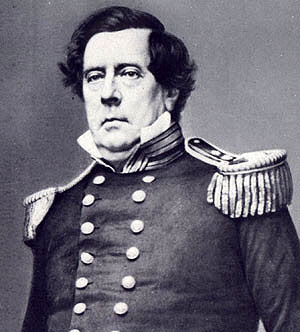
Historically, the US Navy was the plenipotentiary service of the United States with it’s admirals and commodores assuming extremely sensitive diplomatic or even proconsular duties alongside their responsibilities of military command. The careers of Farragut, Perry, Dewey, Leahy, King, Nimitz and others of lesser rank attest to how naval command has always been deeply entwined in American history with statesmanship and keen political insight. The 21st century will be no different.

The lessons of history are a sword and shield.

Happy Veteran’s Day!

Thursday, November 11th, 2010

Thank you to all who have served and who are serving now.

Israel Does Not Understand 4GW

Monday, May 31st, 2010

The story du jour.

Having previously failed to break Israel’s naval blockade of Gaza that denies HAMAS war material and economic aid, a coalition of Islamists, Palestinian nationalists and Western Leftists used ships of Turkish registry. The IDF took the bait and blundered into an ambush where the commandos were promptly swarmed by the “peace activists”, overpowered (!) and then had to bloodily shoot their way out of a debacle.

RealClearPolitics has a better video.

Taking stock of this bit of guerrilla theater gone lethal, let’s see what the supporters of HAMAS terrorism gained:

  • The world is hearing a false narrative that Israel massacred unarmed peace activists.

  • Turkey’s ruling, authoritarian, crypto-Islamist Party has a further wedge to downgrade Turkey’s traditional military cooperation with Israel while putting political pressure on Turkish secularists and Army leaders. 

  • Israel’s diplomatic isolation is greatly increased

  • Additional strain is put on the already lukewarm relationship between the Obama administration and the Netanyahu government

On the moral level of war, HAMAS supporters – whose strategic objective is to end Israel’s blockade of Gaza, so that HAMAS can rebuild it’s military strength – have scored a solid triumph while the IDF have acted with all the instinctive propensity for causing self-inflicted wounds of Richard Nixon confronting the Watergate break-in. 

Because Israel is powerful and democratic and its enemies, despite their viciousness and authoritarian politics, are weak, the Israelis are not held to the same moral standards by international observers (many of whom, it must be noted, begin with a strongly anti-Israel or at least, anti-Western, orientation).  In a 4GW paradigm, even acting in self-defense is not enough for a strong state to play the role of “the good guy” in a globalized media environment, unless the weak side does something that is viscerally morally repulsive – ex. Abu Zarqawi ‘s extreme brutality and lust for staging ghoulish beheadings of captives on the internet.

There seems to be a stunning political-strategic tone deafness on the part of Israeli leaders in recent years. Perhaps there is a degradition of IDF tactical excellence as well. Overpowering highly trained, heavily armed, elite commandos by untrained civilians is not possible unless said commandos were sent in poorly briefed, with unworkable ROE (IMHO, this was more likely a prepared ambush than a spontaneous act). There’s no half-way method of seizing a hostile ship by force. Either you do it swiftly, while citing appropriate legal justification or you don’t and employ a different set of responses to turn the ships away in a manner that does not alienate observers.

Military force used ineffectually is as counterproductive as force used excessively. From a Boydian strategic perspective, the initiative is lost, opponents are “pumped up” while one’s own side and sympathizers are demoralized.  Political irritants become inflated into disasters. HAMAS, Hezbollah, al Qaida and similar entities are not the old, state-sponsored, state-centric, PLO and they are not playing the PLO’s game.

ADDENDUM:

Abu Muqawama gives the “peace flotilla” way too much benefit of the doubt here, but his analysis of how poorly the Israelis handled this situation is spot on:

One could, from the start, think a number of different things about those participating in the peace flotilla to Gaza. (Naive? Righteous? Courageous? Anti-Semitic?) But for the sake of argument, and putting ourselves in the shoes of an Israeli naval commander, let’s assume the most malevolent of motivations for the people participating in the peace flotilla. If I am in charge of doing that for the Israeli Navy, I am going to assume these people are smart and are deliberately trying to provoke a crazy response from my sailors and soldiers that will produce ready-for-television images that both isolate Israel within the international community and further raise the ire of the Arabic-speaking and Islamic worlds. I mean, that is my base assumption for what this group is trying to do. So naturally, the last thing I would want my forces to do would be to overreact, right? It’s like when your convoy gets fired on inside a crowded market: the last thing you want to do is return fire with 7.62mm, killing a bunch of civilians and giving the enemy exactly the effect he was looking for.

If something does go wrong, meanwhile, I am going to have a response ready. I am going to have my very best spokespersons on international and Israeli television. I am most certainly not going to let people like Danny Ayalon provide my government’s response, right? Because a live wire like Ayalon — who the Turks already hate, with an understandable passion — will just say something incredibly crazy like how the people in the aid flotilla were terrorists with ties to al-Qaeda. (Even if you can prove this is somehow true, everyone you need to be speaking to right now — the international community, the Turkish people, the Arabic-speaking world — is just going to think you are nuts for saying it or will roll their eyes and say, “Oh, of course he’s saying that.”)

In reality, what happened today is the Israelis got their butts handed to them. The Israeli response to this aid flotilla was a fabulous gift to Hamas and Iran. (Try to imagine, if you will, the Israelis trying to go before the U.N. Security Council to gather support for sanctions on the Iranian regime right now. They would be more likely to leave New York with sanctions on their own regime!)

ADDENDUM II.

George Friedman of STRATFOR ( Hat tip to Adam Elkus)

Flotillas and the Wars of Public Opinion

….The bid to shape global perceptions by portraying the Palestinians as victims of Israel was the first prong of a longtime two-part campaign. The second part of this campaign involved armed resistance against the Israelis. The way this resistance was carried out, from airplane hijackings to stone-throwing children to suicide bombers, interfered with the first part of the campaign, however. The Israelis could point to suicide bombings or the use of children against soldiers as symbols of Palestinian inhumanity. This in turn was used to justify conditions in Gaza. While the Palestinians had made significant inroads in placing Israel on the defensive in global public opinion, they thus consistently gave the Israelis the opportunity to turn the tables. And this is where the flotilla comes in.

The Turkish flotilla aimed to replicate the Exodus story or, more precisely, to define the global image of Israel in the same way the Zionists defined the image that they wanted to project. As with the Zionist portrayal of the situation in 1947, the Gaza situation is far more complicated than as portrayed by the Palestinians. The moral question is also far more ambiguous. But as in 1947, when the Zionist portrayal was not intended to be a scholarly analysis of the situation but a political weapon designed to define perceptions, the Turkish flotilla was not designed to carry out a moral inquest.

Instead, the flotilla was designed to achieve two ends. The first is to divide Israel and Western governments by shifting public opinion against Israel. The second is to create a political crisis inside Israel between those who feel that Israel’s increasing isolation over the Gaza issue is dangerous versus those who think any weakening of resolve is dangerous.

ADDENDUM III.

Very interesting. Tom Barnett argues the flotilla is a Trojan horse chess move on Ankara’s part to justify Turkey’s eventual membership in the Nuclear Club:

Turkey’s deputy prime minister called the raid “a dark stain on the history of humanity.” So now Ankara has its bloody shirt, which will be used – once Tehran inevitably announces the weaponization of its nukes – to justify Turkey’s rapid reach for the same. Just like Tehran cannot openly rationalize its bid for regional supremacy vis-à-vis archrival Saudi Arabia, Turkey requires an appropriate villain for its nuclear morality play. Anybody watching the deterioration of Turkish-Israeli relations over the past year knew that some cause célèbre was in the works. Suddenly, if perhaps on purpose, Turkey can claim that – despite its efforts to broker a non-nuclear peace in the region (including a recent enrichment deal engineered with Brazil) – it needs its own deterrent against Israel’s nuclear arsenal, too.

Checkmate, Turkey.


Cameron on Conflicts of Commands, Part III. – A Guest Post Series

Tuesday, March 16th, 2010

Charles Cameron, my regular guest blogger, is the former Senior Analyst with The Arlington Institute and Principal Researcher with the Center for Millennial Studies at Boston University. He specializes in forensic theology, with a deep interest in millennial, eschatological and apocalyptic religious sects of all stripes.  Here is part III. of a three part series by Charles, entitled “CONFLICT OF COMMANDS”.

Conflict of Commands III: Two pre-Hasan documents

by Charles Cameron

In my research on the topic of “conflict of commands” I ran across two documents from October and November of 2001 which make for interesting reading in the wake of Major Hasan’s slide presentation and the Fort Hood shooting.

The first is a MEMRI post, and hence both copyrighted and readily available on the web. It s titled Terror in America (23) Muslim Soldiers in the U.S. Armed Forces in Afghanistan: To Fight or Not to Fight? and dated November 7, 2001, and the intro paragraph reads as follows:

As soon as the U.S. geared up for the war against the Taliban regime in Afghanistan, Muslim military personnel in the American armed forces began to deal with the question of the religious permissibility of their participation in battle. Army Chaplain Capt. Abd Al-Rasheed Muhammad, the Imam of Walter Reed Army Medical Center in Washington, D.C. sent an inquiry on the matter to the North American Fiqh (Islamic Jurisprudence) Council, which in turn referred the matter to clerics in the Arab world. The clerics issued a Fatwa permitting Muslim soldiers to take part in the fighting if there was no alternative, and the council delivered the ruling to Capt. Muhammad. But on October 30, the editor of the Arabic London daily Al-Sharq Al-Awsat reported that the clerics who signed this Fatwa had changed their minds and abrogated their previous Fatwa with a new one prohibiting participation of Muslim soldiers in the war in Afghanistan.

The rest you can read on the MEMRI site.

The second document was actually posted a little earlier on the State Department site, although it is no longer available there. Dated 16 October 2001 and titled U.S. Islamic Leaders Issue Fatwa on U.S. Muslim Soldiers Fighting Terrorists, as far as I can determine, it is currently only present (outside of archive.org) on the Department’s Jakarta site.

Interestingly enough, this document also includes a quote from another person whose name has been much in the news in connection with Islamism: Chaplain Yee — the Chinese-American US Army Chaplain who ministered to the Muslim inmates at Guantanamo Bay, was charged in 2003 with sedition, espionage and other crimes, and held in a Navy brig until all charges against him were dropped. Yee is quoted as saying back in 2001 that “Muslims on his base have come to him with worries about being ordered to fight Muslims overseas”.

I think this document is worth reposting in full, and would simply note my surprise that neither this official State Department statement nor the MEMRI document appears to have formed part of any discussion of the Fort Hood incident in open source materials that I have seen. I hope the IC is doing better in this regard — but if these materials have been overlooked by the relevant classified inquiries too, I wonder whether this might not be yet another result of the sort of thing Gregory Treverton comments on in his 2009 paper “Bridging the Divide between Scientific and Intelligence Analysis” from the Center for Asymmetric Threat Studies, Swedish National Defense College:

Analysts do not have the freedom to explore issues by pursuing them down the rabbit hole, so to speak. There is a hard andfast process in place that determines what they look at, when, and in some cases, to what end.

*U.S. Islamic Leaders Issue Fatwa on U.S. Muslim Soldiers Fighting Terrorists:

*

U.S. Muslim soldiers need to defend their country and combat terrorism
By Phillip Kurata
Washington File Staff Writer
16 October 2001

Washington — Two prominent Islamic scholars in the United States have issued a fatwa, or legal opinion, on the importance of American Muslims serving in the U.S. military to defend their country and combat terrorism.

“All Muslims ought to be united against all those who terrorize the innocents, and those who permit the killing of non-combatants without a justifiable reason. The Muslim soldier must perform his duty in this fight despite the feeling of uneasiness of ‘fighting without discriminating.’ His intention must be to fight for enjoining of the truth and defeating falsehood. It’s to prevent aggression on the innocents, or to apprehend the perpetrators and bring them to justice,” the fatwa reads.

It was written by Taha Jabir Al-Alawani, President of the Fiqh Council of North America and President of the Graduate School of Islamic and Social Sciences, and Sheikh Muhammad Al-Hanooti, a member of the fiqh council. The two Islamic scholars issued their legal opinion in response to a query submitted by Chaplain Abdul-Rashid Muhammad, the most senior Muslim chaplain in the U.S. military, who sought guidance on the permissibility of U.S. Muslim servicemen to participate in the war effort in Afghanistan and other Muslim countries.

“Muslims are part of the American society. Anyone who feels he’s fighting in a just war must fight,” Al-Alawani said.

“We abide by every law of this country except those laws that are contradictory to Islamic law,” said Sheikh Al-Hanooti. The sheikh added that U.S. Muslim military personnel may refuse to fight on the grounds of conscientious objection.

“If any Muslim serving in the U.S. Armed Forces has a conscientious objection to combat and believes that it is against Islamic principles to fight in any war, then that individual has the right to stand by his or her concience,” Al-Hanooti said. “They realize, of course, that they may be administratively separated from the military as a result of their choice.”

Muhammad, who is stationed at the Walter Reed military hospital in Washington, says there is no conflict between being a loyal soldier and a loyal Muslim. He is helping some Muslim American servicemen deal with their qualms about fighting terrorists who claim to represent Islam.

“It is time now for us to not only wake up, but speak up,” Muhammad said in a recent interview. “The prophet said when we see evil action we are compelled to change it with our hand, challenge it with our tongue or at least hate it in our heart.”

Muhammad, an African American who was raised as a Baptist, became the first Muslim chaplain in the U.S. military in 1993. Until then, all the 3,150 U.S. military chaplains were either Jews or Christians. In 1996, a second Muslim chaplain was commissioned by the Navy. Since then the number of Muslim chaplains in the U.S. military has grown to 14.

Qaseem Uqdah, a Marine Corps veteran who is executive director of the American Muslim Armed Forces and Veteran Affairs Council, said the Muslim military chaplains include Muslims who were born into the faith in Asia, Africa and the Middle East and Muslim converts, who include several African Americans, an Anglo-American and a Chinese American. Uqdah’s group has been selected by the U.S. military to recommend people as Muslim chaplain candidates.

U.S. military officials say a shortage of candidates with the required education limits the number of Muslim military chaplains. Three Muslim chaplains are currently being trained at the Hartford Seminary in Connecticut.

The newest Muslim chaplain is James Yee, a Chinese American and a graduate of the West Point military academy, who was born into a Lutheran family. He became interested in Islam while a student and later spent four years studying Arabic and Islam in Damascus, Syria. Currently he serves with the 29th Signal Battalion at Fort Lewis, Washington.

Chaplain Yee said that Muslims on his base have come to him with worries about being ordered to fight Muslims overseas.

“An act of terrorism, the taking of innocent civilian lives is prohibited by Islam, and whoever has done this needs to be brought to justice, whether he is Muslim or not,” Chaplain Yee said.


Switch to our mobile site