Archive for the ‘authors’ Category


Barnett’s Great Powers: The Cutting Room Floor
Thursday, January 15th, 2009Tom’s new book Great Powers: America and the World After Bush
Tom has just released some of the material that had been cut during the editing process and it’s worth a look. It’s interesting and it gives you an idea of thoughts in process for writing a large work even if ultimately, these sections received the axe:
GP: the lost chapters
Remember when Tom wrote that the deleted chapters from Great Powers would appear online? Two are now up on International Relations and Security Nework.
The original Chapter One is now Creed of an American Grand Strategist: I am a great power. And so can you!
The subtitle was Mark Warren’s idea (an obvious link to Colbert’s book), which Tom thought was pretty funny.
The original Chapter Two, ‘A-to-Z of American Grand Strategy’ is now broken into four parts:
+ A lexicon deconstructed: A-G
+ A lexicon deconstructed: H-M
+ A lexicon deconstructed: N-S
+ A lexicon deconstructed: T-ZFor now, we’re just linking to ISN. We’ll be reprinting both of these lost chapters in their entirety later in the month.
Having been both writer and an editor on a small scale, I think the natural tendency of every writer is to cling to every word. Frequently though, in making an important point, less really is more to the reader. A good editor clears away the clutter and let’s the writer’s best shine through with clarity.
Say 5GWhaaaat ?
Tuesday, January 13th, 2009David Axe of War is Boring has a piece in World Politics Review on 5GW that summarizes the extended journal article “Fifth-Generation War: Warfare versus the nonstate” in the Marine Corps Gazette by LTC Stanton Coerr that I linked to previously:
War Is Boring: U.S. Wages First Battles in New Generation of War
War has evolved rapidly in the last 100 years, prompting historians and strategists to come up with new terms for new ways of fighting. They call mechanized warfare, which originated in the early 20th century, the third “generation” of war, and ideological warfare waged by guerilla groups the fourth.But what about guerilla-style warfare waged by non-ideological groups against traditional states — pirates, for instance, whose attacks can destabilize trade-dependent nations, but who don’t have strategic goals beyond just getting rich? Free-for-all violence, with indirect global effects, represents a fifth generation of war, according to some experts. And when it comes to defeating fifth-gen enemies, “the old rules of warfare do not apply,” declared Marine Lt. Col. Stanton Coerr, writing in Marine Corps Gazette, a professional journal.
So the U.S. military and its government partners are writing new rules, and putting them to the test on the first of the fifth-generation battlefields emerging in Africa.
Fifth-gen enemies do not have traditional “centers of gravity” — armies, governments, factories, charismatic leaders — that can be destroyed by military attacks. By their mere survival, these enemies undermine the notion that nation-states, their ideals and their economies are viable in the modern world.
To the extent that 5GW can be characterized at all, I think both Axe and Coerr are incorrect here because the term “Fifth-Generation War” makes little sense except in relation to “4GW” and the strategic school of thought associated with William Lind, Col. Thomas X. Hammes and others in the circle of DNI. As Axe and Coerr use “5GW” it is indistinguishable from how Lind has described “4GW” since 1989. To follow the logic of the 4GW theory, as Hammes did in The Sling and the Stone: On War in the 21st Century
, 5GW would be the strategy and tactics that developed in opposition to 4GW as 3GW “Blitzkrieg” emerged from the “Stormtroop tactics” used to counter static and linear 2GW of the Western Front in WWI. Without this context “5GW” is just a placeholder term.

That said, the articles by Coerr and Axe are otherwise praiseworthy for bringing the many nuances and potential dangers of rapidly evolving irregular warfare and associated concepts to describe it, to the attention of a wider audience. That’s useful for generating further debate and bringing more sharp minds to the table. Complex, “hybrid” wars of mixed regulars, insurgents, terrorists and criminals will be here for some time to come and the entire panopaly of the national security establishment needs to come to grips with that threat, regardless of what we ultimately choose to call it. Labels matter less than substance.
Dan of TDAXP, who has voiced his own skepticism about Coerr’s and Axe’s pieces, has issued a call for papers on behalf of Nimble Books to debate the scope and legitimacy of 5GW which will be assembled into an anthology on this subject. It would be nice to have those people who have writtten previously on fifth -generation war a list that includes Thomas P.M. Barnett, John Robb, Thomas X. Hammes, William Lind as well as myself, the cast of Dreaming5GW and others, contribute old or new pieces to that project. Let’s bring it all under one roof for interested readers instead of having posts and articles scattered all over the internet.
ADDENDUM:
Bibliography – The Timeline of 5GW Theory
Cartledge on Alexander
Friday, December 26th, 2008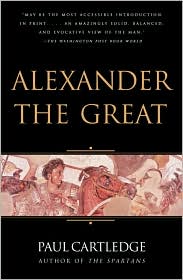
I just picked up the eminently readable biography, Alexander the Great
Addendum:
Recommended…Reads.
Sunday, December 21st, 2008 


Need a last minute gift idea for….yourself? Some highly recommended books that I’ve perused in the past year or so:
Great Powers: America and the World After Bush
Having read an advanced copy, this is easily Tom’s best work, surpassing his bestselling The Pentagon’s New Map in sweep and historical depth. A book with a provocative analysis that is definitely going to challenge the comfortable assumptions of the defense and foreign policy establishments and enrage not a few partisans. I will have a full review in mid-January after I see the “final edit” version.
Caesar: Life of a Colossus
Goldsworthy, a British military historian, gives Julius Caesar the same comprehensive and magisterial treatment that Alan Schom rendered with his landmark biography of Napoleon (Napoleon Bonaparte, incidentally, was an admirer of Hannibal, not Caesar) A biography and work of military history that is a page turner.
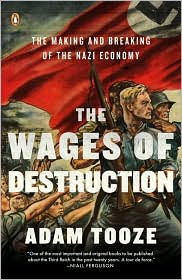
The Wages of Destruction: The Making and Breaking of the Nazi Economy
Dan from Madison at Chicago Boyz has reviewed Wages of Destruction, which led me to pick up a copy recently and start reading. Like Niall Ferguson, Tooze puts economic history into a dramatic explanatory context. If you have doubts, pick up a copy and flip to the chapter entitled “The Grand Strategy of Racial War” and read. You’ll walk out of the store with it.
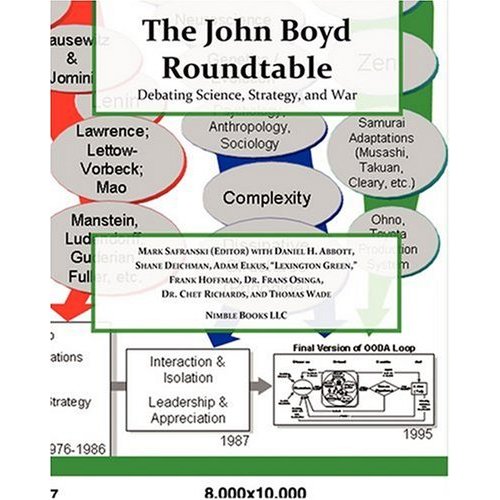
The John Boyd Roundtable: Debating Science, Strategy, and War
A refinement and extension of the online roundtable at Chicago Boyz dedicated to reviewing Science, Strategy and War by Col. Frans Osinga (see below) and debating the ideas of the late strategic theorist Colonel John Boyd. Great for both the “Boyd expert” and those wanting a quick primer before tackling Osinga’s monumental work of strategic studies and intellectual history [ Full Disclosure: for newer readers who may not be aware, I was the editor and I’m shamelessly self-promoting here 🙂 ]
Science, Strategy and War: The Strategic Theory of John Boyd (Strategy and History)
Dr.Osinga has delivered a meticulously researched tome that William Lind called “the book Boyd would have written” that explains Colonel John Boyd as “the first postmodern strategist”. Osinga walks the reader through Boyd’s intellectual journey into fields as far removed from classical military studies as cybernetics, knowledge theory and the work of mathematician Kurt Godel and explains how Boyd distilled a strategic worldview on the nature of conflict and competition.


The Culture of War
Eminent and controversial Dutch-Israeli military historian Martin van Creveld expands upon his body of work that is often described as “prophetic” these days in order to argue the intrinsic cultural value of war.
The Black Swan: The Impact of the Highly Improbable
This was the “must read” book of the blogosphere in 2007- 2008, widely cited (though perhaps first by John Robb) for the Black Swan concept itself. Taleb is an idiosyncratic, wide-ranging, writer interested in counterintuitive perspectives and is deeply skeptical of the validity of existing epistemological methodologies. Parts of the book will be of interest only to those with advanced backgrounds in probabalistic analysis and mathematics but there is much else that is intriguing and entertaining along the way while Taleb explains the characteristics of Extremistan and Mediocristan. A friend who moves among quite a few “thought leaders” described Taleb to me as “arrogant” but with something of value to say. Agreed.
On War (Oxford World’s Classics)
Pick up a copy and join us during the Clausewitz Roundtable in January!!
Annihilation from Within: The Ultimate Threat to Nations
Ikle, a senior Defense Department official in the Reagan administration tackles apocalyptic threat scenarios including the one coming from our own best efforts to avoid them. A gloomy but thought-provoking read.
The Cold War: A New History
Gaddis intended to write a book for the college undergraduate or layman that concisely explains the Cold War and the “why ?” of the victory of the West and generally does a superb job of it. The undercurrent or background that may not be obvious to the layman is that Gaddis is sticking a thumb in the collective eye of the revisionist diplomatic historians of the New Left – notably Walter LaFeber, Lloyd Gardner, Gabriel Kolko and Robert Buzzanco and others descending at least vaguely from the school of thought founded by William Appleman Williams.
Stalin: The Court of the Red Tsar
A brilliant example of Soviet studies scholarship. I’ve read innumerable books on Stalin and the USSR and I still learned things from Montefiore. Highly recommended.
The Third Reich in Power, 1933-1939
The second book in his trilogy on the history of Nazism, Evans looks at the Nazi state and party apparatus and German society during the years of peace. Evans, along with Michael Burleigh, Ian Kershaw and Adam Tooze are revising our understanding of the Third Reich and illuminating that as evil as Hitler’s regime was in fact, it ultimately was intended to be several orders of magnitude worse had Germany won the Second World War.
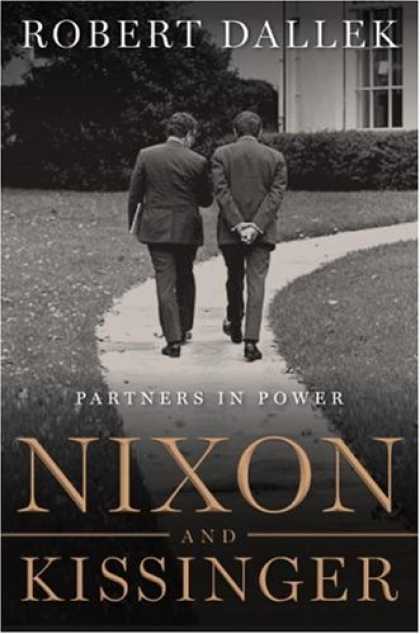
Nixon and Kissinger: Partners in Power
A deeply partisan work of history, Dallek makes little effort to be fair (especially in the first half of the text) to either Richard Nixon or Henry Kissinger, both whom he characterizes as mentally and emotionally unstable, if highly intelligent, personalities and makes an argument that Nixon’s mental state during the Watergate crisis required his removal from office under the 25th amendment. It’s difficult to imagine Dallek treating Bill Clinton or LBJ in similar fashion, regardless of their personal behavior or abuses of power because seldom does Nixon ever get the benefit of the doubt ( in comparison Richard Reeves’ devastating profile, Nixon: Alone in the White House is a work of hagiography).
Why read Nixon and Kissinger then ? Because Dallek, despite his biases, has done an outstanding job in presenting new sources and evidence and his delving into the China Opening and Nixon and Kissinger’s very complicated personal relationship, remains a first-rate work of scholarship. Therefore, I say “Read it” ( just do not let it be the only book you read on Richard Nixon).
That’s it!