zenpundit.com » reading

Archive for the ‘reading’ Category

Books and Bookish Things in 2009

Monday, December 21st, 2009

The Forty Years War: The Rise and Fall of the Neocons, from Nixon to Obama by Len Colodny and Tom Shachtman – just arrived in my mailbox yesterday. Flipped through it today and scanned the index; it looks like a book that would appeal to both “political” bloggers, including Nixon aficianados and the security-defense-foreign policy types who compose a large segment of the readership here.

This year I decided to keep track of all the books I read and see what conclusions I could draw from that experience. I learned a number of interesting things.

First, I did not read nearly as many books cover to cover that I thought I would, though in fairness some of them were a) large and b) ‘hard”. Those I had to read for a grad program were also tedious in the sense of often being composed in the worst kind of academic jargon being overused to convey relatively simple arguments. That said, I could probably have read more than I did. Partly, the problem was a tight schedule and partly it was a case of my reading time being taken consumed more by blogs, PDFs, email, listservs, e-zines and news. All useful but not the same thing as deep reading provided by books.

Secondly, the variety of reading material was not as diverse as I’d have liked, though that is unfortunately the nature of formal programs of study. By definition they are narrow and drill down. I need to add more science and more literature to my repetoire.

Without further ado, my list:


Classics and Ancient History:

The Anabasis of Cyrus by Xenophon ( Wayne Ambler, trans.).    
On War by Carl von Clausewitz (Michael Howard, Peter Paret, trans.)
Caesar’s Commentaries On The Gallic War by Julius Caesar
Alexander the Great by Paul Cartledge
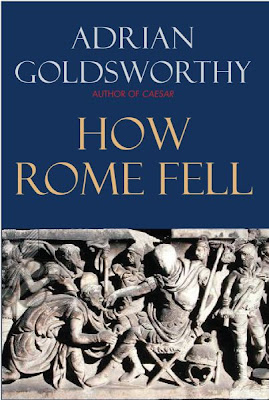
How Rome Fell: Death of a Superpower by Adrian Goldsworthy

War, National Security, Military History and Strategy (Modern):

Great Powers: America and the World After Bush by Thomas P.M. Barnett
Threats in the Age of Obama by Michael Tanji (ed.)
The Culture of War by Martin van Creveld
Wired for War: The Robotics Revolution and Conflict in the 21st Century by P.W. Singer
The Mind of War: John Boyd and American Security by Grant T. Hammond
Horse Soldiers by Doug Stanton
The Bloody White Baron by James Palmer
The Threat Closer to Home: Hugo Chavez and the War Against America by Douglas E. Schoen
This Is for the Mara Salvatrucha: Inside the MS-13, America’s Most Violent Gang by Samuel Logan

Islamic World:

Engaging the Muslim World by Juan Cole
The Shia Revival: How Conflicts within Islam Will Shape the Future by Vali Nasr

Society, Arts, Literature and Science:

Emergence: The Connected Lives of Ants, Brains, Cities, and Software by Steven Johnson
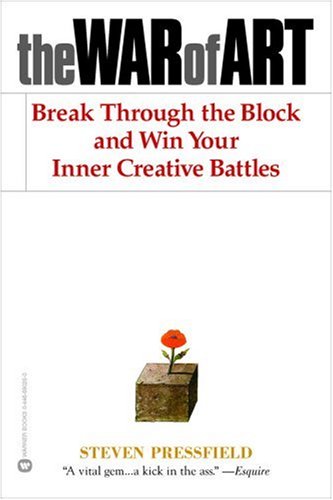
The War of Art: Break Through the Blocks and Win Your Inner Creative Battles by Steven Pressfield
Here Comes Everybody: The Power of Organizing Without Organizations by Clay Shirky
Fatal Revenant: The Last Chronicles of Thomas Covenant by Stephen R. Donaldson
Outliers: The Story of Success by Malcolm Gladwell
Give a Little: How Your Small Donations Can Transform Our World by Wendy Smith

Educational Theory, Learning and Schools:

Real Education: Four Simple Truths for Bringing America’s Schools Back to Reality by Charles Murray
Teach Like Your Hair’s on Fire: The Methods and Madness Inside Room 56 by Rafe Esquith
What Works in Schools: Translating Research into Action by Robert J. Marzano
Teaching What Matters Most: Standards and Strategies for Raising Student Achievement by Richard Strong
Learning by Doing: A Handbook for Professional Learning Communities at Work by Robert E. Eaker
Getting Results With Curriculum Mapping by Heidi Hayes Jacobs
SuperVision and Instructional Leadership: A Developmental Approach by Carl D. Glickman
Pretending to Be Normal: Living With Asperger’s Syndrome by Liane Holliday Willey
Dealing with Difficult Parents by Todd Whitaker
The Essential Conversation: What Parents and Teachers Can Learn from Each Other by Sara Lawrence-Lightfoot
School, Family, and Community Partnerships : Preparing Educators and Improving Schools by Joyce Levy Epstein
American Public School Finance by William A. Owings
Ethics Of School Administration by Kenneth Strike
Ethical Leadership in Schools: Creating Community in an Environment of Accountability by Kenneth Strike
Taking Sides: Clashing Views on Educational Issues by James Noll
Teachers and the Law by Louis Fischer
Practicing the Art of Leadership: A Problem-Based Approach to Implementing the ISLLC Standards by Reginald Leon Green
On Common Ground: The Power of Professional Learning Communities by Roland S. Barth
Leading in a Culture of Change by Michael Fullan
Fulfilling the Promise of the Differentiated Classroom: Strategies and Tools for Responsive Teaching by Carol A. Tomlinson
Studying Educational and Social Policy: Theoretical Concepts and Research Methods by Ronald H. Heck
Data Analysis 2nd by Victoria L. Bernhardt

Currently Reading Now:

The Call of Nepal: My Life In the Himalayan Homeland of Britain’s Gurkha Soldiers by J.P. Cross
Intelligence and How to Get It: Why Schools and Cultures Count by Richard E. Nisbett
The Genius of the Beast: A Radical Re-Vision of Capitalism by Howard Bloom

Related:

I also make use of a Kindle            


Three Questions With Steve Pressfield

Wednesday, November 25th, 2009

I’ve enjoyed a sporadic conversation with Steve Pressfield , author of Gates of Fire and Killing Rommel, ever since he started his Tribes site. While most of our discussions had to do with COIN, tribalism, ancient history and Afghanistan, Steve is also generous with his time and advice with those who aspire to become better writers. Pressfield distilled his philosophy of writing, learned from the school of hard knocks, into a short handbook, The War of Art which I heartily recommend. Steve also features a “Writing Wednesdays” as a weekly tutorial in the writer’s craft and the acquisition of a professional mindset.

In the spirit of “Writing Wednesday”, Steve invited me to pose three questions to him based on my impressions of The War of Art. Here are my questions and Steve’s answers:

ZP: You write in The War of Art about “the muse”and Socrates‘ “heaven-sent madness”. It sounds very much like the “flow” described by creativity theorist Mihaly Csikszentmihalyi. Does the intensity of that experience ever lead the artist astray ?

SP: In my experience, Mark, the writing process bounces back and forth between two poles.  One is the let-‘er-rip mode, which could be called “flow,” or “Dionysian.”  That’s the one when the Muse possesses a writer and he just goes with it.  But yes, as you suggest, it can lead you astray.  It’s the like the great ideas you have at three in the morning after two too many tequilas.  This mode has to be balanced by a saner-head mode, which sometimes to me almost feels like a different person–an editor, a reviser.  That’s really when you put yourself in imagination in the place of the reader and ask yourself, as you’re reading the stuff that this “other guy” wrote: “Does this make any sense?  Is this any good?  Have I got it in the right place, in the right form?  Should I cut it, expand it, modify it, dump it entirely.”  Then you become cold-blooded and professional.  You get ruthless with your own work.  This is the time, I think, when “formula” wisdom can help, when you can ask yourself questions like, “What is my inciting incident?” or “What is my Act Two mid-point.”  Not when you’re in the flow, or you’ll censor yourself and second-guess yourself.  But now, when you’re rationally evaluating what you produced when you were in flow.

This back-and-forthing, I imagine, would be true in any artistic or entrepreneurial venture.  It’s great to let it rip and really get down some wild, skatting jazz riffs.  But then we have to come back and ask ourselves, “Is this working for the audience?  Is this working for the work itself?”

ZP: Amateurs reach a tipping point where they “Turn pro”. Is turning professional more from innate character or from the lessons of experience?

SP: Some people are born “pro.”  I have two friends, identical twins, who are both tremendous producers of excellent work and they’ve never suffered a minute of Resistance in their lives.  The lucky bastards.  For the rest of us though (at least this is my experience), only after many painful hard knocks … really when it becomes simply too excruciating to continue living as an amateur (and thereby suffering the agonies of never completing anything, always screwing up, forever feeling inadequate in our own eyes and just plain not respecting ourselves) do we finally, out of sheer emotional self-preservation, say to ourselves, “This crap has gotta stop!  We gotta get our act together!”

ZP: Artists run straight into hierarchies, filled with gatekeepers, between ourselves and a goal. Go through or go around?

SP: There’s an axiom in Hollywood that if you write a truly great script, it will not go unrecognized.  I think this is true.  What I mean by that is that gatekeepers can be our friends.  They can open gates as well as close them.  In fact, I vote for jettisoning the term “gatekeeper.”  It’s negative and self-defeating–and it’s an insult, I think, to the editors, agents, publishers and development executives whose agenda is not to exclude us, the artists.  In fact they’d like nothing more than to discover fresh talent, a hot new manuscript, a great pitch or biz proposal.  In my own experience, I got shot down again and again when my stuff wasn’t ready and wasn’t good.  But once I had done the work and elevated my material to the professional level, I found open doors and helping hands.

All that is not to say that “going around” can’t be a good idea too.  Look at Seth Godin, who’s the poster boy for damning the torpedoes and taking his stuff straight to the marketplace with incredible success.  In my own career though–now that you’ve made me think about it, Mark–I realize I’ve always gone the traditional route.  And the “gatekeepers” I’ve met have become, almost within exception, great friends and allies–and I’ve wound up helping them, in other ways, almost as much as they’ve helped me.

Thanks Steve!

The Internet is Re-Wiring your Brain….in a Good Way

Tuesday, October 20th, 2009

More fodder for the digital vs. dead tree debate:

UCLA Study: The Internet Is Altering Our Brains

….After the initial brain scan, subjects went home and conducted Internet searches for one hour a day for a total of seven days over a two-week period. These practice searches involved using the web to answer questions about various topics by exploring different websites and reading information. Participants then received a second brain scan using the same Internet simulation task, but with different topics.

The first scan of participants with little Internet experience showed brain activity in the regions controlling language, reading, memory and visual abilities. The second brain scan of these participants, conducted after the home practice searches, demonstrated activation of these same regions, but there was also activity in the middle frontal gyrus and inferior frontal gyrus – areas of the brain known to be important in working memory and decision-making.

….The results suggest that searching online may be a simple form of brain exercise that might be employed to enhance cognition in older adults,” Teena D. Moody, the study’s first author and UCLA researcher, said in a statement.

When performing an online search, the ability to hold important information in working memory and to take away the important points from competing graphics and words is essential, Moody noted.

I will be interested in seeing brain scan comparisons between digital natives who were on computers from the time they were toddlers, and the digital immigrants.  My son, for example, learned to read on his own long before pre-school from looking at words on a computer screen ( less “learned” than spontaneously “realized” the symbol-sound-conceptual connection ) while his sister, who had a more traditional exposure to reading, learned later ( more “taught”).

Another difference, while they are both equally skilled at reading, adjusted for an age, she is an avid reader who devours large books (mostly fiction) while her brother reads instrumentally, for knowledge or expository explanations (mostly natural science subjects. Only “Clone Wars” attracted him to read fiction).

The Grand Failure of my Summer Reading List

Saturday, October 10th, 2009

Ancient library

Ah, I am over a month late on a promised follow up post!

Back in early June, I composed a hyper-ambitious Summer Reading list that I wanted to plough through on those hazy, lazy, dog day afternoons. Here was my list:

THE SUMMER READING LIST:

Military History and Strategy

Wired for War: The Robotics Revolution and Conflict in the 21st Century – PW Singer (Finish, currently reading)
The Anabasis of Cyrus (Agora) – Xenophon
The Accidental Guerrilla: Fighting Small Wars in the Midst of a Big One – David Kilcullen
The Scientific Way of Warfare: Order and Chaos on the Battlefields of Modernity
 – Antoine Bousquet
The Culture of WarMartin van Creveld
Certain to WinChet Richards

Science, Futurism, Networks, Economics and Technology

How the Mind Works – Steven Pinker
Fooled by Randomness: The Hidden Role of Chance in Life and in the Markets
 – Nassim Nicholas Taleb
Emergence: The Connected Lives of Ants, Brains, Cities, and Software
 – Steven Johnson
The Singularity Is Near: When Humans Transcend Biology
 – Ray Kurzweil
The Hyperlinked Society: Questioning Connections in the Digital Age (The New Media World)
Lokman Tsui

Biography

Ho Chi Minh: A Life William J. Duiker

Philosophy and Intellectual History

The Open Society and Its Enemies, Vol. 1: The Spell of Plato
The Open Society and Its Enemies, Vol. 2: Hegel and Marx – Karl Popper
The Closing of the Western Mind: The Rise of Faith and the Fall of ReasonCharles Freeman

Fiction

Pattern Recognition – William Gibson
On the Road (Penguin Classics)Jack Kerouac

Pretty impressive, eh? It would be more so if I had actually done it. While I have all of these books on my shelf, I did not get to most of them and was frequently sidetracked by books that were never on the list in the first place. Here’s what I actually read this summer between Memorial Day and Labor Day:

The Books I Really Read Last Summer:

Emergence: The Connected Lives of Ants, Brains, Cities, and Software – Steven Johnson

Wired for War: The Robotics Revolution and Conflict in the 21st Century – PW Singer

The Bloody White Baron: The Extraordinary Story of the Russian Nobleman Who Became the Last Khan of Mongolia by James Palmer

This Is for the Mara Salvatrucha: Inside the MS-13, America’s Most Violent Gang by Samuel Logan

 Horse Soldiers: The Extraordinary Story of a Band of US Soldiers Who Rode to Victory in Afghanistan by Doug Stanton

The War of Art: Break Through the Blocks and Win Your Inner Creative Battles by Steven Pressfield

The Anabasis of Cyrus (Agora) by Xenophon. Translator,  Wayne Ambler

How Rome Fell: Death of a Superpower by Adrian Goldsworthy

The Books I Partially Read Last Summer but Have Yet to Finish:

The Culture of War – Martin van Creveld

 Certain to WinChet Richards

The Conquest of Gaul  by Julius Caesar on Kindle

Why didn’t I stick to my reading list ? Looking back, there’s a number of reasons.

Foremost would be a lack of discipline on my part to put in several hours plugging away, each day, without fail. While I can legitimately say that professional and family commitments were not inconsequential last summer, I’m sure if I counted up the time I frittered away online reading blogs, social media sites, PDFs, etc. it most likely exceeded the clock hours spent reading books.

A second reason was review copies. When a publisher or PR firm sends me a review copy, I feel an obligation to read the book in a timely fashion. The authors count on that during the roll-out phase and most recipients of review copies never bother to write two words. I tend to write reviews only for the books I feel confident recommending to ZP readers; I’m not a professional critic nor do I get paid to blog, so I’m not going to waste my limited blogging time slamming an author or nitpicking unless his views come across as nutty or dangerous. Review copies that are not at a level to merit a positive review ( I probably get sent 3 books for every review that you see posted here, and I refuse to accept books outside my core areas of interest. I also get embargoed drafts still in the writing process but cannot, for legal reasons, blog about them) are read and then are shelved or given away.

The final reason probably comes down to age. It’s much harder now to read four or five hours at a stretch; whether that is because the internet is re-wiring my brain, as Nick Carr argues, or that the hectic pace and noisy environment of my life lacks any such extended blocs of quiet time that I enjoyed at age 20, I’m not sure.  Regardless, for me, books are now read in brief snatches of time these days, with an uninterrupted hour of book reading being uncommon, unless it is done after everyone else in the house is asleep. Over time, that means reading fewer books.

A shame.

Three Short Reviews

Wednesday, August 26th, 2009


Emergence: The Connected Lives of Ants, Brains, Cities, and Software by Steven Johnson

This classic popular text from 2001 still holds up well as an introduction into the phenomena of emergence and the nature of self-organizing systems. Johnsaon uses a rich array of analogies and historical anecdotes to bring the reader to an understanding how bottom-up, “blind”, systems work and the principles behind them. Highly readable and next to no jargon. Probably due soon for an updated edition though, given the scientific advances in research in network and complexity studies.

How Rome Fell: Death of a Superpower by Adrian Goldsworthy

Superb overview of the decline and fall of Rome with a rejection of the traditional assertions of causations for the end of the Roman empire ( Barbarians, Christianity etc.). Goldsworthy also sharply criticizes the popular idea among postmodern classicists today that the Roman Empire was “really” as strong during the fourth and fifth centuries as it was during the golden age of philosopher-warrior-emperor Marcus Aurelius. Or that there was no fall of the empire at all, just a gentle “transformation” into something new. Goldsworthy discusses the likelihood of Late antquity  “paper legions” of Roman armies which, in any event, scarcely resembled in elan, tactics or fighting strength the ones that Julius Caesar wielded in Gaul.  A tour de force marred only by a weird epilogue that ranges from pedestrian to ( in it’s last sentences) truly awful – was it it tacked on as an afterthought? Did the editor of the rest of the book die before it was completed? Regardless, How Rome Fell is a worthy addition to an collection of popular ancient histories.

The War of Art: Break Through the Blocks and Win Your Inner Creative Battles by Steven Pressfield

A rare, nonfiction book by novelist and blogger Steven Pressfield. The War of Art is a book that I strongly recommend to aspiring writers ( which includes most bloggers) and other people pursuing dreams, not because it is brilliant but because it is profound. Utilizing select personal vignettes and other anecdotes, Pressfield distills in everyday language the essence of what creative people need to understand if they are to succeed – concepts of “resistance”, which seductively undermine your efforts,  and being a “professional”, which is the mindset that will get you there.


Most of the readers of this blog are interested in military affairs to some extent so I will use this reference to explain why I read The War of Art from cover to cover. Pressfield captures the difference in what Col. John Boyd called the question of “To be or to do. Which way will you go?”.  By Boyd’s definition, Pressfield is a doer.

Steven Pressfield blogs on The War of Art of writing every Wednesday.


Switch to our mobile site