zenpundit.com » intelligence

Archive for the ‘intelligence’ Category

Of hot spots and feedback loops

Friday, October 26th, 2012

[ by Charles Cameron — with a pinch of humility which, if you ask me, burns hotter than any pepper ]
.


.

Micah Zenko at the Council on Foreign Relations‘ Politics, Power, and Preventive Action blog raised a question yesterday that I found irresistible:

Well…

To be more exact, and exercise just a little humility, the question I found so exciting was really the one Crispin Burke posed, in a tweet pointing to Zenko’s piece:

**

So I read Zenko’s post with Burke’s term “hot spot” in the back of my head, and when I responded to Zenko, did so in terms of hot spots. Which because they’re like the celebrated “dots” we’re often told we’ve failed to connect, triggered some thoughts that I think are worth repeating, even if the phrasing is a little off from Zenko’s own.

And the only real benefit I can see from my carrying Burke’s “hot spots” over into Zenko’s post is that it raised the issue of peppers, which adds a little spice to my response, and gave me a great graphic to go at the top of this post.

Okay, here’s the key sentence that frames Zenko’s post:

If you ask ten forecasters to predict the next conflict, you’ll likely get ten very different answers. But, they will agree on one thing: it is impossible to know for sure where and when the next conflict will emerge.

Zenko may not mention hot spots as such, but already two things stand out for me: he uses the words “where and when” and “the next” — so he’s thinking in geographic terms and short timelines. In his title, he asks about 2013, which is almost in the greetings card section of my local Safeway by now. And he sees trouble in terms of places, not systems.

**

Here’s the response I posted at his CFR blog:

A given hot spot may only be hot when coupled with another spot in a feedback loop – and the two spots may be widely separated geographically.

To my way of thinking, an assessment of incipient troubles needs to look for feedback loops, blowback systems, echo chambers – all of them patterned phenomena that are likely to feature both sides of a potential or ongoing conflict from a systems analytic point of view. A microphone isn’t a hot spot, a loudspeaker isn’t a hot spot, but put the two of them in the same acoustic system and you can generate an ear-shattering howl…

I’d look at “strong” versions of Islamophobic rhetoric and “strong” versions of Islamist rhetoric as a single system transglobally, for example, and I’d want to figure out what would cause dampening effects on both sides.

Another tack I’d take is to ask questions like “what’s in our blind spots” and “what’s under the radar” – I vividly recall hearing Ali Allawi tell a session at the Jamestown Foundation that within Iraq, “most of the dissident Shi’a movements not within the ambit of the political process have very strong Madhist tendencies” and that they were “flying under our radar” — despite the fact that US forces had been involved in a major battle with one such group outside Najaf.

I’ll post a more extended response on Zenpundit – but for now, I’d just like to throw in one additional question: is there a Scoville Scale for the “hotness of spots” as there is for peppers? It’s hard to know how to think through potential vulnerabilities without some sense of both intensity and probability of risk…

**

Forget Scoville and his habaneros — let’s get to the meat and potatoes.

I’ll be straightforward about this. I suspect we’re doing our intelligence analysis and decision-making with only one cerebral hemisphere fully functioning — ie with only half a brain — like halfwits one might almost say, but in a strictly metaphorical manner — without benefit of corpus callosum.

We don’t have the leaf > twig > branch > limb > tree > forest > watershed > continent > world zoom down yet.

We don’t think in systems, we think in data points.

Blecch, or d’oh! — your choice.

**

So my questions — and I don’t claim by any means to have an exhaustive list, that’s why we have many and varied bright people instead of just one or two — would be along the lines of:

  • how many kinds of metaphorical dry kindling are there in the world, which could turn into metaphorical wildfires?
  • and what sorts of metaphorical sparks could trigger them?
  • where are the rumblings?
  • what are the undercurrents of strong emotion running in different sociological slices of the world, that can be discerned from open sources such as the comments sections of online news media, conspiracy sites, religious group and subgroup (sect/cult) teachings, eccentric political movements, strands of pop culture — fanfic, comics, graffiti — single issue blocs?
  • where are the feedback loops, the parallelisms and oppositions, the halls of mirrors, the paradoxes, the koans, the antitheses, the conceptual antipodes?
  • where does energy drain from the system, and where does it collect, pool, and stagnate?
  • and perhaps most of all, what do we do, ourselves, wittingly or unwittingly, that tends to irritate others enough that they do unto us?
  • and do we consciously want to keep doing those things, and the blowback be damned?
  • **

    Where do we go from here. I think Zen (the Zen of Zenpundit, not the Zen of Zenko in this case) is right: we need to cross-weave our “vertical thinking” tendencies with “horizontal thinking” — see Zen’s posts on understanding cognition 1 and 2, which I take to be foundational for this blog.

    It’s the horizontal part that I’m trying to develop here, in my series of posts under the rubric of “form is insight” — because I think we have the other half of the equation, or the other cerebral hemisphere if you prefer, fairly well in hand.

    As always, it’s our vulnerabilities, dependencies, deficits and blind-spots we should be paying most attention to.


    Søren Kierkegaard on espionage & Kenneth Burke on strategy

    Thursday, October 25th, 2012

    [ by Charles Cameron — a meditation on theological espionage, literary strategy, a Sufi tale from Jalaluddin Rumi, and why the arts and humanities offer excellent preparation for analytic work ]
    .

    Kit Marlowe's portrait, Corpus Christi College, Cambridge, Kierkegaard sketch, Niels Christian Kierkegaard

    .

    It may seem somewhat strange, at least on the surface, for a poet to be interested in strategy and a theologian in the world of intelligence analysis.

    We poets. however, have been termed “the unacknowledged legislators of the world” by Mr. Shelley, one of our own number, and we theologians long considered our study the Queen of the Sciences – so here we have the roots of attitudes that may flower into this strange hybrid being that is myself.

    **

    It’s not easy to list significant writers who were also in the intelligence business, in part because both “writing” and “intelligence” are subject to varied definitions — so my own list here will lean heavily British, and have the patina of old age rather than the glamor of the freshly minted. Let’s just say that Christopher Marlowe, who wrote the great play Doctor Faustus, was apparently sent on extended errands while up at Cambridge on “matters touching the benefit of his country”.

    More recently Rudyard Kipling, John Buchan, Somerset Maugham, Graham Greene, even JRR Tolkien apparently, Ian Fleming, John le Carré, and Anthony Burgess have been among British writers who were also spies, and Peter Matthiessen can serve as a distinguished recent American example.

    Which brings me to the OSS, and this quote from a 2003 piece on Boston.com:

    Yale’s literature specialists played a key role in shaping the agency’s thinking. Mole-hunter James Jesus Angleton, the most controversial figure in CIA history, began his career as an apprentice of the New Critics on Yale’s English faculty, and his literary training in “close reading” may have shaped his hyper-skeptical (some would say paranoid) approach to counterintelligence.

    **

    Why do fine writers make decent intelligence analysts?

    John le Carré, who has been both, has this to say:

    Artists, in my experience, have very little centre. They fake. They are not the real thing. They are spies. I am no exception.

    I’d like to take that a little further. I’d like to say that to be a keen observer of human behavior, you must be a keen observer of your own – only one who has taken the beam out of his own eye can see clearly the mote that is in another’s. That brings you, I believe that chameleon-like condition of receptivity and observation that Keats termed “negative capability” in his letter to Richard Woodhouse of October 27, 1818.

    More on that in the Sufi story below. Now, onward to the two quotes that anchor this piece.

    **

    Here’s Kenneth Burke on “strategy” in the arts, in his Literature as Equipment for Living [link is to .pdf]:

    For surely, the most highly alembicated and sophisticated work of art, arising in complex civilizations, could be considered as designed to organize and command the army of one’s thoughts and images, and to so organize them that one “imposes upon the enemy the time and place and conditions for fighting preferred by oneself.” One seeks to “direct the larger movements and operations” in one’s campaign of living. One “maneuvers,” and the maneuvering is an “art.”

    Are not the final results one’s “strategy”?

    And Kierkegaard on “spying” as a theologian, in the chapter, Governance’s Part in My Authorship from his The Point of View:

    l am like a spy in a higher service, the service of the idea. l have nothing new to proclaim, I am without authority; myself hidden in a deception. l do not proceed directly but indirectly — cunningly; I am no saint — in short, l am like a spy who in spying, in being informed about malpractices and illusions and suspicious matters, in exercising surveillance, is himself under the strictest surveillance. See, the police also use such people. For that purpose they do not choose only people whose lives have always been most upright; what is wanted is only experienced, scheming, sagacious people who can sniff out everything, above all pick up the trail and expose. Thus the police have nothing against having such a person under their thumb by means of his vita ante acta [earlier life] in order precisely thereby to be able to force him unconditionally to put up with everything, to obey, and to make no fuss on his own behalf. It is the same with Governance, but there is this infinite difference between Governance and the municipal police — that Governance, who is compassionate love, precisely out of love uses such a person, rescues and brings him up, while he uses all his sagacity, which in this way is sanctified and consecrated. But in need of upbringing himself, he realizes that he is duty-bound in the most unconditional obedience.

    **

    To return, then, to the issue of those who spy upon themselves…

    Jalaluddin Rumi has a story in his Masnavi, one of the many facets of which, I suspect, can illuminate this point, albeit a bit obliquely.

    He describes a contest that a sultan once held between the Chinese and Greek schools of artists, to determine which had the greater ability in art. Each school was given one half of a room, and a great curtain fixed between them. The Chinese, with a vivid appreciation of nature’s moods and humanity’s place between skies and mountains, painted their half of the room with exquisite care and subtlety. The Greeks took quite an other approach, covering the walls on their side with silver plate, then buffing and burnishing it to a brilliant reflective sheen.

    When the work was done and the curtain drawn back, the beauty of the Chinese room was stunning – but the loveliness of the Greek room, in which the Chinese room was reflected to dazzling effect, was even more so:

    The image of those pictures and those works
    was mirrored on those walls with clarity.
    And all he’d seen in there was finer here –
    his eyes were stolen from their very sockets.

    Rumi explains that the Chinese in his fable are like those who see the outer world only, while the Greeks are those who “stripped their hearts and purified them” – and that “the mirror’s purity is like the heart’s”…

    Those who examine their own hearts — Ursula le Guin nicely calls them “withinners” since their voyages, adventures, discoveries and treasures are found primary within themselves — may make reluctant spies, for they do not easily see one side of a dispute as entirely right and the other side utterly wrong: but their nuance places them among the finest of analysts.

    **

    Oh, but let’s be sensible and worldly: most of us like to balance our mundane lives with the more exciting possibilities that are their opposites, and espionage – the derring-do more than the analysis, to be sure – is a wonderful foil for scholars’ fantasies, just as being swept off one’s feet by a prince and loved tempestuously between the pages of a book is a sweet shift from the menial paper trails of office life, and space opera a fine venture for those beset by gravity and white lab coats.

    And whether Jason Bourne, Jack Bauer, James Bond or just a little J&B‘s your tipple, you may find espionage, dealing as it does with secrets, is a natural launching pad for fantasy…

    **

    More sseriously, for the analysts and educators among our ZP readership — let me just suggest that the literary and humane arts will deepen analytic understanding as surely as big data will extend its technical reach.

    And when you come right down to it — your human mind is still the best and subtlest software engine in the room…

    Form is Insight: the project

    Monday, October 22nd, 2012

    [ by Charles Cameron — about the (not yet titled) book (or post-book project) i seem to be writing, which offers a grand slam intro to an array of box-free contemplative and artistic approaches to creative thinking, and hence opens fresh angles on intelligence ]
    .

    One thing I can promise: whatever this project turns out to be, it won’t be predictable.

    credit for this incredible image: Roger Dean

    .

    This project won’t take you over familiar territory, congratulating you on holding the same opinions as the author and adding in enough choice details to keep you interested. I’m not aiming to teach you the same thing you already know, only better, more interestingly, more precisely, or in greater detail. I’m aiming to question you, challenge you, and give you a whole new range of optics through which to view the world.

    **

    So, here we go.

    I think I am finally at the point where the book (or whatever it is) I’ve been gathering inside me all these years is ready to be written. Some of it has already emerged in earlier posts here on Zenpundit — you don’t known and couldn’t count how many thanks, Mark — and this is certainly where I’ve been developing the style of integrated visuals and verbals that gives the project its flavor — so I’d also like to use my posts here to discuss the thing with you as I go along.

    The project is about intelligence in the widest sense, including heart and mind, and with particular focus on creativity. I’m addressing this from two standpoints that mesh together well, and I’m addressing it to two audiences that I believe also mesh together well.

    The standpoints are (i) meditation and (ii) the arts, and the audiences are (i) the “intelligence community” and (ii) bright people in general.

    I believe that meditation cultivates a spacious mind-set in which we can hold multiple concerns in mind at the same time – the opposing needs of different people, stakeholders, sections of society, the environment, etc – thus seeing things from multiple angles and in balancing & thus balanced ways. And I think the arts serve as the primary means for expressing these balances with all their nuances and shadings, and that techniques from within the arts such as polyphony, chiaroscuro, formal constraint and pattern can teach us to shape multi-faceted insights like these into rich and complex understandings – complex patterns that respond to complex situations. I’ll go into all this in detail as we move along, with examples.

    I also believe that this kind of creatively patterned insight — embodying artistic methodology in the context of complex problems with a “fresh” and open mind – will be of interest beyond the intelligence agencies and policy-makers, to business people, artists, and also — importantly — the bright general public, which I take to be a far larger subset of the population than we commonly think, and always eager for reading that doesn’t talk down to them but appreciates their own intelligence and good will.

    For now let me just say that I’m very excited, because this seems (at last) to be a project that ties together my game-work with Sembl, the think-tank side of me which has been monitoring religious violence, jihad and terror and working towards nuance, understanding and peace these last dozen years — and my sense of creativity as a writer and poet.

    Ripeness is all: I suspect the time for this venture has arrived.

    **

    Here’s the single page overview I’ve written, with a working title:

    Intelligence is Zen: understanding our complex world with koans in mind

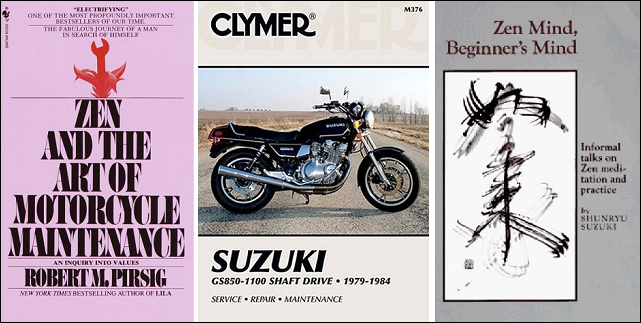
    Just a few days ago, the Director of National Intelligence, James Clapper, referenced Pirsig‘s book, Zen and the Art of Motorcycle Maintenance, as key to the Intelligence Community’s work in understanding and adapting to the many, varied, intersecting problems we face in the world today. As I noted, Clapper was focused a bit more on the biker wisdom than the Zen to be found in Pirsig’s book, but he does raise a question I’ve been addressing for some years now:

    What does the contemplative mind have to offer in terms of understanding a complex world?

    To my mind, the creativity which is all the buzz of the business world, aimed at solving what are called “wicked problems” — problems that feature multiple stakeholders with multiple aims and objectives, aims and objectives which themselves shift over time so the problems are “never the same river twice” – requires a major mental and emotional shift. Reverie and meditation free us up to make the shift: the shift itself is poorly understood.

    Our present, mostly linear way of thinking favors either/or side-taking, dubious cause-and-effect expectations which fail to take complex feedback loops into account, followed all too often by a rush to judgment. We need a whole new – old, even ancient – way of thinking.

    Our problems are complex because they overlap, they ripple through one another. In Buddhist terms, they are “interdependently arising.” Not surprisingly, the way of thinking that is required to gain a deeper insight into “interdependently arising” problems can be found in explicit form in such contemplative traditions as Madhyamika & Zen, Taoism, Sufism, and their Abrahamic contemplative analogs. At the heart of these systems is fresh thinking – thought refreshed by quiet.

    Furthermore, the shaping of insights in an open field of thought is something the world’s artistic traditions have long dealt with, and there are schools of insight not just available but recorded in exquisite detail in the world’s traditions of poetry, music, painting, theater, film… in patterns that are found in nature, in culture, and in the very turbulence we now must learn to flow with.

    The project therefore takes a meditation-influenced approach to intelligence, both in the sense in which Clapper would use the word, relating to the intelligence analysis which develops and influences our decision-makers’ understanding of what’s needed, and in the more general sense of those capable folk with bright minds, keen insights, sharp instincts, warm hearts.

    I’ll propose a series of ways of looking differently – with application for anyone, whether artist, intel analyst, businessman, policy-maker, or lover – that cut to the essence of creativity: lateral, analogical, holistic thinking, witnessing pattern beneath the surface of things. My examples will be mainly drawn from terrorism, which I have been monitoring for a dozen years: my style is that of a poet and an eccentric Englishman.

    My subtext, my subliminal message, will be contemplation and artistry as profound common sense.

    One hand Clapping: or is the DNI a Zen Pundit?

    Monday, October 15th, 2012

    [ by Charles Cameron — silos, motorcycles, zen and the DNI ]
    .


    .

    Pam Benson writing at the CNN Security blog may or may not have had anything to do with the title of her post, Spy chief gets Zen, but she’s presumably responsible for her first paragraph:

    You usually don’t associate spying with being Zen, but that’s exactly what the nation’s chief intelligence officer did this week at an intelligence gathering in Orlando, Florida.

    Here at Zenpundit we’re naturally prone to both Zen and Punditry, so we like that — but to be honest it’s a little over the top. I’m dropping his entire keynote in at the bottom of this post, but for now let’s just say instead that DNI James R Clapper gets bikers.

    Okay, maybe we can go a little further, and say he gets Zen and the Art of Motorcycle Maintenance. That’s not quite Zen, but it’s getting closer. Kristin Quinn‘s piece at Trajectory magazine is titled GEOINT 2012: Zen and the Art of Intelligence, which at least pays hommage to Pirsig’s book, and focuses on Pirsig-zen as it applies to Intelligence…

    And that’s a direction we can applaud.

    Two questions, then: what is zen, and what is intelligence?

    **

    Zen is, strictly speaking:

    A direct transmission outside the Scriptures,
    Not dependent on words and letters,
    Directly pointing to one’s own mind
    Seeing into one’s own nature.

    Those words, however, are something of a scripture, so the transmission isn’t in them — it’s one of those things like ceaseless change, always there, never the same, flexible beyond the capacity of words to capture it — as Laozi remarked at the start of the Dao De Jing, in scribbled response to a border guard who demanded that his scriptures be verbal — “dao ke dao, fei chang dao” — two Chinese phrases English can barely translate.

    Where do we go from here, then, if we’re accustomed to think in words?

    The zen master Shunryu Suzuki Roshi has one answer in the title of his book Zen Mind, Beginner’s Mind.

    Zen takes you back to where your mind is fresh and playful, before it got narrow-minded, siloed and rutted. Zen means wide-angle alertness, from a point prior to preference, assumption and prejudice.

    Zen takes your thoughts and emotions to the laundry, while you take a shower. They come back lighter and cleaner, and you’re freshened up and ready to go.

    **

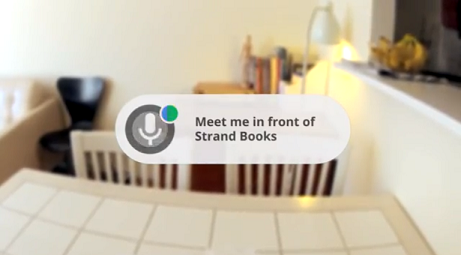
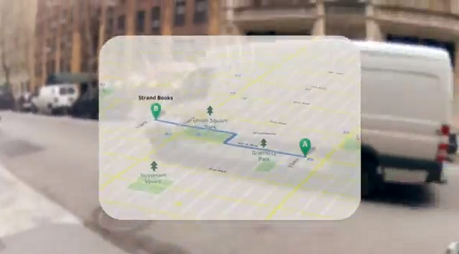
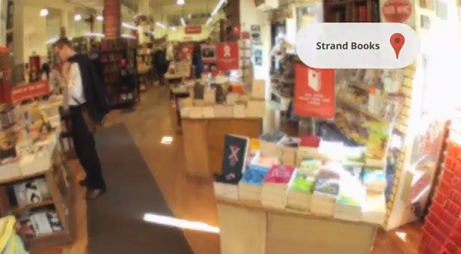
    Let me put that another way, using the analogy of Google glasses. Zen takes you behind words: you can still see them, you can see through them. Very quickly, then, since 5 images are worth 5,000 words and take a lot less time to ingest:

    Wearing some futuristic Google Glasses, you would be able to…

    Let your glasses know you want to go to the Strand Bookstore (great idea, btw!):

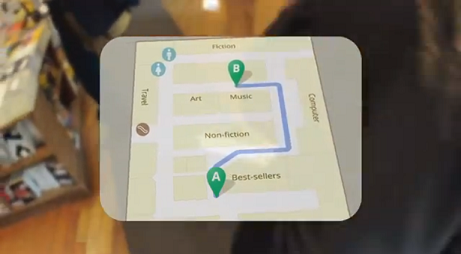
    Get yourself a quick map from there to here, visible but superposed on your natural ability to see the street:

    Know when you’ve arrived at the bookstore (a) because you can see the books and (b) because your glasses tell you so.

    Use a map to navigate to the Music section:

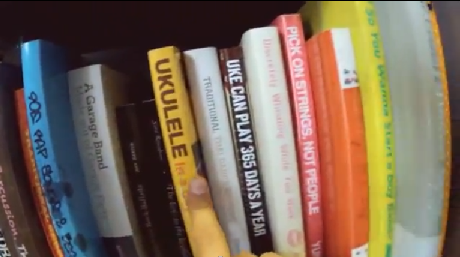
    And locate the Ukulele shelf:

    When IMO you’d be better off reading about Johann Sebastian Bach — though that’s a matter of personal taste.

    With zen, your thoughts and emotions are like head- and heart-mounted displays — you can see them, they can inform your understanding, but you can also see through them, they’re transparent. You can see the world.

    **

    I’m going to suggest my own definition of intelligence: it’s the ability, given some data point or points, to recognize a variety of salient patterns into which it or they fit, and to create a synthetic understanding of how to move, given that all those salient pattern-fields are in play.

    It is seeing in depth, past the surface, where the surface is your assumptions and expectations, and depth is the currents and undercurrents of nuance that your expectations hide.

    Let me say that another way: assumptions and preferences — taking sides, being on a team — deprive you of depth. And another: the opposite of surface / superficial thinking is depthful thinking / pattern-recognition.

    That, in a nutshell, is why I feel intelligence and zen “go together” even more seamlessly than zen and bikers.

    **

    Here’s Clapper’s speech:

    **

    In a future post, I hope to tackle the question of koans — those strange zen riddles, of which the best known may be…

    What is the sound of one hand clapping?

    Form is insight: the funnel, part 1

    Thursday, October 11th, 2012

    [ by Charles Cameron — a post in my importance of form in intelligence series — Afghanistan, the complexity — also a Blackfoot Tale from Grinnell ]
    .

    Funnel image credit: Oxsite

    .

    One of my favorite tales of all time is the Blackfoot legend of The Bull Band, which begins thus in Grinnell‘s telling:

    The people had built a great pis’kun, very high and strong, so that no buffalo could escape; but somehow the buffalo would not jump over the cliff. When driven toward it, they would run nearly to the edge, and then, swerving to the right or left, they would go down the sloping hills and cross the valley in safety. So the people were hungry, and began to starve.

    Somehow I’d come by a sense that the pis’kun was a sort of funnel – perhaps from Joseph Campbell, whom I once heard tell this tale in his own words – and today I looked around my foolscap-sized screen and discovered that John Canfield Ewers reports what he calls a “buffalo fall” pretty much how I’d imagined the thing, in his Indian Life on the Upper Missouri:

    The Piegan band called Never Laughs was camped on the Teton River a few miles north of the present town of Choteau. Their chief announced, “Now we are going to make a buffalo fall.” They built a corral below the cliff and piled rocks in a great V-shape on the slope above the fall. Then they chose a man to lead the buffalo to the fall. But each time he lured them in between the lines of rocks they broke away before they reached the cliff edge. After this had happened three times, young Many Tail Feathers became angry…

    So that’s the shape I’m thinking of here: “a great V shape” – let’s call it a funnel.

    **

    I want to use the funnel to illustrate a movement in time, an imperative in intelligence, and a loss in nuance.

    First, some background.

    **

    We are in a tricky situation here, because our minds would like to grasp a problematic reality (which resembles a landscape) by means of a thought (which resembles a road sign).

    What’s up in Afghanistan?

    Drought, and a huge humanitarian catastrophe, say those whose eyes are focused on human beings as fellow creatures in need of food, water and shelter. Preparations for getting the oil in Khazakstan to market, say those who focus on geology, resources, economics. The start of a strategic corridor that also includes Tibet and Kashmir, contested by India and Pakistan, the nuclear locals, and Russia and China, the nuclear regionals, in a four-sided tug of war. Islam itself, the religion of God, or a perverse and puritanical variant thereof. Or one man, Osama bin Laden.

    Clearly a complex landscape – and we would like, depending which road sign we follow, to bomb the shit out of them, bring in truckloads of food and medicines, establish a stable government with which to ink a pipeline deal, export their Wahabi brand of Islam to the world — or discreetly support the US in its mission to extirpate the terrorists of Al-Qaida without rousing the more fundamentalist and simplistic of our citizens to topple the government and institute a radical Islamist state.

    So much depends on whether we are in Peshawar or the Pentagon, in poverty or power. So much depends on our perspective, and the parallax it brings with it.

    Because no matter what point of view we choose to consider the landscape from, some parts of the terrain will seem so close together as to be indistinguishable which we can understand to be worlds apart if we can only view them from another angle, in a different perspective.

    I am not arguing for moral relativism. I am arguing for a recognition of complexity, and for an admission that sound bites and white papers cannot handle this style of problem. I have painted a highly impressionistic portrait of the complexities at work here, where China touches the tip of the eastwards panhandle of Afghanistan, where Kandahar can stand proxy for Jerusalem, where the national sport is a sort of polo with a goat’s head for a ball, and the tea served in thin, curved glasses is green and sweet.

    **

    I have checked Google and Dogpile, and as far as I can tell from poor memory, my sense of my own style, and the absence of the same text in the search engines, the above is my own work — the text of the bulk of which I found somewhat haphazardly on my hard drive while working on Part 2 of this post. If anyone else claims copyright, count me an admirer and let me know. I believe it’s “mine” for whatever that concept may be worth, I’m skeptical about solo creativity in any case, myself.

    In part 2 of this post, which is definitely almost all borrowed from bright other beings, I’ll try to illustrate the funnel as it applies to America, Afghanistan, Obama and Osama, in a series of “zeroing in” quotes illustrating the complexity of the situation and analysis as contrasted with the “yes” of a kill-decision…


    Switch to our mobile site