zenpundit.com » Afghanistan

Archive for the ‘Afghanistan’ Category

COIN in the Land of Light

Monday, August 3rd, 2009

Nuristan, “The land of Light” (formerly Kafirstan), was the last pagan region of Afghanistan to accept Islam, only in 1895 after a long struggle with “the Iron Emir” Abdur Rahman Khan. It was also one of the first provinces to rebel against the Soviet invasion. The Taliban fared no better there than did the Russians. More or less, Nuristan and the Korengal valley in Kunar province are “Afghanistan’s Afghanistan”.

The Institute for the Study of War has a recent PDF on American COIN operations in this difficult region. They pick up on Frank Hoffman’shybrid war” concept:

Kunar and Nuristan Report: Rethinking U.S. Counterinsurgency Operations (PDF) by Michael Moore and Maj. James Fussell

Excerpted findngs:

In the Korengal, the presence of U.S. forces exacerbates tensions resulting in hostility and facilitates violence in the region, negating the U.S. efforts to bring stability and security.

A type of hybrid warfare should be implemented in Kunar and Nuristan; a combination of counterinsurgency warfare, with its focus on the populations, and mountain warfare, whereby the U.S. forces seize and hold the high ground.

Additional emphasis must be placed on U.S. forces demonstrating the immediate and tangible benefits of their presence in the region. Short term humanitarian assistance such as medical and dental aid, radios, and blankets must be paired with long term economic development projects.

  • Although counterinsurgency doctrine was successfully implemented in urban Iraq, it has proved more difficult to apply in the sparsely-populated mountains of Kunar and Nuristan.
  • U.S. forces are disproportionately committed to defending marginally significant areas in these remote provinces.
  • U.S missions in eastern Afghanistan, specifically places like the Korengal and Pech River Valley, must be re-examined and forces must be re-deployed to areas where they will have greater effect.
  • The Korengal Valley in Kunar province is the deadliest place in Afghanistan. The population is historically hostile to any outside influence, including any Afghans from outside the valley.
    • The Korengalis have successfully fought off every attempt to subdue their valley, including the Soviets in the 80s, the Taliban rule in the 90s, and currently, the U.S. military. 
  • The presence of U.S. forces in the Korengal generates violence and undermines U.S. efforts to bring stability and security.   
    • The current U.S. force disposition in the inhospitable valleys, like the Korengal, relies too heavily on isolated outposts that require massive amounts of artillery and airpower to defend
    • U.S. forces are not denying the enemy the high ground, allowing insurgents to attack and terrorize the population.  
    • Artillery and airpower are counterproductive in dealing with the insurgency in this part of the country because their use alienates the very population the U.S. is trying to secure.
    • Committing additional forces in order to hold this remote terrain would be tactically and operationally imprudent. The resistance in this area is confined to locals in the valley.  It does not accelerate the insurgency beyond the valley.
  • Counterinsurgency in Afghanistan requires less interdiction on the borders and greater security in the population centers.  Resources must flow to areas that are strategic priorities in order to allow force densities high enough to practice counterinsurgency effectively.      
    • Rather than maintaining positions in the Korengal and many of the small, ineffective posts that dot the Pech river valley, U.S. forces should conduct active patrols in the populated areas of the lower Kunar River Valley.
    • U.S. forces must protect the specific populations that oppose the enemy and support the government, rather than fighting populations that historically resist the government.  U.S. forces in Kunar should concentrate efforts in places like Mara Wara, Sarkani and Khas Konar Districts where the population actually desires U.S. support and presence, unlike the Korengalis. 
  • Counterinsurgency requires short-term economic support, as well as a dense and mobile force presence.  U.S. forces must pair long-term development projects, such as building roads, with short-term, immediate humanitarian assistance and quick-impact projects.

COINdinista Andrew Exum on Charlie Rose

Tuesday, July 28th, 2009

Abu Muqawama on the small screen discussing Afghanistan last night.

(Tried to embed but shockwave was problematic)

Guest Post at It’s the Tribes, Stupid!

Thursday, July 16th, 2009

Novelist Steven Pressfield invited me to do a guest-post at his new blog giving my take on the polarized debate regarding his high profile, vblogging, presentation on tribalism. Here is a small snippet:

The Learning Curve

….There was enthusiastic praise for ‘Tribes”, naturally, but the criticism was equally as strong because Pressfield’s theme of tribalism as a general explanatory model is a powerfully attractive one. Too attractive, in the view of subject matter experts (SME) who drill down to a very granular level of detail and see all of the particularistic caveats or limitations of tribalism that exist in a given society. Tribalism among the ancient Gauls was not a carbon copy of 21st century Afghanistan, the artificial kinship network of the Yakuza or Shaka Zulu’s Impi formations. Yet, some similarities or congruencies remain even among such historically diverse examples because a tribe is a durable social network. In terms of resilience, a tribe may be the most adaptive and secure social structure of all.

Read the rest here.

RESPONSE to NATHAN of REGISTAN:

Nathan Hamm, the founder of Registan.net asked some critical questions of me at It’s the Tribes Stupid! and for whatever reason, I have tried multiple times to post a reply and my comment does not appear. Therefore, I emailed it to Nathan and I am replying here so those interested in following the discussion can see it. My apologies for the inconvenience. Here’s the reply, Nathan’s questions are in bold text:

Hi Nathan,

Alexander’s armies had quite a few Persians…..but they were probably shiny, moreso than the Macedonians toward the end.

Good to have you here. For Steve’s readers who may not be familiar with Mr. Hamm or Registan, Nathan has been an important voice on Central Asian affairs in the blogosphere for years on a number of respected regional sites and has extensive experience living in the region.
Let me try to address your concerns in reverse order:

“Mark, so what? This is a huge pet peeve of mine. I know I fall into that category, but from where I sit, I see neither interest nor inclination to engage or respond to these criticisms”.

The latter statement has to be addressed by Steven Pressfield rather than me. On the other part, as a learning aspect, when SME are writing to the uninitiated, there’s often a too large assumption about what the laymen know and a tendency to bring an overloading amount of complexity to the discussion. I am guilty of this myself at times when teaching or writing about my research interests. Pressfield is probably not writing for a typical reader at Registan but his readers may become interested enough in Afghanistan or tribalism that they may start reading articles, books and sites like yours as a result. Where you see a static end-state, I see a gateway or a hook.

“Coincidentally, some colleagues and I were recently trying to turn up academics who specialize in Afghanistan who say that tribe is the critical or even very useful factor for understanding how Afghan society organizes and behaves”

Richard Tapper has written on the negotiation of identity, with one of the major components being “qaum”, which if I recall has (or can have) a loose “tribal” meaning. I’m not qualified to rate experts in your field Nathan, but Nojumi describes the Parcham-Khalq Communists in Kabul thinking the tribes were important enough to warrant sending out the meddling Marxist officials to their villages ( incidentally, the Soviet advisers had cautioned the Taraki regime against it). Flipping through Ewans’ Afghanistan: A Short history, the tribes are present as at least a background political factor from Ahmed Shah Durrani to the fall of the Taliban. Here’s an analysis of warlordism and tribes in Afghanistan by Antonio Giustozzi and Noor Ullah (2006):

http://66.102.1.104/scholar?q=cache:_-hFB7AFp5gJ:scholar.google.com/&hl=en

I suppose point in the argument hinges on what you mean by “critical” or “useful”. That Afghanistan (or any society) is far more complex than one variable, is something I’ll agree with but for an “unimportant” factor, tribal structures in Afghanistan seem to enjoy considerable longevity.

“If we say in COIN theory that we should know the population, we shouldn’t stop halfway with a nice theory that doesn’t have sufficient predictive or explanatory power because of an aversion to academic particularism”

First I am not suggesting we stop halfway. I think that you and Josh fear that will happen with some readers. It will happen with some of them, you’re right. I’m more interested in those readers who are inspired to go further and keep learning.

I think also, on a methodological point regarding Social Science. “Predictive” is a high bar more suitable for hard science that can have appropriate experimental controls. For SS, I’d use “descriptive”, “speculative” and perhaps at best “probabilistic” analysis.

“At best, I understand this to be a descriptive model, and one that is hopelessly broad…and that “tribe” probably describes informal networks all humans create to deal with insecurity and uncertainty and that there is probably an inverse relationship between security in society outside the netowrk and the strength of bonds in these networks”

Tribes are a type of network structure and they can be artificial (social, legal, political) as well as being based on lineage. Most historical lineage tribes had provisions for adopting new members who were unrelated by means other than marriage ( though that was the most convenient device). Within sufficiently large tribes you can have both weak and strong ties or even other kinds of network structures present ( modular, hierarchy, scale-free etc). Network analysis is a useful tool for examining how people seek security and advantage within a group.

Being a long time advocate of horizontal thinking, I like broad comparisons and recognition of patterns and congruencies. They give us data that compartmentalizing, isolating and drilling down often does not ( those are useful tools as well. Granularity is a good thing -it is just not the only thing).

RESPONSE to JOSH FOUST of REGISTAN:

Hi Josh,

Regarding Tapper, in my view, he seems to be very interested in the construction and negotiation of identity and critical of how previous generations of scholars categorized peoples in ethnographic studies. I believe you that he wrote tribes were not important in understanding Afghanistan because his analysis of identity in Afghanistan used three categories including sect and “qaum” sort of a familial/traditional designation which are understood in a fluid sense. Well, ok but for a guy who dismisses tribalism as a variable, the existence of tribes seems to run through Tapper’s academic work on Afghanistan and Iran. Which makes me wonder if Tapper’s framing of identity and downgrading of the tribe is not in part an intellectual reaction to what is and is not acceptable in the modern academic culture of his field? If they are unimportant, why have the tribes of Afghanistan not faded into historical memory? Endurance as a social structure is incompatible with arguing that they do not matter in terms of identity – they seem to matter to some Afghans or they would have all gladly joined the Communist Party or become urban bourgeoisie or cab drivers or emigres or whatever.

Regarding tribal identity being only one part of a whole identity though, I agree with you on that. The level of nuances are often complex with people who move between traditional and modern roles as many Afghans do. However, jumping into that sort of high level complexity and minute detail right off of the bat is a sure-fire guarantee to go over the heads of most people approaching the subject for the first time and makes it probable that they may never come back to the subject a second time. A basic category, be it ethnicity, tribe, language or religion is a good starting point for a novice. Not a stopping point but a place to begin

Mustering the Tribe

Tuesday, July 14th, 2009


Steven Pressfield responds at It’s the Tribes, Stupid to Fabius Maximus, Michael Yon and….me!

What I Would Say Differently If I Were Saying It Again

“Good” Tribalism and “Bad” Tribalism

I would define “bad” tribalism as that practiced by the Taliban and al-Qaeda. I know, I know . . . critics will say that both those groups are pan-Islamic, ideology-driven, supra-national, propelled more by Salafism and Deobandism than pure tribalism. I would not argue with that.

But if we probe beneath the surface, we recognize virulent tribalism at the heart of the belief systems of both the Taliban and al-Qaeda. I would cite the following “bad” tribal characteristics: hostility to all outsiders; perpetual warfare; codes of silence; duplicity and bad faith in all negotiations with non-insiders; suppression of women; intolerance of dissent; a fierce, patriarchal code of warrior honor; a ready and even eager willingness to give up one’s life for the group; super-conservatism, politically and culturally; reverence for the past and, in fact, a desire to return to the past.

Defined in relation to its opposites, “bad” tribalism takes its stand against everything open, inclusive, modern, progressive, secular, individualistic, Western, female-empowering.

What about “good” tribalism? “Good” tribalism is the ancient, proud, communal system of family- and clan-based local governance that has been practiced in Afghanistan and many parts of Central Asia for millennia. Tribal jirgas resolve disputes and give a voice to all members; tribal militias protect the land and the people. “Good” tribalism wants to be left alone to live its own life. In a way it’s democracy in its purest and most natural “town hall” form. It has worked for thousands of years and it’s working today….

Read the rest here.

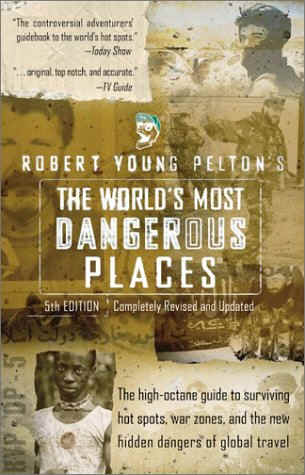
Robert Young Pelton

Tuesday, June 23rd, 2009

The author of  The World’s Most Dangerous Places: 5th Edition  and Licensed to Kill: Hired Guns in the War on Terror was nice enough to drop by in the comment section and discuss his firsthand view of special operators in Afghanistan. During the course of the discussion, in response to a question from Lexington Geen, RYP offered up a couple of links that I think readers will find worthwhile. Here is a quote from one of them:

….The next morning, about 60 Afghan cavalry came thundering into the compound. Ten minutes later, another 40 riders galloped up. General Abdul Rashid Dostum had arrived.

“Our mission was simple,” another soldier says. “Support Dostum. They told us, ‘If Dostum wants to go to Kabul, you are going with him. If he wants to take over the whole country, do it. If he goes off the deep end and starts whacking people, advise higher up and maybe pull out.’ This was the most incredibly open mission we have ever done.”

“Dostum” is the mercurial, ex-Communist, Uzbek Afghan warlord,  General Abdul Rashid Dostum.

Here are the links:

The Legend of Heavy D and the Boys: In the Field With an Afghan Warlord

Inside the Afghan War Machine

Incidentally, I read The World’s Most Dangerous Places in an earlier edition, back when Pelton’s uber-violence list was topped by Algeria, Colombia and several, broken down, West African nations. It’s a great book and a fun read that I have lent out to many of my students who had an all too idealistic and  parochial view of the world. It cured a few of them.


Switch to our mobile site