zenpundit.com » science fiction

Archive for the ‘science fiction’ Category

The Haqqani come to high Dunsinane

Wednesday, November 23rd, 2011

[ by Charles Cameron — why is non-actionable (useless) intelligence sometimes the most intelligent (useful)? – importance of multiple frames for complex vision ]
.

spec-taliban-to-high-dunsinane.png

I have fun choosing my data points, I’ll admit, and I enjoy the art of juxtaposition for its own sake — but the particular juxtaposition above is frankly useless.

Readers of the Chuang-Tzu, however, will be familiar with the idea that the useless is not without its uses

Here, then, is the method to this madness.

What I want to establish in myself – and in others who choose to follow me – is a rich supply of frames, of analogies, of patterns that can be seen at a glance. And the ways to do this are (a) to read widely in those arts and sciences which make frequent use of symmetry, analogy, metaphor, and pattern, and (b) to practice, oneself, the techne of analogy-, metaphor-, symmetry-, and pattern-making.

1.

In the two image-frames above, the lower image shows a still from a Haqqani network training video from SITE — which could be viewed as the fulfillment (albeit in Afghanistan, and waking reality) of a prophecy made earlier (about Scotland, a not-entirely-dissimilar country, mountainous, clannish, proud), in suitably oracular fashion, in Shakespeare’s Macbeth Act IV Scene 1 (shown in the upper frame, from the First Folio edition).

Here, you might say, the Taliban come to high Dunsinane Hill.

But…

This is not actionable intelligence.

The injunction to “keep a lookout for people on the move pretending to be trees” is not a useful addition to tradecraft.

It is, however, vivid. And it’s an instance of “the leap” from one idea to another that’s at the heart of the process of insight and discovery. It is an example of a specific skill of considerable analytic importance.

2.

Karl Weick and Kathleen Sutcliffe, in Managing the Unexpected: Assuring High Performance in an Age of Complexity, p. 42, [quoted in Fishbein and Treverton and Jeffrey Cooper ] define mindfulness thus:

By mindfulness we mean the combination of ongoing scrutiny of existing expectations, continuous refinement and differentiation of expectations based on new experiences, willingness and capability to invent new expectations that make sense of unprecedented events, a more nuanced appreciation of context and ways to deal with it, and identification of new dimensions of context that improve foresight and current functioning.

How’s that for a prose version of the basic OODA insight?

3.

Obviously, I am not talking about the kind of tactical intelligence that is concerned with materiel and logistics here, but with mindset and morale.

This may get overlooked, since…

Emphasizing current intelligence for actionable exploitation may have created an unintended mind-set that undervalues the immense importance of knowing and understanding the adversary’s intentions throughout the course of the confrontation, even at cost of foregoing exploitation of these sources for temporary advantage on the battlefield or in the diplomatic conference room.

[Cooper, Curing Analytic Pathologies: Pathways to Improved Intelligence Analysis, p.30]

4.

What I am talking about here is that “willingness and capability to invent new expectations that make sense of unprecedented events, a more nuanced appreciation of context and ways to deal with it, and identification of new dimensions of context that improve foresight and current functioning mentioned above.

New dimensions of context? What this boils down to is multiple frames of vision… which the IC understands very well, as expressed in the often-repeated chess master analogy — good for strategic thinkers of all stripes. Here’s Robert Sinclair‘s version, in Thinking and Writing: Cognitive Science and Intelligence Analysis, p. 13:

Simon estimates that a first-class player will have 50,000 of these patterns to call on — by no means a small number, but orders of magnitude less than the theoretical possibilities that flow from any given position. The expert can use them to drastically reduce the number of choices he must consider at any point in a game, with the result that he often hits on an effective move with such speed that the observer attributes it to pure intuition.

Enter Neustadt and May, whose book Thinking in Time Zen reviewed here just the other day — enter, in fact, history, as a store of stories.

Richards Heuer explains [Psychology of Intelligence Analysis, p. 38]:

An analyst seeks understanding of current events by comparing them with historical precedents in the same country, or with similar events in other countries. Analogy is one form of comparison. When an historical situation is deemed comparable to current circumstances, analysts use their understanding of the historical precedent to fill gaps in their understanding of the current situation. Unknown elements of the present are assumed to be the same as known elements of the historical precedent. Thus, analysts reason that the same forces are at work, that the outcome of the present situation is likely to be similar to the outcome of the historical situation, or that a certain policy is required in order to avoid the same outcome as in the past.

And the analogies and insights can come from fiction as well as history, as Charles Hill is quoted here as saying:

That is why Alexander the Great carried the Iliad with him on his conquests, and why Queen Elizabeth studied Cicero in the evenings. It is why Abraham Lincoln read, and was profoundly influenced by, Walt Whitman’s “Leaves of Grass,” and why Paul Nitze paged through Shakespeare on his flights to Moscow as America’s chief arms negotiator.

Further, the appropriate insights and possible framings can come from future and/or speculative histories — hence the meetings between IC members and various science fiction authors and thriller screenwriters which then DDI Jami Miscik arranged in an attempt “to see beyond the intelligence report and into a world of plot development”.

As I noted a few days back, I’m particularly impressed by Frank Herbert‘s ability to recognize the importance of the oil / desert / ecology / major powers / jihad / Mahdi complex – back between 1957 and 1965, while writing Dune.

5.

But all this takes me back to a comment I made a while back on Mark Stout‘s On War and Words blog, on “the notion of the kinship of spycraft and literature.” I wrote there:

I think that idea has a lot of merit. Chaucer was a spy, as was Kit Marlowe, and Wordsworth, and Basil Bunting. Somerset Maugham and Graham Greene spied, and John le Carre – and if I’m not mistaken, much of the early OSS was recruited from the Yale literature department by the likes of Archibald MacLeish…

My own suggestion would be that this is because the literary mind is well suited to understanding and expressing complex relationships, just as (it has been suggested) the engineering mind is suited to seeing things in black and white – you’ve probably seen Diego Gambetta and Steffen Hertog’s paper on Engineers of Jihad, in which they determine that “engineers, in particular, were three to four times more likely to become violent terrorists than their peers in finance, medicine or the sciences”.

I don’t know whether that allegation is accurate, or just an artifact of their research methods – but if it’s true that literature offers a different (and in some ways more subtle) means of modeling the kinds of complex situation we’re all facing these days, maybe we need to increase the intake of lit and humanities majors into the IC, and stop being so tech-centric about our analytic methods. The human mind might just be better at selecting and connecting the right dots than our datamining programs.

Keith Oatley‘s paper Shakeapeare’s invention of theatre as simulation that runs on minds might give us a hint or two.

And we’re back to Shakespeare.

6.

Why?

Because what’s important in all this is the quality of imagination expressed. And the core insight is that the greatest poets, dramatists, science fiction writers and historians create pocket universes — worlds invented or perceived in which the logics of the many binary oppositions, tides, undertows, tipping points and emergent patternings of our profoundly complex world are found in miniature.

The mind in a nutshell, the world in a grain of sand…

Perhaps clearest statement of this perspective comes from the great scientist Gregory Bateson, who writes about poetry in these terms:

One reason why poetry is important for finding out about the world is because in poetry a set of relationships get mapped onto a level of diversity in us that we don’t ordinarily have access to. We bring it out in poetry. We can give to each other in poetry the access to a set of relationships in the other person and in the world that we are not usually conscious of in ourselves. So we need poetry as knowledge about the world and about ourselves, because of this mapping from complexity to complexity.

7.

If it is great imaginative power that provides the deepest insights into a complex world, great minds and hearts will be those you need to follow — not minds cowed by the pressures of bureacracy and success.

“You want some new ideas? Read some old books” Marine Gen. James Mattis told his audience at the 14th annual American Veterans Center conference the other day, in a speech which “recommended books by and about leaders like Nelson Mandela, Martin Luther King Jr., George Washington and Abraham Lincoln.”

Great hearts, great minds. And not always well-tolerated by those around them.

8.

Jami Miscik again, at a conference discussing “The Power of Impossible Thinking: A Prerequisite for Profitable Growth“:

Embrace the maverick.

Miscik is clear that the purpose isn’t only to be widely read, but to be independently and courageously thoughtful.  Bureaucracies are not by nature the most friendly places for independent thinking, stove-piping and soloing, seniority and comfort all militate against it — hence the need to embrace the maverick, to develop (in fact) a culture that embraces the maverick.

Miscik addresses that issue, too: “She also warned the audience that a single spate of change is not enough; an organization will always have to change again.”

Or as Sinclair has it in Thinking and Writing (op. cit., p. 9):

I do believe diversifying the workforce in this way would require a cultural shift at least comparable to that involved in a shift to online substantive collaboration. Without such a shift, the directorate, like any organism under threat, would identify people who failed to fit the dominant pattern as foreign bodies and extrude them.

9.

I am thinking, in all this, of those whose task it is to provide the richest, highest level analysis of “the adversary’s intentions” — the readers of minds by which history is about to be written.

Those whose job it is to be concerned about the threats that face us, from the Haqqani, from the Chinese, from Pakistan, from wherever, will do their job better, with greater insight – with greater critical doubt and critical confidence – if their minds are richly sown with myths and histories, matter for analogies pattern languages, than if they have focused down along the scope of a single silo…

As Mattis, Hill, Miscik, Sinclair, Bateson, Oatley, Heuer and company, each in their own way, suggest…

10.

When you come right down to it, audacious, insightful thinking is its own form of special ops.

Scenario planning and prophecy

Friday, October 14th, 2011

[ by Charles Cameron — futurism, prediction, Christian and Islamic apocalyptic traditions, fiction ]
.
clancy-rosenberg.jpg

Two new thrillers.  And what caught my eye — fascinated as I am by the whole business of prophecy and prediction, scenario planning and science fiction — was Wolf Blitzer‘s pronouncement about Tom Clancy on his CNN blog today:

Sometimes nonfiction seems to follow fiction, especially, it seems, in the case of Tom Clancy and his spy novels.

Here’s Blitzer’s supporting evidence:

In 1994, he wrote a thriller called “Debt of Honor.” Long before the terrorist attacks of 9/11, Clancy had a character fly a Boeing 747 into the U.S. Capitol. Clancy’s “The Teeth of the Tiger,” published in 2003, features a man named Mohammed who has a network of Colombian drug cartel thugs who plot evil deeds against the U.S. His newest book is entitled “Against All Enemies.” A major plot line has Taliban terrorists joining hands with Mexican drug cartel killers to launch attacks in the United States. A friend who’s read all the Clancy books alerted me to this when he heard of the Obama administration’s accusations that Iran plotted to have members of a Mexican drug cartel kill Saudi Arabia’s ambassador to the United States, Adel al-Jubeir. “Seems like terrorists are big Clancy fans,” my friend suggested…

Not so fast, Wolf and Wolf’s friend. They might equally well have been reading Joel Rosenberg (also, or instead).

Clancy does this sort of stuff because he’s a scenario planner turned novelist — Rosenberg does it because he’s a student of prophecy turned novelist.  Come to that, I rather like the idea that prophecy and scenario planning might be related.

Here’s an excerpt from Wikipedia’s current article about Rosenberg:

Nine months before the September 11th attacks, Rosenberg wrote a novel with a kamikaze plane attack on an American city. Five months before the 2003 invasion of Iraq, he wrote a novel about war with Saddam Hussein, the death of Yasser Arafat eight months before it occurred, a story with Russia, Iran, and Libya forming a military alliance against Israel occurring the date of publishing, the rebuilding of the city of Babylon, Iran vowing to have Israel “wiped off the face of the map forever” five months before Iranian President Ahmadinejad used similar language, and the discovery of huge amounts of oil and natural gas in Israel (a major gas discovery occurred in January 2009).

Neat, hunh?

Or of course, they could just all be playing Steve Jackson‘s 1995 Illuminati card game

illuminaticardgametowers.jpg

I suppose we should add role-playing and card-reading to our list of prognostic activities…

*

In any case…

I enjoy Joel Rosenberg’s books.  His thrillers are full of Christian and Islamic apocalyptic elements, of course, which are of continuing interest to me — especially when they cross over into each others’ territories.  I’ve been meaning to write up my review of the first book in his current series for months now — my copy must have a hundred or so little colored flags in it, marking passage of interest, plot points and so on.

And there are things Rosenberg gets seriously wrong that are important. It’s dangerous when someone who influences thousands through his Epicenter conferences and his appearances with Glenn Beck is unable to distinguish the Hojjatiyeh Society (a small group that may not even exist at this point) from Twelver (ie orthodox Shi’ite) Islam.

But it’s because I think:

  • that Islamic apocalyptic is important and all too often overlooked,
  • that he thinks so, too,
  • that his tying it in with policy proposals carries some weight,
  • that the brisk pace of his novels reaches readers who have not much other access to ideas about the Mullahs, the Twelfth Imam or Mahdi, and the issue of the Iranian nuclear program, and
  • that there are scholars in a position to clarify and correct some of his mistakes and misconceptions,

that I still hope to review the first book in the current series, The Twelfth Imam, and his new book, The Tehran Initiative, right alongside it.

Heck, I’d be more than happy to review the new Clancy, too.

The Lion of Judah, Jesus and Jihad

Tuesday, September 27th, 2011

[ by Charles Cameron – a meander from Narnia via Roke and the stars to Jihad –  too religious, perhaps, or too literary — a lightweight post of no significance ]

.
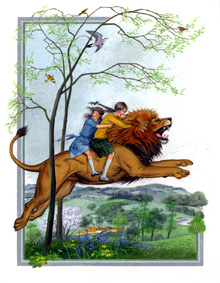
lww-1991-03-small.jpg
illustration credit: Pauline Baynes
.

In my previous post, I quoted the prophet and apostle Bill Harmon:

We are about to move from the dispensation of grace to the dispensation of dominion. We are about to see Jesus, not as the suffering lamb that was slain, but the roaring Lion who is King!

Dominion is a keyword that’s getting a lot of attention right now – it has significantly different meanings for different strands in the theological mix — but as usual I’m at least as interested in the symbols and imagery people use as I am in their doctrinal expressions.

This post, then, will explore the imagery of the Lion.

1.

Having recently written that post with the Harmon quote from 1999, I was struck to read the following account on the Elijah list just yesterday :

I had a profound encounter recently before going to bed. I think it is just like God to get you right before you fall asleep. I had to get out of bed to make a record of this! I felt it important to share with you. We see Jesus in many different expressions in the Scriptures. He is the Good Shepherd, the Lamb of God, the Lord of Hosts, the Angel of the Lord and many other looks. But one night recently He came to me as the Lion who is ready to roar. As you read, ask the Lord to reveal this aspect of His nature in your life.

I had a vision where I found myself on the back of this giant Lion with a huge mane. Then I realized it was the Lord. As the Lion turned His head, I could see His mouth open as if He was getting ready to roar. It is time to ride on the Lion of Judah. It is as if He has been waiting for this season. There is something fresh and new in the air. The breath of His mouth will destroy the enemy.

In this vision I was also running my fingers through the mane of the Lion. This represents the intimacy with God that is the foundation for our authority. Our intimacy is for a purpose – it is to establish the Kingdom of God for the King. The Lion is symbolic in that it is the “King of the Jungle”. The world is that jungle. Jesus is coming as the Lion to rule in the jungle bringing His power to set people free.

The Lord carries us into that jungle with His authority. When we are riding on the Lion we can be assured that we will succeed in all He calls us to do. He is massive, larger than life. He is ready to conquer and demonstrate His power.

In my encounter, I was suddenly on this Lion and He was of full age and postured for action. This will be a time where God will do things suddenly. It will take us by surprise. The sons of the Kingdom will advance the Kingdom for His purposes and with His power.

John Belt, Live In His Presence Ministries

2.

To be honest, it strikes me that that’s straight out of CS Lewis and his wonderful books for children – but without Lewis’ grace as a writer. Compare:

That ride was perhaps the most wonderful thing that happened to them in Narnia. Have you ever had a gallop on a horse? Think of that; and then take away the jingle of the bits and imagine instead the almost noiseless padding of the great paws. Then imagine instead of the black or gray or chestnut back of the horse the soft roughness of golden fur, and the mane flying back in the wind. And then imagine you are going about twice as fast as the fastest racehorse. But this is a mount that doesn’t need to be guided and never grows tired. He rushes on and on, never missing his footing, never hesitating, threading his way with perfect skill between tree trunks, jumping over bush and briar and the smaller streams, wading the larger, swimming the largest of all. And you are riding not on a road nor in a park nor even on the downs, but right across Narnia, in spring, down solemn avenues of beech and across sunny glades of oak, through wild orchards of snow-white cherry trees, past roaring waterfalls and mossy rocks and echoing caverns, up windy slopes alight with gorse bushes, and across the shoulders of heathery mountains and along giddy ridges and down, down, down again into wild valleys and out into acres of blue flowers.

— CS Lewis, The Lion, the Witch and the Wardrobe (illustration above by Pauline Baynes)

That captures the “riding the Lion” idea a great deal more powerfully, and it’s imaginative fiction.

3.

The other idea present in Belt’s narrative is the Lion’s roar. Again, it seems to me that what Belt offers us is a less gracious version of Lewis, who wrote:

The Lion opened his mouth, but no sound came from it; he was breathing out, a long, warm breath; it seemed to sway all the beasts as the wind sways a line of trees. Far overhead from beyond the veil of blue sky which hid them the stars sang again; a pure, cold, difficult music. Then there came a swift flash like fire (but it burnt nobody] either from the sky or from the Lion itself, and every drop of blood tingled in the children’s bodies, and the deepest, wildest voice they had ever heard was saying: “Narnia, Narnia, Narnia. Awake. Love. Think. Speak. Be walking trees. Be talking beasts. Be divine.”

It was of course the Lion’s voice.

— CS Lewis, The Magician’s Nephew

4.

Commenting on Lewis’ version of the Lion’s roar, Paul Ford writes:

This passage is remarkable for the intense breath image and the addition of the fire image (from the first conferral of the Holy Spirit in the New Testament on Pentecost; see the Acts of the Apostles 2:3-4).

— Paul F. Ford, Companion to Narnia

With in turn refers us to this passage:

And suddenly there came a sound from heaven as of a rushing mighty wind, and it filled all the house where they were sitting. And there appeared unto them cloven tongues like as of fire, and it sat upon each of them. And they were all filled with the Holy Ghost, and began to speak with other tongues, as the Spirit gave them utterance.

— Acts 2:3-4

5.

TS Eliot was notably moved by the same passage, and we can see how a poet deals with the same wind and fire in one of the final sections of “Little Gidding”:

The dove descending breaks the air
With flame of incandescent terror
Of which the tongues declare
The one discharge from sin and error.
The only hope, or else despair
Lies in the choice of pyre or pyre —
To be redeemed from fire by fire.

Who then devised the torment? Love.
Love is the unfamiliar Name
Behind the hands that wove
The intolerable shirt of flame
Which human power cannot remove.
We only live, only suspire
Consumed by either fire or fire.

— TS Eliot, “Little Gidding”, Four Quartets

6.

It’s the wind of inspiration that brings tongues of flame here, many tongues, many languages…

The wind bloweth where it listeth, and thou hearest the sound thereof, but canst not tell whence it cometh, and whither it goeth: so is every one that is born of the Spirit.

John 3:8

And the Greek is really quite wonderful here, as Phillip Comfort among others points out

In John 3:8, there is a metaphor which is purposefully polyvalent, in that Jesus was speaking of wind, spirit, and breath at the same time (inasmuch as pneuma can mean all three)

Philip Comfort, Encountering the manuscripts: an introduction to New Testament paleography, p 235

And circling back for a moment to CS Lewis — because there is really only one universe of discourse…

It must always be remembered … that the various senses we take out of an ancient word by analysis existed in it as a unity.

CS Lewis, The Allegory of Love, p 365

7.

I said earlier that CS Lewis’ writing seemed to me to have notably more grace than John Belt’s — and I think that grace has to do with the theological virtue of the same name too, that beauty is an indicator of Grace if you like.

Here’s another author, also writing for children, whose prose is a marvel of purity — describing the music of the stars of which Lewis also spoke — Ursula Le Guin:

It is no secret. All power is one in source and end, I think. Years and distances, stars and candles, water and wind and wizardry, the craft in a man’s hand and the wisdom in a tree’s root: they all arise together. My name, and yours, and the true name of the sun, or a spring of water, or an unborn child, all are syllables of the great word that is very slowly spoken by the shining of the stars. There is no other power. No other name.

Ursula Le Guin, Wizard of Earthsea

Ursula would, I think, describe herself as a Taoist: the traditions may differs, grace is still grace.

8.

Well, you might not think it would be easy to get from Narnia and CS Lewis to jihad in a single bound, but it has been done, and Jarret Brachman posted the proof a while back…

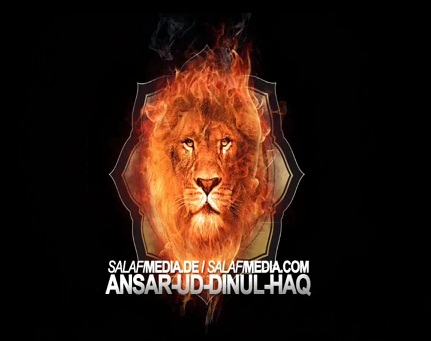
The jihadist propaganda lion:

screenshot.jpg

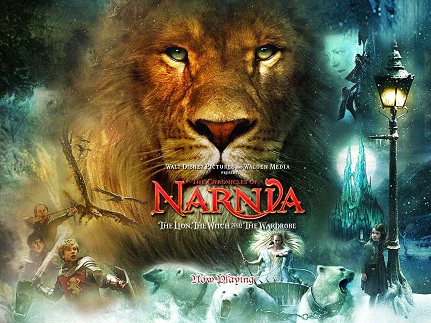
was in fact swiped from the Narnia lion:

narnia.jpg

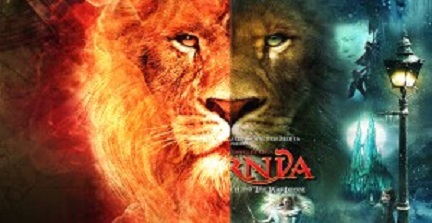
— as Brachman elegantly demonstrated:

composite.jpg

all three images credit: Jarret Brachman, Cronus Global

9

Well, that’s funny — but not uplifting.

So I’ll leave you with another flight — that of the king of the birds this time in the words of Isaiah:

But they that wait upon the LORD shall renew their strength; they shall mount up with wings as eagles; they shall run, and not be weary; and they shall walk, and not faint.

Isaiah 40:31

2083 Graphics — a first look

Sunday, July 24th, 2011

[ by Charles Cameron — index of graphics, first 800 or so pages of the “2083 European Declaration of Independence”, with some analysis ]

.

A great deal of work needs to be done on the 2083 European Declaration of Independence, and I thought a useful place to start would be a catalog of images.

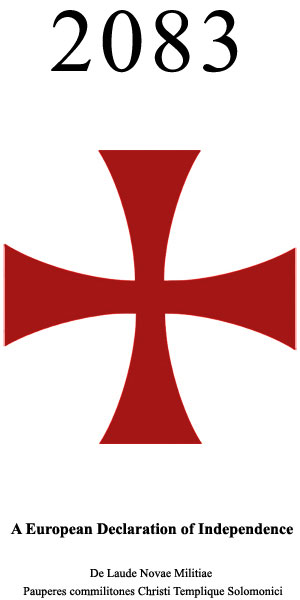
The document opens with a graphical title:

000-2083-cross-tp.jpg — title page —

That’s probably the largest single graphic in the entire work, and it puts the work squarely in the context of the Knights Templar — with e Templar cross and the full name of the order, “Pauperes commilitones Christi Templique Solomonic” or Poor Fellow-Soldiers of Christ and of the Temple of Solomon.  The Templars were a Western Christian chivalric order strongly associated with the Crusades — and the topic more recently of much historical, occult and fictional speculation.

The date 2083 is a date SFE (in the Science Fictional Era) as was 1984 before it — but it was almost certainly chosen for its echo of the 1683 Battle of Vienna, which is commonly taken to represent the turning back of the Ottomans by the Habsburgs, and thus the victory of Christendom over Islam.  Two maps show the Umayyad Conquests:

umayyad-conquests-p-228.jpg — p 228 —

and the Second Islamic Wave, turned back in Spain and at the gates of Vienna:

243-1683-second-islamic-wave-p-243.jpg — p 243 —

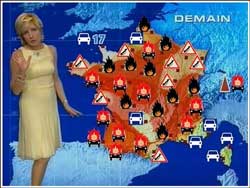
These can fruitfully be contrasted with a map of “tomorrow”:

demain-p-487.jpg — p 487 —

it being the author’s contention that France will be the first European country to fall to Islamic dhimmitude.  I suspect much the same is implied in this version of the French tricolore:

flag-face-p-781.jpg — p 781 —

There are some pointed attacks on leftist intellectuals:

033-academic-reform-p-33.jpg — p 33 —

and on media perceived as left-leaning, notably the BBC:

bbc-flag-w-crescent-p-384.jpg  — p 384

— that’s the Saudi flag mashed up with the BBC logo and star and crescent — and:

804-bbc-02-p-804.jpg  — p 804 —

giving both “ancient” and “modern” variants on the theme…

There are some strange items which I’ll drop in here for a breath of fresh air…

free-pluto-equal-gravity-for-all-planets-p-381.jpg  — p 381 —

which appears to be a commentary on the respective attractions of Venus and Mars, since it’s situated in a commentary on Feminism…

this really is a strangely mythic document… and…

global-warming-voidka-p-657.jpg

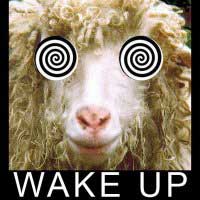
with its reference to “mind control agents” — and those whose minds have been controlled are clearly sheep:

wake-up-p-803.jpg — p 803 —

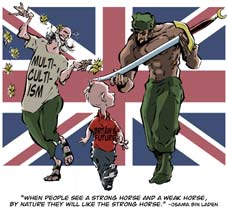
which may be the right moment to mention that the British, too, come in for a measure of contempt, via a quotation from none other than Osama bin Laden:

when-people-see-a-strong-horse-p-707.jpg  — p 707 —

“When people see a strong horse and a weak horse, by nature they will like the strong horse”.  Perhaps its unsurprising that the author is something of an admirer of bin Laden’s means, if not his ends.

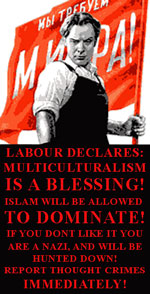
Of course, that’s largely the fault of the Labour party:

labour-declares-multiculturalism-is-a-blessing-p-373.jpg

But that’s probably enough for one post — in my next, I’ll consider how weak we are, what the jihadist strategy against us is, and how the new Templars hope to turn the tide

against:

worst-threats-to-mankind-p-674.jpg — p 674 —

the worst threats to mankind.

Recommended reading — in stereo

Wednesday, May 11th, 2011

[ By Charles Cameron ]
.
quo-dark-side-of-force.jpg

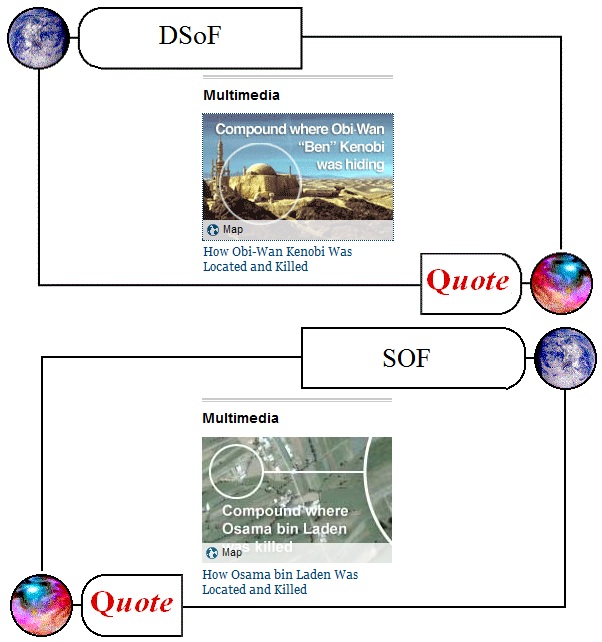
I’m always on about the power of polyphonic thinking, right? Okay, IMO, these two pieces are well worth reading in stereo:

http://www.galacticempiretimes.com/2011/05/09/galaxy/outer-rim/obi-wan-kenobi-is-killed.html
http://www.nytimes.com/2011/05/02/world/asia/osama-bin-laden-is-killed.html

h/t @abumuqawama


Switch to our mobile site